Sea rise prompts Miami-Dade to consider raising heights of roads, seawalls and canals
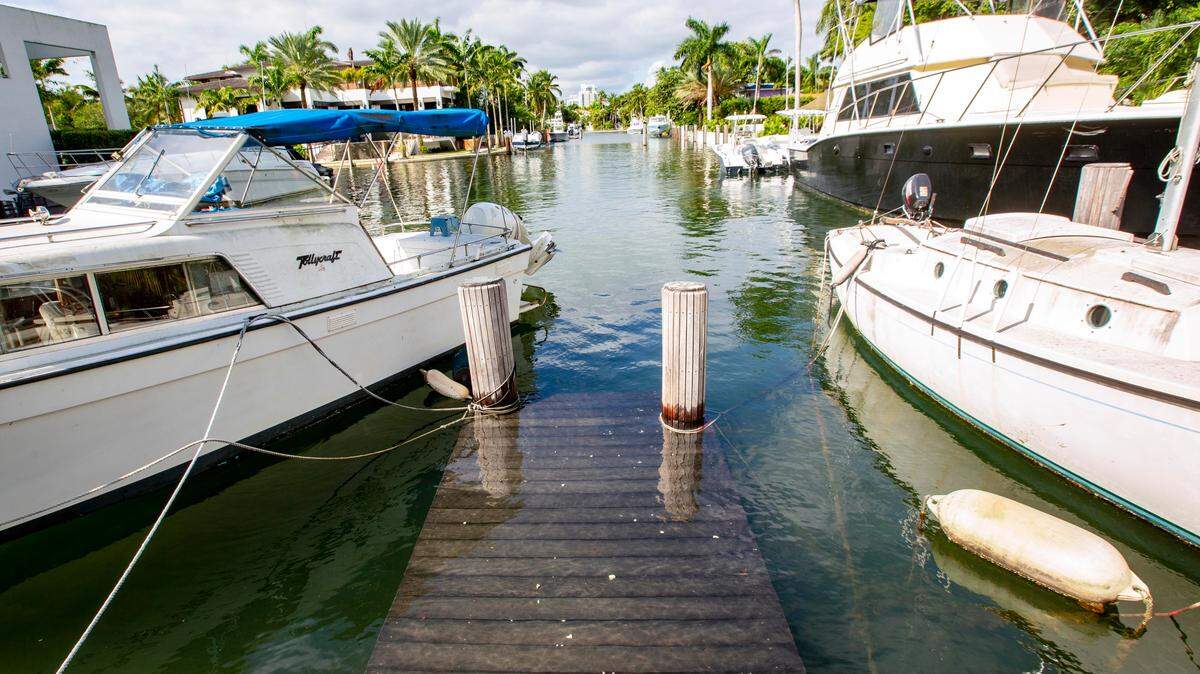
Miami-Dade hasn’t changed the most basic form of flood protection — the minimum height for building things like roads and new homes — in 40 years.
Now a new proposal on the table could nearly double that standard, a dramatic change that reflects two inevitable realities: sea rise poses an increasingly imminent threat and adapting to it will raise construction costs.
A new minimum height of 6 feet for things like roads, sea walls, canal banks and lots sounds high, but the visual impact will likely be minor for everywhere except the most low-lying pockets of the county. The costs of such a change, if the county commission agrees to pass it, are unclear. It could add up in a community squeezed by an affordable housing crisis and also facing a future of more frequent flooding.
“It’s a resilience measure,” said Marina Blanco-Pape, director of DERM’s water management division. “The idea is you’d build to a high enough elevation that with a 10-year storm event in 2060 you’re free of flooding.”
But like most other measures to build a safe building, like stronger roofs or window, the expense can add up. Howard Nelson, head of environmental practice at Miami-based law firm Bilzin Sumberg, said adding a foot of fill to a quarter acre lot in Miami-Dade could run between $3,000 to $5,000. For developers working with much larger tracts of land, it could be a significant impact.
“I don’t want to detract from the concept that raising the elevation of roads, of sea walls, is enormously important to protect us from rising sea levels, but it’s got some costs to it,” he said.
Technically, the proposal from the county’s Division of Environmental Resources Management would bump the minimum elevation from 3.45 feet to 6 feet NAVD88. That stands for North American Vertical Datum, a national fixed measure used by surveyors, engineers and others to determine elevation used instead of “sea level,” which is shifting due to climate change.
DERM mapped out what would happen if a strong rainstorm hit Miami-Dade in 2060, when estimates suggest the county will see about two feet of sea level rise. Plenty of the county, including inland and western areas, would experience flooding at their current heights, but not as much if all those structures were two feet higher
Blanco-Pape said researchers analyzed the storm surge Miami-Dade experienced in Hurricane Irma, which drove 6 feet of storm water ashore in the south end of Biscayne Bay and four feet of storm surge in the northern, more urban areas.
“That’s how we came to pick that 6 feet NAVD88, because we thought it would give us the added protection because of sea level rise-driven storm surge impacts,” she said.
Another factor is groundwater, which is also rising along with sea levels. During the average October currently, a period where there’s more rain and tidal flooding, an analysis of 170 wells in Miami-Dade found groundwater reached a maximum height of 5.71 feet NAVD88, although the median height was just under 2 feet NAVD88.
Blanco-Pape said her team plans to present the proposal to the Miami-Dade Commission sometime in the next few months, and public comment on the new flood criteria closed at the end of January.
Who’s affected?
If this policy passes, existing structures and buildings wouldn’t be affected, only new construction or major renovations.
Any home or building that does “substantial improvements” affecting 50% or more of the value of the property would be required to meet these new standards, exactly like it would be required to meet the newest version of the building code.
But even where it does apply, county modeling shows that the new standard wouldn’t result in thousands of buildings across the county suddenly being required to dramatically elevate. That’s because most lots are already pretty close to the proposed 6 foot requirement, or even above it.
Blanco-Pape said the average elevation change in unincorporated Miami-Dade is about two feet, although some very low properties may see more.
“If you look at that county-wide there may be some specific properties that will be more impacted, but we’re not talking about anything that all of a sudden created a 5 or 6-foot building requirement. You’re not gonna see that at all,” she said.
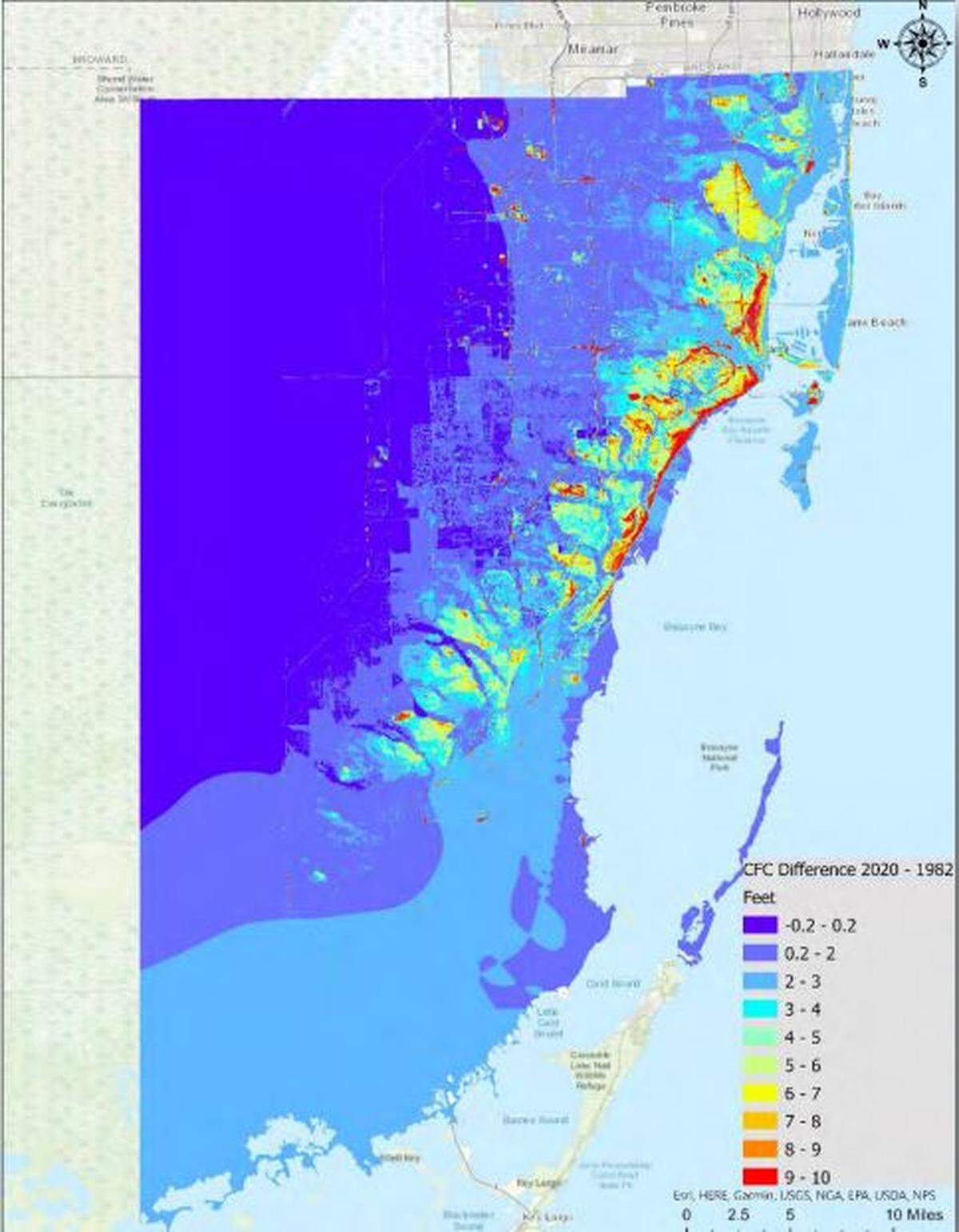
There are almost no changes to properties on the coastal ridge of high ground that runs down the center of the county, and west of that ridge the average change is less than a foot, according to county calculations. Coastal areas and southern parts of the county would see an average change of two to three feet.
If approved, the new standards would apply to all unincorporated areas of the county and in any municipality that specifically cites the county’s flood criteria in its code, like the city of Miami. About a third of the municipalities in Miami-Dade would be affected directly by this switch.
This doesn’t affect the long-standing rules guiding how high buildings or homes must be built — commonly known as base flood elevation or BFE. That number is set by the National Flood Insurance Program, and the Florida Building Code tacks on another mandatory foot. Some cities (like Miami Beach) allow builders to go even higher to be safer in storms and floods.
Elevate everything
Elevation is a key component of Miami-Dade’s plan to address the impact of sea level rise, which is expected to rise about two feet by 2060. Visually, that might look like the annual king tides South Floridians are used to dealing with every fall.
That could put more than 12,000 homes and $6.6 billion in property value at risk, according to an analysis by Climate Central.
Miami-Dade’s sea level rise strategy focuses on moving away from the rising water — a process known as retreat — and elevating everything.
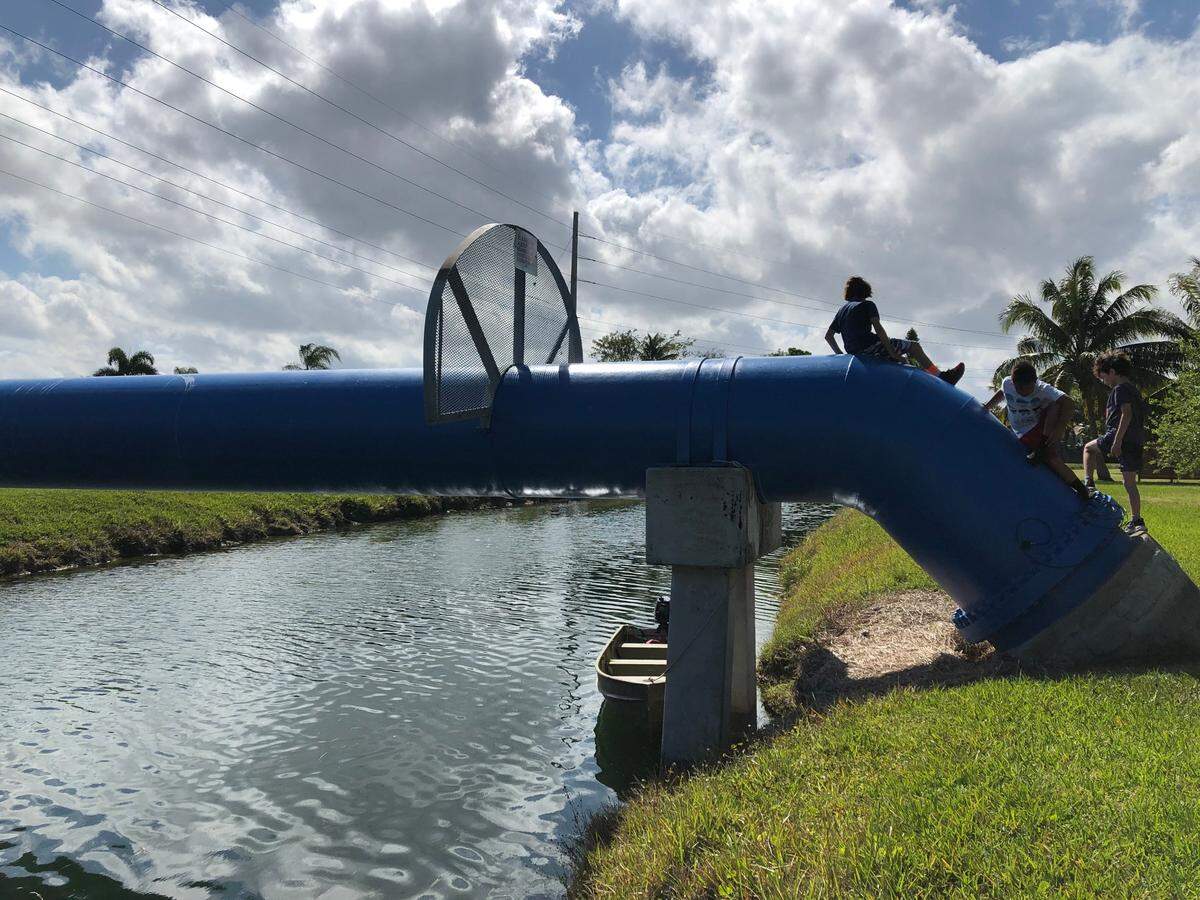
This new flood elevation criteria covers parts of the puzzle within county control: seawalls, the height of canal banks, county roads and fill, the height of the rock added to a piece of property before a building is built on it. Del Schwalls, a consultant and southeastern director of the Association of State Floodplain Managers, said coastal counties in Florida and beyond are making similar moves to counteract the invading sea.
“It’s part of a conversation that’s been going on for a while,” he said. “Recognizing that flood risks are increasing along the coasts, it is imperative that communities reevaluate whether the regulatory requirements they’ve had in place are sufficient.
Elevating canal banks and sea walls will help protect nearby properties from flooding, but Schwalls worries that adding more rock and dirt to properties could cause problems for their neighbors, especially as sea rise makes flooding more common.
“Adding more fill in the floodplain is problematic. Although the building being raised may be safer, those flood waters are diverted elsewhere and become someone else’s problem,” he said.
Those in the development industry wave off that concern by pointing to state building code rules that require properties to take care of every drop of rain that falls on their property and make sure it doesn’t flood neighbors.
Nelson, who represents developers, also pointed to a concern that already plagues places like Miami Beach, which raised roads before homes or buildings. Elevating some parts of a neighborhood before others can lead to an uneven distribution of flood risk for the parts that get left behind.
“That patchwork will get evened out over the next 50, 60, 70 years but it’s a difficult path to tread,” Nelson said. “There is no doubt that we will need to raise the elevation of our communities, but we need to do it holistically.”
This story was originally published February 18, 2022 at 7:00 AM.