How do sharks take power naps? This species ‘surfs’ to get a break, FIU scientist says
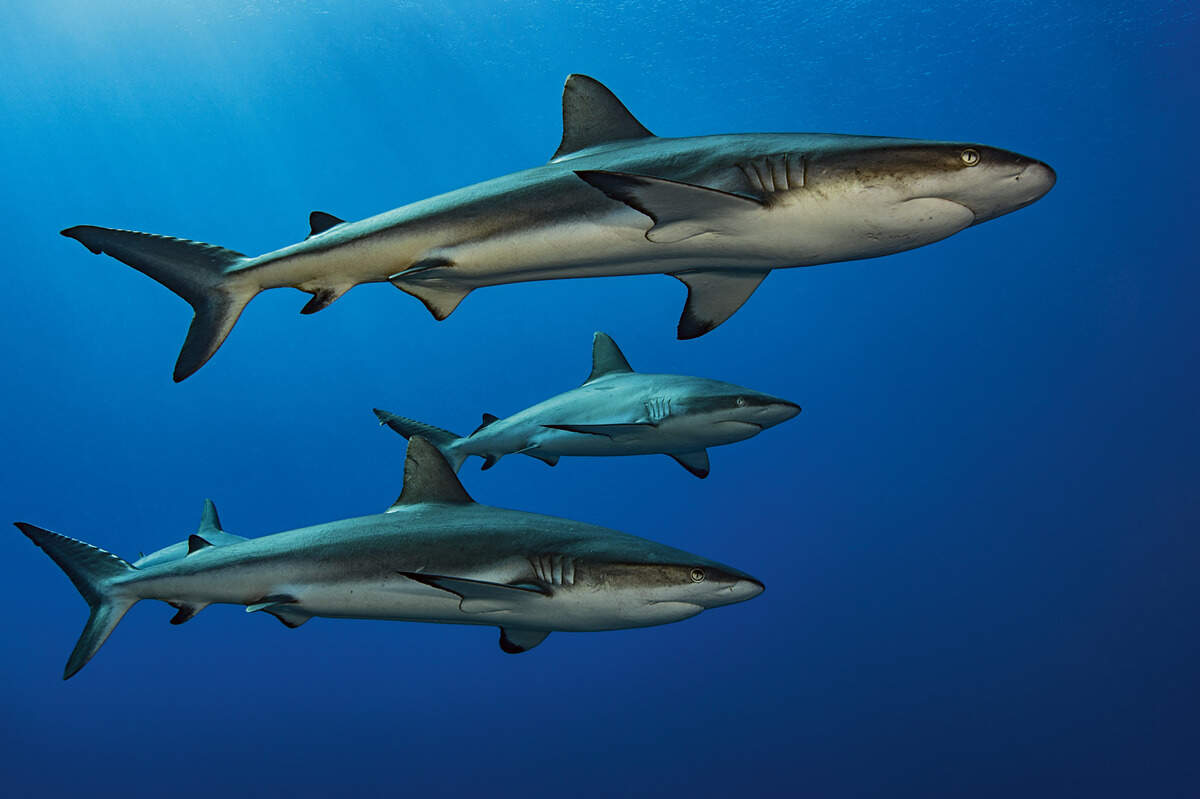
Did you know that when a gray reef shark wants to rest — it goes surfing?
This type of shark species can’t stop swimming; it’s how they breathe. If they stop, they’ll sink. (the animals are “negatively buoyant.”)
Instead, the sharks have a gnarly trick: They “surf” currents to help conserve energy, said Florida International University marine scientist and assistant professor Yannis Papastamatiou.
It’s similar to how birds soar on wind currents, except underwater, he added. Or like how a person takes a power nap.
The finding is part of a new research Papastamatiou led with an international team, including marine biologist and underwater photographer Laurent Ballesta. The findings were published this month in Journal of Animal Ecology.
The discovery was made during a visit to the southern channel of Fakarava Atoll in the middle of the South Pacific. The channel is home to more than 500 gray reef sharks and is part of French Polynesia.
Swarm of sharks
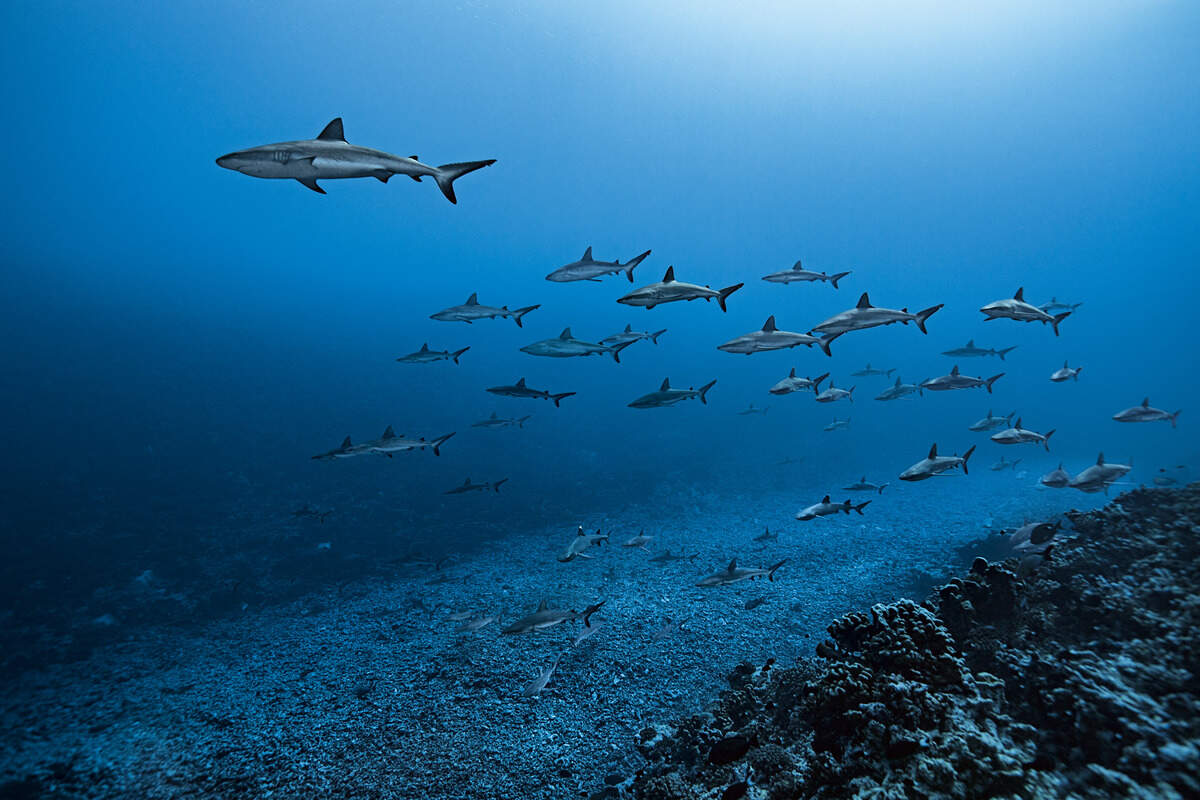
The team was there to document the sharks behavior at night — when the channel becomes a hunting ground, for a 2018 French research documentary called “700 Requins Dans La Nuit. “ (National Geographic later aired a shorter version called “700 Sharks.”)
“The first few dives were definitely tough and then you get used to it,” Papastamatiou said. “It was honestly the best dives I’ve ever done in my life. I’ve never seen anything like that before.”
But it was during the daytime dives that Papastamatiou noticed that many of the sharks remained in the small channel, even though they weren’t hunting. Then he noticed something else:
The sharks had developed a “conveyor belt” like system. When one shark reached the end of the line, it allowed the current to carry it back to the beginning, he said. So did another shark. And another. And another. Many barely moved their tails. They looked almost motionless, like they were floating.
But they weren’t sleeping.
To figure out what was happening, the team used a variety of tools, including animal-borne cameras, special tags to gather data on the sharks activity and swimming depths, and a detailed map to predict and model where possible updrafts might appear, depending on the direction of the tide.
The data confirmed what researchers noticed during their underwater observations:
The sharks were using the updrafts to “surf the slope” and cut their energy usage by at least 15 percent, which is significant for a species that can never stop swimming, said Papastamatiou.
How deep the sharks went also depended on the updraft.
During incoming tides, with strong updrafts, the sharks would go deeper where the current was weaker, he said. During outgoing tides, when there was turbulence — enough to have the sharks bouncing around like they were on a bad flight — the sharks would move closer to the surface for a smoother ride.
Papastamatiou said it seems that sharks, at least some of them, like to congregate in places where there are high currents, and expects that this finding could help researchers predict and understand why sharks might prefer a certain area over another.
But, wait, do sharks actually sleep?
It’s a bit complicated.
“Sharks do not sleep like humans do, but instead have active and restful periods,” according to the Florida Museum of Natural History.
Some species, like nurse sharks, don’t have to swim all the time, which lets them have “stationary rest,” according to the museum.
What about species like the gray reef shark that swim continuously?
Well, that’s still a mystery and is one Papastamatiou hopes they’ll be able to answer some day.
This story was originally published June 15, 2021 at 4:58 PM.