
Why the feds may kill the party at Haulover’s sandbar: A nearby beach needs help
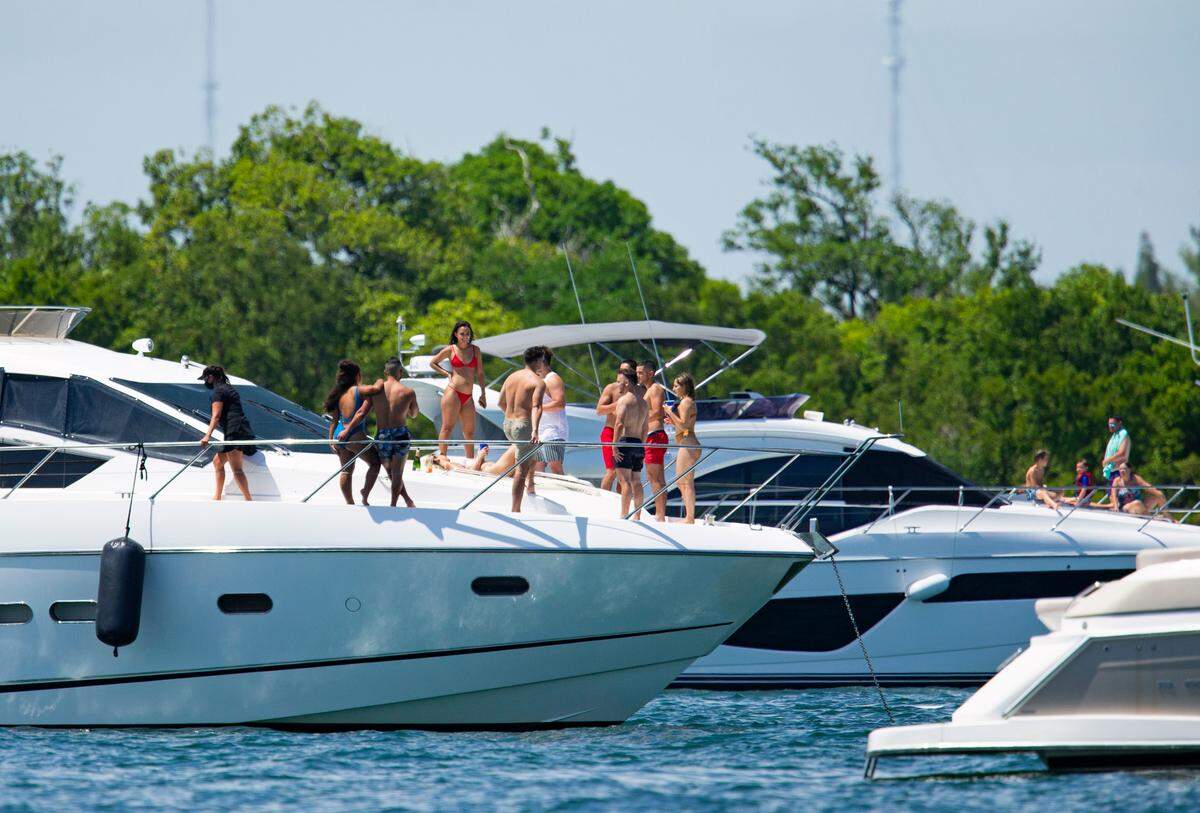
The Haulover sandbar, one of the liveliest spots for party boating in the Miami area, moved closer to receding into the sea Wednesday when Miami-Dade commissioners voted to allow the federal government to dredge tons of sand there and move it to the Bal Harbour beach.
The plan by the U.S. Army Corps of Engineers would dredge about 160,000 tons of sand from the county sandbar, which forms a mini island during low tides.
A county study estimates the sandbar should fully reappear in about five years as sediment washes back in from the ocean, and boats could still anchor in the shallows there.
Dredging would take 3 to 6 feet off the sandbar
The project would “initially deepen the entire sandbar by between three and six feet,” according to a county memo, ending the shallowest areas around one of the most popular anchoring spots on Biscayne Bay.
“It’s one of those places that, until you go out and experience it, you don’t understand,” said Captain Mike Lynch, whose company, Speed Boat Tours Miami, makes regular stops at the sandbar. ”This is local Miami people partying and really loving life.”
Miami-Dade commissioners on Wednesday approved use of the Haulover sand to replenish the public beach at Bal Harbour. The sandbar is part of the county’s Haulover Park, and Miami-Dade could have declined to let the U.S. Army Corps use it. The Corps still needs approval from the National Park Service, which must approve major changes for the area because Haulover Park has received federal funds for improvement.
The approval Wednesday came without discussion, and commissioners voted for the deal as part of a blanket adoption of agenda items that received no request for discussion or separate votes.
A memo by Mayor Daniella Levine Cava said denying the donation of nearly $3 million worth of sand could jeopardize the beach renourishment project at Bal Harbour because the Corps warned it may have to cancel the contract and shift up to $30 million in funding elsewhere if it doesn’t have a relatively easy source of sand nearby. The Corps wants to award the dredging contract this summer.
“The beach desperately needs it,” said Bal Harbour Mayor Gabriel Groisman.
He called the Haulover sand an ecologically sound solution because the underwater structure formed from sand from Bal Harbour and other areas, swept in by current created through the man-made Baker’s Haulover Inlet. Without the inlet’s construction in 1925, the beaches wouldn’t be losing so much sand to the bay.
“I grew up here. I love the sandbar,” Groisman said. “But what are we going to do? We’re going to run out of beaches.”
The county government has responsibility for beach renourishment down the coast, and must use local dollars to plug funding gaps left by Washington. The Bal Harbour project is fully funded by the federal government, and part of a $158 million beach renourishment effort underway in Miami-Dade.
“Maintaining the county’s beaches is critical to protecting our residents and infrastructure from the impacts of storm surge, and our world-renowned beaches play an important role in supporting our tourism industry,” Levine Cava wrote in the memo.
The memo says the current height of the sandbar causes sand to get washed into the nearby Intracoastal Waterway, and that dredging it should ease the problem of that popular channel becoming shallower over the years.
Seagrass not a worry, feds say
The sandbar, along with most of Biscayne Bay, is designated a “critical habitat area” for the threatened Johnson’s Seagrass. Seagrass serves as a nursery for sea life and also stores carbon dioxide, which causes global warming.
In its draft environmental assessment, the Corps said there isn’t seagrass in the planned dredging area, but that excavating the sand could spread sediment to nearby grass beds. The study concludes any potential impacts would be “temporary, minor, localized effects.”
Jose Vega sees only dramatic effects for the future of his sandbar-based business if the Army Corps moves forward with the dredging plan.
The owner of the Schwarma at Haulover food boat, he regularly joined the floating restaurant circuit that formed off the sandbar before COVID rules put a dent in the weekend gatherings.
Miami-Dade’s emergency COVID rules currently bar beaching boats, and that’s led to the sandbar itself being empty on weekends when police bar people from getting out of their vessels and onto the sand, Vega and others said.
Vega said he tried selling his food in deeper water to cater to the many boats still anchoring in the area during the crackdowns but had no luck. He worries it’s a sign of what business would look like if customers don’t have a shallow place to stand and eat.
“People come to this place because it’s shallow water. You see kids playing,” he said. “It attracts people from all walks of life. It puts people in a good mood.”
This story was originally published January 20, 2021 at 6:00 AM.