Miami-Dade wants mangroves and islands as storm protection instead of 10-foot walls
The federal government plan to protect Miami-Dade from future storms hinges on a tall, gray wall between the city and Biscayne Bay, but residents have their own vision for how best to keep the water from drowning the Magic City. And it’s much greener.
Wednesday was the deadline for public comment on the Army Corps of Engineers’ proposed plan to build walls and pumps, elevate homes and install flood gates on the mouths of rivers to keep the coastal county safe from storm surge driven by powerful hurricanes. The projected cost is $4.6 billion.
Residents, businesses and governments all shared their thoughts with the Corps, and they pretty much all had two things in common: nobody wants an up to 20-foot high wall along Biscayne Boulevard, and everyone wants more coral reefs, mangroves and living shorelines instead.
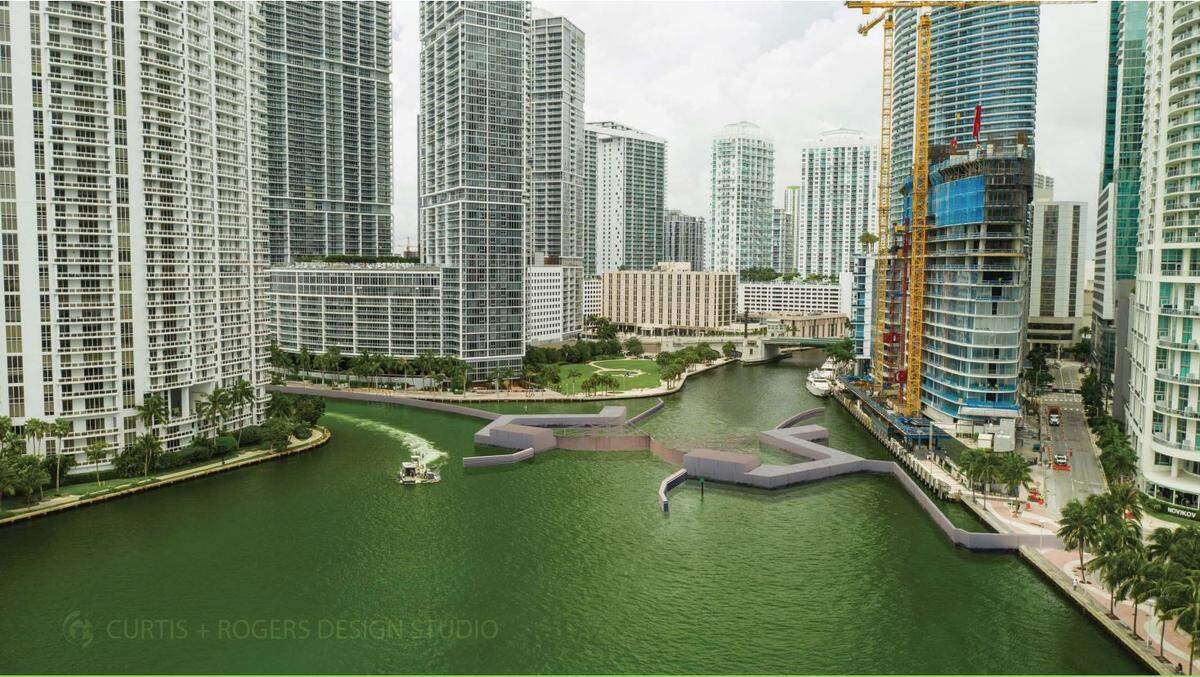
Critics say the miles of walls — some of which would go directly through Biscayne Bay — will create “winners and losers” by dividing up neighborhoods, potentially worsen flooding and block views and access to the bay.
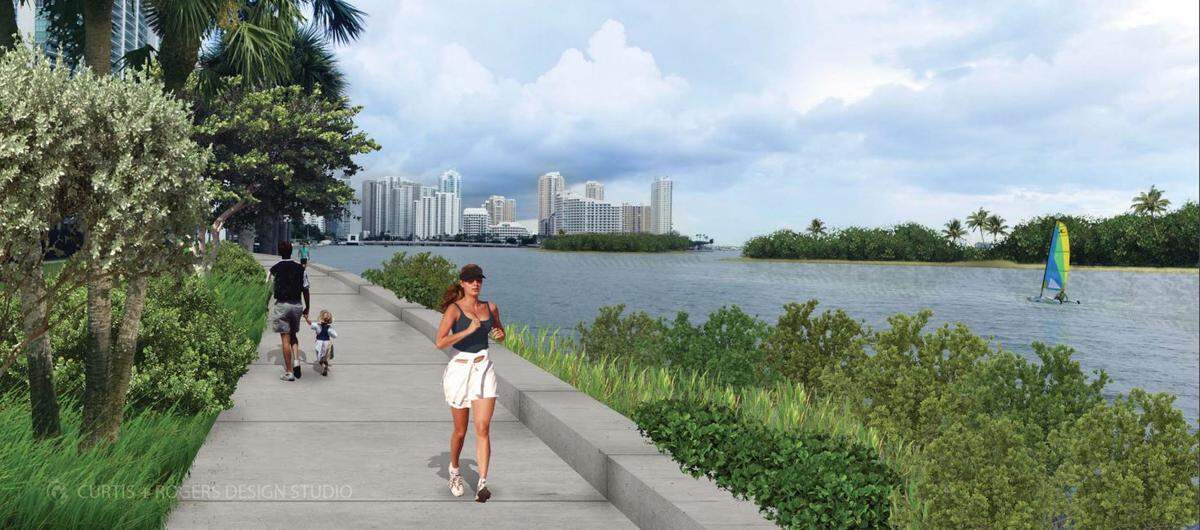
The Downtown Development Authority made its opinion on the walls crystal clear by attaching renderings of the proposed wall in downtown Miami along with renderings of alternate proposals featuring more nature-based solutions. The ones picturing the walls feature graffiti and trash floating in brown, stagnant water. The ones with man-made islands and walking paths protected by coastal mangroves are lush and vibrant with clear, blue water.
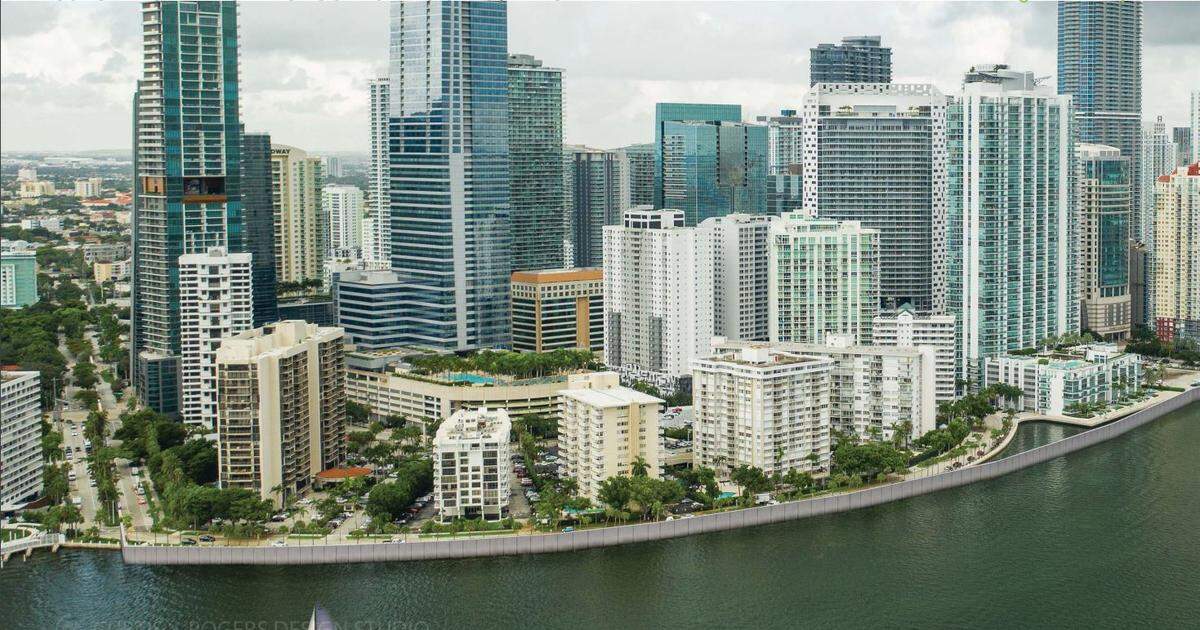
“Nobody wants to see the Berlin wall in the middle of Biscayne Bay,” said Miami City Commissioner Manolo Reyes, chair of the DDA.
Reyes, who called the wall concept “horrendous, ill-conceived and simplistic,” said it would decrease property values in downtown and Brickell and discourage potential investors and businesses from choosing Miami.
Neal Schafers, transportation, planning and resiliency head for the DDA, noted that building the wall would cut off all boat and water access for miles, as well as gut the DDA’s signature project, an interconnected pedestrian pathway called the Baywalk.
“It will wreck what we’ve built up in the last 30 years,” he said. “Not to mention what it will do to the marine environment.”
In a letter outlining its comments, the DDA asked the Corps to consider using man-made islands and mangrove shorelines to cut down on the power of hurricane-strengthened waves that would otherwise smack Miami. It also suggested the Corps rely more heavily on buying out properties and turning the lots into parks to increase property value, but not in the condo-heavy downtown area.
“That was much more meant for single-family homes. It wouldn’t necessarily be a comparable solution for downtown,” Schafers said.
Miami-Dade County, the main sponsor of the project, submitted 264 specific comments covering everything from spelling errors to its concern that the $3 million study undertaken by the Corps did not take into account the most influential force in South Florida flood control, the network of canals and pumps run by the South Florida Water Management District.
The comments repeatedly question whether Corps researchers appropriately modeled or even understood the impact that the proposed walls, flood gates and pumps would have on flooding throughout the county. It also comes back to one of the central criticisms of the plan, that it is specifically designed to address only storm surge, not sea level rise-induced flooding or anything else.
“The County shares the South Florida Water Management District’s concerns that the analysis conducted does not account for inland drainage implications and future extreme rainfall,” Miami-Dade wrote in a letter to the Corps.
The comments also noted that the Corps study does not grapple with the fact that building miles of walls that are meant to be sealed shut days before a storm would complicate evacuation and response efforts. Miami-Dade clarified that if the Corps does need to buy up property to build the walls, it does not support the use of mandatory buyouts using eminent domain.
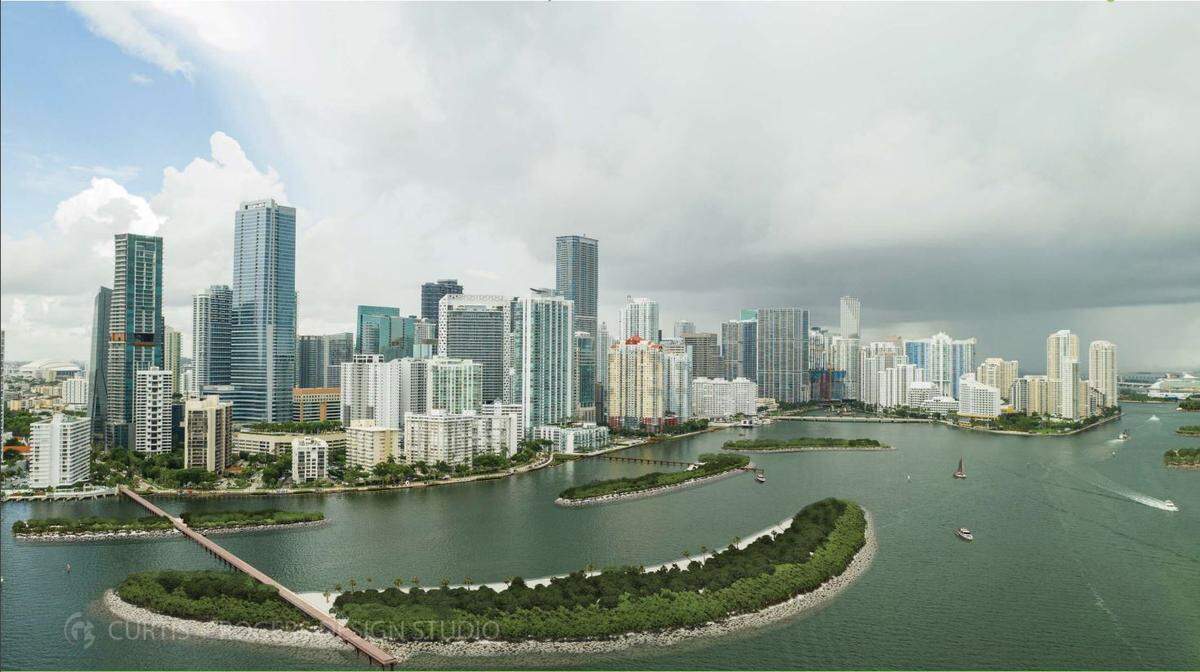
Instead of walls, the county echoed the DDA in asking the Corps to consider more nature-based solutions beyond the limited mangrove replanting suggested near Cutler Bay, particularly restoring the nearshore coral reef and installing more living shorelines.
The county also wants to see more “critical infrastructure,” like fire stations and wastewater treatment plants, selected for floodproofing than the Corps listed. Miami-Dade wants the expanded list to include all city halls, hospitals, fire stations, parks, cruise terminals, wastewater pump stations and wastewater treatment plants, like the vulnerable one on Virginia Key.
Other major critiques of the plan came from environmental groups like the Everglades Coalition, which also requested more nature-based protections. In its comments, the coalition asked that the Corps take all the simultaneous plans to protect Miami-Dade from future storms and flooding into account when coming up with solutions, particularly the Comprehensive Everglades Restoration Plan.
The Coalition also warned that the Corps should be careful not to “exacerbate inequality” by elevating, floodproofing and protecting more properties in rich neighborhoods than lower-income ones.
“We are concerned that high-value properties are more likely to benefit from protection features, leaving under-resourced communities without crucial storm risk assistance. This disparity is shown by the proposal to elevate 184 private residences in Golden Beach, where the average home value exceeds $4 million. This is not an equitable investment, given that roughly 19 percent of Miami-Dade’s population live in poverty,” the group wrote in its comments.
The Corps has closed public comment on the draft plan, which it released in June. The final version of the report is set to be released in October 2021. The Corps can also work with the county to come up with a “locally preferred plan” that incorporates the community’s suggestions. Any deviations from what the Corps recommends in its final plan would be paid for entirely by Miami-Dade, instead of the 65 percent cost-share the Corps carries for ideas it suggests.
From there, Congress has to fund the projects. On the fastest possible timeline, that would mean project design and engineering wouldn’t begin until 2023 and construction wouldn’t kick off until 2026.
This story was originally published August 21, 2020 at 6:00 AM.