
Is offshore fish farming in Florida’s future? A test project in the Gulf could supply answer
A boat traveling southwest from Sarasota into the Gulf of Mexico for a little over two hours will reach a spot where the ocean is 130 feet deep and the sandy sea floor holds no corals, seagrass or shipwrecks.
For almost three years it’s been the proposed site for anchoring a submerged mesh cage — one about the size of 20 backyard swimming pools — to raise a fast-growing native fish called the almaco jack. A company’s small pilot project aims to show how offshore fish farming can be done responsibly with minimal environmental impacts to produce sustainable seafood. Opponents are deeply concerned that, if permitted, the project would lead to larger fish farms that spark algae blooms and compete with regional fishers.
A Trump administration executive order introduced in May could now accelerate the launch of offshore fish farms as part of its mission to boost domestic seafood production. The order calls for investigating two U.S. locations to start up commercial aquaculture, the farming of aquatic animals and plants. Florida representatives, including U.S. Sens. Marco Rubio and Rick Scott and Agriculture and Consumer Services Commissioner Nicole Fried, have asked for Florida’s federal waters, defined as three to 200 nautical miles from shore, to be one of those locations.
Fish farm proponents point to a growing population with growing demands for seafood that can’t be met by wild-caught fish. Over 80% of seafood eaten in the U.S. is imported, though some of that includes U.S. seafood processed elsewhere then imported back to the U.S.
“We’re essentially exporting our ecological footprint,” said Neil Sims, CEO of Ocean Era, the company applying to raise captive fish in the Gulf. “We need to figure out how to grow these fish ourselves in U.S. waters where we can have control over the environmental standards and the food safety standards.”
Fish farming — particularly close to shore — doesn’t have the best reputation. Salmon escape their cages, parasites like sea lice spread among densely clustered fish, and packed farms in shallow waters can cause nutrient pollution. But Sims says there have been major advances in modern fish farming, such as fish health management with vaccines and proper nutrition to minimize antibiotic use. Putting fish farms in the right location is also crucial.
“They have to be properly sited and managed,” said Daniel Benetti, professor and director of aquaculture at the University of Miami Rosenstiel School of Marine and Atmospheric Science.
An emerging style of offshore fish farming in deep, moving waters generally has minimal potential environmental impact if farms are well managed, he said. In deep waters with a moving current, fish pee and fish poop can spread out far enough so that algae and bacteria consume the nutrients and wastes without exploding into potentially damaging blooms.
If farmers put too many crowded fish cages in shallow coastal waters though, the wastes and any uneaten fish food could accumulate to a problematic tipping point. Algae blooms could form and a frenzy of bacteria could use up all the oxygen in sediments on the bottom of the ocean.
Over the past 20 years Benetti’s research team has done environmental monitoring around small, demonstration farms offshore of Puerto Rico and the Bahamas, and around a commercial cobia farm in Panama with 20 fish cages eight miles from shore.
“We have shown over and over and over that there are no significant or cumulative impacts on these farms,” he said, referring to impacts on water quality and the sea floor. Researchers did find a slight buildup of nutrients and fish waste in sediments under the Panama fish cages between 2012 and 2013, but didn’t see farm wastes accumulate between 2017 and 2018.
If the fish cage in the Gulf gets the go-ahead, Benetti’s research team will conduct the environmental monitoring before and during farm operation.
20,000 fish in the farm
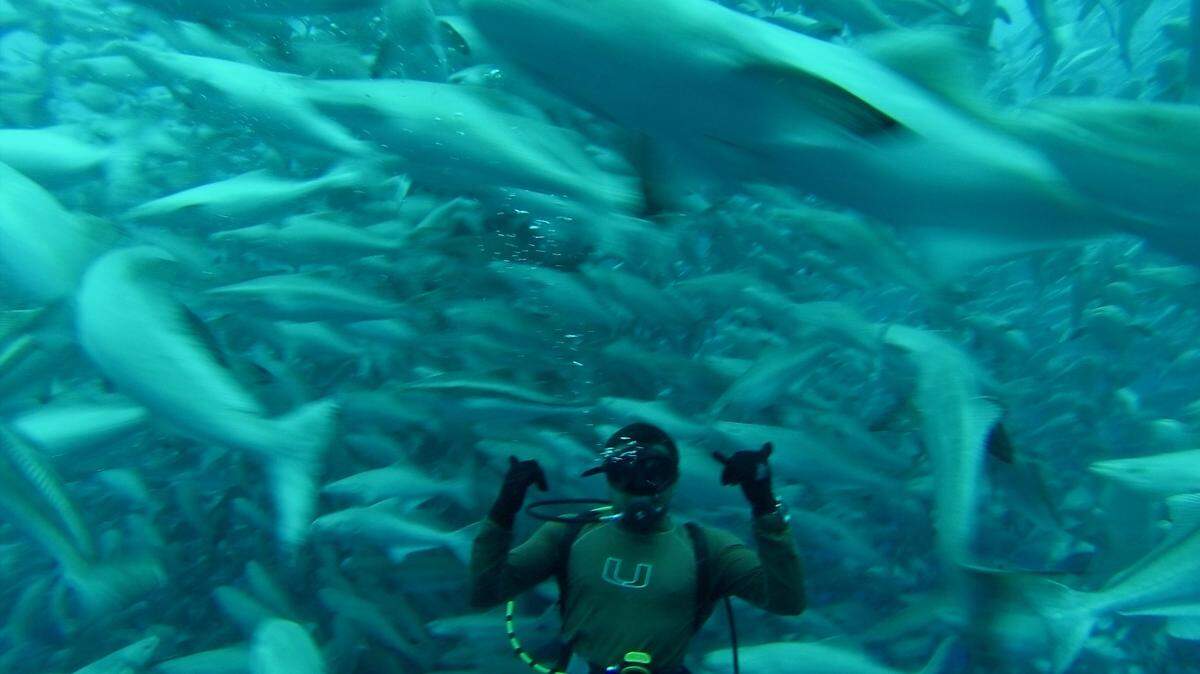
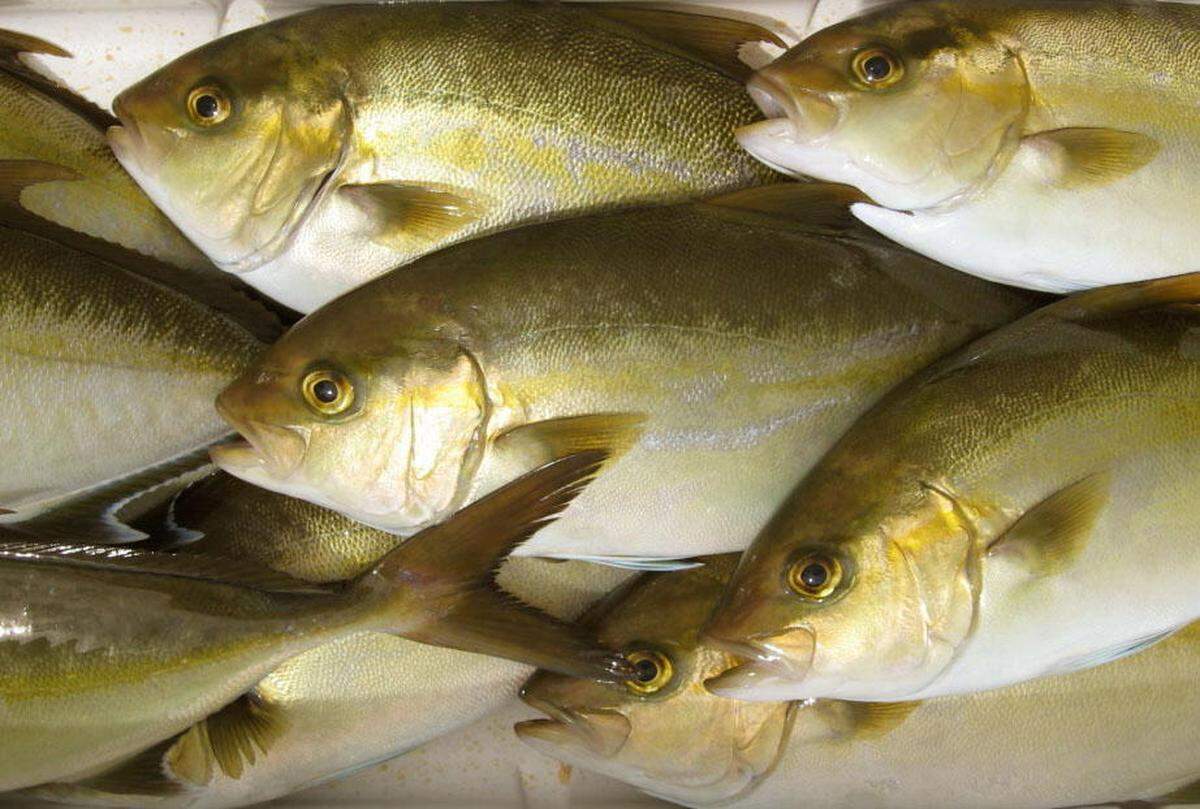
Ocean Era, formerly Kampachi Farms, is a Hawaii-based aquaculture company proposing the small offshore demonstration farm in the Gulf, where they’d like to raise one batch of 20,000 almaco jack. According to Sims, this fish grows quickly, adapts easily to captivity, and converts its food into fish meat pretty efficiently. It will take about a year for juvenile almaco jack weighing less than an ounce to reach over 4 pounds, when they’ll be harvested.
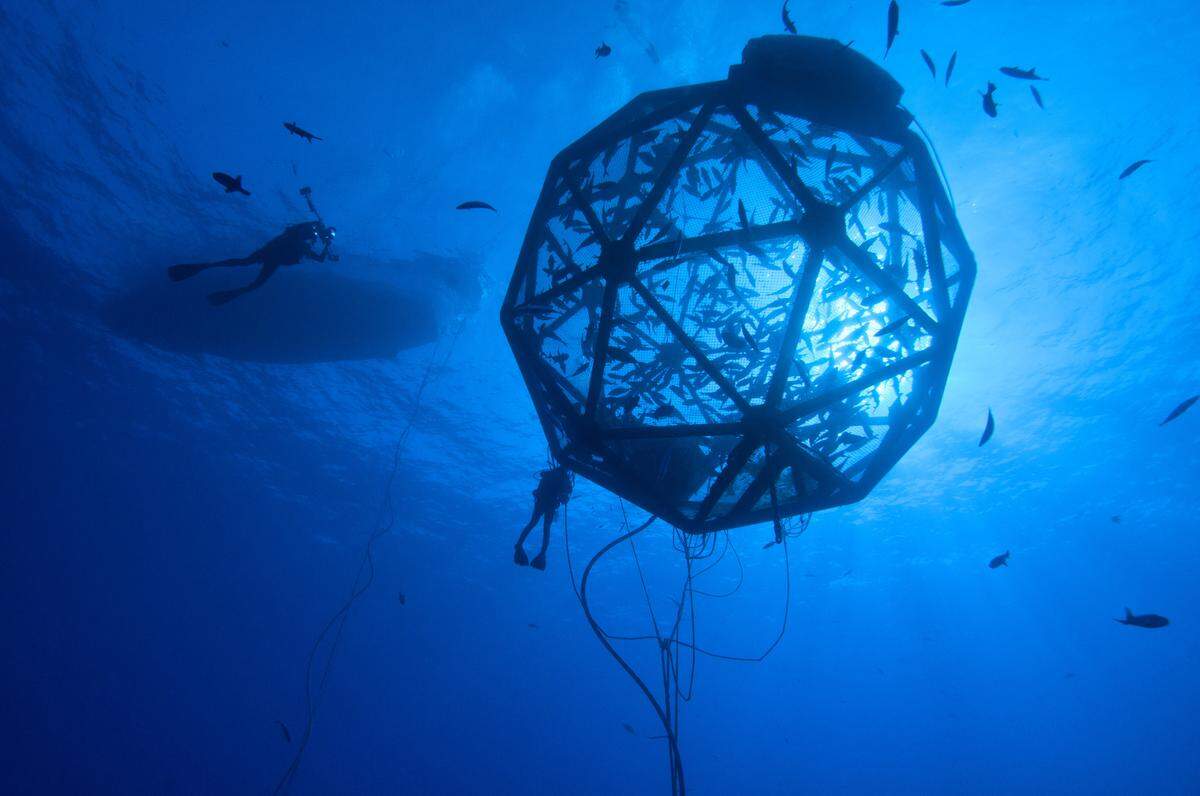
Their circular fish cage, called a net pen, would be roughly 50 feet across and 17 feet deep. Most of the time it’d be submerged about 30 feet below the surface, deeper if a hurricane is coming. A boat would attach to the pen so researchers can monitor the farm, feed the fish and take environmental samples from the water and sediments.
Ocean Era worked with the National Oceanic and Atmospheric Administration, or NOAA, to choose a location, considering factors such as depth, current speed and distance from wild fish habitats like seagrass and coral reefs.
The company was one of the first to apply for aquaculture permits in the Gulf’s federal waters. Sims said they felt a sense of obligation to pioneer the process after seeing no one else apply in the past decade.
Sims isn’t new to offshore fish farming. He co-founded a company in Hawaii that grew fish offshore commercially. A larger company took over about 10 years ago. Now Ocean Era focuses on research and development to push the industry forward and make it more sustainable, such as by using less fishmeal in fish food. They’ve tested how fish grow and how they taste when fed foods made with soy, similar to tofu. They’ve led two offshore demonstration projects in Hawaii, each with a single fish cage. They’re also starting up an offshore farm in Mexico.
With wild fish populations declining, fish farming is seen as a solution to meet increasing demand for seafood. Several familiar Florida species of snapper, grouper and amberjack are on NOAA’s overfished list this year, with fishing limits imposed to preserve and rebuild their populations.
Some companies also are developing high-tech indoor operations as an alternative to offshore farming. Atlantic Sapphire in South Florida is raising salmon in indoor tanks of cold freshwater, which doesn’t require a years-long offshore permit application process.
Coastal residents wary
Ocean Era’s EPA permit for the Gulf pilot project is still pending. The environmental assessment determined that potential impacts, like nutrient pollution and changes to the sea floor and danger to marine animals, were minimal. But concerned coastal residents, fishers and some environmental organizations think it’s too risky.
The EPA held a public hearing on the Ocean Era project this January in Sarasota. Justin Bloom, an environmental lawyer and founder and board member of Suncoast Waterkeeper in Sarasota, was one resident who spoke at the hearing.
“It appeared to me, and most of the people that commented in this community, that there was significant risk here that had not been adequately studied,” said Bloom. He’s worried about the precedent the project would set for future farms in the Gulf, and thinks more thorough research into the proposed region is needed.
Environmental concerns focused on algae like red tide, which especially plagued Florida’s Gulf Coast two years ago, piling dead fish on the beaches. Red tide blooms start forming 10 to 40 miles offshore and can get pushed to the coast by wind and currents. The proposed fish cage would be anchored roughly 40 miles southwest of Sarasota.
“We are a tourism and real estate-based economy and a red tide bloom is felt by everyone here,” said Bloom.
A history of opposition over both environmental and economic issues has followed slow progress toward fish farming in Florida’s federal waters. There are no commercial farms in federal waters of the Gulf. After NOAA released regulatory plans in 2016 for Gulf offshore aquaculture permits, fishing and food safety organizations won a lawsuit that banned NOAA from regulating aquaculture. The plans would’ve allowed between five to 20 farms to grow and harvest a total of 32,000 tons of fish per year in the Gulf’s federal waters from Texas to Florida.
Companies can still apply for offshore farming permits in the Gulf through agencies like the EPA and Army Corps, which consult with NOAA, but the process can be prohibitively complex and uncertain.
It’s been almost three years since Ocean Era started the permit process.
“We’re patient. We realize that communities and regulatory agencies need to be able to think this through,” said Sims. Still, he thinks people’s concerns are often based on what fish farming looked like decades ago.
The recent executive order limits how long environmental impact assessments for proposed farms can take, up to two years. The order also demystifies the permitting process by designating NOAA as the lead agency and creating a nationwide fish farm permit system.
Streamlined permit process
Sims said the order is a “great step forward” to highlight both the need to scale up offshore aquaculture and the hurdles currently in the way. He thinks the idea of streamlining the permitting process can get misinterpreted, though.
“When people say ‘streamline’ a lot of people hear ‘circumvent,’ ” said Sims. “The executive order doesn’t do that. We do not want to circumvent any of the environmental regulations because if I’m going to go and put a fish farm in the Gulf of Mexico, I want to make sure that any neighbors that are doing farms are held to a really rigorous environmental standard.”
Without real offshore farms to study, researchers use theoretical models to predict impacts of larger fish farms, like how much nitrogen gets excreted in fish waste and how far it’s dispersed.
“I think having some pilot commercial farms could be helpful in getting more information to make sure our models are as accurate as possible,” said Sarah Lester, assistant professor at Florida State University. “But I think there’s certainly enough data and science to be able to make smart siting decisions.”
NOAA and the Florida Department of Agriculture and Consumer Services Commission have been working together to identify suitable locations in the Gulf for offshore aquaculture, said Lester. NOAA researchers created an online tool called the GulfMapper that lets users overlay boundaries like coral reefs and shipping lanes on top of measurements like ocean current speeds.
In specific regions where offshore aquaculture could happen, establishing a small farm is useful for checking whether researchers’ estimates of environmental impacts are correct, said Rebecca Gentry, a postdoctoral researcher with Florida State University.
“We know enough to be able to figure out how to manage and site aquaculture well, but that doesn’t mean we don’t need any more research,” she said.
Another potential impact of offshore farms is escaped captive fish that infect, mate with, or prey on wild fish. Net pens have improved, but escapes are possible. An escaped fish might not be tough enough to survive outside the pen, though.
“It’s fat, it’s slow, and it’s stupid,” said Sims. “They hang around the cage, and they get picked off very quickly by predators or by other fishermen,” he said about his own experience with escaped fish. “They’ve learned that their food is a pellet that comes down a pipe.”
Structures in the ocean like fish cages can also attract wild fish, and Sims said this makes them a great fishing spot. The Gulf management plan calls for a restricted access zone around farms, but people could fish outside those boundaries.
Impacts of any food production process will never be zero, but consumers can compare impacts when deciding what to buy.
“If you’re building an aquaculture farm, there will be impacts,” said Gentry. “But I think it is important to think about it in the context of any food.”
Researchers have compared the environmental impacts of different types of animal protein, like fish and chicken and beef, based on how much greenhouse gases are emitted to produce them, or how much freshwater they need or how much nutrients they pollute. Different fish have different impacts, but it’s safe to say that responsibly farmed fish has a smaller impact than beef. Catfish aquaculture has one of the largest greenhouse gas emissions per protein produced. Mollusk aquaculture, like oysters and mussels, is one of the most environmentally friendly ways to produce animal protein.
Whether offshore fish farming is coming to the Gulf anytime soon is still unknown. The executive order allows a year to identify the two U.S. locations, and then assessments could take another couple of years. Still, executive orders can be overturned, said Sims.
“I don’t know how extensive the impacts of this executive order will be until they are finally baked into legislation,” he said.
Opponents and proponents of offshore fish farming agree they want what’s best for the planet.
Bloom of Suncoast Waterkeeper thinks there’s potential for offshore aquaculture in the future, but it comes with risk. “I think we need to better assess that risk before we move forward,” he said.
Sims thinks business opportunities that help solve environmental issues, like overfished oceans, can be effective. “The sweet spot where we like to work is using economic incentives to drive ecological imperatives,” he said.
Sarah Loftus is a Mass Media Fellow with the American Association for the Advancement of Science, sponsored by the Heising-Simons Foundation.
This story was originally published July 22, 2020 at 7:00 AM.