
Giant toxic toads come out in South Florida as heavy rains set the perfect mood for breeding
“Who can I call to get rid of these monsters??? I’m dying over here and I have 3 dogs!”
The distressed plea for help was posted late last month by Ohilda Gilbert, a real estate agent, on a Facebook group of South Florida moms. A photo of a fat, warty cane toad next to a pool pump illustrated her post and fired up a conversation with over 200 comments about the dreaded amphibians.
The yellowish brown cane toads, also known as bufo, marine or giant toads, are making an appearance in South Florida after the recent heavy rains stirred them up from their burrows and gave them plenty of water to breed in. If summer turns out to be wetter than normal, as forecasts are predicting, tadpoles will have better chances of survival, potentially creating a population boom for the largest toad found in Florida — a big concern for many dog owners.
“As long as there is water for them to breed in, the cane toads will thrive,” said William Kern, an associate professor at the University of Florida who specializes in urban pest management. “They will be out above the surface, foraging and breeding. People are probably seeing more of them now.”
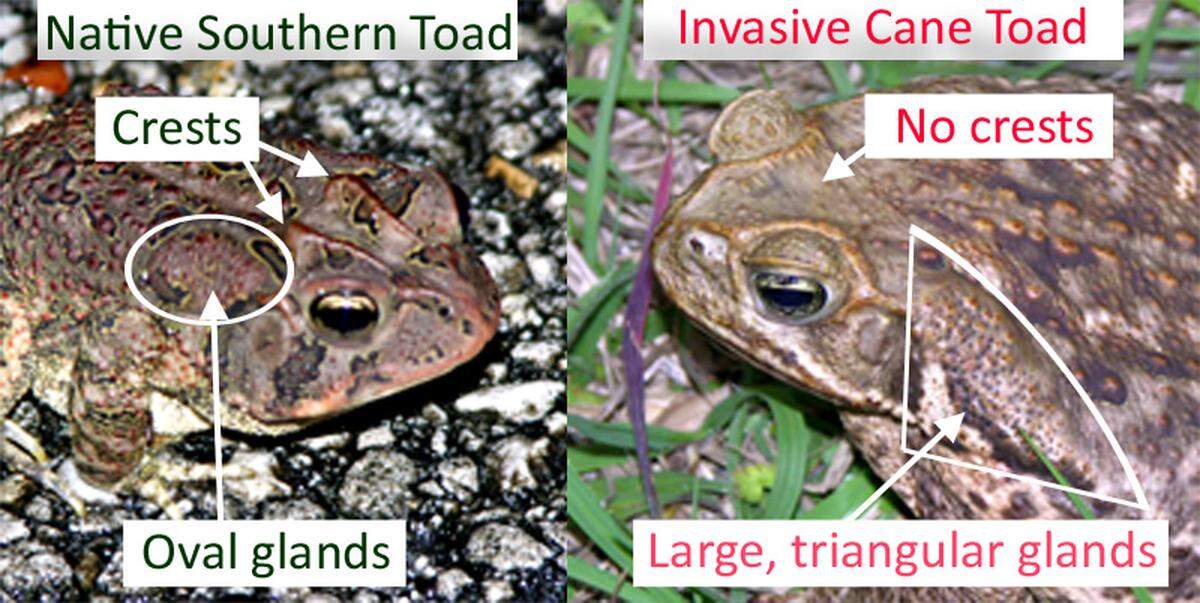
Though these scary-looking toads are generally harmless to humans, they can be dangerous for pets. The amphibians, which average between 4 and 6 inches but can grow to 9 inches, have large triangular glands behind the eyes that contain a high load of a milky-white toxin that can kill dogs, Kern said. If a dog bites or licks the slow-moving frog and gets some of the poison in its mouth, it can suffer convulsions, loss of coordination and cardiac arrest.
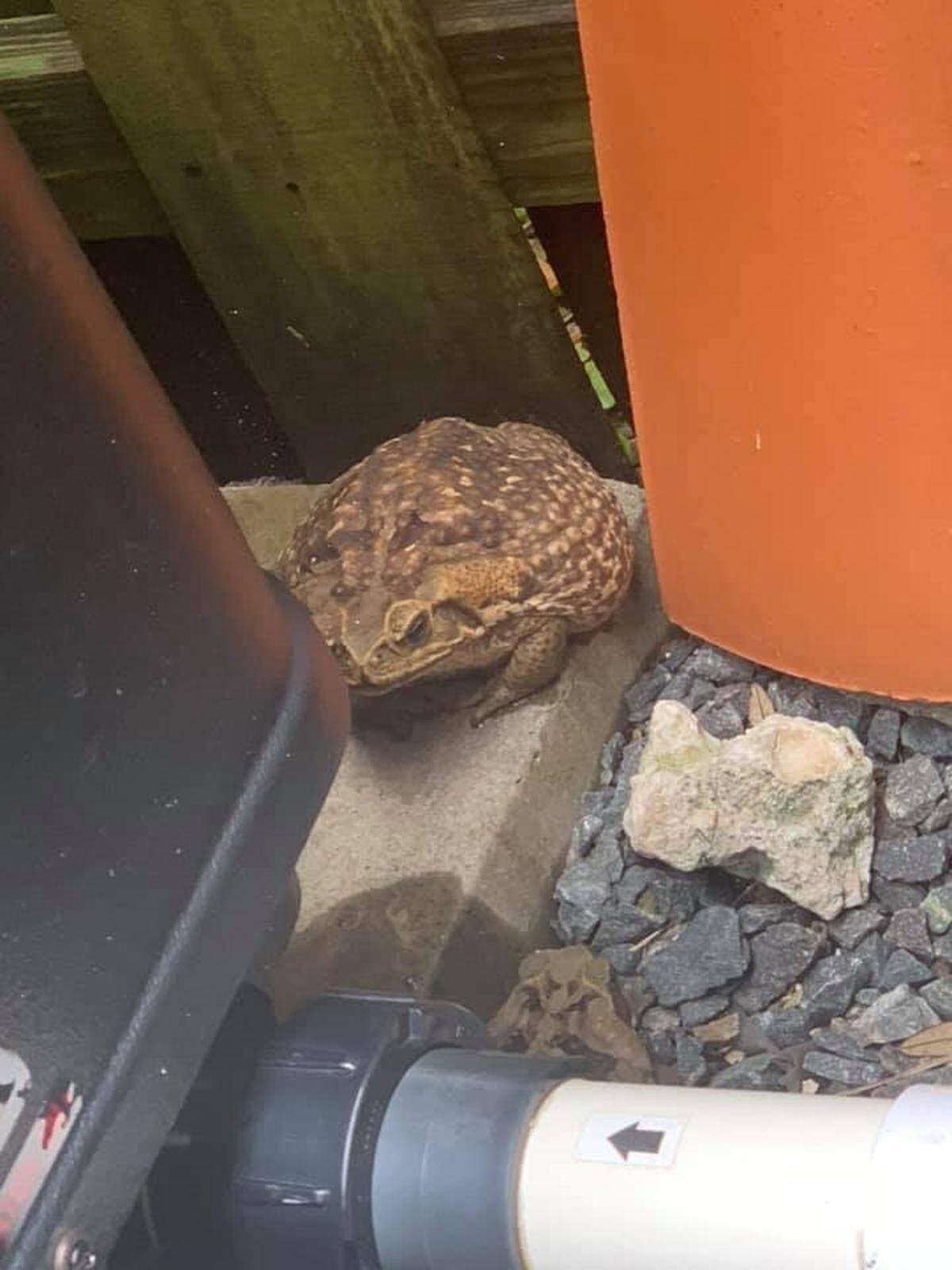
During the rainy season, when the toads are breeding and are generally more active, dog owners must watch out for signs of poisoning: excessive drooling, red gums, vomiting, disorientation, circling, stumbling and falling, and seizures.
If poisoning is suspected, use a hose to wash the dog’s mouth for several minutes, running water through one side of the mouth and out the other, taking care not to flush water down the throat, which could further spread the poison. The advice is to get to a vet as quickly as possible.
The cane toads can also cause environmental damage. They have no predators and eat pretty much anything: small lizards, snakes, bugs, and even smaller native frogs. Cane toads also compete with native frogs for food and breeding areas.
And much like other invasive species such as the voracious Burmese python, cane toads do well in Central and South Florida’s urban environments. With hundreds of man-made lakes and canals, and plenty of bugs year-round, this is paradise for them.
“We have dozens out on the street at night. They are not even scared of people anymore, it’s like there are gangs of them out this year,” said Elizabeth Bonilla, who lives near a canal in Homestead. Her technique for getting them out of her backyard is to stomp and chase them out until they leave. “I can’t bring myself to kill them.”
The Rhinella marina, as the toad is called, is yet another invasive species that was introduced to South Florida by people — but with a misguided purpose. Native to mainland Central America and parts of South America, the toad was introduced in the 1930s in several sugarcane-growing regions, including Hawaii, Australia and South Florida, as a way to control pests. Farmers believed the toads would benefit crops by eating beetles that killed cane plants.
But the plan backfired. As it turned out, cane toads can’t jump very high, so they couldn’t eat the beetles that lived in the upper stalks of the plants. Instead, they ate pretty much everything else, including bird’s eggs and small mammals. And their poisonous glands ensured that would-be predators stayed away.
In Australia, the toads have been especially problematic, having spread widely and establishing large populations in isolated areas where they have wiped out native species of frogs. The Australian government has spent millions on programs to control the invaders.
Wildlife managers in South Florida encourage landowners to kill the invasive cane toads on their property whenever possible, so it’s important to correctly identify them and not confuse them with native southern toads, which are harmless. Southern toads have ridges on their heads and smaller, oval glands. If the toad is more than four inches long and has puffed-up, triangular bags in the area above each shoulder and behind the eyes, it’s likely a cane toad.
Because the toads are not protected by conservation laws, they can be killed, but there’s a catch: Even the poisonous amphibians are protected by Florida’s anti-cruelty law. The recommended method of humanely euthanizing cane toads is to rub a small amount of numbing agent like Orajel on their bellies, placing them in a plastic bag and freezing them for 48 hours, Kern said. After that, the toads can be disposed of. The Florida Fish and Wildlife Conservation Commission refers to instructional videos by Steve Johnson, a wildlife ecologist and cane toad expert at the University of Florida, who also recommends a topical anesthetic followed by the freezing method.
Guidelines from the American Veterinary Medical Association do not recommend this method, though the advice is meant to provide direction for veterinarians and is not intended to instruct the general public on how to humanely kill toads.
“Hypothermia is considered an unacceptable method of euthanasia for amphibians and reptiles (unless animals are less than 4g) because it does not result in immediate and irreversible death,” the association said in an emailed statement. Acceptable methods include inhaled anesthetics, injections, immersion and some physical methods, the association added.
If dabbing lidocaine on a toad’s belly sounds gross, a toad removal company can do the job.
“That’s a business that will probably do well this season,” Kern said.
And homeowners can do a few things to make their backyards less appealing to these monsters: Keep grass short and clear away brush piles and clutter, clean up food scraps from pet bowls or outdoor gills, keep pet food indoors and install bug lights that keep flying insects away, reducing the toads’ main food source.
Update: This story has been updated to reflect the American Veterinary Medical Association’s guidelines on how to humanely euthanize an amphibian.
This story was originally published June 3, 2020 at 6:00 AM.
.jpg)