South Florida water managers race to lower canals, brace for heavy rain
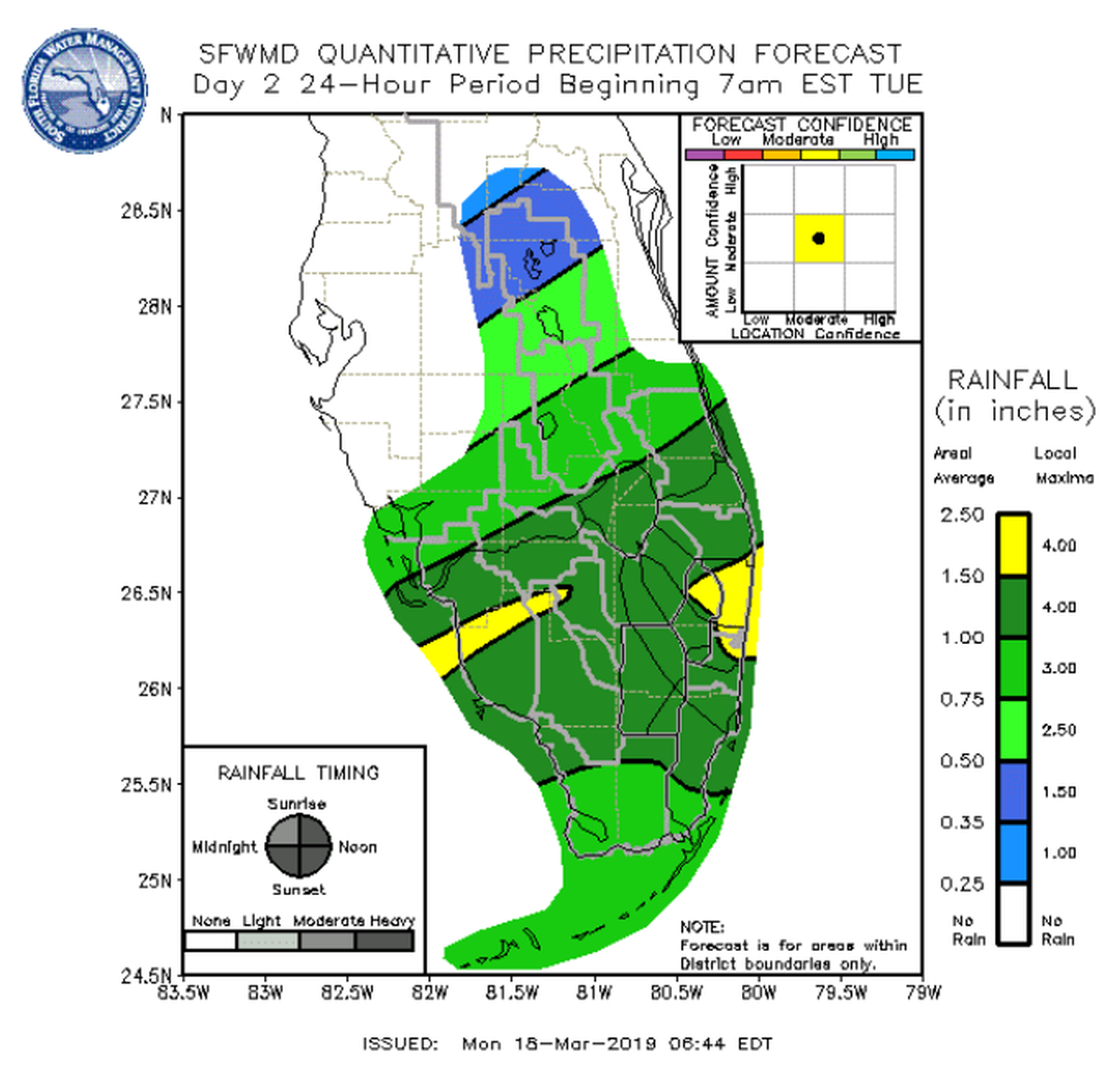
South Florida water managers scrambled to lower canals Monday ahead of heavy rain expected to begin after nightfall and continue much of Tuesday.
While much of the coast will likely see two inches of rain, some areas could get pounded with six or more inches, said National Weather Service spokesman Rob Molleda. The service has not issued any flood advisories, but that could change, he said.
“Right now, it appears the more likely scenario area-wide will be some ponding in highly urbanized or poorly drained areas,” Molleda said.
With sprawling water conservation areas west of Miami-Dade and Broward counties nearly full, the South Florida Water Management District began lowering canals to make room for stormwater. Lake Okeechobee has about a 50 percent chance of getting two or more inches of rain, possibly undoing weeks of flushing by the U.S. Army Corps of Engineers.
The Corps has been trying to lower lake levels below normal this year in advance of the rainy season and at the request of the state’s new governor to avoid having to release polluted lake water to coastal rivers and estuaries as summer rains arrive. Levels much higher than 15.5 feet can begin to threaten the lake’s fragile dike, now in the middle of a $1.7 billion repair job.
Last year’s releases helped fuel widespread blue green algae blooms that fouled parts of the Caloosahatchee River with toxic cyanobacteria and exacerbated a saltwater red tide in the Gulf of Mexico that left beaches littered with dead sea life.
On Monday, the lake stood at 12.18 feet, nearly a half foot lower than the 12.5-foot range typically preferred for the start of the wet season but well short of the 10.5-foot limit allowed on June 1.
While keeping the lake low for a prolonged period could damage marshes along the western edge of the lake, a dip after years of high levels could actually benefit the marshy fringes inhabited by endangered snail kites and prime fishing grounds for bass anglers. This year’s push by Gov. Ron DeSantis and U.S. Rep. Brian Mast, a Treasure Coast Republican, has drawn criticism from farmers and nearby utilities who worry about running out of water.
This story was originally published March 18, 2019 at 6:02 PM.