
How can you get a $40-an-hour job? Workers pursue high-demand positions
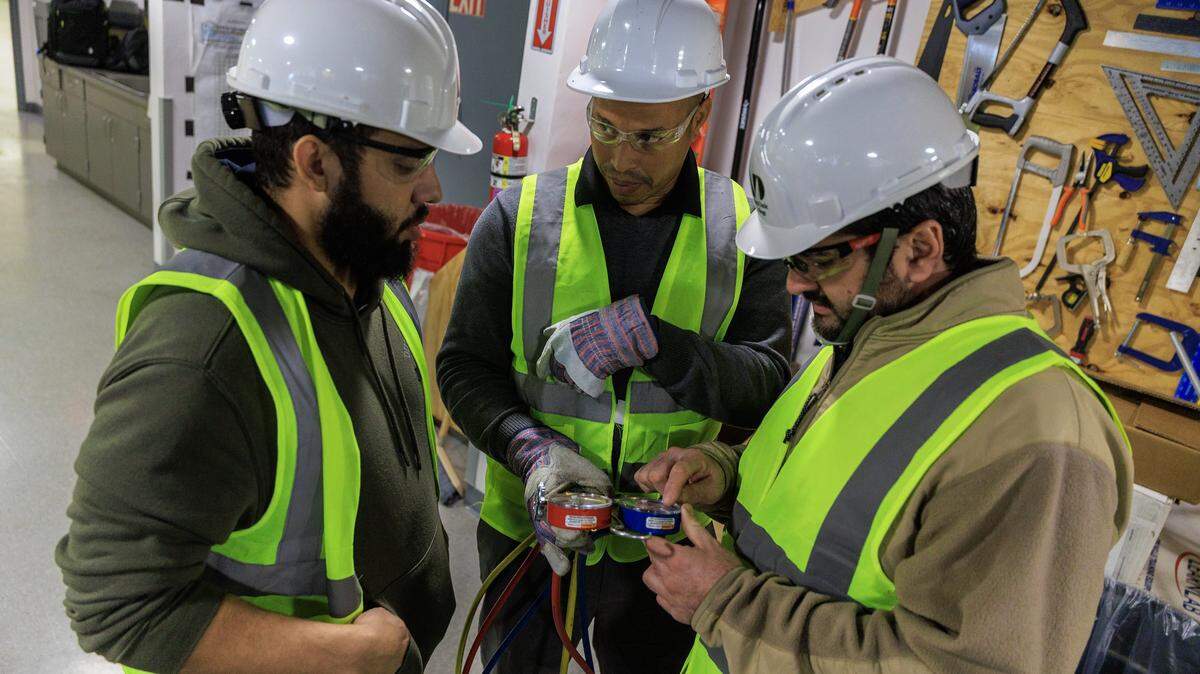
Giordano García Rosado’s workday doesn’t end at the end of the day.
He works all day as a handyman and takes night classes at the north campus of Miami Dade College. Wearing his construction worker hard hat and neon green vest, the 23-year-old from Cuba joins his classmates to earn certification as a refrigeration, heating, ventilation, and air conditioning technician.
The goal is to increase pay or move up the career ladder.
“I want to start my own business,” said García Rosado, who works in a building in Sunny Isles Beach.
“I had the basic knowledge more or less, but here you get deeper into the world of air conditioning, the failures, because before I really only knew how to clean the air units,” García Rosado said.
The AC technician course is part of the vocational programs offered by the School of Continuing Education and Professional Development at Miami Dade College.
Continuing education allows students to earn a degree or certification in a short time. Another advantage: Many courses are offered in English and Spanish and include hands-on training and demonstrations that prepare students for trades in industries that pay well.
“These types of jobs are increasingly essential in Florida,” said Soraya Galán, community outreach and strategic partnerships manager at MDC.
Galán points to the growing demand for workers in Florida’s construction industry, both to build more housing and to improve and create new infrastructure.
By the end of 2025, 439,000 new workers were needed to meet demand in the construction industry, according to the Associated Builders and Contractors. Full-time construction workers in the Miami metropolitan area earn a median of $47,452 a year.
Wages and certifications
Skilled specialists such as HVAC/R technicians can earn between $18 and $40 per hour in Miami-Dade County, depending on experience and certifications.
“The limit is set by the employee, because one of the most important things in this industry is punctuality and honesty,” said instructor Omar Silva.
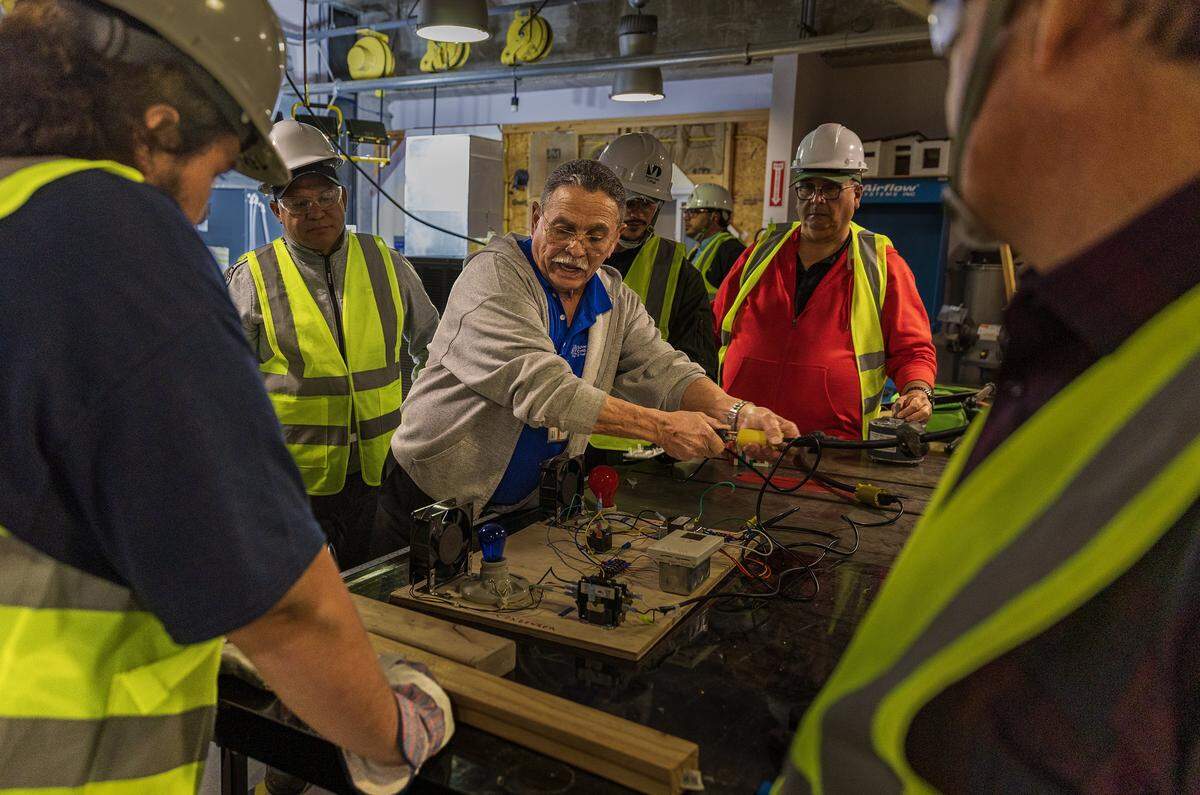
To enroll in the HVAC/R technician program, students must be at least 18 years old and have a high school diploma or equivalent, such as a GED.
During class, Silva guides students through the different stations and tools in the lab where they practice at MDC’s north campus. He emphasizes workplace safety measures, which can save lives on any construction site.
These measures are primary requirements to obtain certification from the Occupational Safety and Health Administration, a federal agency of the Department of Labor that ensures the education and training necessary to guarantee safety in workplaces.
OSHA and EPA certifications
In addition to OSHA standards, course participants develop nationally certified technical skills through the National Center for Construction Education and Research, and obtain EPA 608 certification from the Environmental Protection Agency, which allows them to handle refrigerants legally and responsibly without harming the environment.
“OSHA graduates gain the ability to detect errors and hazards,” Silva said, noting that having certifications affects both finding work and raising pay rates.
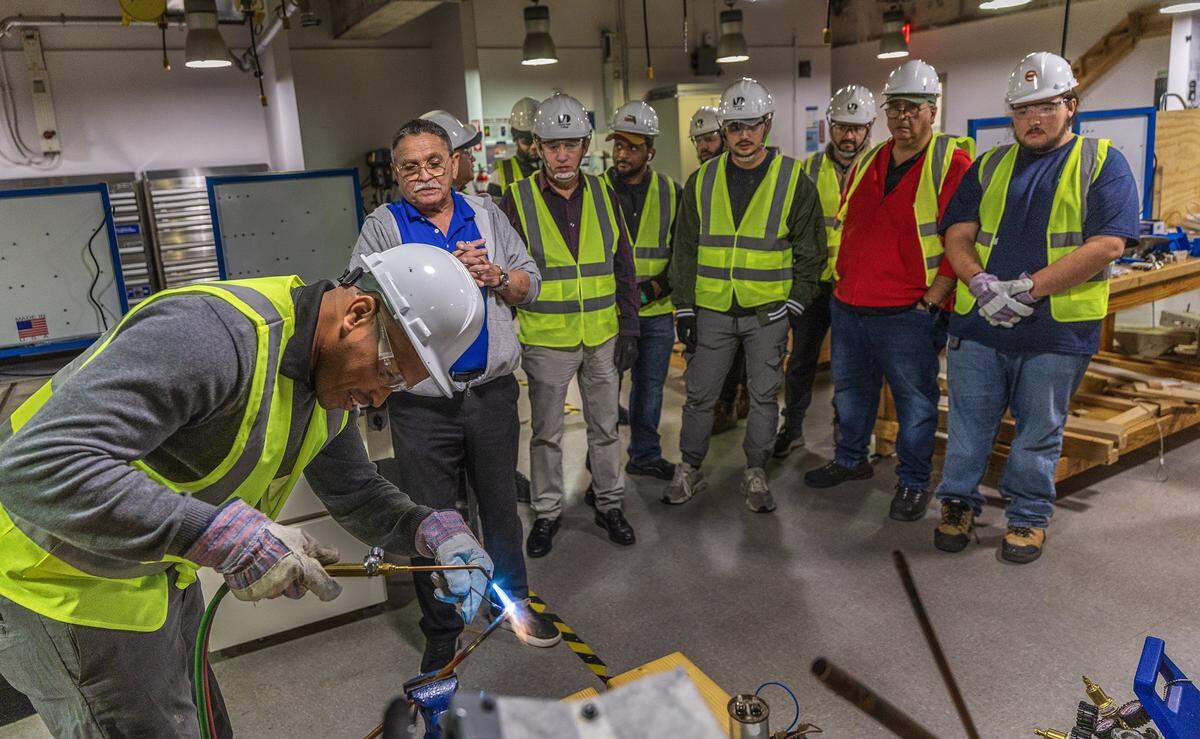
To obtain OSHA certification students must complete 10 hours of study, and for the EPA certification they must complete 122 hours of study.
“It’s job-oriented training, aligned with industry standards and the real needs of employers in the residential and commercial sectors,” Galán said.
Many students in this course were referred by Hispanic Unity of Florida, a nonprofit that helps immigrants find jobs, housing, and start their businesses. Hispanic Unity of Florida has an agreement with MDC to guide them in their professional goals.
For many of them the goal is to gain greater independence and work for themselves.
Jaime Milla, born in Peru, said his goal in this course was to get construction certification, OSHA, and EPA credentials.
“That lets me buy the refrigerants to recharge air conditioners,” he explained, noting that he could work for someone who already had those certifications, but having them himself puts him on another level.
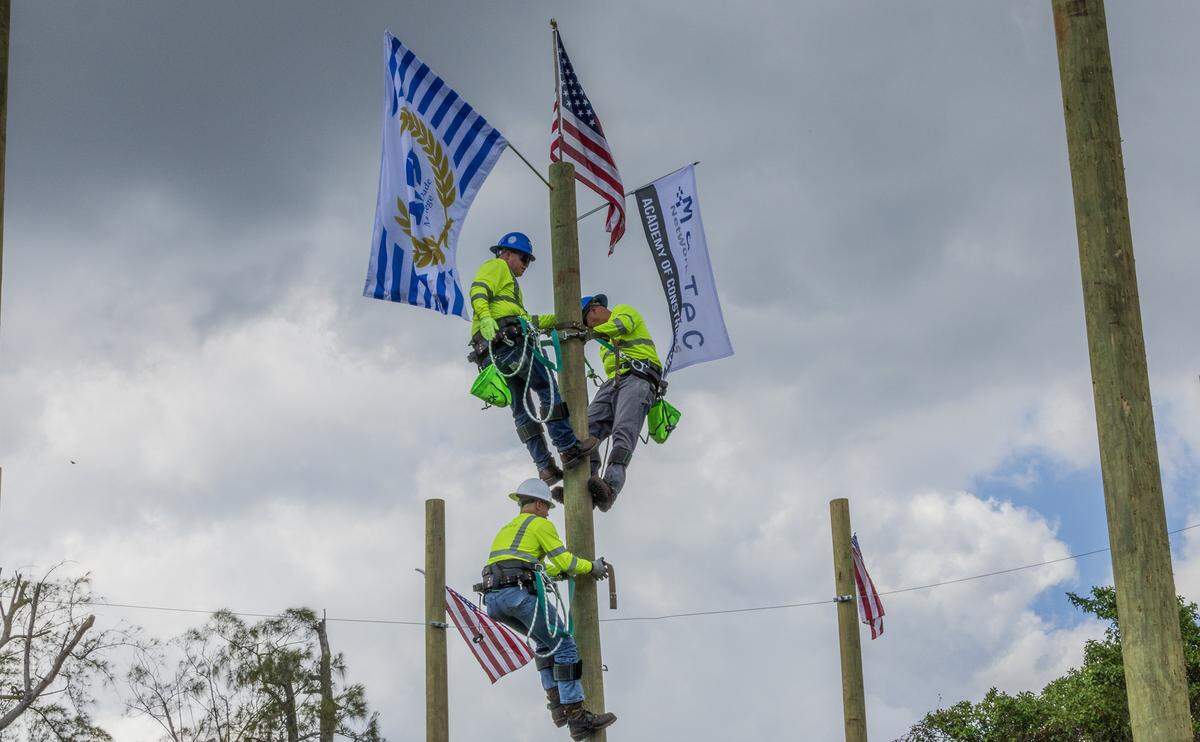
The School of Continuing Education and Professional Development at Miami Dade College also has a broadband and fiber optic technician program, which trains those who install and repair high-speed internet networks.
For this program, and especially for the lab that houses the latest technology — also located on MDC’s north campus — they partnered with the company MasTec. Graduates, who can earn $50,000 and up, can apply for jobs at MasTec.
