‘Respectable,’ but not enough: Miami teachers weigh contract with small raises
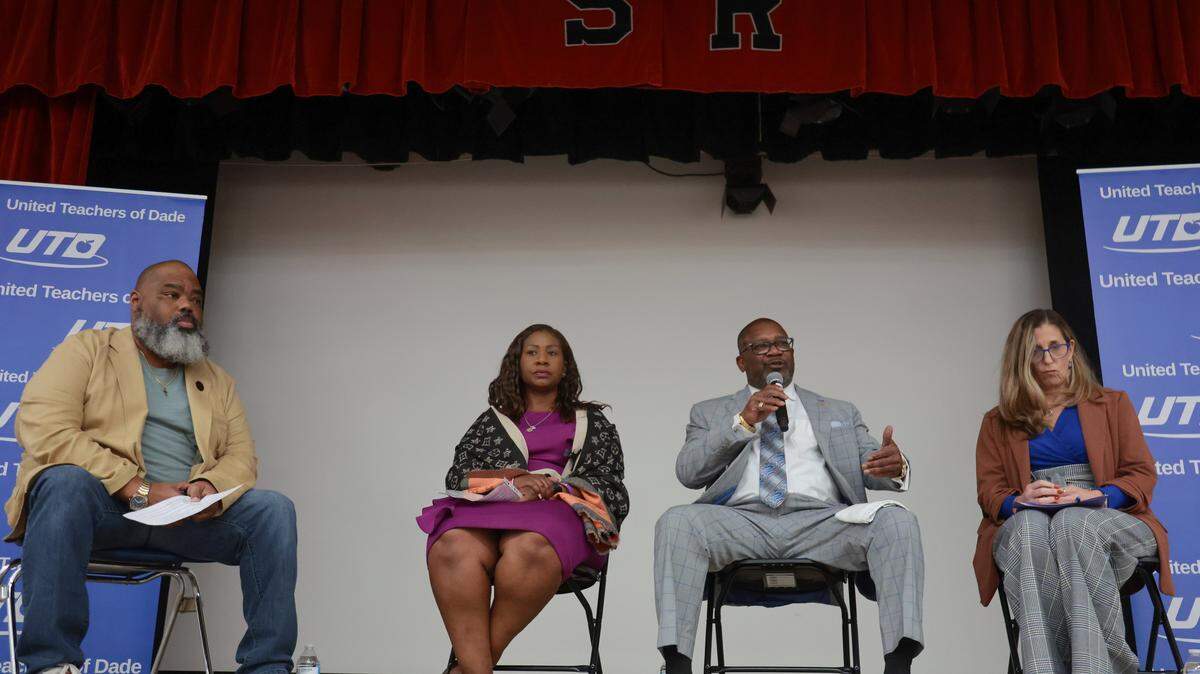
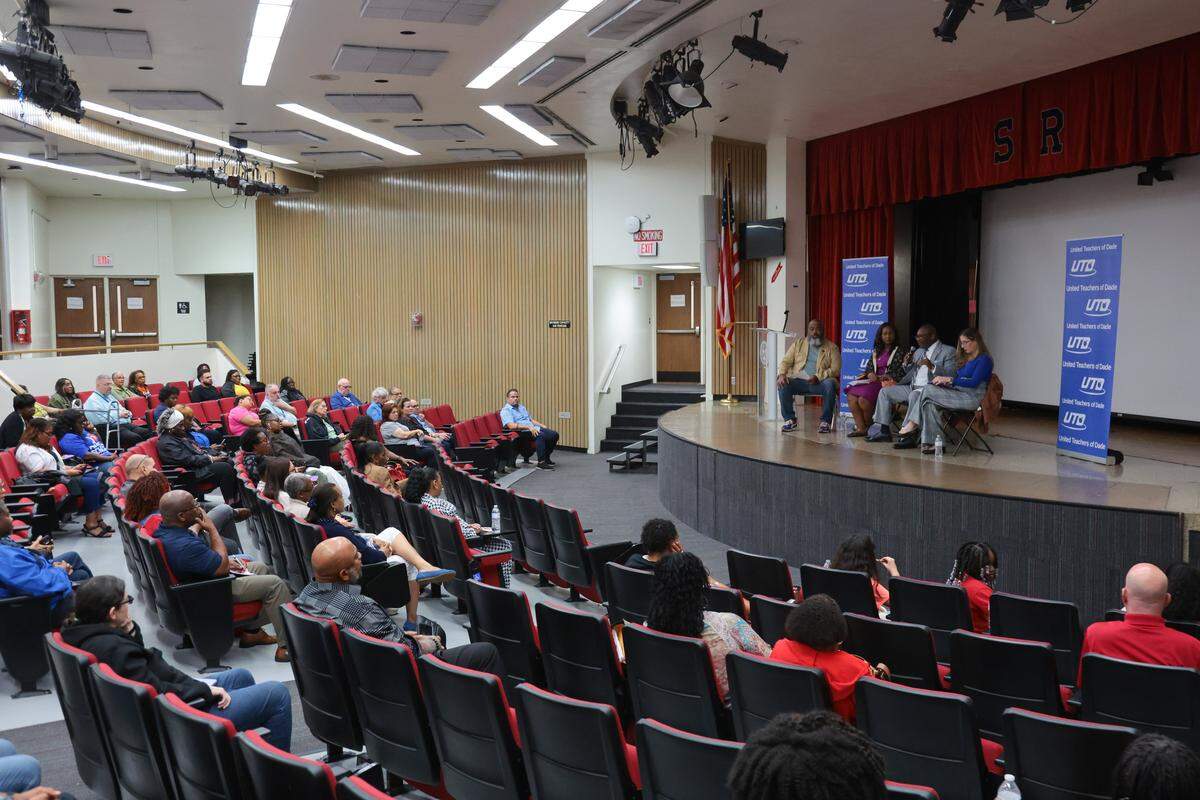
About 65 teachers gathered in the auditorium at Miami Southridge Senior High on Wednesday, where former state senator Dwight Bullard moderated a conversation with leaders of United Teachers of Dade — the state’s largest teachers union, representing more than 25,000 educators and school staff.
The Town Hall offered an opportunity to hear from their union leadership ahead of a contract ratification vote taking place on Thursday. Bargaining this year was delayed because the legislative session took longer than normal, meaning the district was unable to bargain until it had a clear idea of its budget coming from Tallahassee.
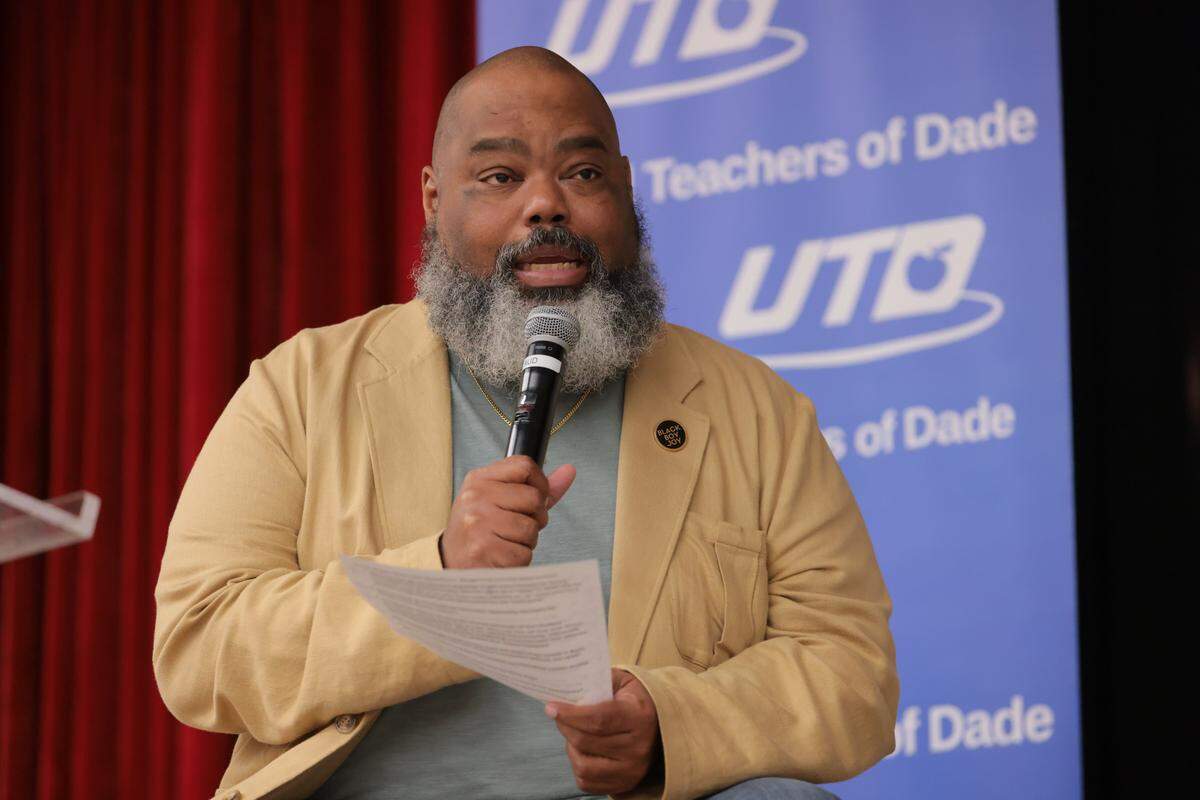
“I know it doesn’t give you exactly what you deserve, but I think it’s respectable,” said Antonio White, the union president. He urged the teachers to continue encouraging their colleagues to support the union.
“We are the only thing standing between straight anarchy,” he said, as teachers nodded in agreement.
Small raises and moderate bonuses
The tentative agreement the union reached with the school district gives teachers a 3.26 percent increase to their current referendum supplement, a property tax–funded bonus added to teacher pay since 2018. It will be up for renewal through a vote in 2026.
Depending on whether a teacher is on performance pay with an “effective” or “highly effective” rating, they will also get a 0.7 percent and 0.9 percent increase on their base pay, respectively.
For paraprofessionals and part-time teachers, they will see a 2.25 percent base pay increase.
There are also changes to the supplemental pay for teachers and school support staff who work with special needs students. If a teacher at a Special Education Center works with at least 90 percent special needs students, they will get a $2,500 supplement. General education teachers with at least 35 percent special needs students get $2,000 extra.
The health plan for teachers is offered with a $0 premium. There are three healthcare plans for teachers to choose from, and this year, there is an added program called “Lantern,” which covers surgeries and procedures.
There are some cost increases for teachers who have spouses on their coverage, and those teachers have the option to switch health plans to avoid increases.
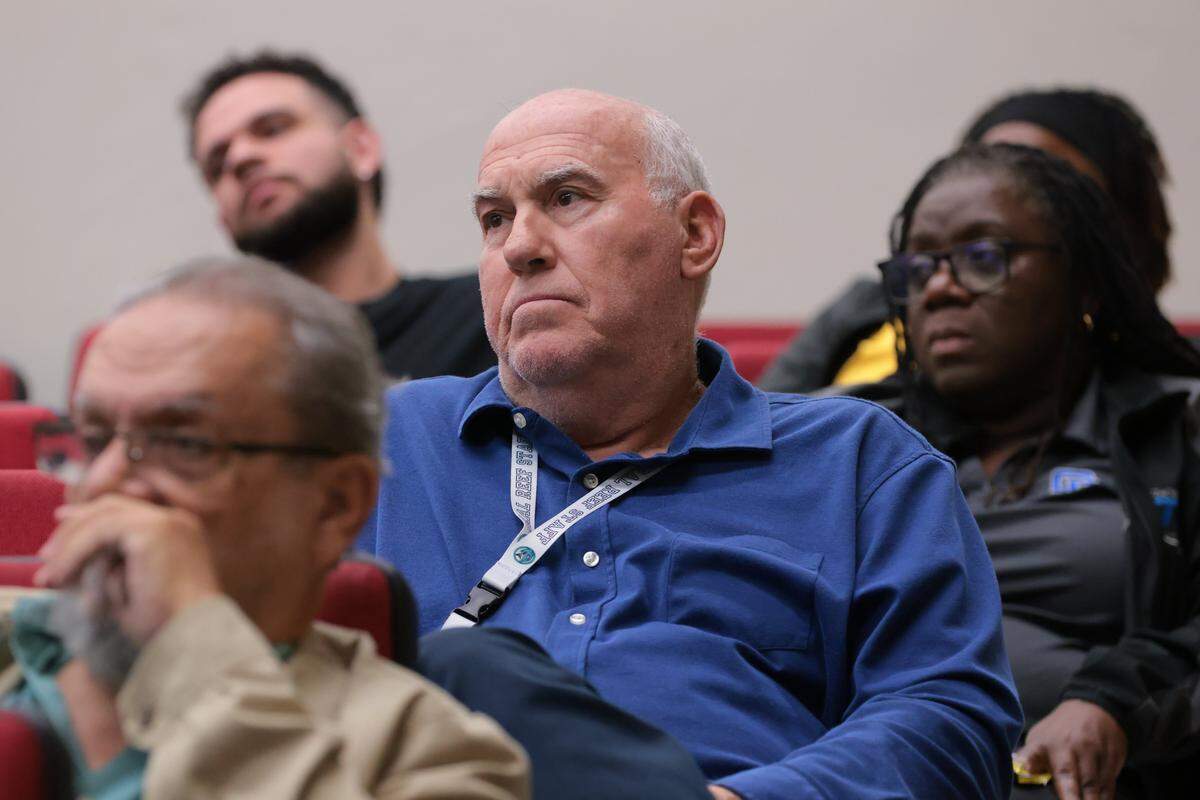
Jovany Corzo, a 7th-grade physical science teacher at Arvida Middle who attended the town hall, said his takeaway from the meeting was that there is a serious lack of funding for education.
“We were unable to secure a contract to pay something meaningful given the prices of gas and groceries,” said Corzo.
“I know that it’s been difficult for people,” he said of his fellow teachers, who he says struggle to make ends meet.
Educators feel ‘under attack’
The recurrent theme of the event was that public schools are “under attack” through taxpayer-funded private school vouchers and the new expansion of charter schools, some of which are now going to be able to occupy district property, and that the union is working to protect fair pay and working conditions.
“What they’re doing is they’re trying to seize public property and put it in the hands of private vendors, that’s why I call it a hostile takeover of public goods,” said White, referring to the expansion of Schools of Hope, a law that allows approved charter school companies to move into areas with underperforming schools. The most recent expansion of the law allows charter school operators to co-locate in district schools.
Belinda Rowe, a teacher at the Brucie Ball Educational Center, a special education school in Kendall, said that for her, the most pressing issue is declining enrollment, which is an issue for the entire district. Between this year and last, Miami-Dade schools lost 14,000 students.
Rowe’s school went from around 400–500 students last year to 350 this year, she said. Rowe says she is looking at teachers who may get “surplused,” or moved to another school to maintain student and teacher ratios.
During the meeting, the union reminded teachers that although there will not be layoffs, some teachers may be moved to other schools.
“This may be a hardship,” said Rowe, especially if a teacher is moved to a school far away from where they live.
The contract also calls out “academic freedom” and spells out the discipline process for seriously disruptive students.
As for academic freedom, the contract affirms teachers’ ability to “freely pursue truth and knowledge.” The contract states that teachers “may introduce political, religious, or other controversial material whenever, in teachers’ professional judgment, it is appropriate to the instructional objectives and the age level of the students,” within the confines of state law.
This comes after teachers have been working in an increasingly structured environment where some teachers have stated that they do not feel comfortable expressing their beliefs.
“If they talk about us being indoctrinators, what they’re really telling us is that’s what they want to do. All of our systems were designed by the same people in power now,” said White, to a crowd of teachers that nodded their heads and audibly agreed.
The contract also clarifies issues related to cell phone policy and discipline, including the teacher’s ability to have “disobedient, disrespectful, violent, abusive, uncontrollable, or disruptive” students removed. Union leaders also said they plan to look into creating a policy on artificial intelligence, as well as extending the lunch period.
If the contract is voted favorably on Thursday, the tentative contract will now go before the Miami-Dade School Board for ratification at its next meeting — the final step before the pay raises and policy changes take effect.
This story was originally published November 6, 2025 at 3:35 PM.