Why Miami-Dade public schools have 13,000 fewer students this year
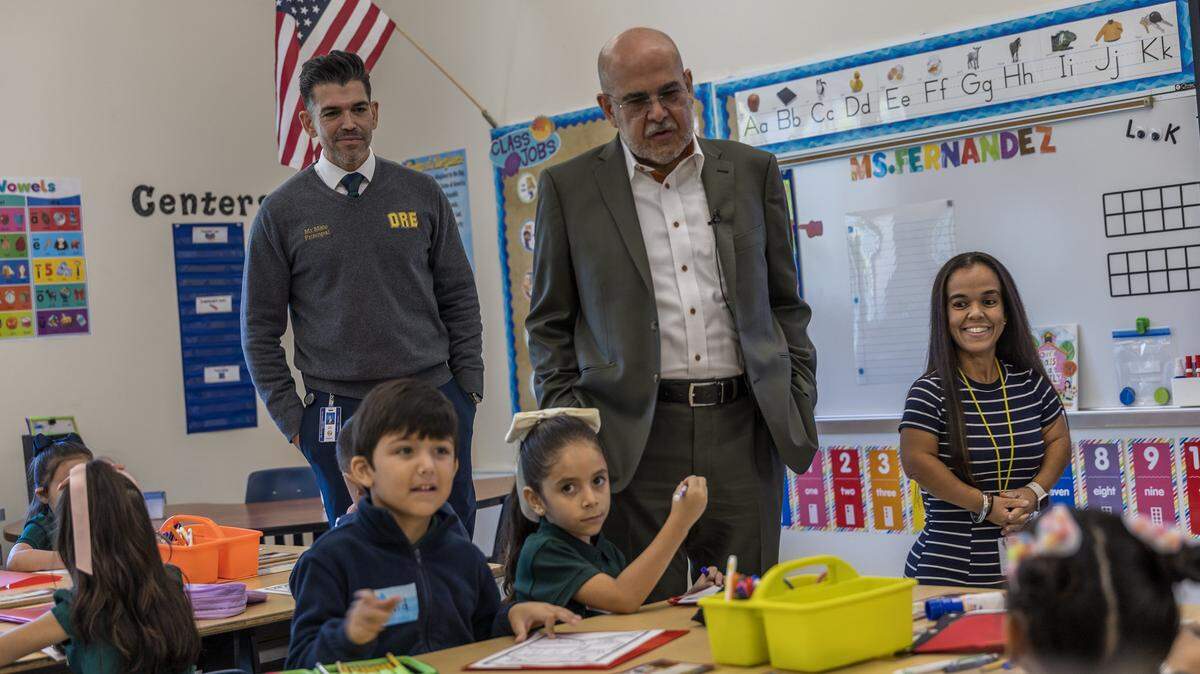
Initial numbers show 13,059 fewer students attending Miami-Dade County Public Schools than last year — a 4% decrease in enrollment from the same time in 2024.
On Wednesday, the Superintendent Jose Dotres said the sharp attendance decline (from 326,279 last year to 313,220) was a result of the significant decrease in the number of newly arriving immigrants from other countries, declining birth rates, and potentially families leaving for more affordable places as Miami-Dade becomes increasingly expensive.
According to the district’s data, this year’s numbers tell a story of immigrant families avoiding Florida altogether: the number of newly arrived students from abroad fell by more than 5,300 this year, plummeting from 7,193 last year to just 1,847 this year.
This year, there were also 2,000 fewer Kindergarten students (attributed to declining birth rates) and 647 fewer students because they withdrew from public schools to enroll in private schools.
But that still leaves more than 5,000 missing students the district can’t account for.
Immigration advocates, as well as a school board member, say the decline in enrollment is also partially a result of families who are afraid to send their children to school or who have self-deported back to their own country because of the immigration crackdown.
The ending of humanitarian parole programs and an increase in immigration enforcement have made South Florida a much less attractive destination for the immigrant groups who have historically made a home here, like Haitians, Venezuelans, Cubans, and Nicaraguans.
The district says it has ramped up phone calls and check-ins with parents whose children never arrived on campus in the first days of school. In some cases, according to Jaquelyn Calzadilla, a school district spokesperson, they have even sent people to knock on doors.
Superintendent Jose Dotres said the outreach, conducted by both district staff and teachers, is ongoing.
“We want to understand why they are not coming to school — did they move, are they experiencing hardship?” he said.
“In many instances, there is nobody home, and people have moved,” said Calzadilla, of the home visits.
“We don’t know what we don’t know,” said Calzadilla.
At Wednesday’s meeting, Dotres sought to dispel what he called myths about attendance – that immigration crackdowns and the lure of private schools caused the shift.
Dotres said their outreach didn’t indicate that parents who left the school system did so out of fear of being detained or deported.
“We did not find a pattern of fear of students not coming to schools,” said the superintendent.
School board member Steve Gallon, who serves a district with many students from Haiti, tells a different story. He says he has been hearing anecdotally that enrollment is down in some parts of his district due to immigrant parents keeping their children away from schools.
Some immigration advocates also say they have encountered families that fear sending their children to school.
One long-time advocate for migrant and immigrant students in South Dade told the Miami Herald that she has spoken to families who are now living in the shadows, not sending kids to school or even fearing tasks like going grocery shopping. She declined to use her name because she fears repercussions.
“As much as schools are trying to be protective, families are still afraid,” said the advocate.
On Wednesday, the superintendent also rejected the idea that students are leaving en masse for private schools. District data supported his assessment. According to the data, 647 public school students formally withdrew to attend private schools, a fraction of the 13,000 missing. The state voucher program has yet to release its data, so the full number of new Miami-Dade students that received them is still unknown.
The lower enrollment carries financial consequences for the school district. Because state funding is tied to enrollment, Miami-Dade now faces a drop in dollars — a shortfall that could eventually lead to merging or reconfiguring under-enrolled schools. The Attendance Boundary Committee, which guides those decisions, will spend months reviewing options before a decision is made.
For now, Dotres has promised no teacher layoffs. But he warned of “tough decisions” ahead: reducing hourly workers, minimizing overtime, and cutting back on travel. The district will also dip into reserve funds to plug budget gaps.
Miami-Dade has hired a demographer to understand which areas of Miami-Dade are impacted most by drops in attendance and launched new recruitment and retention efforts.
This story was originally published August 27, 2025 at 6:36 PM.