Where did the students go? Fear, migration fuel steep enrollment drop at Miami schools
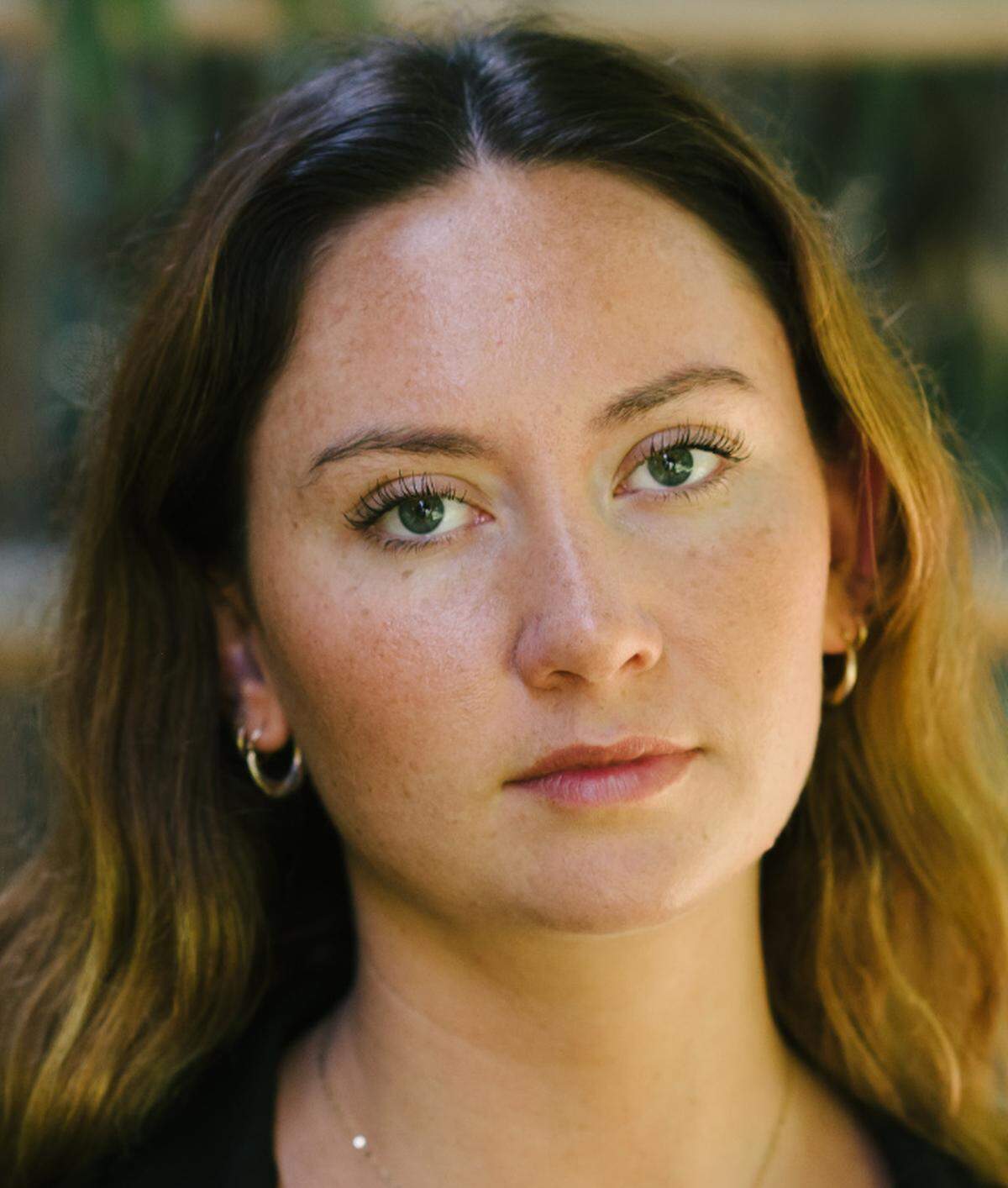
For the past four years, Vanessa has escorted children and their families across the street to Shenandoah Elementary in Little Havana, ensuring they arrive at school safely. But when school started this fall, the crossing guard immediately noticed something was different.
Beginning last school year, immigrant parents told her they were leaving the United States for their home country. Others said they were too afraid to bring their children to school. On the first day, she watched families turn around after spotting police cars parked near the school. Some never came back, she said.
“I’ve had parents tell me they’re not bringing the kids anymore,” said Vanessa. She declined to use her full name because she worries about her own immigration status. She says her daughter came home from school multiple times to tell her that friends had suddenly left for their countries of origin.
Miami-Dade County Public Schools has seen enrollment dips before. But this year’s drop — from 326,279 students last fall to 313,220 now — is sharper than expected. District officials had projected about 5,000 fewer students; instead, more than 13,000 disappeared from classrooms.
The most troubling number: after calling more than 23,000 families whose children were registered but didn’t show up, the district said they still have been unable to locate about 3,700 students.
Immigrant families account for the lion’s share of the decline. Miami-Dade typically gains between 7,000 and 8,000 new arrivals from other countries each year, but this fall, only 1,800 immigrant students enrolled, according to district data.
The number of English-language learners — a group that had been growing since the pandemic — dropped by nearly 5,000.
Those figures together with the thousands of students the district still can’t find and dozens of interviews the Miami Herald conducted with parents, advocates, teachers and district staff members, suggest that aside from fewer immigrant students arriving this year, many immigrant families already living here are making the difficult choice of either returning to their home country, leaving the state or keeping their children home from school out of fear of immigration enforcement separating their family.
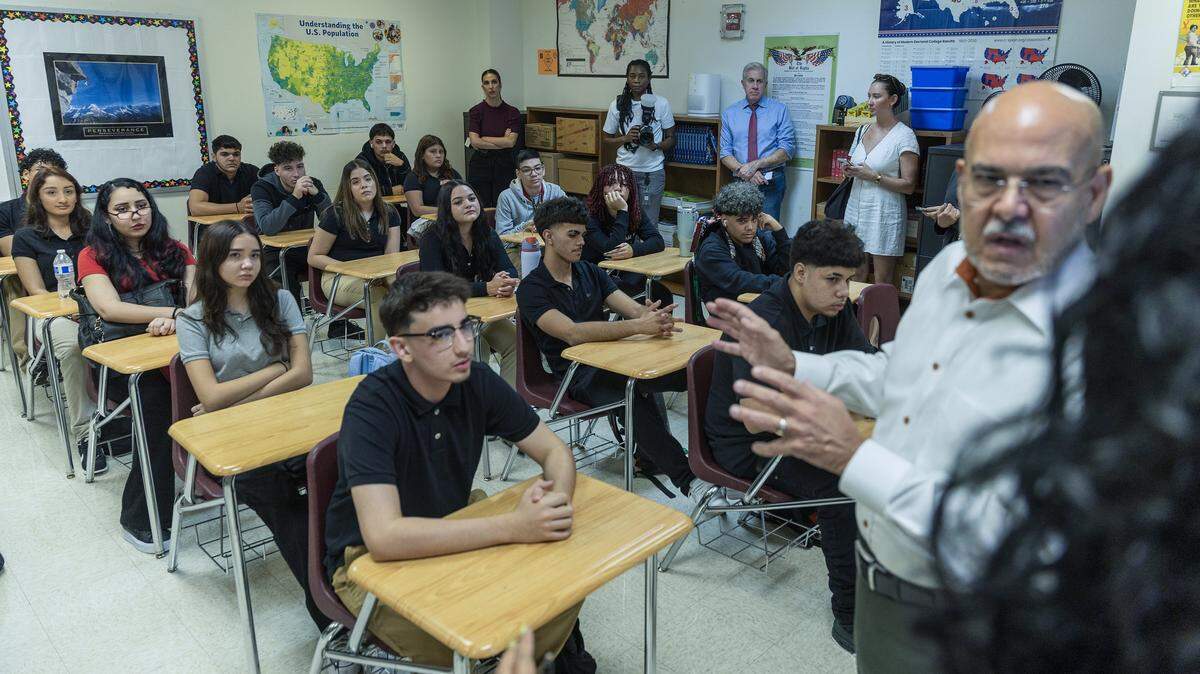
Miami-Dade schools are now grappling with the fallout. Some families won’t enroll their children because they fear encountering immigration authorities at hospitals that administer vaccinations or on the way to or from schools. Some children are struggling in class because of the stress of having loved ones detained by ICE. An atmosphere of fear ripples throughout campuses, educators and community leaders say. Yet few are willing to speak publicly, worried about reprisals.
Decoding the enrollment numbers
Miami-Dade schools superintendent Jose Dotres pointed to a perfect storm of reasons for the drastic decline in enrollment at a press conference two weeks into the school year.
The decrease in new arrivals, he said, accounts for much of the loss. But Dotres also pointed to Miami’s rising cost of living, driving families to less expensive cities, declining birth rates, and transfers to private schools as reasons enrollment tanked this year.
Kindergarten enrollment was down by 2,000 this year, which could be the result of Miami-Dade County’s declining birth rate.
And although census data estimates that population has increased in Miami-Dade between 2020 and 2024, there have also been people leaving the county in large numbers.
More than 130,000 residents left Miami-Dade between 2020 and 2023, according to FIU’s Metropolitan Center.
District data indicates that only about 600 students left for private schools.
Dotres, however, stated at the press conference that there was no evidence that the dip in enrollment had to do with fear among immigrant families to send their children to school.
But that runs counter to what many families, teachers, advocates, district staff and the teachers’ union are saying.
“The fear is real,” said United Teachers of Dade president Antonio White in a conversation with the Miami Herald regarding the impact of the changing immigration climate.
Schools, churches and hospitals had long been protected spaces where immigration agents could not enter. Under President Trump, these spaces became less restricted. A federal lawsuit filed against Immigrations and Customs Enforcement seeks to restore these areas as safe spaces. The National Education Association and American Federation of Teachers, representing a total of nearly 5 million educators and staff, recently signed on to the suit.
School board member Steve Gallon said that educators in the Haitian community told him there are Haitian families in Miami-Dade who are choosing to keep their children at home because they worry bringing their kids to school could jeopardize their safety.
“Clearly, recent enrollment declines in M-DCPS can unquestionably be attributed to recently adopted immigration policies,” said Gallon.
But it is hard to confirm this with data, because it is against the law for the school district to track students’ immigration status. All students, regardless of their country of origin or immigration status are legally entitled to an education.
However, several of the schools that the district has indicated have large numbers of new arrivals from other countries, which they do track, saw large decreases in enrollment between last school year and this year.
Doral’s John I. Smith K-8 Center lost 123 students, dipping from 753 to 630, a 16 percent loss. Sweetwater Elementary School and Coral Terrace Elementary both lost 70 students, about a 15 percent decrease for both schools.
Zora Neal Hurston Elementary saw a 10 percent drop in enrollment. Melrose Elementary and Miami Springs Elementary both lost about 8 percent of their student body this year. In all, more than 350 schools saw a decrease in enrollment, according to district data.
Looking for the missing students
District staff tasked with locating the missing students say families are terrified of being torn apart – either due to a student being detained at school or the parent being detained while the child is in school, leaving the child without a caregiver or under the care of someone other than their parents.
Marjorie Murillo, who has worked with immigrant families at underserved schools in the district for more than three decades, was one of the district employees who tried to track down students who didn’t show up the first days of school. She said many of the people she has reached on the phone tell her they have moved away or are choosing to keep their children home.
She said many told her they were concerned about immigration, despite her efforts to assure them it is safe.
Murillo said she’s been calling families from her personal phone because she gets more pick-ups from a non-school district phone number. Of the 55 families she personally contacted, she estimated about 20 were still in Miami but keeping children home.
Murillo recalled a Cuban grandmother whose grandchildren were terrified to go to school after their father was detained in front of them at their own home by Immigration and Customs Enforcement.
“They don’t want to come to school, they don’t want to do anything, because they are afraid,” said Murillo. The grandmother, a U.S. citizen, is caring for the children.
Florida law says children between 6 and 16 have to go to school regularly, and many parents do not admit to keeping their children home because they worry about repercussions, said Murillo.
“They would lie and say they left because it is against the law [to keep the kids from school],” she said.
Other educators who spoke to the Herald describe parents cutting back on extracurricular activities, avoiding school pick-up and drop-off lines, and even keeping children home to study informally.
Leisy Valdes, a behavioral analyst at Biscayne Beach Elementary School, said that some teachers at the school told her they had students who were not showing up in the first weeks of school because the parents were fearful of immigration crackdowns.
Maria Norton, a speech pathologist at Redwood Elementary School who volunteers with the Parent Teacher Association, said she noticed that many students in the English as a Second Language or ESL classes are often getting picked up from school early by parents who are fearful of waiting in the long lines of cars when school is dismissed.
Family events that once drew dozens of immigrant parents to school cafeterias — math nights where they play Uno, reading nights and cultural celebrations — have dwindled or stopped.
Before, between 75 and 100 families would show up at Redwood Elementary’s cafeteria in the evenings for these family activities, such as Mexican Lotería Night, according to Norton. Now, less than two dozen families show up.
Norton also said that beginning last year some teachers at the school received messages from parents through the communication tool where parents said they are not bringing children to school because they are afraid “immigration would come and they would be taken.”
There have been no instances of immigration officials detaining or arresting a student in any Miami-Dade Public School, according to the district.
The decline in enrollment has consequences beyond empty classrooms – fewer students mean fewer dollars for a school system already stretched. Miami-Dade schools are funded on a per student basis, and fewer overall children enrolled means millions of dollars less to maintain school facilities and fewer students to fill out specialty programs like arts and magnet schools.
Declining enrollment means the district may need to shuffle schools, students, or teachers to ensure each school is well attended, and the student-teacher ratios are well-balanced. Jose Dotres, the superintendent of Miami-Dade schools, says he is not going to hire any new teachers this year.
“We are going to have to make some tough decisions,” said Dotres, the superintendent of schools. But he made the assurance that he would not make any cuts that impact the core mission.
But with thousands of children still unaccounted for, the district’s enrollment crisis is no longer just about demographics or economics. For many educators, it is a sign of how deeply fear is reshaping Miami-Dade’s immigrant communities.
“Even if there is one child not being sent to school due to the anxiety and fear of their parents, that is one child too many,” Gallon said.
This story was originally published September 13, 2025 at 4:30 AM.