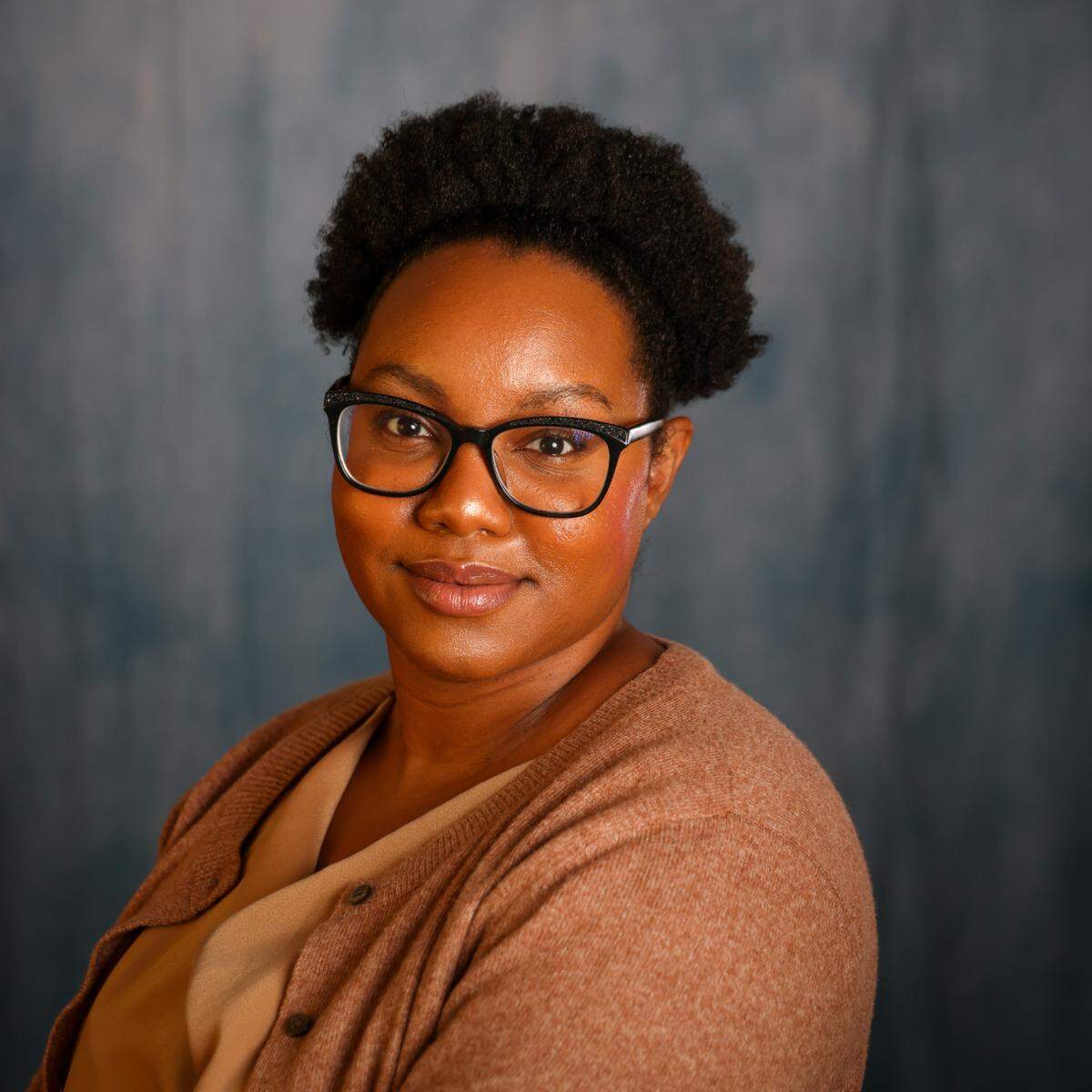
‘That was our place’: Miami author teaches history of Little Haiti in children’s book
Eunice Flowers has vivid memories of being taught about the Civil Rights Movement, learning about Rosa Parks, Martin Luther King Jr. and the Black Panther Party.
“When I was a child, we were taught to be proud to be Black,” said the Miami native who was born in Little Haiti. She recalled having conversations about history with her uncle and how her parents instilled in her the importance of knowing Black history.
Now at 41, Flowers said that she tries to do the same for her children as they navigate a world — especially since she is concerned that they aren’t being taught Black history the way she believes they need. She’s particularly concerned that they — and other kids in Miami — aren’t learning the Black history that surrounds them.
RELATED: ‘I feel more seen here’: Black history is central to this microschool in Overtown
Flowers decided to create Maya and Xavier’s Adventures, a book series that chronicles elementary school children as they visit historically significant sites in Miami’s Black history. The first book in the series, “Maya and Xavier’s Adventures in Little Haiti,” follow the children Maya and Xavier as they visit the Little Haiti Cultural Center and the The Toussaint L’Ouverture Monument.
Those two destinations are among the few remaining symbols of Little Haiti’s identity, which has undergone gentrification in recent years. “I want to preserve that,” she said. “The fact that that’s where we were made to belong, that was our place.”
The children, who are based on Flowers’ two youngest children, Zipporah and the Zion-Khalid, learn different aspects of Haitian culture in the book, which can be purchased on Flowers’ website.
Flowers, who self-publishes, hopes to get the books in the Miami-Dade Public Library System and in Miami-Dade County Public Schools libraries and said she is working with an afterschool program to provide them with books.
RELATED: This Miami native wants to teach Black students things they might not learn in school
Untold Black history in Miami-Dade
Flowers moved to North Miami Beach when she was six years old. She and her family lived in an apartment until they outgrew that space and bought a home in a white neighborhood. It was 1993 and they would be the first Black family in a community that Black residents had dubbed “White Town,” she said.
At the time, Flowers said her family lived next door to an affluent Italian family that did not like having them as neighbors.
“When I say they gave us so much hell, they would call [Department of Children and Families] on us every weekend,” Flowers said. “It was just the craziest things that were happening to us.”
After graduating from Florida State University, Flowers worked as a teacher at Miami Norland Senior High and later opened her own daycare, which she closed as she is hunting down a larger location.
Over the years, she served on the multicultural committee for North Miami Beach and produced elaborate shows for the city. Last year, she organized a Black History Month program that centered on the city’s Black history. It was during that experience that she realized how much local Black history she hadn’t learned. She learned about Washington Park, the city’s historic Black community, and about North Miami Beach resident Barbara Pearson Bryant, who led the charge in desegregating schools in the city.
RELATED: School-desegregation fight in Dade was slow — ‘and hard,’ trailblazing student recalls
“That just blew my mind, because they never talk about these people,” Flower said. “I could be walking down the street or be at Walmart with Miss Barbara, and I wouldn’t know who the lady was.”
That encouraged Flowers to write the book and hopefully educate her children on the environment around them, since she recognizes that they are growing up in a very different moment. She pointed out how teaching about issues related to race has been severely limited in schools, colleges and workplaces in Florida. And now President Trump’s administration is looking to expand those policies nationwide. She worries the erasure of Black history will have serious ramifications.
“If you’re not purposeful in remembering the past, then you’re doomed to repeat it,” Flowers said.
READ: This historian wants you to learn Broward’s Black history. His flashcards might help
A digital tour of Miami’s Black history
Flowers said she wants her books to highlight the cultural aspects of the communities she focuses on. For instance, in her first book, Maya and Xavier try Haitian food, they learn to pronounce different words such as griot and they learn to play drums and about Haitian music.
Readers are also treated to a digital tour by scanning a QR code in the book. The code takes them to an online tour of the sites Maya and Xavier visit in the book.
By including the tour of the landmarks, Flowers wants to preserve the legacy of historically Black neighborhoods and communities in Miami while they still exist and hopes it encourages people who read the book to one day visit and learn about them.
The next book in Flowers’ series centers Overtown and its history, which she says will be out in May. After that, the third book will focus on the afro-Latino history in Hialeah.
“I’m hoping that through these books, we remember these types of stories so that we don’t become accomplices in erasing people,” she said.