
School-desegregation fight in Dade was slow — ‘and hard,’ trailblazing student recalls
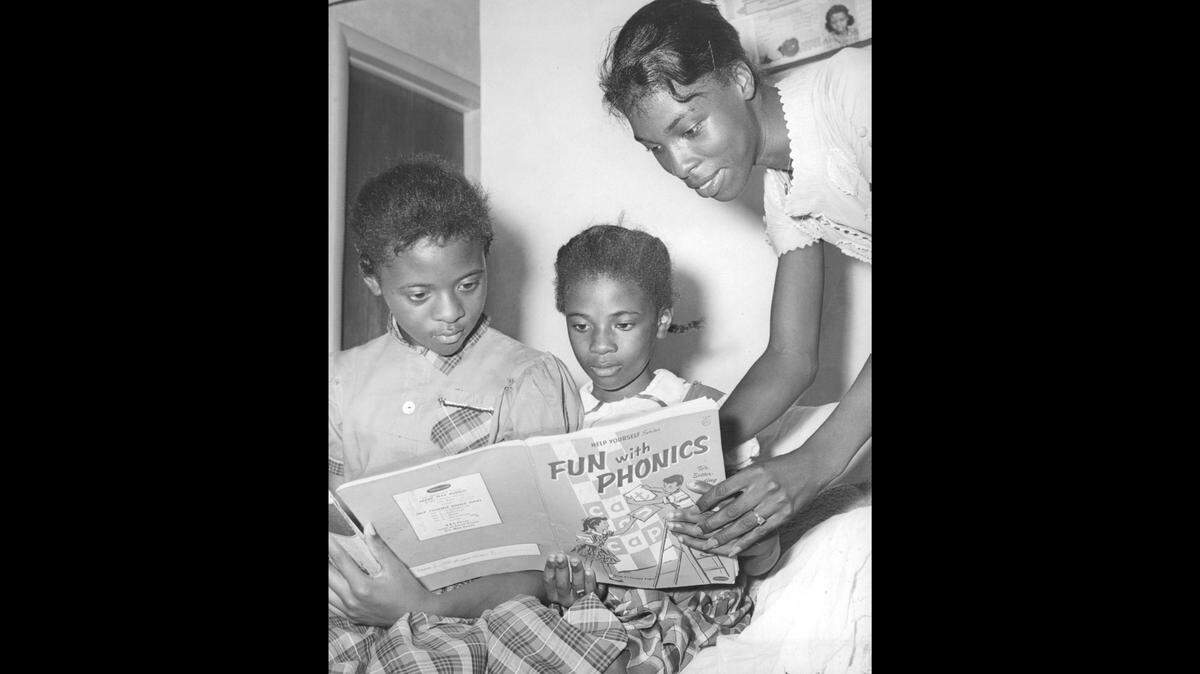
As Black History Month comes to an end, I am looking back over the years, thinking about how far we, as Americans, have come. My mind goes back to 1954, and the landmark Brown v. the Board of Education of Topeka, Kansas, which outlawed segregation, at the time, in schools in 21 states. It was a mammoth decision. America watch, to see how the law would be implemented.
I was in the 10th grade at the time, attending all-Black Booker T. Washington High School in Overtown. The day the U.S. Supreme Court made its ruling, The Miami Herald sent a reporter and a photographer to our school to interview four of our students. The late T. Stewart Greer was a senior and president of the school’s Student Council at the time, was one of the students selected to be interviewed. I vividly remember the photographer who was sent to take their pictures.
The next day when I got to school, our principal was furious. On the front page of the paper were pictures of eight high school students – four were white and four were Black. The pictures showed the white students smiling and looking directly into the camera. All the Black students had their heads bowed, looking as though they were afraid to look at the camera.
We later learned that the photographer had given our students a document to read as he took their photos. The students’ pictures, with their heads down, made them appear timid and shy. It was another way to send the message that Black students were not intelligent enough to attend school with whites. Greer, who would go on to serve as a high-ranking administrator for Dade County Public Schools, at one time also served as the school system’s interim superintendent.
(Ironically, 16 years later, I would become the first Black female reporter at The Miami Herald and more than a few times, the same photographer was sent out to shoot pictures for my stories. He and I never had a problem.)
We were treading deep water back then. Even with the Supreme Court’s decision, change was slow to happen. It was five years later, when a young and feisty M. Athalie Range attempted to enroll her son Gary in the then all-white Orchard Villa Elementary School, that Miami started to take the decision seriously. Orchard Villa was near Range’s home, and a safer route for her young son to walk. On the morning she stood face to face with school personnel to get her son enrolled, the streets surrounding the school were filled with white onlookers, white police officers and several Black supporters. Range stood her ground. Her son would be enrolled. And he was.
The fight for school desegregation had just begun. But on that day, Range had voiced the frustrations of all the Black parents who were tired of having to put their small children on buses to be taken across the county to schools out of their neighborhood.
Doll Pearson was one such parent. It was 1960, and the mother of nine, had lived in Washington Park, the Black area of North Miami Beach, since the summer of 1957. For a while her only two school-age children - Rosetta and Barbara - were driven to schools out of their neighborhood, because there were no Black schools close by.
.JPG "IMG_Barbara_Pearson_Brya_4_1_KRFKN88T_L462506064 (1).JPG")
“It was hard,” Barbara Pearson Bryant said in a phone interview. “Momma had to take us to school before going to work, and our oldest brother would pick us up when school was out. One day, Momma just got tired and went to the Dade County school Board with the Rev. Theodore Gibson and attorney E.G. Graves to find out why her children couldn’t go to the schools nearest them. Gibson and Graves filed a class action suit against the school board and the next thing I knew, I was being enrolled at Fulford Elementary School. My sister Rosetta, went to JF Kennedy Junior High,” Barbara said.
“I was in the third grade, and I didn’t understand why all the policemen were outside the school. I was scared when I heard the white people yelling racial slurs at me. I didn’t know what I had done wrong to make them so angry at me… But I also remember how happy I was to be able to take my books home. At the Black school, we weren’t allowed to take our books home because we didn’t have enough books for every child.”
“I was so little I really didn’t know what was going on. I just knew I was going to a different school – where there would be white children. And I remember being so scared at the school. The children called me the ‘N’ word and threw food and spitballs at me in the cafeteria. But I had a teacher, Mrs. White, who was very nice to me. She sat in the cafeteria with me at lunch time and walked the halls with me to protect me. I felt safe with her around. After a couple of months, things got a little better. I made friends with a few of the white children. And some of the other teachers seemed to accept me.
Barbara’s sister Rosetta, (now deceased) was 12, and she integrated North Miami Junior High at the same time.
“Looking back at my mother actions, she reminds me of Michele Obama,” Barbara said. “When they said we couldn’t, my mother said, ‘We can get this doner’ and we did. She was very strong woman who raised nine children. We came to Miami from Greensville, Mississippi when I was 4. So, Momma was accustomed to a lot of racial hostility. But when they wanted to bus us past schools in our neighborhood, to schools miles away from where we lived, Momma said, ‘enough is enough’ and she put on her gloves and was ready for a fight.”
Barbara said as she grew older and realized how her mother wasn’t afraid to go to battle for her children, it made her even more proud of her. “She was an educated woman; graduated from Greenville Industrial College in Mississippi. And she was no pushover.”
Although she had a college degree, in Miami, Doll Pearson had to work as a domestic to help support her family. But she was wise and bought up a lot of property in the surrounding Black area of Washington Park, Barbara said. When Doll Pearson was 82, she got her real estate license. She died in 2017 at the age of 93.
On Feb. 6 Fulford Elementary, the school she helped to integrate, honored Barbara as Principal of the Day. “I had a wonderful time. The school is so different today. The student body is nearly all-Black, but the principal is white. The rest of the school administrators are now all Black,” she said.
Today, Barbara is the mother of three and the grandmother of three. She said looking back, she would do it all over again because it has benefited her children and grands, all of whom attended Fulford Elementary. “It was worth all the pain”, she said.
.JPG "IMG_hines_2_1_3RJQLF6J_L623874409 (1).JPG")