‘Do not track our daughters.’ Sports board hears scathing comments over menstrual proposal
READ MORE
Florida’s menstruation question controversy
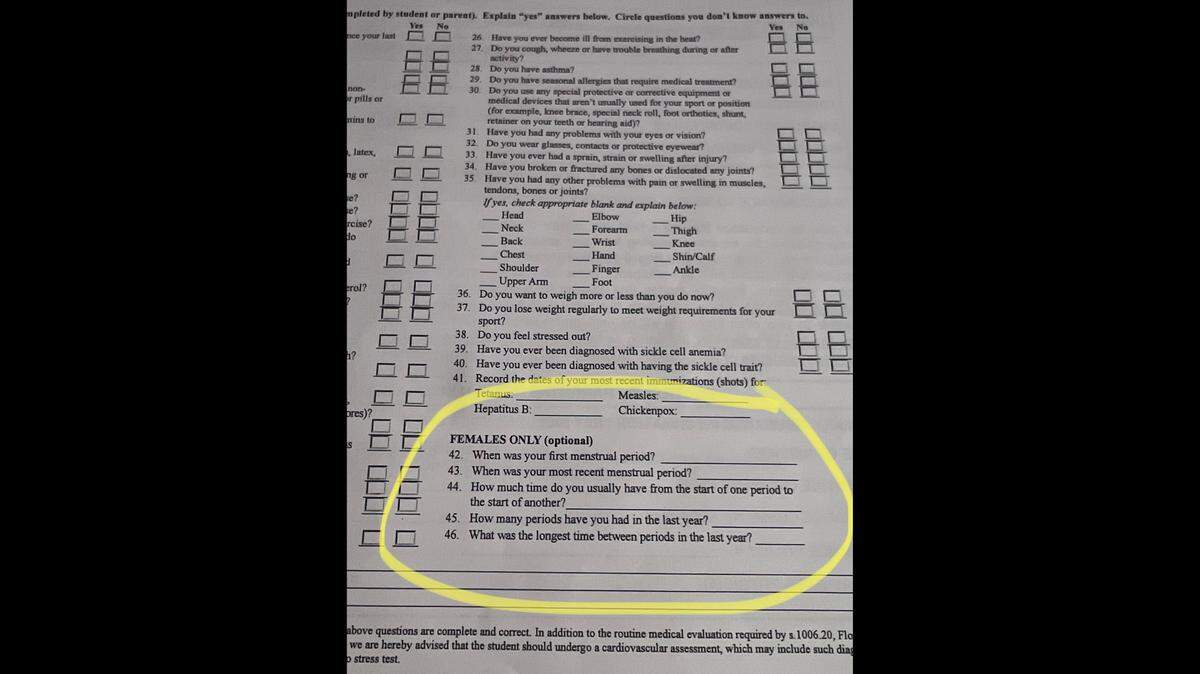
A proposed draft of a physical education form in Florida would have required all high school student athletes to disclose information regarding their menstrual history — a move drew pushback from opponents who say the measure would harm students and violate medical privacy laws.
The Florida High School Athletic Association’s 16-member board of directors had scheduled a vote on this issue in late February. The board, however, held an emergency meeting Thursday, Feb. 9 to discuss the FHSAA proposal.
Expand All
Female athletes won’t have to disclose information about their menstrual history, the Florida High School Athletic Association ruled Thursday.
During the Thursday emergency meeting, the FHSAA board voted 14-2 to scrap its controversial proposal to require Florida female athletes to disclose their menstrual history in order to play high school sports in the state. The board voted instead to only require students to submit a one-page doctor-signed paperwork to indicate whether or not they are healthy enough to compete.
READ MORE: Sports board removes menstrual questions for Florida athletes after scathing criticism
The proposal faced scathing criticism from students, parents, physicians and others. Here’s what people are saying about the board’s reversal:
‘Do not track our daughters’
During the Thursday meeting, the board listened to more than 150 emails — many of them from parents or medical professionals — that ridiculed the board for its initial proposal.
“It is a gross and an extremely sexist invasion of privacy,” a Miami-Dade parent wrote in an email to the board.
“Hey, what in the world are you thinking?” another parent of a female high school athlete said. “Get this off your agenda and issue a press release to say you’re sorry.”
“The question doesn’t have any bearing on a female being able to perform a task,” another wrote. “Its simple purpose: to shame and degrade females from participating in sports.”
“I will not be putting my children in sports if this is required in any way,” a parent said. “Please do not track our daughters and tell them that they’re being treated different than their male peers.”
“The standards do not apply equally to when a boy begins to masturbate,” another wrote. “I use this as an example of the absurdity of the notion...”
Multiple people suggested if the menstruation question were to be required, information about male students’ ejaculation also had to be collected.
‘Private personal matter’
Lisa DeSolar, 16, was getting ready for dance practice when she heard about the board’s decision. The sophomore at Miami Beach High School told the Miami Herald she was relieved.
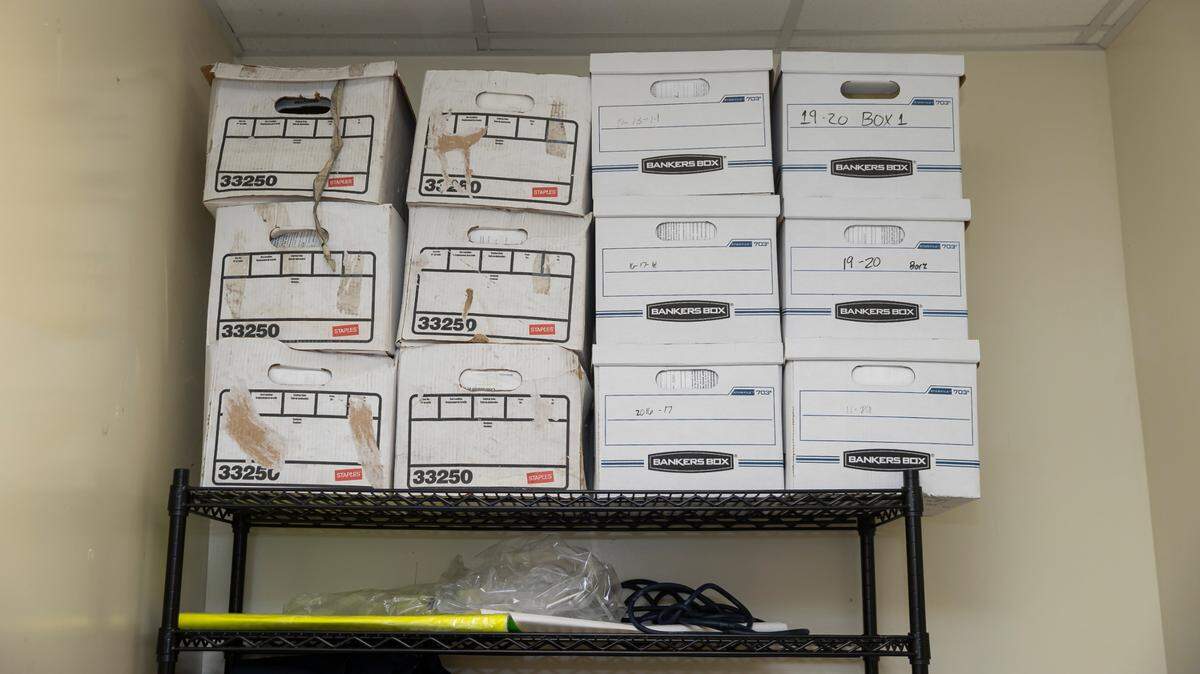
“It’s too much of a private personal matter for the school to be documenting that and have it stored in a box somewhere,” DeSolar said.
Miami High girls’ basketball coach Sam Baumgarten said the girls on his team didn’t really talk about the issue, but he doesn’t imagine any female student athlete would want to answer those questions.
“I just don’t know where a question like that would tell me if I should play or not,” Baumgarten said. “You have a heart murmur or there’s something wrong with your lungs — things like that — these are reasons why you should maybe check that out before we put you on a playing field.”
Lisa Zielinski, volleyball coach at St. Thomas Aquinas girls’ volleyball, said she is fine with doctors having the information, but doesn’t think schools should need it: “What is the purpose of that?
“As a coach who’s been in athletics my whole life and having daughters who played, I understand the physical and the doctors documenting and verifying that student athletes are healthy,’’ she said. “Is this system functional? I don’t really think that’s inappropriate, to be honest with you, but I do understand the privacy part of it.”
‘Win for Florida student athletes’
Several physicians whose comments were read noted the potential breach of medical privacy laws. At least one physician wrote that they would refuse to fill out the form’s menstrual record section because it was an “invasion of privacy meant to weed out transgender kids.”
Several cited Florida’s right of privacy enshrined in the state’s constitution.
READ MORE: Doctors raise concerns over Florida possibly requiring student athletes’ menstrual info
Dr. Judith Simms-Cendan, division director of pediatric adolescent gynecology at the University of Miami Miller School of Medicine, said she’s glad the board vetoed the requirement.
“I do hope that athletes, parents and their healthcare providers do address menstrual health in their wellness exams, but I am glad that this information is kept private,” said Simms-Cendan, who’s also the president-elect of the North American Society for Pediatric and Adolescent Gynecology.
The board’s decision allows athletes to safely participate in sports while also protecting their privacy, said Dr. Thresia Gambon, a Miami-Dade pediatrician and president of the Florida chapter of the American Academy of Pediatrics.
“We also know that storing records of protected medical information outside the clinical setting poses privacy risks for students and families,” Gambon said. “Today’s decision by the FHSAA is a win for Florida’s student athletes.”
‘Egregious overreach’
Fentrice Driskell, the Florida Democratic House leader, submitted a letter stating how the board’s initial proposal to mandate menstrual information would be “an egregious overreach” with there being “absolutely no reason’’ for schools to collect that information.
Several state representatives also weighed in on social media, commending the revised rule but raised concerns about other language in the document — and how it could affect transgender youth.
READ MORE: Florida athletes may soon be required to submit their menstrual history to schools
A question requiring athletes to report their “sex assigned at birth” appears to have been quietly approved with no mention of the change by board members during the meeting, as first reported by the Palm Beach Post Thursday. The form previously asked athletes for their “sex.”
Miami Herald staff reporters Sommer Brugal, Clara-Sophia Daly, David Wilson and Michelle Marchante contributed to this report.
This story was originally published February 9, 2023 at 4:32 PM.



.jpg)