As DeSantis injects politics into school boards, parents are getting more influence
In September, a debate over whether the Miami-Dade School Board should recognize October as LGBTQ history month again left board members facing a divided roomful of constituents.
It was the latest strain in school board-parental relations. So, board member Lubby Navarro offered what she believed to be a timely reminder to the crowd.
“We can never forget who our customers are. Our customers are our parents,” she said. “And we have to be driven to give parents what they’re asking us, this school system, for our children.”
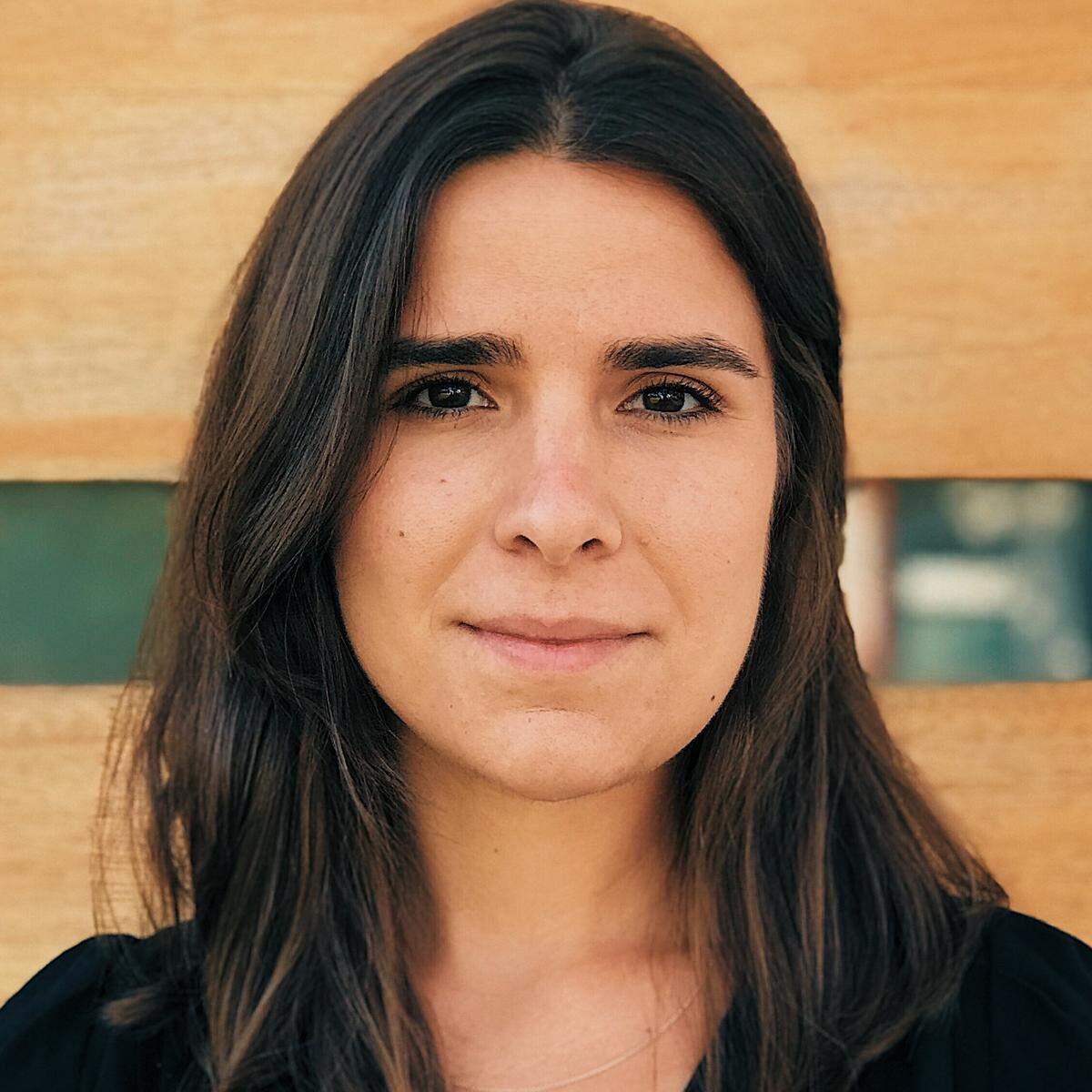
The comment drew a rebuke from the board’s student adviser, Andrea Pita Mendez, a senior. The board, she countered, was there to serve students, and that students — not parents — should be at the center of their decision-making. It’s the students who walk the hallways and interact with teachers every day, she said.
As Gov. Ron Desantis injects partisan politics into local school boards — and as Miami-Dade and Broward school boards swear in new members Tuesday — the exchange between Navarro and Pita Mendez highlights a growing dissonance between young people, parents and school board members about what the main mission of the nine-member boards is. Are they stewards of the students or are they there to placate the parents, who in the last year have increasingly been flexing their muscles in Florida, thanks to new laws that embolden them?
The answer — and the question — points to a longstanding paradox about public schooling, which is funded in part by taxpayers, one that at times puts parents at odds with the school district, experts say.
But it’s also a reflection of the current political climate surrounding education and local school boards. In Miami-Dade, two, possibly three DeSantis allies will be joining the board on Tuesday, while in Broward County, four DeSantis appointees will leave, potentially altering the political makeup and issues each board chooses to prioritize.
In the last year, the Florida Legislature passed a slew of education bills that impact the hundreds of thousands of students who attend public schools and tens of thousands of teachers, who are increasingly being told what they can and can’t teach in their classroom. Miami-Dade is the nation’s fourth-largest school district, while Broward is the sixth largest.
Meanwhile, those same laws, such as the Parental Rights in Education law, dubbed “Don’t say gay” by its critics, have amplified parents’ rights and given them more leverage to say what they believe is appropriate classroom discussions and, in some instances, legal authority to challenge teachers and districts. The bill, signed into law in March by DeSantis, prohibits classroom instruction on sexual orientation and gender identity for students in kindergarten through third grade, though critics argue the law impacts all grades.
READ MORE: ‘It’s a sad day for education.’ Miami teachers react to passing of ‘Don’t Say Gay’ bill
“These cycles come and go, and I think we’re both in a cycle where there’s a return to parental concerns and demands,” said David Gamson, associate professor of education in the department of Education Policy Studies at Penn State University. Nevertheless, the trend toward parents’ rights this time, he argued, is one that has shifted from viewing public education as an “important common good [and has] narrowed the perception into a private good, a commodity, and that’s only going to lead to problems.”
Student, young adult voices
In recent years, students and young people’s voices have emerged as an outspoken group — organizing rallies, raising awareness about statewide policies and attending school board meetings to speak out against measures they deem to be harmful to their peers.
Earlier this year, local youth led dozens of students to Tallahassee to speak against bills, including the Parental Rights in Education law, before state legislators. In Miami-Dade, young people appeared in droves to speak in favor of recognizing October as LGBTQ history month and the adoption of a sex-ed textbook.
READ MORE: Miami-Dade School Board flips its decision, adopts health, sex-ed textbook
They argued the recognition would create a safe and reaffirming environment for LGBTQ students and sex-ed courses would offer life-saving information to students.
But student voices — or young people’s rights — haven’t always been accepted, or even recognized, said Jonathan Zimmerman, a professor of history of education at the University of Pennsylvania Graduate School of Education. It wasn’t until the mid-1960s following the landmark Supreme Court case, Tinker vs. Des Moines, that youth were seen to have any rights at all, and the emergence seen in recent years only underscores how tensions within the school system are changing, he said.
Historically, schools were created and still serve to “compensate for what parents either can’t or won’t do, and obviously those things have changed over time,” he said. But at the same time, parents also endow the schools, including electing its school board members and most of all, paying property taxes that contribute to the multibillion-dollar budgets for each district.
The longstanding debate between parents and schools is the “heart of the tension” in school districts; the more recent debate, he argued, is between parents and kids.
Young people today are arguing for a more inclusive, diverse school environment. Parents rights organizations, including Moms for Liberty, an organization that advocates for parents rights but routinely amplifies conspiracy theories, say conversations surrounding race, gender or gender identity are inappropriate for school-aged children.
Parents who don’t have kids in public schools
For May Marquez, 23, a graduate of Florida International University, one of the more frustrating elements of the student-vs-parents dynamic is that some of “the most vocal right-wing voices trying to get their political agendas in schools don’t have kids in the public school system.”
Notably, Alex Serrano, the county director for County Citizens Defending Freedom, sends his children to Centner Academy, the Miami private school that last year said teachers and students who got vaccinated for COVID-19 could not interact with students and would risk losing their job. He’s been a vocal opponent of the district’s LGBTQ-inclusive and sex education initiatives.
READ MORE: ‘Insane and dangerous’: Inside the Miami school that told teachers not to get vaccinated
The school board logo, noted Marquez, a trans woman, states that its mission is to “give our students the world.”
And while she attended Christopher Columbus High School, the Miami private religious school, though not by choice, she added, “It feels like the School Board is disproportionately pandering to parents who’ve said they don’t care about the public school system. I do think there’s been a shift in the focus of the board [toward parents] and I do think it has a lot to do with the greater movement nationally to bring politics into school boards.”
Jennifer Restrepo, a district parent, shared similar sentiments, arguing politics have “really taken over everything, especially education.”
The board is shifting, focusing more on parents, and the members are “going to tailor to this new idealism some parents have,” she said. Students should be the constituents, as they are the ones who attend school daily, she argued.
A shift towards parents
When the pandemic shut down schools in the spring of 2020, parents took on “much of the responsibility,” which allowed them to take ownership of their child’s education, said Andrea Messina, president of the Florida School Boards Association, which represents school boards across the state. School boards for years had been working to get parents involved, she said, but now there were immediate demands from parents as a result of that ownership.
As elected officials, board members are charged with listening to everyone and “not just a select few” when making decisions, but the balancing act of whose voices are heard and when is not always easy, Messina said. Moreover, what’s often missing from the conversation surrounding parent-school conflicts is that many school board members are themselves parents or grandparents — or former teachers.
That’s why the parent-vs-teacher-vs-student rhetoric has become increasingly more frustrating, said Thomas Fiori, a Miami Beach Senior High teacher and district parent.
“It’s just not accurate,” he said. “This is a far right-wing attempt to claim the mantle of parents’ rights, when in reality, parents have very diverse perspectives and value social issues differently.”
When asked if the pendulum is swinging more toward parents instead of students, and if he was concerned, Fiori said, “Absolutely. I don’t think it’s going to let up.”
Miami-Dade board gains two DeSantis allies
For board member Maria Teresa Rojas, a former teacher and principal in the district, the “number one group is our students.”
Yet, she acknowledged, the school district community is also comprised of internal and external stakeholders, which include teachers, administrators and parents. That’s why it “shouldn’t be an either-or, but a both-and,” she said of the student, parent and district dynamic.
But as the historically nonpartisan board welcomes Roberto Alonso and Monica Colucci, the two Miami-Dade School Board members who were elected in August and begin their tenure Tuesday, the “both-and” approach could be challenged. The board’s political makeup is expected to shift rightward and parental rights issues will likely be at the forefront, as both campaigned to emphasize parents’ voices.
Indeed, Perla Tabares Hantman, the longtime board chair who is stepping down and will be succeeded by Alonso, and Marta Pérez, whom Colucci defeated in the Aug. 23 primary, were both conservative allies on the board, but at times, sided with the more liberal members.
As of Friday, a third member, who will be appointed by DeSantis to replace Christi Fraga, who is required to step down as she continues her bid for Doral mayor, had not yet been announced. Fraga is in a Dec. 13 mayoral election runoff in Doral.
The three will join Lubby Navarro, a staunch conservative who’s been criticized for claiming “God and Jesus Christ” were the only God while on the dais, and Rojas, who often supports conservative initiatives, though she has previously split with the Republican Party. (Her brother-in-law is Carlos Giménez, the former Miami-Dade County mayor and now U.S. House representative.) Steve Gallon III, Dorothy Bendross-Mindingall, Lucia Baez-Geller and Luisa Santos are often viewed as the more liberal voices on the board.
Though Alonso and Colucci have both maintained they will act independently from the governor, their seats, along with the third DeSantis appointee, almost guarantees a conservative majority that centers on parents. The potential 5-4 majority could mean future discussions — particularly when it comes to potentially politically divisive issues, such as the curriculum or the adoption of a textbook — could play out differently than they did under the current board.
Broward board to lose four DeSantis appointees
In Broward County, though, the political makeup is expected to differ significantly from Miami-Dade schools. Come Tuesday, four of the five DeSantis-appointed members will be off the board and will be replaced by four new members who were elected on Nov. 8: Brenda Fam, Jeff Holness, Rodney “Rod” Velez and Allen Zeman.
READ MORE: DeSantis-ousted Broward School Board member loses; four new faces join board
In August, DeSantis appointed the four new members — Torey Alston, Ryan Reiter, Kevin Tynan and Manuel “Nandy” Serrano — after removing four sitting board members, citing a grand jury recommending their removal over what they said was mismanagement of the district’s $800 school bond construction program.
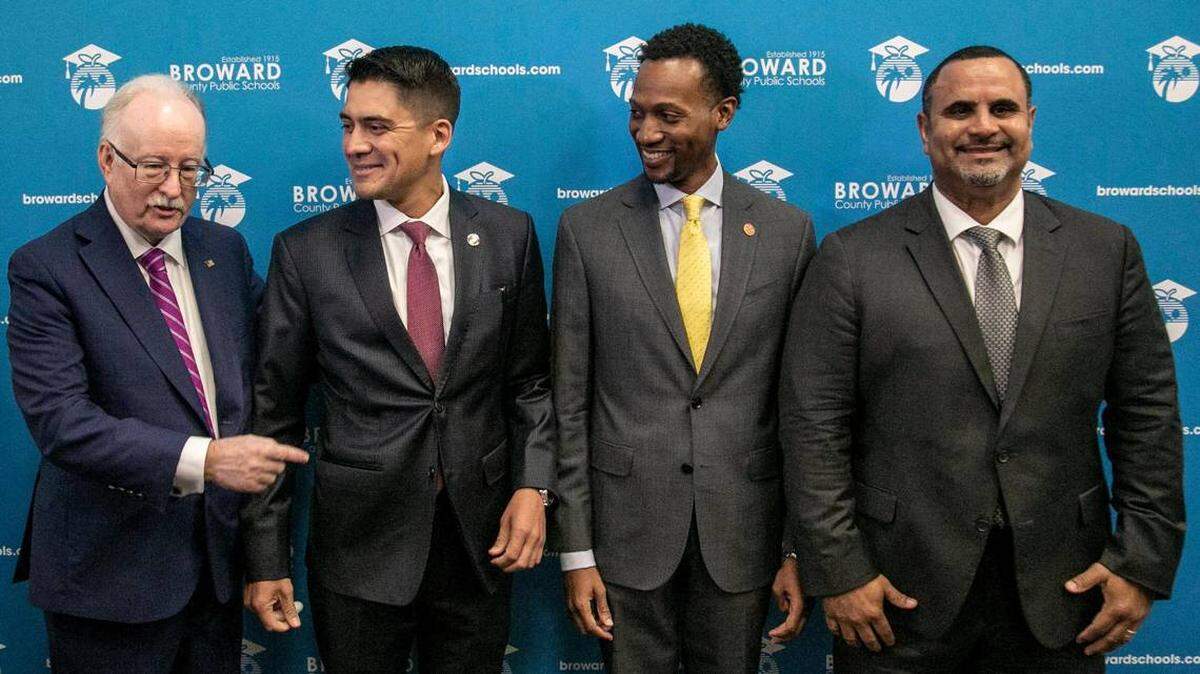
In April, DeSantis had appointed a fifth board member, Daniel Foganholi, after another board member resigned to run for the state Senate.
Except for Alston, the board chair whose term expires in 2024, the other four will be off the board Tuesday.
But in one of their final acts before leaving, the five Desantis appointees fired Superintendent Vickie Cartwright in a surprise 5-4 vote late Monday night. Cartwight, hired in an 8-1 board vote in February, was the district’s first woman superintendent.
Questions have arisen as to whether the board violated the state’s Sunshine Law as the board’s publicly posted agenda did not include an item related to Cartwright’s potential firing. In fact, on Tuesday, the four board members who voted against her firing tried to rescind the measure but were defeated 5-4.
Now, the district and superintendent’s future depends on a board that is expected to lean further from DeSantis in the most Democratic county in the state, and one that could reverse Cartwright’s firing.
Undermining education?
Regardless of the political changes both boards are set to face, Zimmerman, the University of Pennsylvania professor, said one of the shifts facing districts — and what he argues are successes for politicians like DeSantis — is how education and parents’ rights have become a national concern instead of a local one.
Parents, he argued, have always influenced schools, and they’ll do so in different ways based on the cultural phenomenon around them. And though there is an “inherent tension” between parents’ rights and children’s rights playing out on a national scale, decisions will ultimately be made locally.
For Gamson, the Penn State professor, however, another shift is occurring: Instead of viewing school boards as “civic participation in a local democratic entity,” they are viewed as an “entity that allows parents to follow whatever whim they might have.”
“It’s important for parents to be engaged in schools,” he said, “but to wholesale say teachers can’t teach what they usually teach or that schools can’t use the books they normally use, it’s highly problematic because it undermines the whole process of education.”
This story was originally published November 20, 2022 at 5:00 AM.