Miami-Dade and Broward schools’ report card: Learning losses, mental health, test scores
The 2021-22 school year, which just ended last week, brought major changes.
First, Broward and Miami-Dade school districts implemented a mask requirement at the start of the school year. Then they didn’t. But after winter break, amid a surge in omicron COVID-19 cases, they reinstated face coverings for visitors and adults, and “strongly encouraged” them for students.
Leadership, too, changed at both South Florida school districts.
In December, former Superintendent Alberto Carvalho announced he would leave Miami-Dade schools after 14 years in the position to lead the Los Angeles Unified School District. The School Board in January tapped former Miami-Dade district veteran Jose Dotres to be Carvalho’s successor. In Broward, Vickie Cartwright, who’d served as interim superintendent since August, became the permanent superintendent in February after a national search.
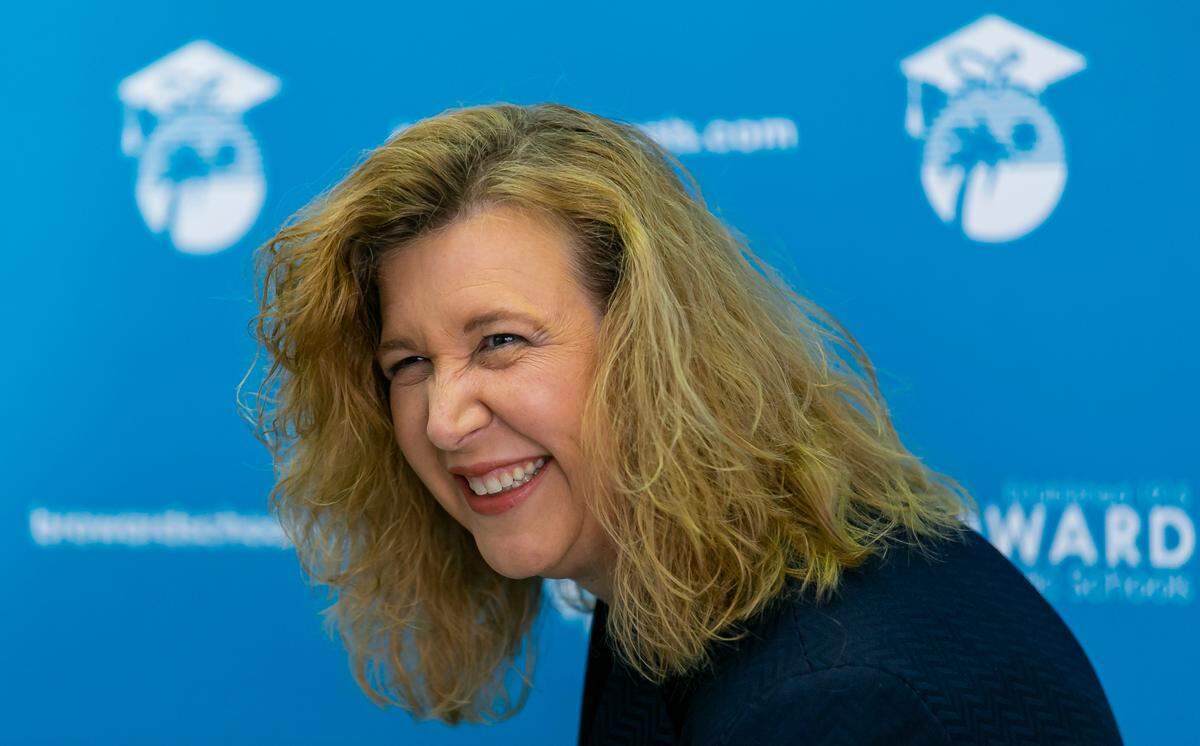
And yet, despite the changes, the school year also reflected a return to “normal” or the traditional learning environments: All students and educators came back to the classrooms, in person, for the first time since the pandemic’s onset in March 2020.
To understand how the districts fared in their first full year back, the Herald looked at five key metrics: student enrollment, teachers employed, Florida Standard Assessment results, learning losses and mental health.
Here’s what we found:
Fewer students
Nearly 263,000 students attended Broward County Public Schools during the 2021-22 academic year, a slight uptick from the previous year’s 260,000. But a data analysis showed student enrollment has declined over the past five years.
Since the 2017-18 academic year, the Broward district has lost about 6,500 students, dropping from more than 269,000 students five years ago to nearly 263,000 this school year.
The biggest decrease occurred in the 2020-21 school year, when the district lost nearly 8,000 students, falling from nearly 268,000 down to just under 260,000. That year, however, districts across the state and country saw record-low enrollment numbers, largely because of the pandemic and the start of a school year marked with changing safety measures, virtual learning challenges and confusion for families.
Still, enrollment for the upcoming school year is expected “to remain fairly stable,” district officials told the Herald.
Miami-Dade, for its part, also registered a steady decline over the last five years, decreasing by a few thousand students every year, records show.
In 2017-18, the district reported just more than 354,000 students. This year, it reported just under 330,000, shrinking its enrollment by about 24,800 students.
Like Broward County, the biggest dip in Miami schools came during the pandemic. From 2019-20 to 2020-21, the district’s enrollment fell from more than 347,000 to 334,400 students, a reduction of nearly 12,700 students.
Last month, the Miami-Dade School Board OK’d a new position — the student and families’ enrollment officer — to “develop and implement a strategic and innovative student recruitment plan” to offset the drop in student enrollment.
But the new role is not to say officials haven’t already begun addressing the district’s enrollment concerns, Dotres told the Herald.
“The work has already started. We’ve implemented a work group that’s been looking at enrollment trends over the past years to understand demographically where we’re losing the majority of students,” he said in a recent interview.
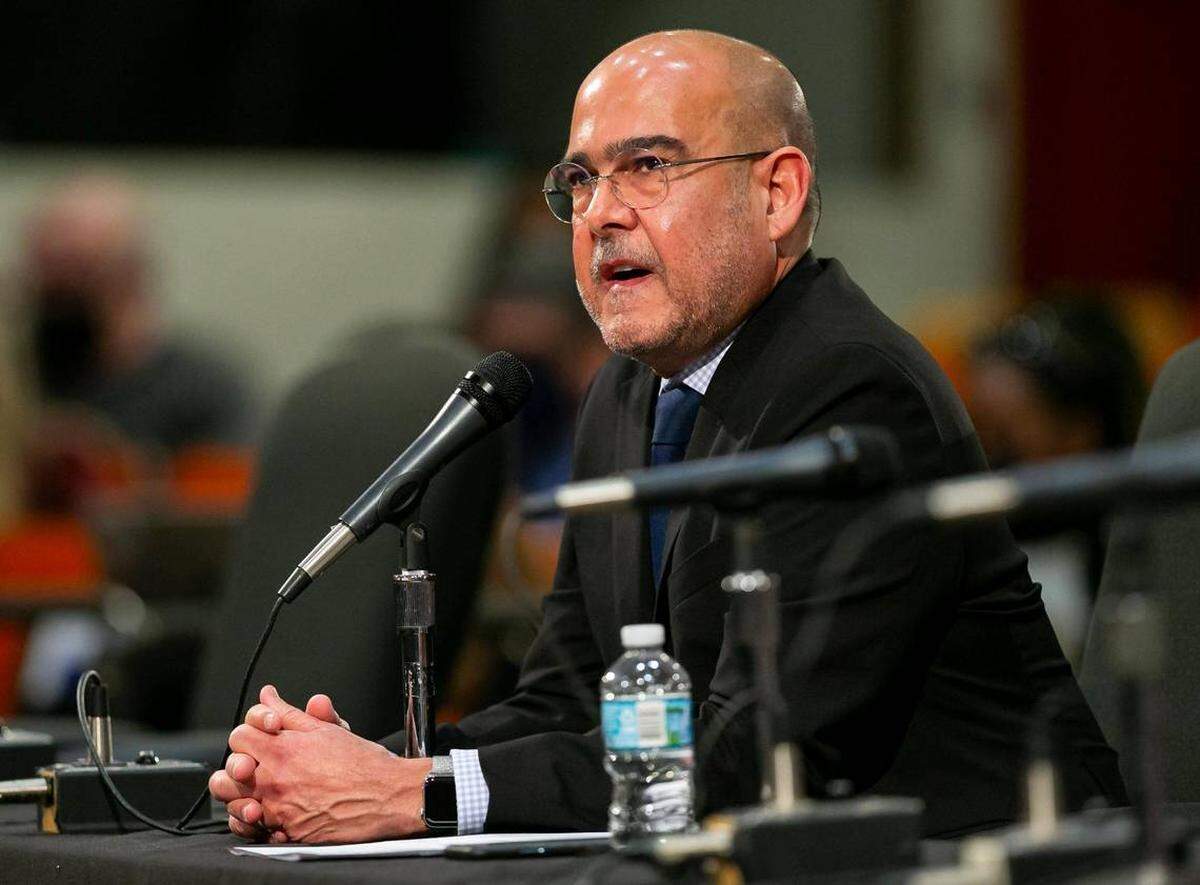
And it’s not solely because of charter school growth or private school enrollment, he said. In many cases, families are leaving Miami.
Teacher retention challenges
Like student enrollment, the number of teachers employed by the districts also decreased.
In Broward County, there’s been an overall decrease of about 1,220 full-time teachers since the 2017-18 school year, records show, or a dip from about 15,000 to about 13,780 teachers.
The largest decrease occurred between last school year and this year, with nearly 440 fewer full-time teachers across the district. In 2020-21, Broward schools employed 14,220 teachers.
Miami-Dade schools reported nearly 700 fewer teachers this year compared to last school year, employing about 16,570 teachers compared with about 17,260 in 2020-21.
Since 2017-18, though, the district has seen a decrease of more than 1,500 teachers, records show.
Teacher pay and retention challenges are nothing new to district officials, though. In fact, both Dotres and Cartwright addressed the issue in April, saying recruiting and retaining teachers was a top priority, especially as the cost of living in South Florida continues to soar.
Both pointed to the upcoming referendums — where both districts are asking voters to increase the property tax millage rate — as a way to supplement teacher pay. The Broward referendum will be on the Aug. 23 primary ballot; the Miami-Dade referendum will be on the Nov. 8 general election ballot.
In Miami-Dade, the average teacher salary, which includes supplemental pay from a 2018 referendum, was $68,269, according to the district. In Broward County, it was about $55,000, according to the Sun Sentinel.
Test scores decline
In Broward public schools this year, third-grade reading scores increased slightly, while those in Miami-Dade decreased slightly, according to 2022 Florida Assessment results released last month by the state’s Department of Education.
Still, just more than half of third graders in both districts earned a passing score.
In Broward, just 54% — up from 53% in 2020-21 — earned a Level 3 or “satisfactory” grade on the exams. In Miami-Dade, 56% did so, a 1 percentage point decrease from the previous year.
The state has yet to release the 2022 test scores for math, science and social studies.
Over the past five years, the percent of third graders in the two districts who’ve scored at grade level or above has hovered between 50% and 60%, state data shows.
In 2017, 57% of Broward third graders scored a Level 3 or above, while 58% of those in Miami-Dade did.
For the next two years, that percentage was higher in both districts, moving to 59% in 2018 and to 60% in 2019 in Broward. In Miami-Dade, the rates jumped to 61% in 2018 and back down to 60% in 2019.
The sharp decline came in 2021, the first year of testing since the pandemic’s start. (Annual exams were canceled in 2020.)
In Broward, the percent of third graders who earned a passing score — a Level 3 or above — dropped seven percentage points to 53%, while Miami-Dade saw a dip of three percentage points to 57%.
Nicole Mancini, the BCPS chief academic officer, said that although the district hasn’t received all of the results yet, her team did look at some data in March and that sparked some optimism in terms of progress.
“People keep talking about a ‘return to pre-pandemic achievement,’ but I like to say I want to return to ‘better than pre-pandemic achievement.’ And it’s not going to happen in six months or nine months. It’s going to take time, but what we do want to see is movement and growth,” Mancini said.
“And that is what we did start seeing this year,” she added. “We are hopeful based on interim data that ... we will see an upward trend.”
Addressing learning loss
Addressing the learning losses shown in the classroom and on annual test scores began last summer.
In Miami-Dade, the district expanded its summer programming and “created new offerings and forged innovated partnerships,” such as with The Children’s Trust, to recover from the pandemic’s disruptions. “It was one of the most comprehensive and multidimensional suites of summer services the school district has ever offered students and families,” officials told the Herald.
The districts plan to expand those offerings this summer. In addition to the required third-grade reading camp and course and credit recovery program, the district is offering arts programs, smart start camps that include STEM education, a career and technical program that includes new driver’s education courses, according to officials.
In 2020, about 15,900 students across grade levels and specialized centers, attended summer school in Miami-Dade. The following year, in 2021, that number had jumped to more than 48,300, according to the district.
Other initiatives included:
▪ Hiring additional reading and math coaches to target schools with highest need
▪ A new homework help initiative called Pop N’ Prep
▪ Before and after school tutoring, Saturday school, Winter Break and Spring Break academies
▪ Adding additional people to monitor and address student attendance
In Broward, the school district held a summer experience last year for students in pre-kindergarten through 12th grade. It turned out to be the largest summer school program the district hosted in recent years, serving more than 30,000 students during six weeks, four days per week.
The district will again host that program this summer and provide students with academic needs an opportunity to accelerate their learning. Students in grades 6th to 12th can also make up course credits.
Broward County also tackled learning losses in real time, targeting specific gaps in skills, Mancini said.
The district hired additional teachers to focus on specific content and standards with individual students or smaller groups of students who were falling a bit behind.
“By having that shift in mindset, we’re hoping that the gap closes sooner and that it then becomes part of our system and culture as how we address teaching and learning moving forward,” said Mancini, adding that the new modus operandi could help students and teachers rebound easier with the next obstacle like a pandemic.
Mental health
School social workers in Broward County received more than 6,800 referrals to address emotional or mental health concerns of students, according to the district, and 1,500 referrals were made to the Family Counseling Program, which provides up to 12 sessions free of cost to all students.
This year, the program has served more than 3,100 students, the district said. The district also hired 58 additional counselors to address the rising demands, officials said, bringing the total number to 438.
Mancini said teachers in Broward classrooms have also kept in mind children are struggling socially and emotionally, because students can only learn if they’re mentally ready to do so.
In Miami-Dade, each school was allocated an additional student services position to support the existing 688 employees providing counseling services to students, officials said. Moreover, 45 full-time and 100 part-time professionals were hired to increase the number of mental health coordinators in the district.
There are now 218 coordinators across the district, officials told the Herald.
Still, Dotres said, there’s more that can be done when it comes to addressing the mental health of students.
While the district has been able to reach many students who need support, there is a continued concern about students who may have gone overlooked, he said. As the district prepares for the next school year, he said, there will be an emphasis and greater commitment to provide a sense of belonging for all students.
“This year was a bridge,” a transition back to a new normal, he said. “Next year, we have to anchor down and [figure out] if there are students who we haven’t identified that need support.”
This story has been updated to correctly reflect the Miami-Dade County Public Schools’ partnership with The Children’s Trust in providing summer programs to students.
This story was originally published June 13, 2022 at 6:00 AM.