USAID taps FIU to recruit Hispanics into Latin America/Caribbean posts, foreign service
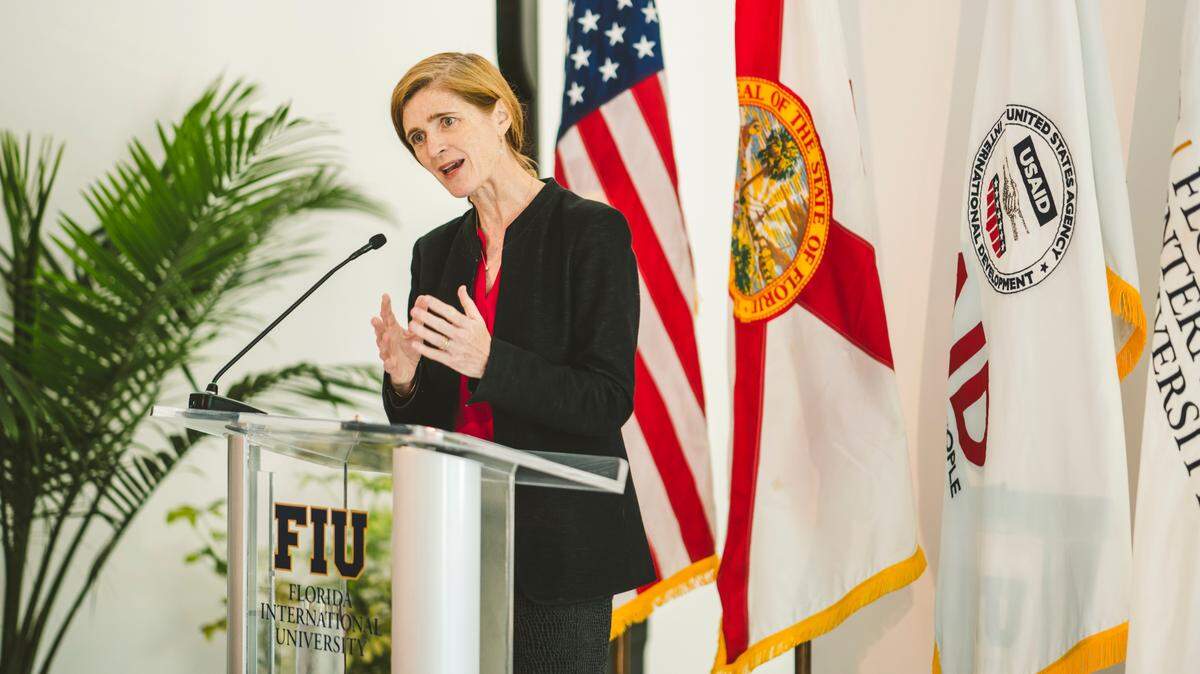
To get more Hispanics interested in pursuing a career path in the foreign service or international economic development, particularly in Latin America and the Caribbean, the top official of the U.S. Agency for International Development came to FIU on Tuesday, opening her pitch to the students with a line from “Hamilton.”
“Immigrants ...” started Samantha Power, an Irish immigrant. She smiled and raised her arms forward, prompting 50 people or so to finish the sentence during an event at the Steven J. Green School of International and Public Affairs, on the main West Miami-Dade campus of Florida International University.
“... We get the job done!” the audience volleyed back to her, quoting the refrain from the popular award-winning Broadway play by Hamilton creator Lin-Manuel Miranda.
Power, sworn into office last May, visited the largest public university in South Florida on Tuesday to sign a seven-page agreement with FIU Interim President Kenneth Jessell that will allow FIU students, faculty and staff to engage with the USAID Latin America and the Caribbean Bureau through paid internships, career fairs, a mentorship program and other initiatives.
READ MORE: Haiti raises $600 million from other nations to rebuild southern peninsula after quake
The partnership is part of a larger USAID program to increase diversity at the federal agency. It’s already collaborating with two historically Black colleges or universities — Tuskegee University in Tuskegee, Alabama, and Delaware State University in Dover. FIU became the first Hispanic-serving institution and the first Florida school to join the cohort.
USAID picked FIU because of its large Hispanic student population, about 67 percent of undergraduates, and because of its focus on social mobility — about 25% of FIU undergraduates are first-generation students and about 50% are Pell grant recipients, a federal program for undergraduate students who demonstrate exceptional financial need.
“By intentionally reaching out to the largest Hispanic-serving university in the country, we are likely to be more successful in partnering with people from diverse backgrounds with diverse perspectives and diverse research approaches than we are if we assume that business as usual is going to get us that kind of diversity of worldview,” Power said.
Added Jessell: “At FIU we’re ready and able to do this work, and quite frankly we are the right team for the job.”
USAID aims to promote diversity within
USAID, which manages a budget of about $25 billion and employs about 9,000 employees, will recruit more Hispanics and Blacks to diversify its workforce.
“We only have 4 percent of our workforce that identify as Hispanic or Latino, which is shameful,” Alexious Butler, a career foreign service officer with USAID since 2006 who oversees the initiative directly, told the Herald. “We can do better.”
Power told the Herald that research shows more diverse groups make better decisions, and seeing a diverse group of leaders retains and inspires employees.
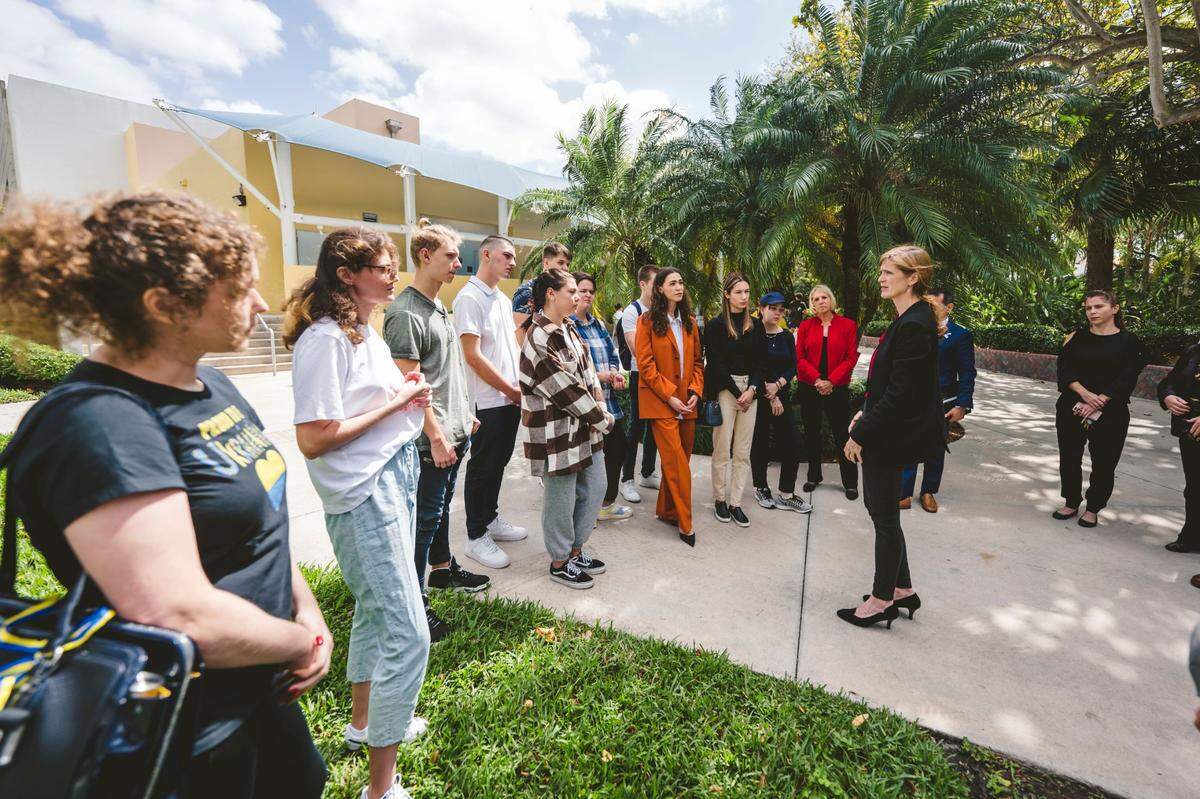
“It’s hard to overstate the amount of gravity that pulls DC-based institutions toward the same set of universities in terms of recruitment, but also in terms of research, partnerships, funding opportunities,” Power, who previously served as the U.S. ambassador to the United Nations under the Obama administration, told the Herald.
READ MORE: Four years after FIU student dies in bridge collapse, FIU honors her and 5 others killed
USAID launched its efforts to connect with minority-serving institutions across the country in October 2020 and started negotiations with FIU in early 2021.
The federal agency plans to join forces with three more HBCUs soon: Alcorn State University in Lorman, Mississippi; Morehouse College in Atlanta; and Florida Agricultural and Mechanical University (FAMU) in Tallahassee.
“It’s really about relationship-building; it’s not focused on money at this point,” Butler said. “It’s about how we can make sure that we better understand each other as institutions and then, once we have that foundation, the other parts will come.”
This story was originally published March 22, 2022 at 6:31 PM.