
‘Going back will be nerve-racking.’ How students will cope with a return to the classroom
READ MORE
Back to school
How South Florida students, parents and teachers are coping with a return to the classroom.
Expand All
‘Going back will be nerve-racking.’ How students will cope with a return to the classroom
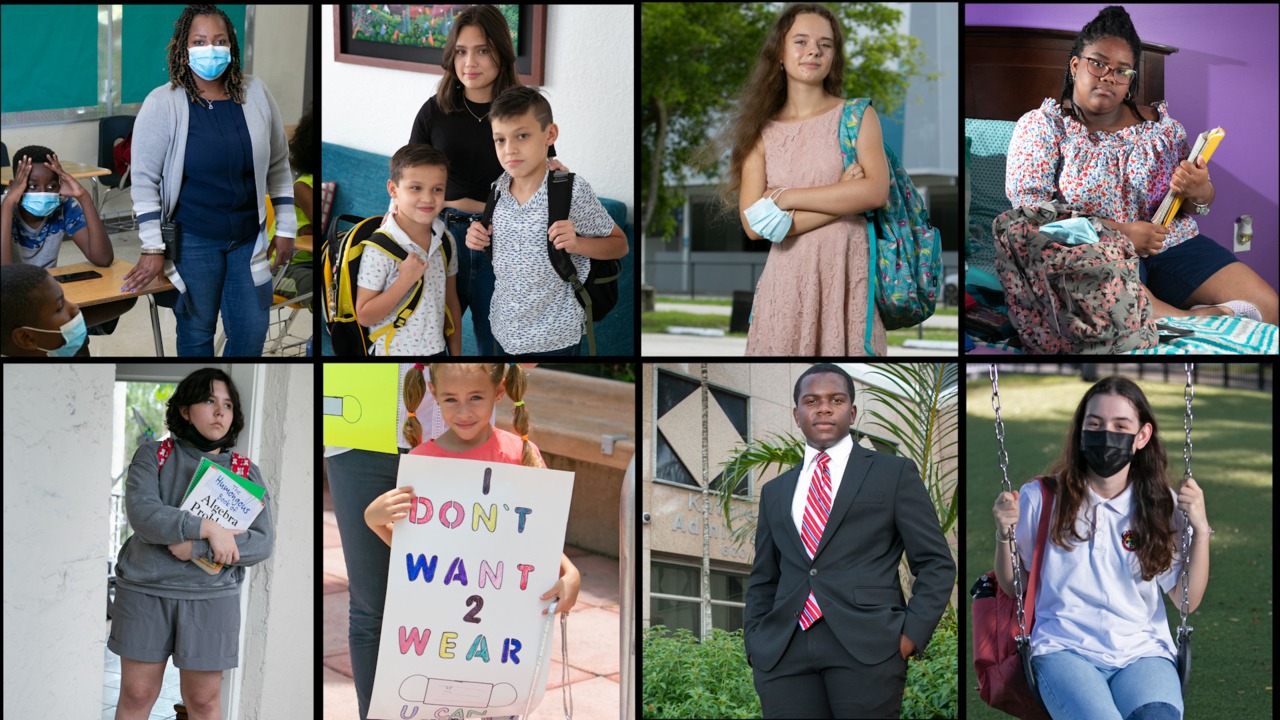
Mask mandates, critical race theory: This year, schools are a political battlefield | Editorial
Lessons I learned from teaching during the pandemic: Miami-Dade’s teacher of the year
Some kids will be vaccinated, others won’t. Same with teachers. That’s troubling to many.
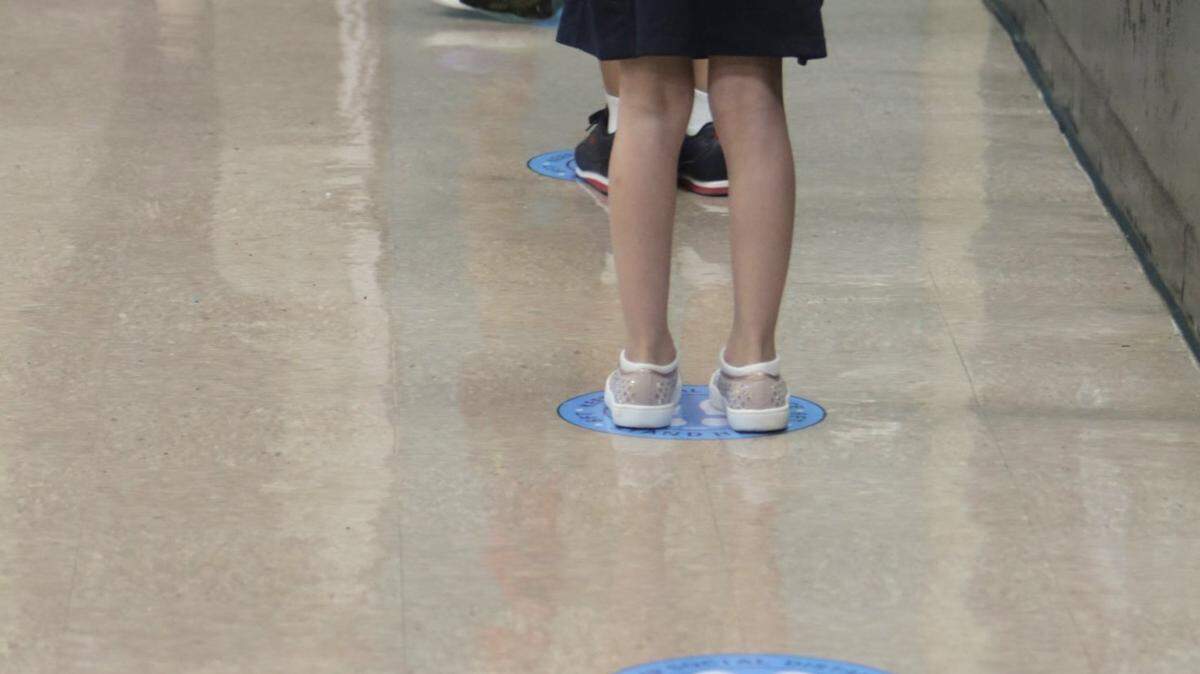
Here’s how to help your child if they’re anxious about returning to school
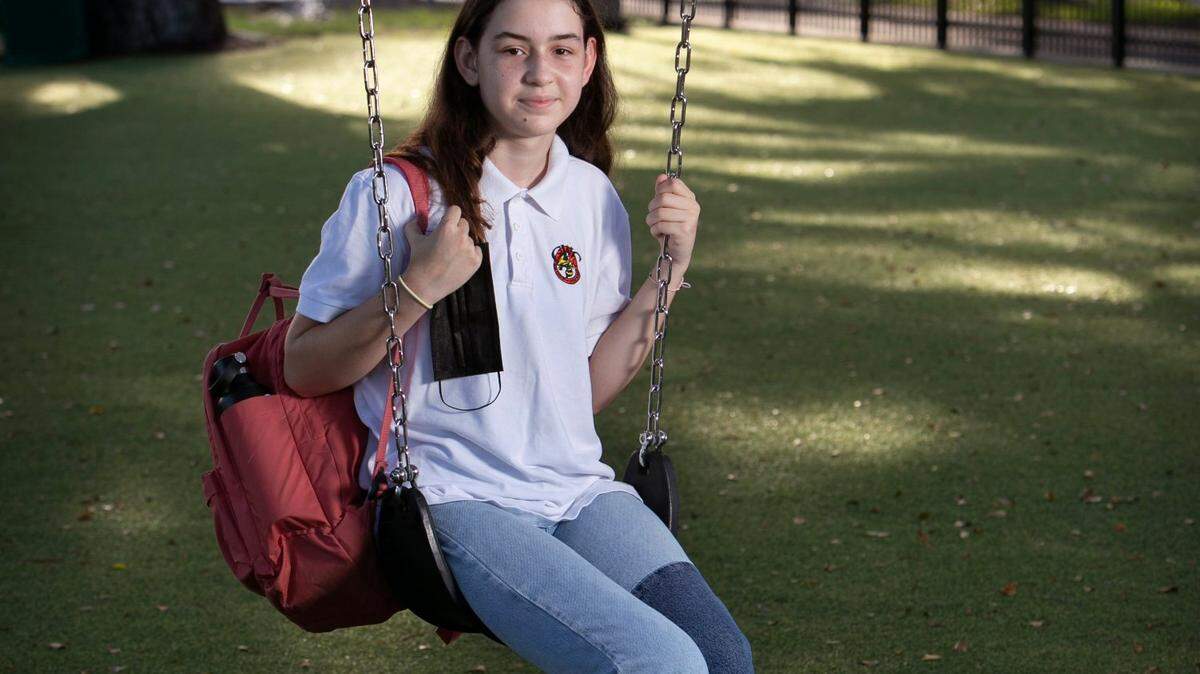
Making the transition from the cocoon of a small middle school to a high school with thousands of students can be a stressful time for any teen. But for Ariane Guenther, who will make the leap to high school with COVID-19 cases soaring in South Florida, there’s a whole new layer of anxiety.
Guenther is apprehensive about going from Archimedean Middle Conservatory, a school of 330 students in Miami, to Palmetto High School, which has more than 3,000 students. But the 14-year-old, who got the second dose of the Pfizer vaccine in early June, also worries about fellow students whose parents don’t believe in vaccines and how the school will handle masking.
The things that used to stress students on the first day of school — are they wearing the right sneakers, do they have the supplies on their teachers’ lists, will friends they haven’t seen over the summer still be friends? —seem almost quaint compared to the pandemic-related mental health challenges South Florida students will face as they return to the classroom. Many have not been in a classroom in 17 months.
“It will be awkward at first for students who have been pretty much isolated for more than a year,” said Guenther, who tends to get anxious when talking to new people.
Anxiety, depression among students
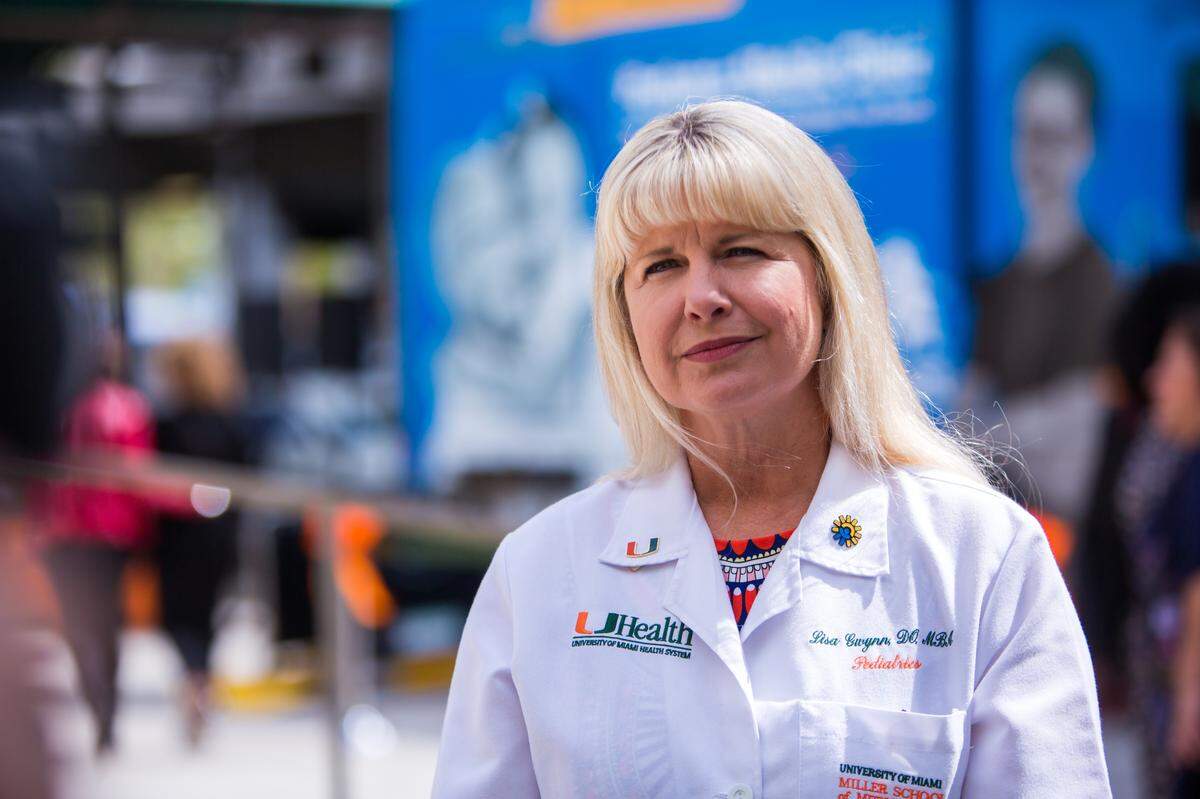
“We’ve seen more kids expressing suicidal thoughts and more kids suffering from anxiety and depression,” said Dr. Lisa Gwynn, medical director for the University of Miami’s Pediatric Mobile Clinic and a professor of clinical pediatrics.
Some students have been out of the classroom completely since March 2020, when schools closed and pivoted to remote learning during the early days of the pandemic; others returned to quiet schools with far fewer in-person students at some point during the school year.
Regardless of their learning situations last year, the 2021-22 school year will require adjustments.
Public school leaders in both Miami-Dade and Broward counties say they hope to have near total in-classroom attendance as they begin classes this month. At the same time, they’re convening special workshops and medical task forces to determine how to reopen schools safely on Wednesday in Broward and on Aug. 23 in Miami-Dade. As the first day of school approached, Florida led the nation in the number of children hospitalized for COVID-19.
Even students who returned to the classroom last school year may find the new reality of full classrooms stressful.
“They’re worried about the numbers. It’s been very quiet in their classrooms. Some are a little nervous about this,” said Dr. Elizabeth Pulgaron, an associate professor of clinical pediatrics at the University of Miami’s Mailman Center for Child Development who works with children at grant-funded clinics in nine Miami-Dade County public schools.
Some of the students who stayed home had trouble concentrating on lessons via Zoom and fell behind academically. Virtual learning also brought social isolation. Kids missed their friends and the interactions so important for their social development.
Parents’ job losses hit students hard
And there are students still trying to cope with staggering personal losses — the death of family members or friends from COVID-19, parents who lost jobs and housing to the pandemic. To prevent their parents from losing jobs, some kids had to take on the added responsibility of overseeing the virtual learning of younger siblings.
At North Miami Middle School, where the 850 students are mostly of Haitian descent and 25%, mostly Creole and Spanish speakers, are enrolled in the English for Speakers of Other Languages program, pandemic-related job loss hit parents especially hard.
“In my school some of the parents were working three or four jobs,” said Principal Miriam Stewart. The pandemic meant that some of their jobs and the part-time gigs they stitched together to make ends meet dried up.
Such problems sometimes took precedence over their children’s learning and meant parents had to leave their kids taking virtual classes unattended so they wouldn’t lose their jobs, said Stewart.
“Our enrollment went down, and a lot of students moved to Orlando, Jacksonville or back to Haiti when family members lost jobs. One family moved to Panama,” said Stewart. One student she called about failing classes told her, “I don’t live there anymore. I live in Georgia.”
“We had a number of students who could not be found when we went knocking on doors or went to a parent’s workplace,” said Elmo Lugo, a Miami-Dade County Public Schools media specialist.
The enrollment at Miami-Dade Public Schools dropped by about 10,000 students for the 2020-21 school year. For Broward Public Schools, about 8,500 students did not report to either brick-and-mortar class or remote learning, school officials said.
Sometimes the staff at North Miami Middle made referrals to the MDCPS Office of Community Engagement or community organizations such as the Sant La Haitian Neighborhood Center to get a family stabilized enough so their children could focus on learning. The staff also was quick to distribute clothes from a uniform closet at the school, gift cards for groceries or supplies.
“Whenever we can help the family of a student we do,” Stewart said. “They’re often so appreciative their tears bring tears to your eyes.”
“Some students have had multiple losses,” said Pulgaron, and they need group or individual help. “Everyone reacts differently to grief and loss. Everyone doesn’t move at the same pace.”
Pandemic’s ‘heartbreaking toll’ on children
“Clearly this year in some ways has been really horrible for kids,” said Dr. Jeffrey Brosco, a pediatrician, professor of clinical pediatrics and associate director of the Mailman Center for Child Development at UM.
“The research shows that kids do better when they’re in school,” he said. Not only are they more engaged with their teachers, but they benefit from social learning. “If everyone is doing it, we do it, too,” he explained.
In July, the Centers for Disease Control and Prevention updated its COVID-19 guidance for schools, emphasizing that in-person schooling should be a priority this fall — even if all COVID-19 safety measures aren’t in place. With U.S. COVID cases soaring since mid-July, the CDC has also said K-12 students and staff heading back to class this fall should wear masks — even if they’ve been vaccinated.
In its updated guidance for the coming school year, the American Academy of Pediatrics also strongly recommended in-person learning.
“The pandemic has taken a heartbreaking toll on children, and it’s not just their education that has suffered but their mental, emotional and physical health,” said Dr. Sonja O’Leary, chair of the AAP Council on School Health. “We need to prioritize getting children back into schools alongside their friends and teachers — and we all play a role in making sure it happens safely.”
The AAP has recommended that everyone older than age 2 wear a mask — regardless of their vaccination status — because children under 12 still aren’t eligible for vaccines, many schools don’t have a system in place to monitor the vaccine status of students, teachers, and staff, and because some areas of the country have either low vaccination rates or high transmission rates like South Florida.
Guenther, the Palmetto High freshman, has been taking virtual classes and hasn’t experienced in-person learning for nearly 1½ years.
“Teachers need to be encouraging to bring people out of their bubbles. A lot of my introverted friends are feeling anxiety about school,” she said.
They have plenty of company.
“The biggest [mental health] issue as students return to school is probably anxiety,” said Pulgaron. “It’s stressful when you don’t know what is going to happen. Part of the challenge with COVID is that there is no deadline.”
In a poll of 1,000 parents across the United States, the Ann & Robert H. Lurie Children’s Hospital of Chicago found that 71% of parents say they believe the pandemic has taken a toll on their child’s mental health and 68% wished they’d let their child socialize more.
During the past school year, they said, they prioritized social distancing too much over mental health and they cited social isolation as the most unhealthful aspect of the pandemic. The consequences of remote learning and too much screen time also worried parents.
Fifty-five percent of Miami-Dade County Public Schools students were enrolled in online classes at the start of the 2020-21 school year and 45% in classroom learning. During the year, students gradually returned to the schools, and when classes ended in June, online enrollment had fallen to 49% and 51% of students were back in the classroom.
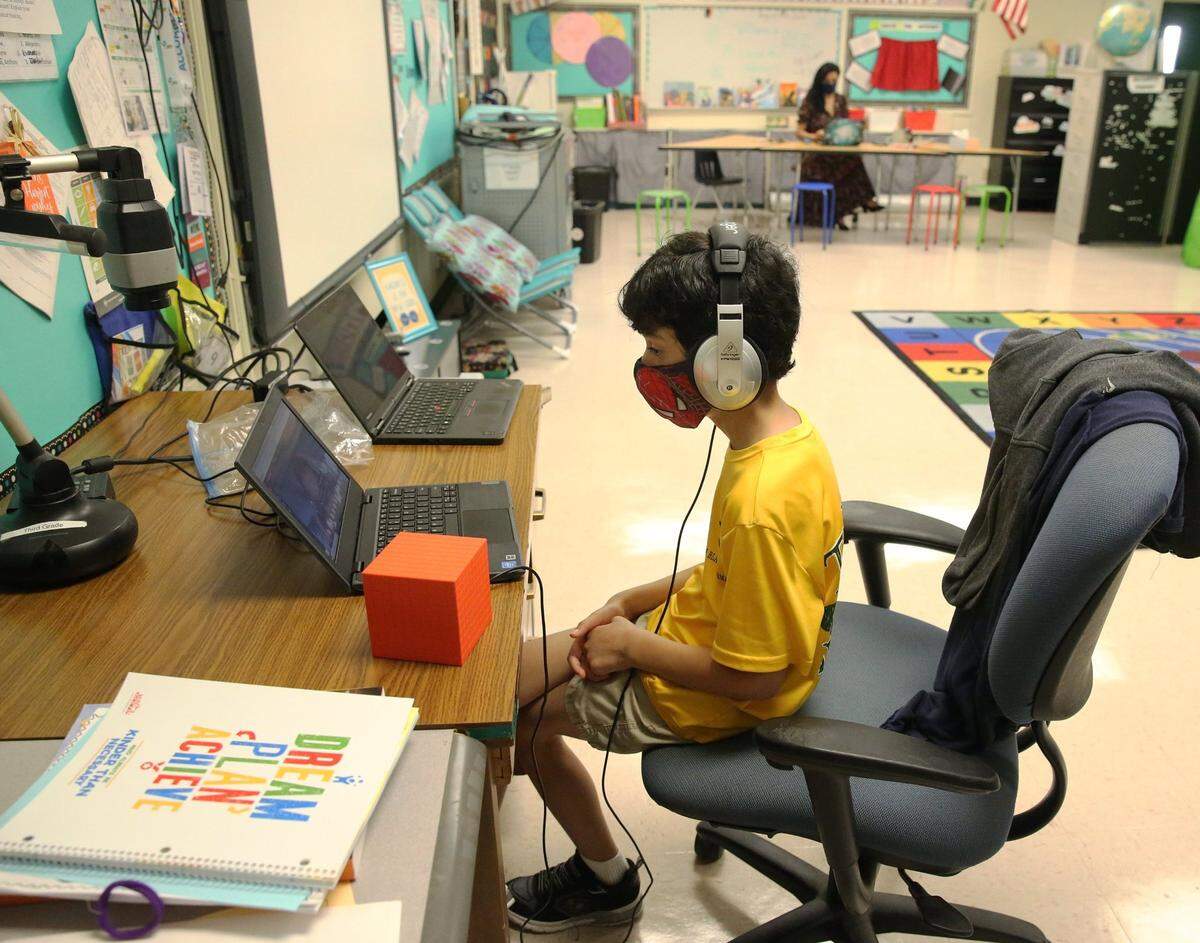
Broward County finished the 2020-21 school year with 98,069 students (47%) in the classroom and 111,373 (53%) learning at home. For the coming school year, the student population in district schools is expected to climb to 218,076, up from 209,442. Charter school enrollment is expected to be 49,059.
Hiring more mental health experts in schools
The South Florida school districts are well aware of the mental health challenges students and their teachers may face as they return to the classroom, and they are preparing.
In July, the Miami-Dade School Board unanimously approved a $13 million plan to hire an additional 20 mental health coordinators and 100 part-time mental health professionals to help students deal with pandemic-related issues and other traumatic events. They will join a 73-member mental health counseling staff.
With a dearth of certified mental health counselors available, Miami-Dade School Superintendent Alberto Carvalho said hiring the additional part-timers will enable the district to cover all of its 392 public schools.
“We have to be ready to go. We’re being as proactive as possible,” said Sally J. Alayon, an assistant superintendent for education services in the district’s Mental Health Services division.
The school district also has contracted with 12 agencies within the community to help students in need of “deeper, more intensive support,” she said.
The Mental Health Services division is only three years old, so part of the job is reminding parents over and over of its existence and willingness to support students and offer family counseling, Alayon said.
A parental assistance line is available at 305-995-7100.
“If they need help for their children, they should seek it now,” said Alayon. “It will help ease the challenge of returning to school.”
Miami Heat partnership in mindfulness training
Through the Mindfulness Champions Initiative, a partnership with the Miami Heat, each school has selected a champion teacher or counselor who will receive training in de-escalation techniques, mindfulness and breathing techniques and bring these calming lessons back to share with their schools.
The Miami-Dade school district also is giving school police officers the same mental health training as teachers to help them spot students facing mental health challenges, and Mental Wellness Clubs that offer a stigma-free place for students to discuss mental health issues will be expanded to all grade levels this fall.
“Our expectation is that all students will be returning to the classroom,” said Dr. Antoine Hickman, the chief of the Broward County Public Schools Student Support Initiatives and Recovery Division. “I think we’re ready to bring them back, but we don’t know what we don’t know.”
BCPS is also expanding its counseling services. It is hiring 38 new guidance counselors for the 2021-22 school year and has hired a total of 61 new counselors since August 2018.
Some school social workers who have held part-time positions also will be going full time, said Marisa Kinney, director of student services in the Support Initiatives Division of Broward Schools.
School officials know they will be dealing with some students who became isolated and frustrated during online learning who are anxious about the new school year.
“Some have had losses in their families, lost income, lost homes that all has impacted their capacity to learn,” said Hickman.
“We expect referrals [to behavioral health professionals] to rise dramatically,” said Ralph Aiello, the director of school counseling.
Broward will emphasize the concept of a “village raising a child” as students transition back to in-person learning, he said.
Teachers and even bus drivers have undergone youth mental health first-aid training, and students in grades 6-12 will receive five hours of state-mandated mental health instruction.
There also will be a push to reach out to the families of students whose attendance has tapered off and to make more home visits, said Kinney.
School officials and teachers will be listening closely to what kids have to say about the issues affecting them during the student-led “Young Voices Matter” program.
For students buckling under the pressure of the pandemic, there are referral mechanisms that teachers can use to get kids more help, said Gwynn, who is also president of the Florida chapter of the American Academy of Pediatrics.
UM’s Brosco said there are an estimated 400,000 children with behavioral health conditions in Florida and only about half of them are getting treatment.
“There are not enough specialists to go around,” said Brosco, who is booked through October in his own practice. “With the shortfall, parents will have to play a greater role. Fortunately, there are some good online resources parents can try as they wait for appointments.”
Mask concerns amid rising COVID cases
Virtual school versus in-classroom learning was the battleground issue of the 2020-21 school year, but this year the fault lines are being drawn around whether masking has a place in the classroom and vaccinations should be required for those who are eligible for the shots.
There are impassioned advocates on both sides of the masking issue.
Prior to the rise in COVID cases, Carvalho said masks would be optional for the 2021-22 school year and that mandatory vaccination was not an issue that the school board would take up.
With the soaring COVID cases, however, the district convened a meeting of its medical task force via Zoom on Monday. The task force unanimously recommended a mask mandate for the upcoming school year.
Carvalho said he was in “full agreement” with the recommendation. The Miami-Dade School Board is expected to vote Wednesday on whether to require a masking mandate.
The Broward County School Board had planned a July 27 workshop where masking and other issues related to the return to school were expected to be discussed. But it was postponed after a group of 20 anti-mask protesters refused to put on masks in order to speak at the workshop and yelled insults at teachers.
Later that day, the CDC issued a guidance that said children and adults, regardless of their vaccination status, should wear masks indoors in high COVID transmission areas such as South Florida.
The next day, Wednesday, July 28, the Broward School Board voted unanimously to impose a mask mandate for all students, teachers, staff and visitors at its schools.
On Friday of that week, Gov. Ron DeSantis issued an executive order threatening to withhold state education funds to any district that enacted a mask mandate.
Broward Schools, after initially saying it would comply with DeSantis’ order, reversed course, saying its mask mandate would stay in place and then reaffirmed its decision by an 8-1 vote at an Aug. 10 school board meeting.
The state had threatened to withhold the salaries of school superintendents and school board members who defy the governor’s order to make school masking optional.
But in an acknowledgment that the governor has no control over local administrators’ pay, the governor’s spokesperson later said school board members should dock their own pay if the state goes ahead with financial sanctions against the district. The Biden administration suggested Friday that federal relief funds might be used to offset any penalties from the state.
Immediately after the latest Broward vote, Florida Education Commissioner Richard Corcoran fired off a letter to the county’s interim school superintendent and school board chair saying the district was in “glaring non-compliance” with the governor’s masking order and stating that any mask mandate must allow for a parent or legal guardian to opt out a student from masking.
Currently the Broward district requires a doctor’s note to opt out.
Corcoran said the state would conduct an immediate non-compliance investigation, but so far the Broward board hasn’t been swayed and the legal wrangling is expected to continue. The board has authorized the district to hire outside counsel to evaluate a possible challenge of DeSantis’ order.
At an emergency meeting Tuesday, the State Board of Education instructed Corcoran to further investigate the actions of the school boards and superintendents of Broward and Alachua counties but did not make a decision regarding penalties. There was discussion of financial penalties but also the possibility of removing board members and superintendents from their positions.
Students weigh in on masks
For Anastasia Orynyk, a North Miami Beach teen who will be a freshman at Alonzo and Tracy Mourning High School in North Miami, putting on a mask for class is part of her routine. “The kind that doctors and nurses use: $14.99,” she says.
Even before the new CDC mask guidelines were issued, Guenther said she planned to wear a mask when she begins her classes at Miami Palmetto High.
“I don’t want to make other people uncomfortable and because none of us are wearing Post-it notes on our foreheads announcing our vaccination status,” she said.
Some doctors fear the mask controversy may set children up for bullying if, for example, the teacher and most students are wearing masks and a child is not because their parents have told them they don’t have to.
“How do you think that child’s experience will be if they are singled out?” asked Gwynn, the director of UM’s Pediatric Mobile Clinic. “I know it will add stress. Parents need to think about this. They should think of the mask as a seat belt.”
She laments that the mask issue has become so politicized. “At the end of the day, rally around the kids and do what is best for them,” Gwynn said.
From mid-July, Florida has been accounting for more than 1 in 5 of the new COVID-19 cases nationwide, even though the state accounts for only 6.5% of the country’s population.
As such, students were looking for answers even before the start of the new school year.
At the July 20 meeting of the Broward County School Board, 17-year-old Raymond Adderly III, the student adviser to the board, said students he’s spoken to are concerned about returning to in-person classes amid the COVID surge.
“Are vaccinated students going to have the option of not being able to wear their mask or to wear their mask? And, with the resurgence of COVID back into our community, especially with the delta variant striking young people at an alarming rate, a lot of students and parents have once again put their guard up and are now concerned,” said Adderly, who will be a senior at Fort Lauderdale High School and is a candidate for the board’s Seat 8.
“So, a lot of people are asking for that sort of guidance. I know in elementary schools the problem is a lot different, but as far as middle and high school, those students are looking for answers.”
Elementary school issues
Elementary school is a lot different. Children under 12 aren’t eligible for vaccines plus the younger kids follow their parents’ lead on masking and don’t have as much input on classroom versus virtual learning.
Some also had very little experience with school before the pandemic forced them to experiment with virtual learning. For younger students, going to school this year will be almost like starting over.
“For the younger kids there may be quite a bit of separation anxiety. They haven’t had much experience with school, and many have been at home with their parents,” said Gwynn.
It’s not just kids who are challenged as they get back to school-year routines, she said: “We’re all struggling to return to normal life and its hustle and bustle. For kids who may have been at home, there’s the renewed pressure of getting up early for school, transportation, getting to school on time.”
All the basic COVID-19-related issues of last year will still be present when school opens, Gwynn said. “There will be issues around masks, outbreaks; there will be exposures and possible quarantines.”
But the good thing, she said, is that students will be back in school. “That’s fantastic. Everyone should be in school, in person.”
However, if infection rates spike or new variants emerge, school districts may have to be ready to pivot and shift policies, Gwynn said. “That also adds stress to kids’ lives.’’
Some students prefer remote learning
While many students are eager to get back to the classroom to see friends and teachers, Janiah Henley said she actually enjoyed distance learning and did better in her studies while at home.
When the 13-year-old started virtual school, she admits she was tempted to play games, go on YouTube, or just lie down on her bed.
With time, she learned to message her teachers if she had a problem. When she felt her mind wandering, “I had to tell myself you are not going to understand so when the teacher calls on you, you are not going to know the answer and you’ll be embarrassed.”
That seemed to work well for the John F. Kennedy Middle student; she even brought up her civics grade to an A at the North Miami Beach school.
With the delta variant circulating, she admits she’s nervous about returning to in-person learning.
“Going back will be nerve-racking,” she said, “but I’m not nervous for me but for my brother.”
Her 10-year-old sibling, Jamiel, has no spleen, which plays a major role in the body’s immunity protection, and she worries about his health if he were to contract the virus.
Her mother, Shervon Manzano, is thinking about letting her get the vaccine, she said, but she had not gotten vaccinated by late July. “So, I’m going to be wearing a mask to be safe and extra careful not to bring the virus home to my brother,” she said.
Other students who had no adult around to make sure they were attending virtual school, who didn’t have good computer connections, or who had trouble concentrating on the screen or never got the hang of online learning struggled.
Missing their friends during remote classes
Orynyk, who turns 14 later this month, didn’t like online classes. “For me, I learn better when someone is physically teaching me.” Sometimes, she said, when the teacher asked a question in an online class, no one would answer.
“It was pretty quiet. Everyone was very introverted,” she said. And, Orynyk said, attending classes from her bedroom was just boring. She also was lonely and missed her friends.
So toward the end of the first semester, Orynyk returned to her eighth grade classes at John F. Kennedy Middle in North Miami Beach. There were usually just 15 or 20 students in the class.
Now the North Miami Beach teen is looking forward to starting at Alonzo and Tracy Mourning Senior High. “I think everything will be fine, but it depends on the people around me, whether they are social distancing and wearing masks.”
Some students who found online learning difficult will end up starting the new school year with an academic deficit.
“We’re not sure they’ve learned enough to advance academically. We’re just not sure,” said Gwynn.
“There are estimates that students who couldn’t be truly engaged in online classes may have lost half a year of learning,” said Brosco, of the Mailman Center for Child Development.
“It will take some time. Most kids will catch up. Others will need more help,” said Pulgaron.
Tutoring for students who fell behind
Stewart said a high percentage of students at North Miami Middle already weren’t performing at grade level and will require even more support as a result of spotty learning during the pandemic. Among resources available to them, she said, are morning and afternoon tutoring and Saturday school that at least 100 students attended during the pandemic.
“Our reading and math coaches are already planning with our teachers — and it’s still summer,” said Stewart.
By February, about half of North Miami Middle students had returned to the classrooms and the one-way hallways and additional exits and entrances that were part of the school’s COVID-19 protocols.
But for those who didn’t and haven’t returned to the classroom for many months, the challenge this school year will be “to get them back to an urgency about their learning,” said Stewart. “This wasn’t just a summer slide. It was a year’s slide.”
Even within families, students experienced online learning differently.
One family’s experience during pandemic
Fifteen-year-old Isabella Rodriguez-Sánchez missed her friends and school routines during virtual learning, but as she sat in front of the computer, her mother noticed that she was taking more notes, her concentration improved, and she enjoyed working at her own pace.
Her grades went up, said Juliana Sánchez, her mother.
It was a different story for her two younger brothers.
Seven-year-old Samuel was in kindergarten when the pandemic began, and he just couldn’t get the hang of engaging with a teacher through a computer and with 20 other students on Zoom.
“He wanted the teacher to respond immediately. He wanted to hear if he did a nice drawing,” said Sánchez. “He would tell me, ‘The teacher isn’t listening.’ He was crying all the time and telling me, ‘I can’t do this.’ ”
His brother Gabriel, 10, who has attention-deficit hyperactivity disorder, would sit in front of his computer but was often playing video games or looking at YouTube videos, Sánchez said. “We had to check all the time to make sure he was in class.’’
Toward the beginning of the year on a family outing to the zoo, Sánchez noticed Gabriel observing a jaguar who was walking around in circles. Gabriel is usually not very expressive, his mother said. But the jaguar struck a chord. “That is the way I feel stuck in the house,” Gabriel told his mother.
“I see a lot of anxiety with my kids,” she said.
To help her children stay focused she works from home once a week and at the beginning of the last school year, she hired a tutor to come to the house three times a week. The tutor has continued to work with the boys through the summer.
Sánchez was on the fence about whether her children should return to in-person learning this school year. But as COVID cases soared, she made her decision: The boys would continue at-home learning and Isabella would return to the classroom.
Her mother said her daughter is very conscientious about masking and social distancing.
Teachers, meanwhile, are preparing themselves to deal with the learning fallout from the pandemic.
Teachers concerned about learning losses
“We’re going to have a wider variety of readiness this year than ever before. Some students progressed at a regular pace, but many didn’t,” said Stephanie Woolley-Larrea, a language arts teacher at Coral Reef Senior High.
Last year, Woolley-Larrea said she always erred on the side of compassion and cut her students some slack. “Some of these kids went through so much personal trauma that due dates and certain protocols that I like to keep in my classroom seemed much less important,” she said.
“I am preparing to begin my year with a lot of review things I typically expect my students to know and be ready to do. I want to set them up for success, but I suspect that there will be a lot of remediation that has to happen in order to move forward,” she said.
Last school year, as the pandemic dragged on, Woolley-Larrea taught two classes fully online and four in person. She began each class by asking her students to “tell me something good.”
“It was my way of trying to focus on the positive instead of all the negative things happening in our world,” she said. “It turned out to be the favorite part of our day and a great way to build community. It’s definitely something I plan on continuing this year to help students form connections.”
With the return to the classroom, teachers, who may have experienced loss and have their own health concerns, will have the added challenge of identifying students who may be dealing with pandemic-related problems.
“I give all my love and support to teachers,” said Gwynn. “They need to have their guard up to identify students who are struggling. We’re putting a lot of pressure on them.”
Woolley-Larrea remembers the vitriol directed at some teachers before the start of the last school year when they stood up for themselves and balked at in-person teaching because of their own health concerns.
“On the whole, teachers tend to put their students first, but this is a situation where teachers have to remember to protect themselves, too,” she said.
To keep her own stress levels in check, she tries to stop working at dinnertime and allows herself not to respond to one more message or check one more email. “I have had to set some personal boundaries to make sure I stop doing that, but it isn’t easy for me.”
Her other coping mechanism during the pandemic has been to watch many episodes of the “The Great British Baking Show.” She isn’t a baker and doesn’t even eat many baked goods so that wasn’t the attraction.
“It’s so calming,” she said. “I just liked how nice everyone was to each other.”
Miami Herald Staff Writers Linda Robertson and David Goodhue contributed to this report.