
State drops charges against Miami woman who watched police officer kill her son
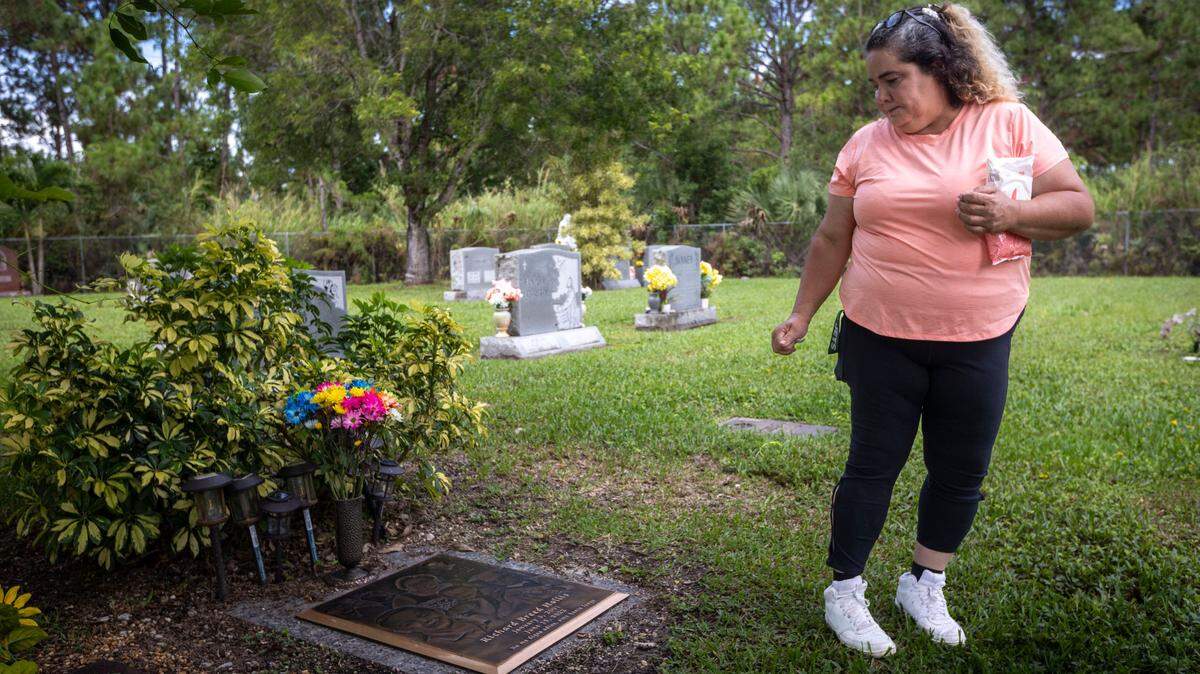
Gamaly Hollis, who served nearly a year in jail for violating a judge’s order to stay away from the Miami-Dade police officer who shot and killed her son, has been cleared of lingering charges that could have sent her back to jail.
Miami-Dade prosecutors dismissed two stalking and resisting arrest charges against Hollis on Thursday. Hollis was found guilty of violating a restraining order in 2023 because she posted messages on Facebook calling the officer a murderer.
“The government made the right decision by dismissing the pending case against Ms. Hollis,” said Miami-Dade Public Defender Carlos Martinez. “The investigation into her case laid bare a system that is broken, a system that fails to approach those with mental illness with the compassion and understanding they deserve.”
Although she’s relieved the charges were dropped, Hollis said she will never feel fully vindicated.
“I lost my son, and he was my life,” she said. “The police were called to help my son, not kill him. I am disappointed that we don’t have a justice system – we have an injustice system. And we don’t have police we can trust – we have police we’re afraid of because they can do whatever they want with no consequences.”
Hollis, 53, saw her only child, 21-year-old Richard Hollis, shot five times in the kitchen of her small West Kendall apartment by officer Jaime Pino in June 2022. Richard, who had cycled through ineffective mental health care for years, was in the throes of a psychotic break, insisting he was not mentally ill while wielding a steak knife and shrieking about strangers poisoning his food.
Two months after Richard’s death, Hollis recognized Pino when she was driving down a Kendall street and saw him at a scene where police had arrested and handcuffed a young man for a traffic infraction. She rolled down her window and told Pino, “You killed my son.”
“I did. I’m sorry,” replied Pino, who was back on duty after the State Attorney’s Office ruled he did not use excessive force against Richard. “Maybe if you did a better job there wouldn’t be a problem. Goodbye.”
As she backed out, another officer told her to steer clear of Pino, who said, “Let her hit me with the car so I can shoot her.”
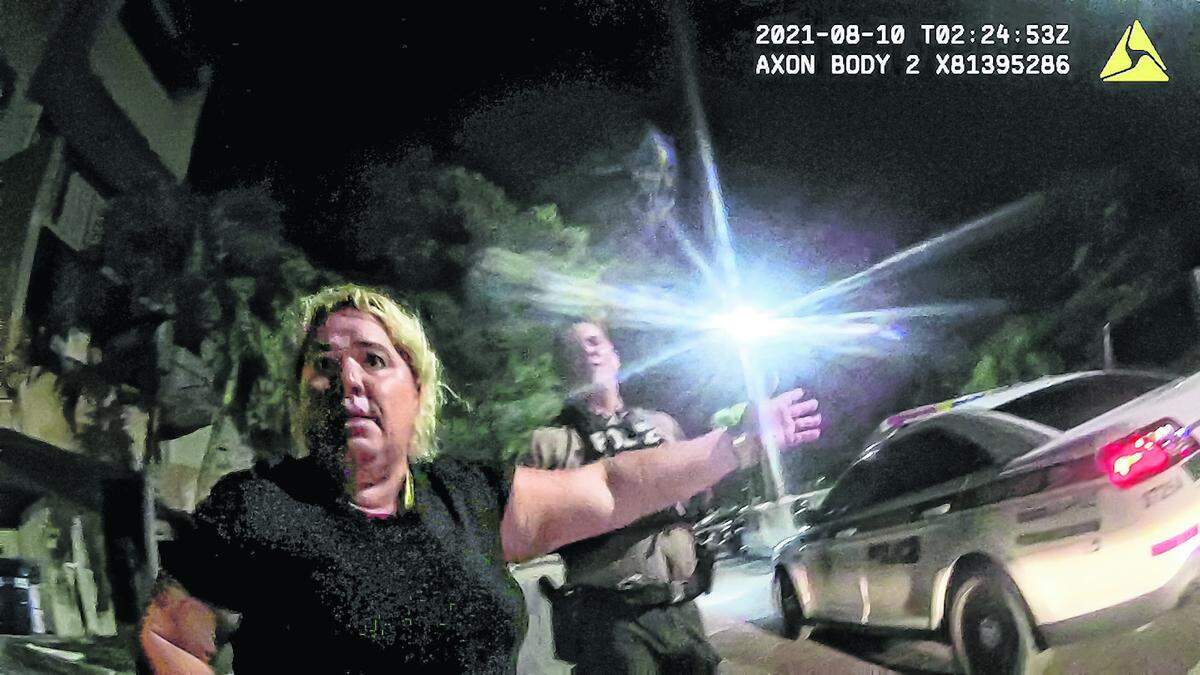
When Hollis reappeared minutes later driving in the opposite direction, a group of officers pulled her out of her car, tased her and pinned her to the ground while handcuffing her as she cried out, “I’m driving to my home.”
Hollis then began posting occasional pictures of Pino from his Facebook page onto her own Facebook page, despite a judge’s order to cease. She accused Pino of murdering her son. She and her attorney from the Public Defender’s Office argued that Hollis was warning the community about police misconduct and she never threatened Pino.
During a July 31, 2023, jury trial, prosecutors argued Pino was rightly concerned that Hollis was a threat to him and his family, and chastised Hollis for not being grateful to Pino for putting his life on the line to save hers. The state said Hollis was wrong for harboring bitterness toward him. Convicted of violating the stay-away order, she was sentenced to 364 days in jail.

After her release, Hollis still faced two additional charges, stalking and resisting arrest. She declined a deal to plead guilty in exchange for no more jail time, saying she was exercising her First Amendment right to free expression when she spoke to Pino from her car, and had done nothing wrong.
Prosecutors contacted Pino days before Hollis was to appear in court on Thursday to set a new trial date.
“Pino advised that Hollis has not done anything that concerns him in the time since we extended our plea offer,” the State Attorney’s Office said in a statement to the Herald. “We advised that we saw no reason to continue prosecuting her in light of the fact she already was adjudicated on the violation of injunction charge and served 364 days in jail, and has been complying with the injunction for some time.
“Pino said he had no objection with dismissal of charges.”
‘I’m going to kill your son’
The Hollis family’s long ordeal was detailed in a 2024 Miami Herald series called “Guilty of Grief” that included police body camera footage of various incidents.
At age 21, Richard Hollis, a Terra High graduate, was taking classes at Miami Dade College; he wanted a career in medicine. He was small in stature – he stood 5-4, and weighed 140 pounds – but he could be fierce and intimidating when angry. Diagnosed with schizophrenia, Richard lashed out at the mother who took care of him alone after his father left them, and neighbors avoided him, especially when he walked his Rottweiler dog, Rollie.
He was also well acquainted with the officers at Miami-Dade’s Hammocks district. In the three years preceding Richard’s death, police were dispatched to the Hollis apartment more than 25 times.
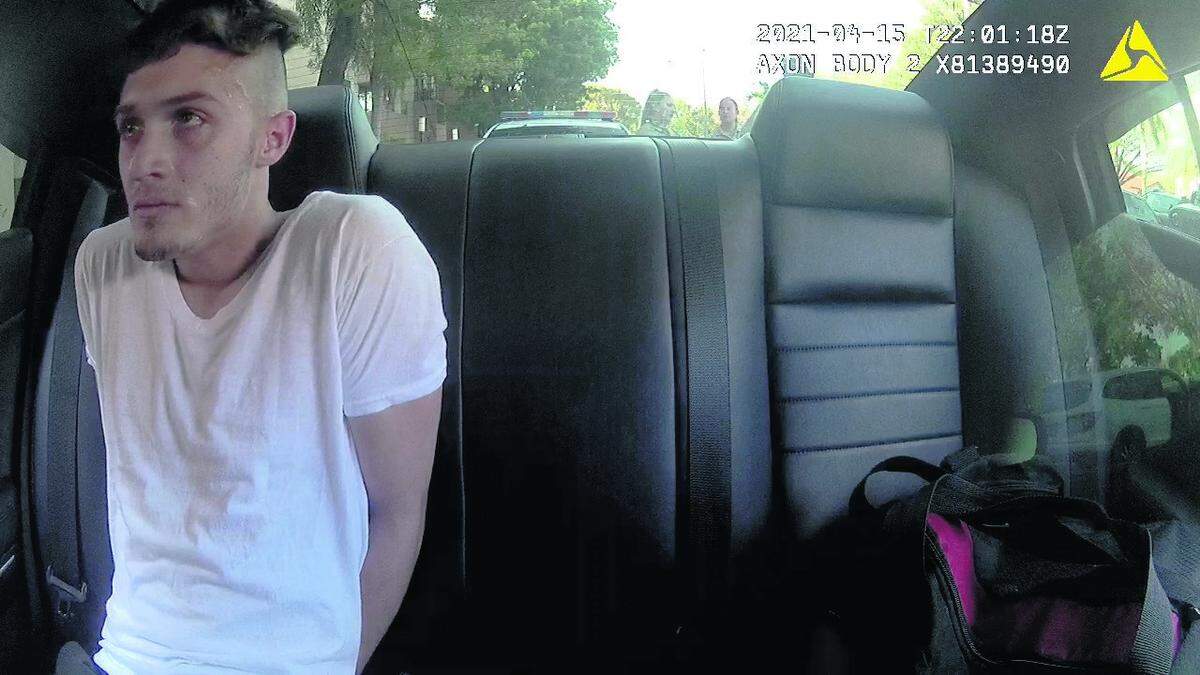
Richard’s clinical records showed he was in and out of psychiatric care. Doctors prescribed mental health drugs after brief hospitalizations. His mother said he refused to take them.
Ten months prior to the shooting, Pino responded to a call from Hollis. Richard was gone by the time he got there. Pino had stern words for Hollis, saying she was “wasting our time” because on a previous call, when Pino wanted to hospitalize Richard under the Baker Act, Hollis had resisted; she knew how much Richard hated the hospital and the tranquilizing medications he was given.
“Your child is an adult and you can’t control him. If you have a problem with the way police deal with your son, like you had the problem last time, don’t call us,” Pino said. “We are not social workers. We are police officers.”
Pino wasn’t finished.
“If your son takes a BB gun or a real gun out on me, I’m going to kill your son,” he said.
Argument at apartment
On June 15, 2022, neighbors called police again to report a loud argument between Hollis and Richard inside unit B-312 of the Peppermill Apartments. Richard howled obscenities at three officers who were talking to him through the locked door.
Pino arrived. Without a word he kicked open the door. He told Hollis to get out of the way. He blindly fired his taser at Richard and missed, then wheeled around the door, saw Richard crouching in the corner with a steak knife in one hand and shot Richard five times. The confrontation was captured on the officers’ body cameras.
“You killed my son,” Hollis said, over and over again. The words became her mantra. She maintains Pino carried out the threat he had made nine months earlier.
“Officer Pino didn’t try to negotiate with Richard,” Hollis said Friday while out walking Rollie. “He busted down our door and shot him at close range. He did it on purpose. He was not scared of Richard.
“Pino is still working. I’m the one who was punished, for saying he should not be a police officer carrying a gun.”
Hollis, who was back at her job selling avocados and fruit until a recent knee surgery limited her mobility, said she wants the FBI to re-investigate the shooting. She wants to write a book.
Improving police response to those with mental illness
She wants to be an advocate for changing the response to mental health crisis calls. She would like to see mental health professionals and trained peer counselors dispatched instead of armed police officers – an approach that has been adopted in various U.S. cities.
“The ordeal endured by Ms. Hollis is finally over,” said Martinez, the public defender. “Her journey was marked by unimaginable hardship. Witnessing her mentally ill son lose his life in front of her was a tragedy beyond comprehension. To then be prosecuted for exercising her First Amendment right to seek answers from the officer involved was unfair and unjustified.”
In the wake of the Herald’s “Guilty of Grief” series, Martinez pledged to create a working group of justice system leaders to study deadly use of force by police who confront people with mental illness. The group is to include the State Attorney Katherine Fernandez Rundle, the chief Circuit Court judge, Sheriff Rosie Cordero-Stutz and the president of the county chiefs of police association.
“Seeing her suffering has strengthened my commitment to fostering improvements in how we respond to the mentally ill and their families,” Martinez said.
This story was originally published April 27, 2026 at 5:30 AM.