Alexander brothers’ abuse began in high school, women, feds say. No one stopped them


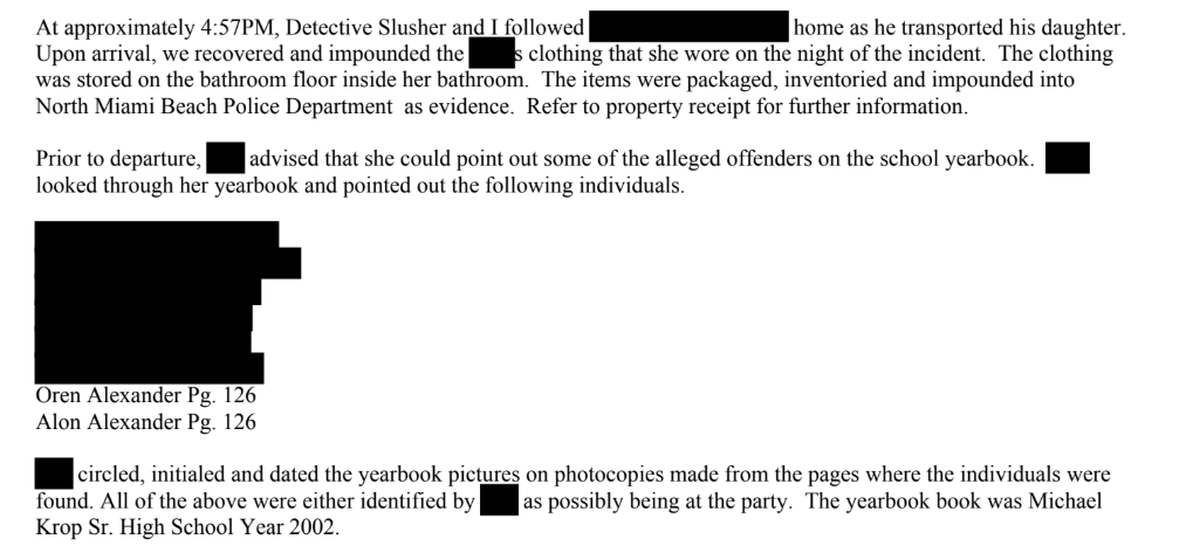
The following Monday, police came to her house to collect her clothes as evidence. The girl, a high school freshman, pulled out a yearbook and pointed to eight boys who were at the party, according to the North Miami Beach police report.
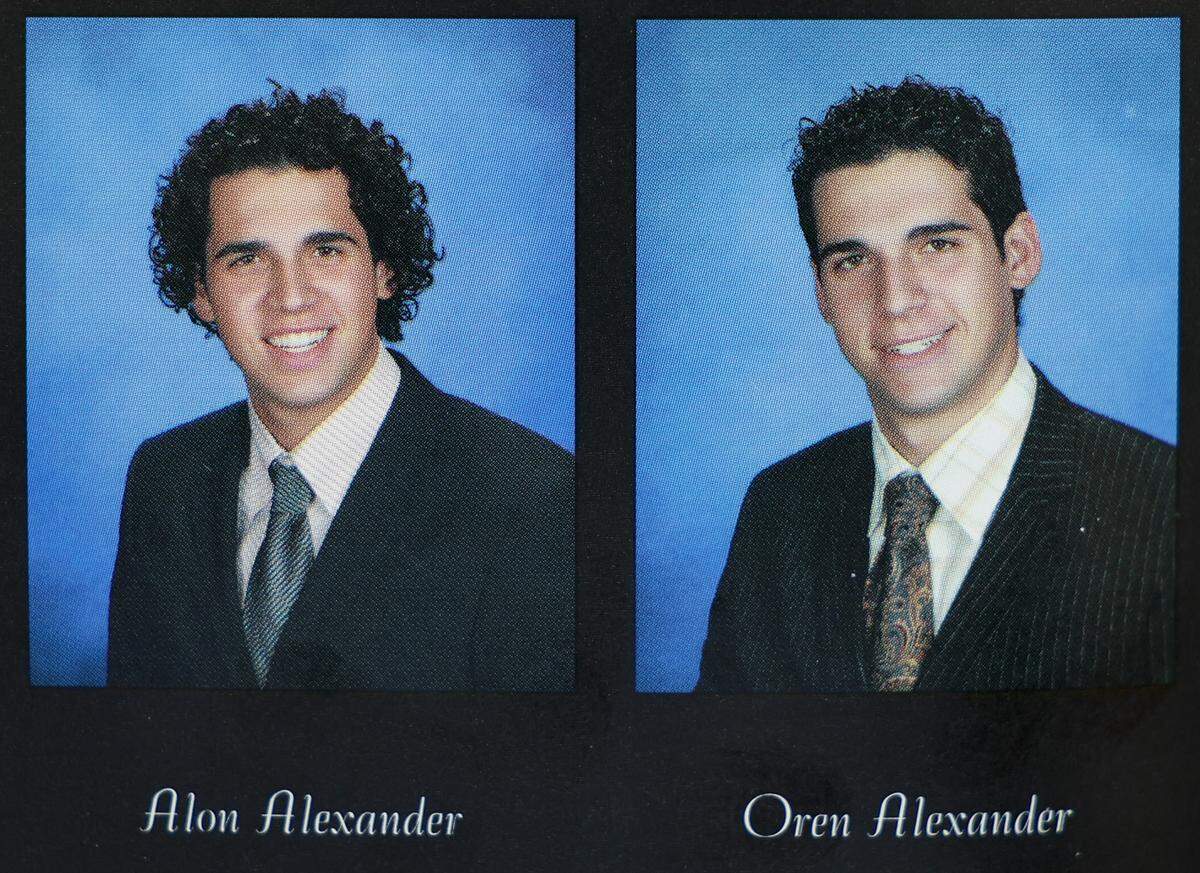
That 2003 report is partially redacted, but shows two of those names: recently convicted sex offenders Oren and Alon Alexander.
The twins and their older brother Tal Alexander were convicted in March of multiple federal sex crimes, including sex trafficking. But a Miami Herald investigation found their pattern of drugging, raping, and videotaping their abuse of girls began decades earlier – when they were as young as 15 and still in high school.
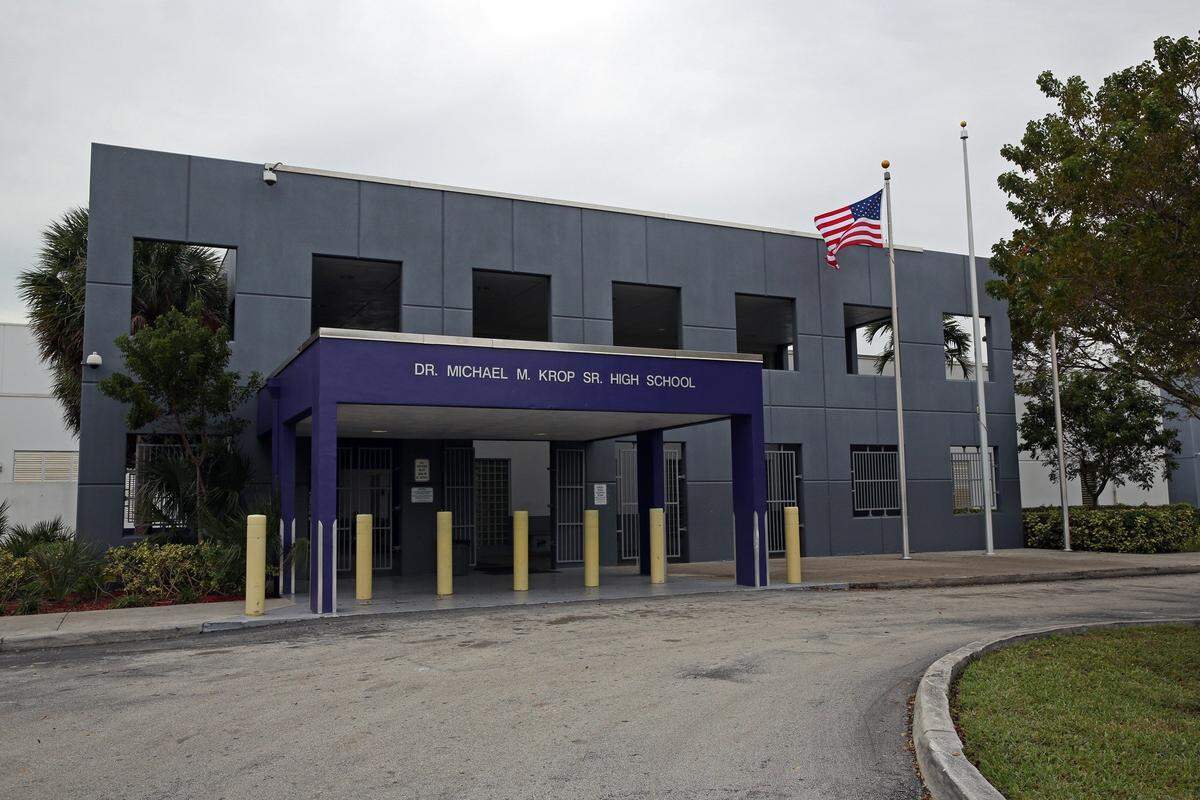
Six women told the Herald they were raped or assaulted by one or more of the brothers between 2002 and 2004, while the three brothers were attending Dr. Michael M. Krop Senior High School near Aventura. One spoke to police, and despite her accusations, police did not interview all the boys, and the school appears to have taken no disciplinary action.
The women said the assaults were rampant, and occurred at teen hangouts devoid of parental supervision, at the homes of the Alexander brothers or their friends. Half of the women spoke to the FBI about what happened to them when they were younger.
The women were students at Krop, a large Miami-Dade public high school, or nearby Miami Country Day School, a private school. One was in eighth grade when a group of boys, including Tal, “dragged” her into a bedroom, she said. She believes she was drugged.
“It just seems like the adults completely f—--- abdicated their responsibility,” that woman told the Herald.
In the 2003 report, which notes that Krop’s principal was informed after a school resource officer called law enforcement, police did not interview the brothers, and the State Attorney’s Office declined to press charges.
The brothers, who are imprisoned at the Metropolitan Detention Center in Brooklyn awaiting sentencing, and their parents declined requests to be interviewed for this article through their representatives. Their lawyers referred reporters’ questions to Juda Engelmayer, a public relations consultant who has previously represented Hollywood film producer Harvey Weinstein and rapper Sean “Diddy” Combs as they faced widespread accusations of sexual abuse.
He said the brothers each deny any allegation of non-consensual conduct.
“The allegations you reference are decades old, unproven, and in many cases were never raised at the time, investigated to conclusion, or resulted in any charges,” he wrote.
“They have never been found by any court or legal authority to have engaged in wrongdoing from that period,” he added. [Read Engelmayer’s full statement]
Except for the girl who spoke to police, none of the five other women who spoke to the Herald reported what happened to law enforcement at the time – but their stories echo a pattern described in the 2003 police report, and the weekslong sex-trafficking trial in Manhattan that ended with guilty verdicts on all 10 counts.
Marci Hamilton, the founder of CHILD USA, a nonprofit advocating for children rights, read the 2003 police report, and said, “The real tragedy is that law enforcement, in high school, didn’t go after these boys with a hammer.
“They were just given permission to keep going,” she said, “even though law enforcement knew about it.”
A federal prosecutor in the New York case said the government spoke to almost 70 women, nearly all with accusations of drugging and raping from different stages of the men’s lives. In a December 2024 letter to the New York judges in the sex-trafficking case, the prosecutors also said multiple women told them they were raped in high school, some by a group of boys.
“Evidence from the investigation, including multiple victim and witness accounts, shows that the Alexander Brothers began engaging in acts of sexual violence, including gang rapes, while still in high school in Miami, Florida,” the letter states.
Federal prosecutors tried to include the testimonies of two women assaulted in high school – identified in court records as Victim 27 and Victim 28 – but ultimately neither were allowed to testify as the trial was restricted to the years after 2008.
READ MORE: Did you know the Alexander brothers? Tell us your story
The three brothers would go on to become well known in the wealthy real estate and social circles of Miami and New York. Tal and Oren sold multimillion-dollar homes to celebrities as real estate agents for Douglas Elliman, an A-list firm specializing in luxury properties. Alongside Alon, who worked for his family’s security firm, they partied around the world.
The Miami Herald interviewed nearly three dozen people who knew the Alexander brothers at Krop or who worked at the school. This included former classmates, school staff, alleged victims and others who knew them at the time. Most asked for anonymity, afraid of retaliation.
Tal, now 39, graduated from Krop in 2004. Oren and Alon, now 38, graduated in 2005.
One man who knew Tal through tennis during Tal’s teenage years said Tal told him he had raped a younger girl with a pool stick.
“He thought it was something that was pretty cool. He wasn’t embarrassed about it or felt bad about it,” said the man, who asked for anonymity due to fear of retaliation. “He felt like he had accomplished something.”
The brothers and their friends had a vulgar metaphor for gang raping girls, which alleged victims said they heard frequently: “running a train.”
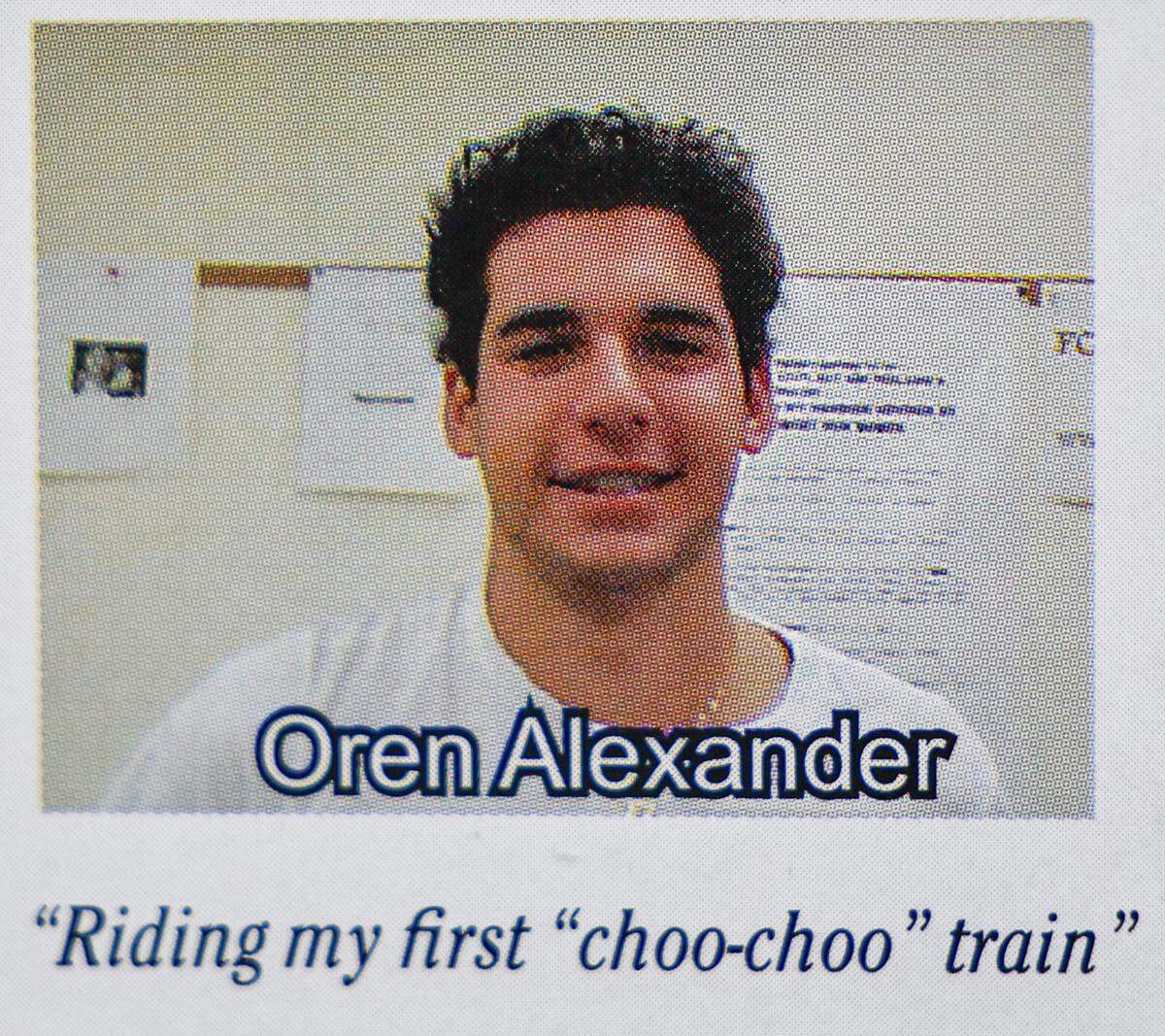
For his senior yearbook, Oren was asked about his most “memorable moment” in high school. Despite how well known the train metaphor was, his response was published.
“Riding my first ‘choo-choo’ train.”
‘I wish I cared more about myself’
The girl who spoke to police was in her freshman year at Krop. She kept her hair long, straight, and parted down the middle. Her parents were divorced, and she was living with her dad in Miami.
One Friday evening, she went to a classmate’s house for what she thought was a party, and saw a group of boys there – but no girls. She took Xanax earlier that day, and smoked weed. When she arrived, she thought they passed around alcohol.
She remembered having oral sex with her crush. Other boys walked in on them, and she left the room.
From there, it’s all a blur. Xanax, an anti-anxiety medication, mixed with alcohol is a dangerous combination that can cause someone to lose consciousness.
She remembers being on a bed.
“There’s like flashes, of like, just guys, a different guy. I’ll open up my eyes and like, there’s a guy there, having sex with me, and then, like, I black out,” she said. “That’s how my memories are.”
The next thing she remembers is being in a bathtub, where she thinks the boys were trying to hide her. Her father and cousin had come looking for her, and were screaming outside. She could hear her cousin’s voice through the door.
“Where the f— is my daughter?” her father yelled, according to the police report.
She doesn’t know how she got out of the house. She woke up at Aventura Hospital, where her father had taken her for a drug test.
“I just remember laying in a hospital bed and my dad telling me that I have no underwear on,” she said.
To police in 2003, she described various recollections of having sex that night. With one boy, she told police she “does not recall if she wanted to.” Two boys later came into the room, and she didn’t know if she had sex with them.
She recently told the Herald that everything after the oral sex with her crush was not consensual, and that she believed all the boys except one – who she didn’t think would have done that – had raped her. Friends told her after that they heard the boys ran a “train” on her, she said.
“The rumor was that she had slept with seven guys,” the police report reads.
On the following Monday, someone handed her the purse she left at the house on Friday. Opening it, she realized all her money – about $75 – was gone.
She broke down in the school hallway, screaming and crying so hard that a security guard came over and told her friends to bring her to the guidance counselor.
“For some reason, that was, like, the triggering point, and I just lost it,” she told the Herald.
She spent the rest of the day recounting what she remembered – to the counselor, to the school resource officer, and then to two detectives.
A North Miami Beach police officer came to the school after being summoned by the school resource officer, and the girl got into the patrol car. The officer took her to the second floor-conference room of the police station, where she remembered “two male officers” interviewing her.
“I remember feeling, like, scared and nervous and not comfortable. I mean, I don’t think any 14-year-old girl would be comfortable in that position, and then having to recount the events,” she said.
She worried she would lose all her friends by getting popular boys in trouble. She worried about telling them she had taken Xanax, and didn’t want any problems with her parents, she said.
Police wrote in the arrest report that she “does not remember ever having a struggle, being forced, or saying no to any of the males.”
They ended the interview by testing whether she knew the difference between a truth or a lie. An officer pointed to a white board in the department, and asked if it would be a truth or a lie to say the board was green. She said it would be a lie.
Is it “good or bad to lie?” the officer asked her, according to the police report.
“Bad,” she replied.
Over the next two and a half weeks, the police report indicates detectives interviewed four of the eight boys listed as suspects, three friends of the girl, her dad, her mom and the guidance counselor. The police report shows three boys said they had sex with her, but thought it was consensual.
George Nuñez, who was principal of Krop at the time and is now the chief of staff for Miami-Dade School Board member Monica Colucci, didn’t respond to multiple interview requests from the Herald. He declined to talk to a reporter at a recent School Board committee meeting.
“I can’t answer questions,” Nuñez said, citing a federal law that protects student records, before the reporter could ask any questions.
The day after detectives interviewed the girl – and four days after her alleged assaults – she went to the Roxcy Bolton Rape Treatment Center at Jackson Memorial Hospital. It’s unclear what resulted from the hospital visit.
Today, she is 37, married and living in Key West, where she works as a professional organizer for homeowners.
“Looking back, I wish I didn’t care about other people. I wish I cared more about myself.”
She left Krop and Miami after her freshman year.
‘Sexually battered by all the subjects’
When first asked about the 2003 police report, Engelmayer, the brothers’ public relations representative, said the brothers were not “ultimately identified as a suspect.”
“A partially unredacted document reflecting unverified allegations does not change the underlying record, no Alexander brother was identified as a suspect or interviewed, and there were no contemporaneous complaints involving them,” Engelmayer said.
The twins’ names are mentioned in several pages of the police report, including on the “Incident Report Suspect List” as “UNKNOWN, ALON UNKNOWN” and “UNKNOWN, ARIN UNKNOWN.” When the girl said she could point to “some of the alleged offenders” in the yearbook, both of their names are spelled correctly in the report.
In the narrative of the report – which gives redacted summaries of the interviews – Oren and Alon don’t appear to have been explicitly mentioned as having sex with her.
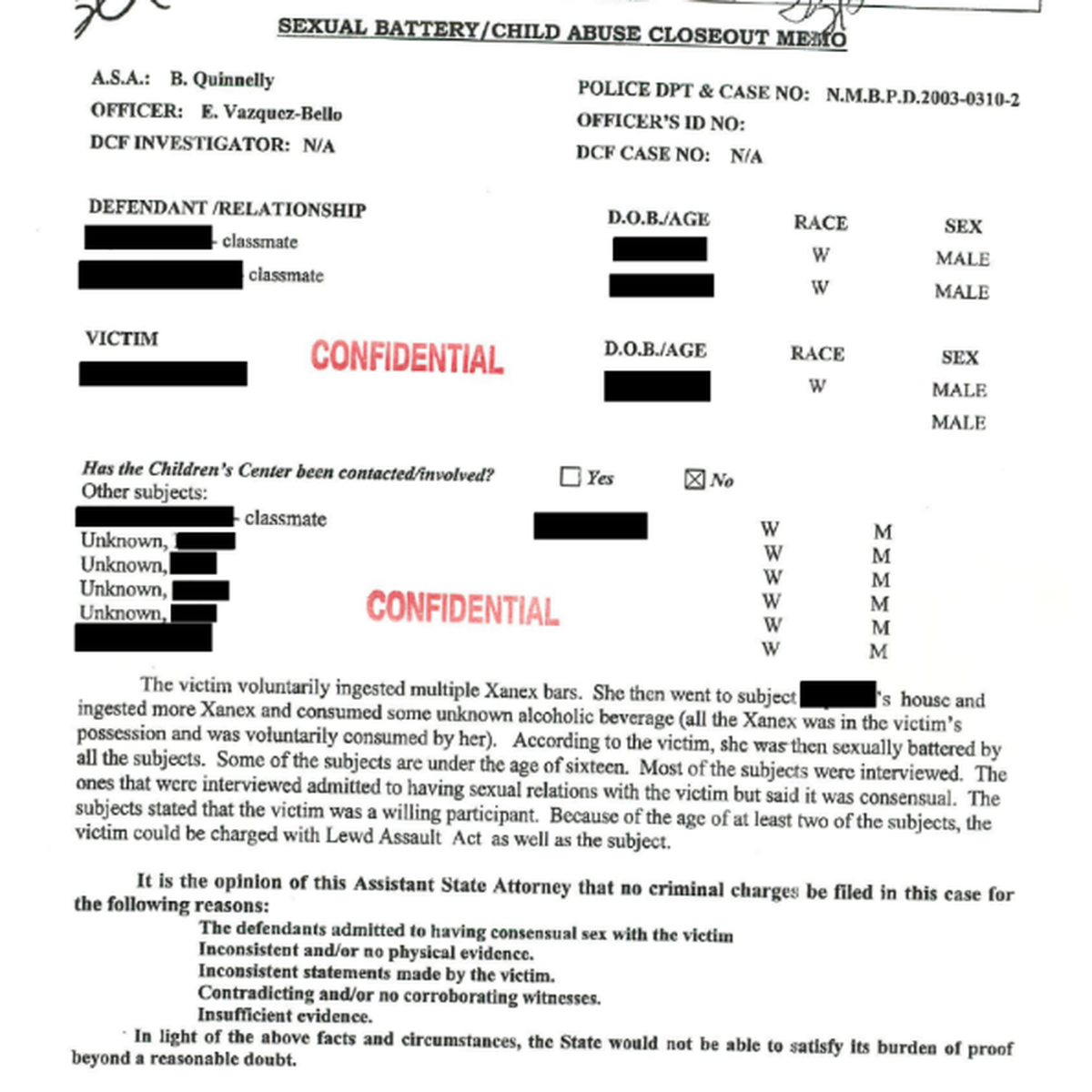
Assistant State Attorney Barty Quinnelly closed out the case on May 28, 2003 – the same day she opened it.
“According to the victim, she was then sexually battered by all the subjects,” Quinnelly wrote in the closeout memo. “Most of the subjects were interviewed. The ones that were interviewed admitted to having sexual relations with the victim but said it was consensual.”
She listed among her reasons for closing the case: inconsistent and/or no physical evidence; inconsistent statements made by the victim; contradicting and/or no corroborating witnesses; and the fact that the boys thought it was consensual.
Quinnelly also pointed to a law in Florida that – while rarely applied this way – could mean the victim would be charged as well. Under Florida statutes, all sexual activity involving someone age 12 to 15 is criminalized as sexual battery, regardless of consent.
Quinnelly died in 2017. It’s unclear what inconsistencies she was referring to – and what resulted from the police taking the girl’s clothes.
Adriana Alcalde, a former Broward State Attorney sex crimes prosecutor who reviewed the police report and Quinnelly’s closeout memo, said it was evident that the victim was “heavily intoxicated and not in any position to consent to sex.”
She said it probably wouldn’t be an easy case to prove, but it could have gone forward.
“Even if they were both 15, if she was too intoxicated to give consent, it’s rape,” she said.
The state attorney at the time, Katherine Fernandez Rundle, still runs the office today. In December 2024, she announced charges against the twins in two state cases stemming from Miami Beach alleged rapes in 2016 and 2017 – the same day the federal government arrested all three brothers. Oren is charged in both state cases and Alon is a co-defendant in one.
Ed Griffith, a spokesman for the state attorney’s office, said “legal problems inherent in the case,” noted by Quinnelly, led to her decision in 2003.
“Prosecutorial ethics require that an ASA [assistant state attorney] must believe that they have sufficient evidence to prove a case beyond a reasonable doubt in order to file a criminal charge,” Griffith said in a statement to the Herald.
Juan Pinillos, the current North Miami Beach Police chief, said the department could not answer specific questions – like why not all the boys were interviewed – because the lead detective in the case had retired, and so much time had passed.
“While we cannot speak to the specific reasoning behind individual investigative steps in this case, we are confident that the protocols, procedures, and oversight in place at the time were followed in good faith,” Pinillos wrote in an emailed statement.
‘Why stop if you never got caught?’
The brothers grew up in a waterfront mansion in Bal Harbour. Their parents, Orly and Shlomo Alexander, along with Orly’s brother, started a security firm, Kent Security Services.
As children, they attended Scheck Hillel Community School, a private Jewish day school near North Miami Beach, and then Highland Oaks Middle School near Aventura. By the end of his freshman year, in spring 2001, Tal was already playing tennis for Krop. The twins began high school that fall.
The same year, Abigail Hofeldt left her all-girls school in New York for Miami Country Day. She heard a story from her new classmates about a group of boys who had raped a girl after giving her Bacardi 151 – rum with an alcohol content of 75.5% that Bacardí later discontinued.

Around fall 2002, during her sophomore year, she went to a party that was about to be broken up by police when she arrived. A boy there drove her, a friend and other boys to a house, claiming there was an “after party,” she said. There, someone handed her a bottle of Bacardi 151.
Remembering the warning from her classmates, she pretended to drink it.
“I was prepared the minute I saw that bottle,” she told the Herald.
The boys pushed her into a room, locked the door, pinned her down on a bed, and tried to take off her pants, she said. All three brothers were in the house.
Tal was on top of her, humping her over her clothes, she said. Out the window, two boys stood with a camcorder.
“They were really violent and like, pushing me, and like, tried to rape me,” Hofeldt remembers later telling her friend at a sleepover.
She unclasped the necklace that Tal was wearing and took it “as proof,” she said. As she tried to leave, one of the twins knocked her over, she said. She managed to stick her foot in the door as a boy opened it, and demanded someone drive her home.
Her friend refused to go to the police with her because she didn’t want to get in trouble for sneaking out to a party, said Hofeldt, who didn’t want to go alone. Her friend declined to speak with the Herald. But after news broke of the brothers’ arrest in Miami Beach in 2024, she sent Hofeldt an email, which the Herald reviewed.
“I remember the night, I’m so sorry I couldn’t save you, they just locked you in the room and I was helpless and just kept saying to leave you alone,” the friend wrote.
Hofeldt gave the necklace, a thin gold chain with a gold die, to a different friend for safekeeping.
That friend, who asked to only be identified by his first name, Gavin, for fear of retaliation, told the Herald that Hofeldt confided in him about the assault just days after it happened. He recounted the details she described – how they held her down, that she said there was a camcorder. He still has the die.
He also said he saw “little circular bruises” on her arms and legs.
“They looked like, you know, someone that had been, either restrained or held down, almost like if you had been tied,” Gavin told the Herald.
Several months later, a boy pretending to be Holfeldt’s crush texted her to hang out. Instead, multiple boys, including Alon, showed up at her home in the middle of the night. When she opened the door, they came into her house, and masturbated in front of her, she said.
John Davies, the Miami Country Day principal at the time, told the Herald he did not recall hearing about the brothers, and had “no idea” who they were until they were arrested.
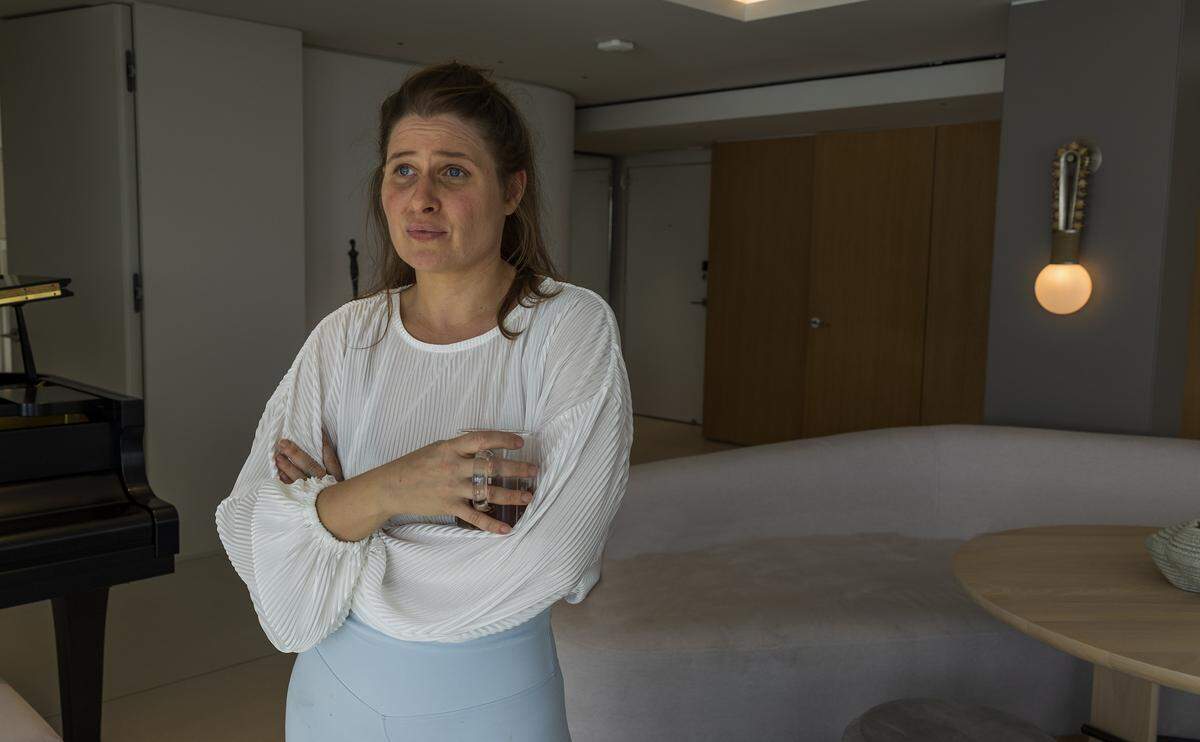
Four of the six women who spoke to the Herald described a group of boys involved in their assault or rape. Half of the six women left the two schools afterward.
One said that, as a 13-year-old eighth grader at Country Day, she was at a classmate’s house when a group of boys, including Tal, assaulted her. It was around the same time as Hofeldt’s alleged assault, fall 2002.
She and her friends frequently hung out at the brothers’ friends’ houses. One day, someone handed her a drink, and she became “extremely incapacitated,” no longer able to walk or even lift her head.
Like the girl who would later report a rape to police, she remembers only flashes of a group of boys around her. She remembers Tal being part of the group.
“They dragged me back to this bedroom and, like put me on the bed, kind of stripped off my clothes from the waist down, and started fondling me, fingering me. I was penetrated,” she told the Herald. “I remember there being a little red light from like a camcorder.”

“I remember being shoved into a closet at a certain point, and then my friend came and got me, and she helped me out of the house,” she said.
She threw up in the driveway.
She said around the same time, she was pulled into the guidance counselor’s office because of sexual harassment and rumors circulating about her. She didn’t share what had happened with Tal. Her parents sent her to a different school.
“There was no one in my life I felt like I could talk to about any of this,” she said.
She described routine sexual harassment at school, and said many of the girls had similar stories.
“Most of the boys that we went to school with behaved like this. It was a lot of like, yeah, like, gang rapey type stuff, lots of like, you know, running trains. That’s what they used to call it, you know, where, like, they just have sex with you one after another,” she said.
“And I swear to God, like we just thought that this was what sexuality was. That was just kind of the culture of Miami at that time.”
A fourth woman said she would often hang out at the Alexanders’ home in Bal Harbour during her freshman year, between 2002 and 2003. She had consensual relations with Alon, but said frequently the line of consent would blur or be crossed into rape. She said that all three raped her, and she stopped hanging out with them.
“They would just get you very drunk and then to the point that you can’t, like, get away,” she told the Herald, speaking on the condition of anonymity.
“Essentially, even if you said no, like, it would continue,” she said.
She didn’t tell anyone, blaming herself for hanging out with them. She said she was “pretty shocked” to see they had continued with the same behavior. Then she paused.
“I guess that wouldn’t surprise me,” she said. “Why stop if you never got caught?”
‘I remember feeling my body go away’
Engelmayer said the men’s parents, Shlomo and Orly Alexander, did not receive complaints about their sons in high school and had no any knowledge of the alleged rapes. They deny assertions that any of the rapes happened at their family home in Bal Harbour.
“The Alexanders categorically reject any suggestion that girls were ‘lured,’ trapped, or systematically preyed upon,” Engelmayer wrote. “These retrospective allegations are being framed today in a dramatically different light than they were understood by participants and peers at the time, including by individuals who continued social relationships and friendships afterward.”
“It is also important to avoid rewriting ordinary high school social behavior from 25 years ago into something more sinister without careful scrutiny, corroboration, and fairness to everyone involved,” he said.

Two other women told the Herald that Tal assaulted them while in high school.
One said she was a 14-year-old freshman at Krop. He handed her a drink while she was hanging out with a group of people at his parents’ home in Bal Harbour around late 2002 or early 2003. She said she believes she was drugged.
“I remember walking there, as I’m walking there, I’m feeling my body go away,” she said.
She could barely stand, she said. He put his arm around her shoulders and led her into a bathroom. A camcorder was propped up on the sink, and he forced his penis in her mouth. She remembers running out of the house barefoot and waking up at a friend’s house, but not how she got there.
She didn’t tell anyone, but her behavior changed – she quit activities she loved, stopped going to classes and seeing friends – and her mother pulled her out of the school.
In 2004, Melissa, the other woman, woke up in the back of a car with no pants and her underwear around her ankles. Then a junior at Krop, she was in the same grade as the twins.
“What’s going on? What’s happening to me?” she yelled.
She had gone to a party with her friend and that friend’s boyfriend, she told the Herald. She had one drink and blacked out, and believes she was drugged.
She did not know who assaulted her, nor does she remember the assault. Her boyfriend at the time confronted boys who attended the party, she said. They told him Tal went upstairs with her.
The friend’s boyfriend told the Herald that he remembered Melissa making accusations against Tal at the time.
‘Everyone knew’
Amanda G. Altman, the CEO of Kristi House, a Miami child advocacy center, said she was “disgusted” to hear these stories.
“You just have to believe that there were people who knew and didn’t do anything for it to have been this prevalent,” she said.
Videos circulated the schools, several Krop, Country Day alumni and some of the alleged victims said. One woman told the Herald she saw a sex video of her friend uploaded to Kazaa.com or LimeWire, online file sharing platforms. Hofeldt said she once saw the brothers watching sex videos outside a party on screens installed in their car, and believed the videos were of her peers because they looked “homemade.”
At Krop, in the 2004-2005 school year, a video of a girl having oral sex was played on a screen in front of her classmates in place of morning announcements.
The Herald confirmed the incident with multiple sources, including a classmate who remembered seeing it, and the girl afterward in tears. The brothers do not appear to have been involved in that incident.
Enid Weisman, who was the inaugural principal at Krop from 1998 to 2001, told the Herald that she was “stunned” by the news of the brothers’ arrests on federal sex-trafficking charges in 2024.
“I had a lot of contact with the school,” said Weisman, who continued to work with the school district. She said she didn’t hear anything. “Not a whisper. Nothing.”
Still, at least one former Krop teacher told the Herald she thought the administration was aware.
“Everyone knew. Some of the other boys were doing it with them,” the former Krop teacher told the Herald. “They were gangbanging these girls and taking videos of them.”
Women would later say the brothers continued to film assaults as adults. In the federal case, Oren was convicted of sexual exploitation of a minor for recording himself and another person “engaging in sexual activity with a incapacitated 17-year-old girl in Manhattan” in 2009.
‘We used to do it with tequila and Xanax’
At Krop, the brothers and their friends were known for throwing parties. Oren would even brag about it in a 2022 interview.
“My brother and I, you know, were sort of responsible for the social life for a lot of our friends,” he said. “In school I remember we were throwing the high school prom parties when we were like sophomores. We were throwing it for the seniors.”
.jpg "party tik (2).jpg")
After high school, the brothers went to different colleges: Oren to the University of Colorado in Boulder, Alon to the University of Maryland in College Park, and Tal to Hofstra University in Long Island, New York.
By the end of Oren’s first semester in college, the University of Colorado Police Department had been called to investigate him for alleged sexual battery, according to a university police report obtained by the Herald.
The woman who filed the report said she didn’t know if she was taken advantage of or raped. She had been hanging out with friends in her dorm room when Oren Alexander took off her clothes, and started having sex with her, she said.
“I don’t know if I got scared or I kinda blocked it out, but like, all I remember is like all of a sudden he was on top a[sic] me, like, and it was kind of, and just very rough,” she told the officer, according to the report. “I just was too afraid to speak up. Like the words couldn’t come outta my mouth.”
She declined to pursue charges, and the investigation was closed.
The brothers built a lifestyle of luxury across New York and South Florida after college, frequently traveling to hotspots like the Hamptons and Aspen to party, and vacationing abroad.

Alon worked for his family company, Kent Security Services. Oren began working as a broker at Douglas Elliman in New York, and with Tal, they formed the “Alexander Team.”
“I’m out networking and partying with everyone,” Oren told the Real Deal in a 2011 article on young real estate “Moguls in the making.” He was labeled “The Party Boy.”
In 2013, an article in Details Magazine, titled “Meet the new rock stars of real estate,” described Oren and Tal as “real estate royalty.”
In the federal trial in Manhattan, prosecutors shared texts between the brothers and their friends to build their case. Some of their old high school friends, including a man named Erik Yehezkel, were in their group chats. Hofeldt said Yehezkel was in another room of the house during her high school assault. Neither Yehezkel nor his attorney responded to requests for comment.
In 2016, they went to Tulum, Mexico, for Erik Yehezkel’s 30th birthday celebration.
“I don’t want anyone being upset if they don’t run a 10 man train,” Yehezkel texted in a group chat titled “Lions of Tulum.” While he is identified only as “Male-1” in the federal indictment, prosecutors later identified him as the man behind the texts in the trial.
“Boys need to hunt we are running out of prey,” Oren wrote in a group chat in July 2017, according to trial transcripts.
On June 29, 2020, Yehezkel wrote in a group chat: “Yeah, let’s get these girls real wasted. Maybe we’ll be able to bang ‘em easier.” Alon responded with laughing emojis.
“We used to do it with tequila and xanax,” Yehezkel texted.
‘Know that we were all victims’
It took nearly two decades of rape accusations before the men would be arrested. At each stage of their lives, women would later say it was an open secret.
“Every friend I talked to would say either them, or their friend had been assaulted by him,” a woman told Miami Beach police detective Jessica Pascual in August 2024, while reporting that Oren raped her in 2017. “It was like everyone in Miami knew.”
She told the detective she heard he once raped a 13-year-old – and that she “heard stories about the pool stick girl.”
On Dec. 11, 2024, about 40 FBI agents planned to meet Miami Beach police at 5 a.m. at the Miami Beach Golf Club on Alton Road – the halfway point between the twins’ Miami Beach homes.
They surrounded both houses with patrol units, an operational plan shows, and arrested Oren and Alon in Miami Beach. Federal agents arrested Tal – visiting from New York – at his father’s home in Bal Harbour.
“The Alexander Brothers are serial violent rapists who have been drugging and forcibly raping women alone and together for years,” read a federal indictment filed the day before.
The women interviewed by the Herald watched as the news unfolded. They are now in their mid-to late 30s.
Some moved across the country. Some got married, and several are raising young children. Some never told their partners or friends – and are only beginning to talk about it.
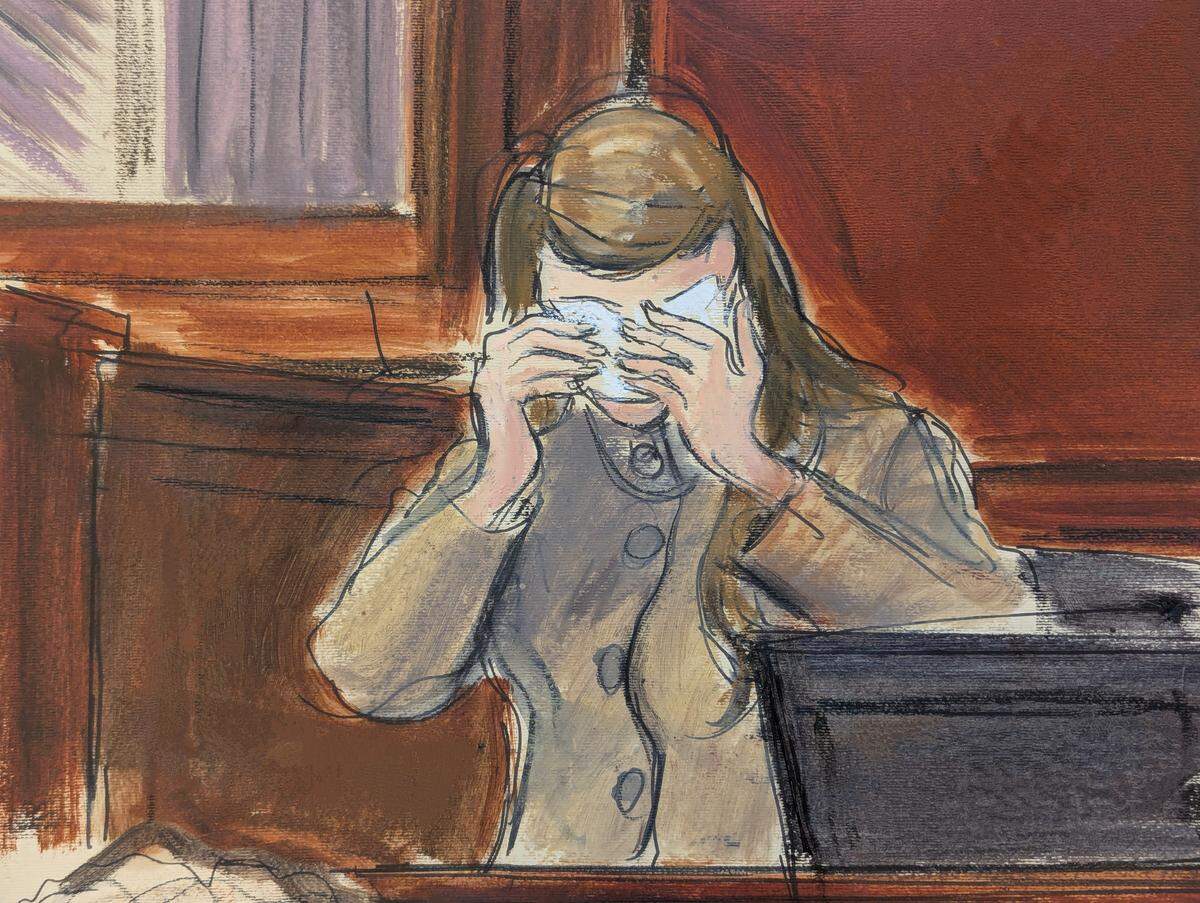
Some spoke to authorities after the first accusations against the brothers became public. The woman who said she was raped in eighth grade met with Miami-Dade police. Three others shared their stories with the FBI – including Hofeldt and the woman who filed the 2003 police report.
So did the woman who said Tal led her into a bathroom, and propped a camcorder on the sink. She recently told high school friends what happened. Often, she thinks about what she might say to her younger self and those other girls.
“Know that we were all victims,” she said. “And that, however we ended up there, we were exploited.”
When the verdict was announced, she was making dinner for her three children. A friend from high school sent her an article showing the guilty verdict.
“Thank f—-- God. Love you,” the friend texted.
She got goosebumps and began to cry.
This story was originally published May 19, 2026 at 5:30 AM.