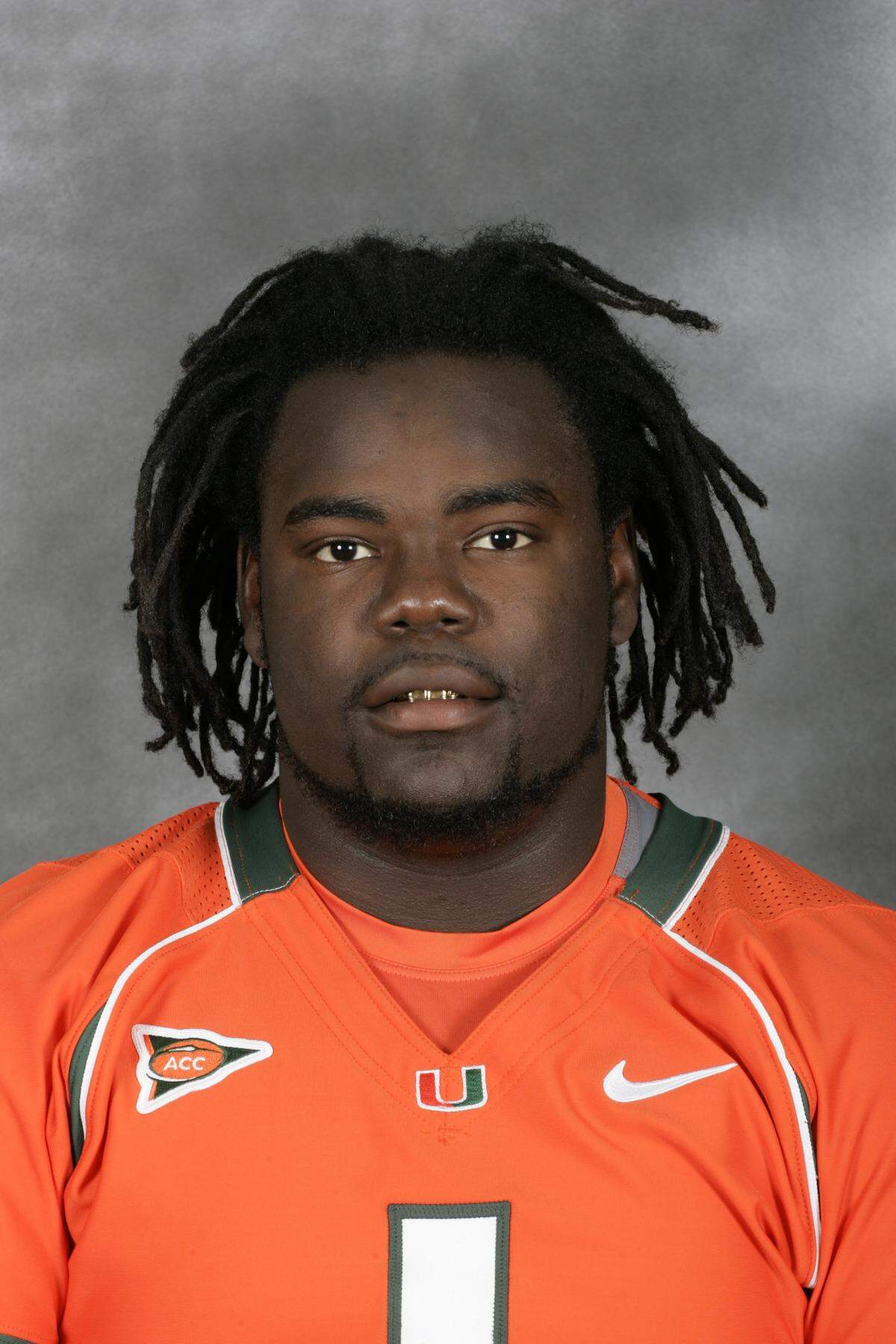
Did he kill his UM football star teammate in 2006? Jury is deciding
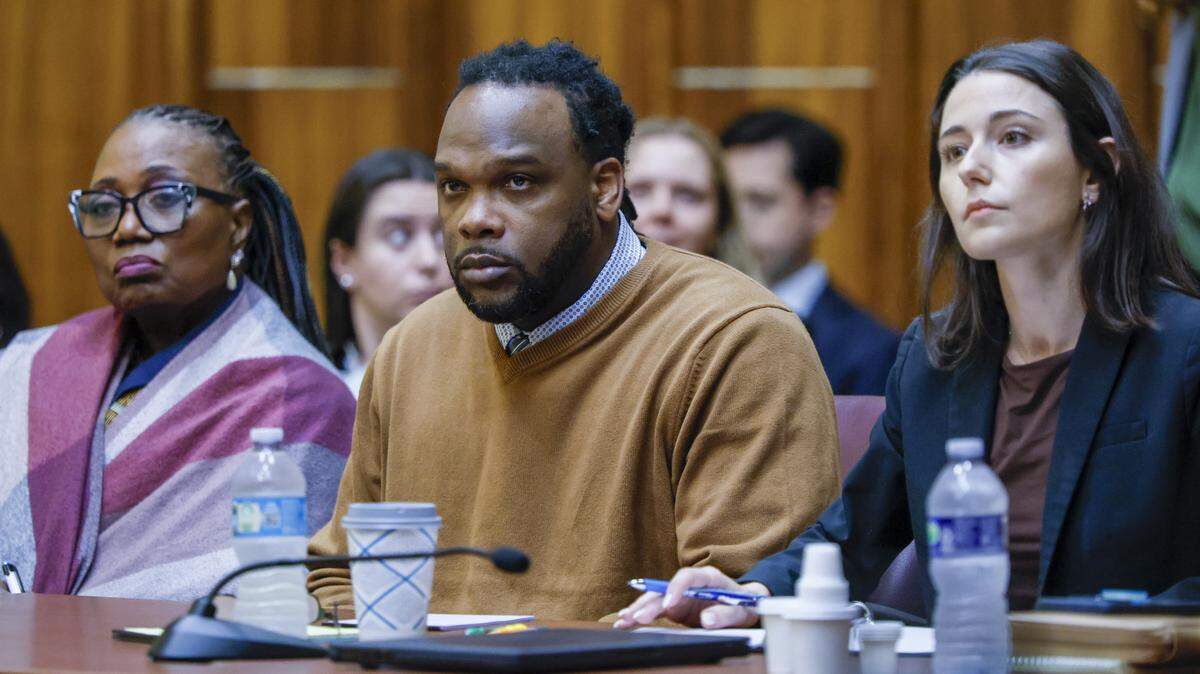
The fate of the man accused of gunning down his University of Miami football star teammate is in the hands of the jury.
The six-person jury began deliberating Thursday afternoon whether Rashaun Jones is guilty of the murder of his teammate Bryan Pata. Pata, a 22-year-old Hurricanes star defensive lineman expected to be a top NFL draft pick, was shot and killed on Nov. 7, 2006, outside his home at the Colony Apartments in Kendall. He had just returned from football practice.
Jones, 40, who is on trial, was arrested on a second-degree murder charge in 2021, 15 years after Pata’s death. He has pleaded not guilty.
Prosecutors on Wednesday rested their case as did the defense — without presenting any witnesses. Jones declined to testify.
During closing arguments later that day, prosecutor Cristina Diamond compared Pata’s and Jones’ lives at the time of the killing.
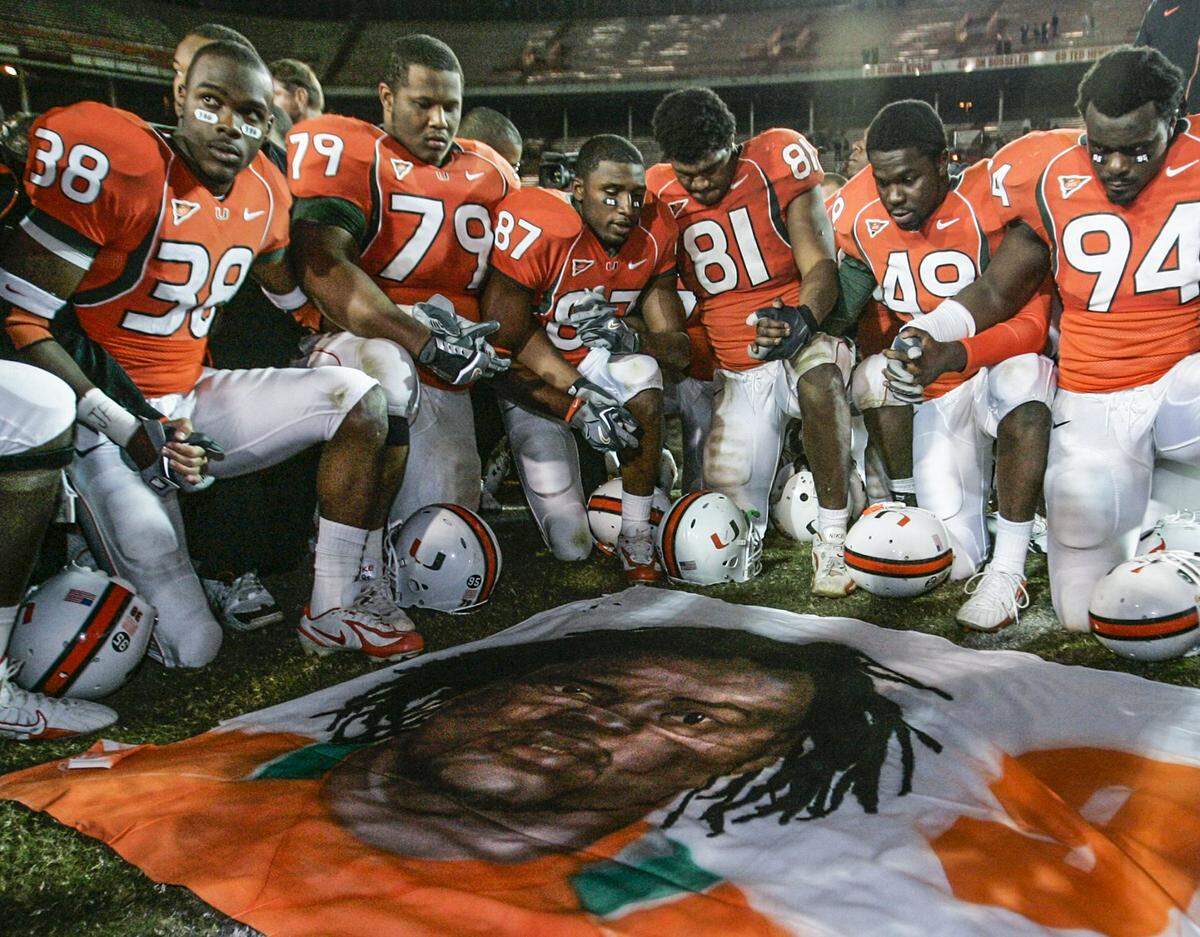
Pata was a standout defensive lineman certain to be drafted into the NFL. Jones, who had been a star football player in his hometown of Lake City, Florida, was no longer in the spotlight — and was mostly confined to the bench.
“Bryan has everything the Defendant wants,” Diamond said. “He choses to have jealousy overtake him, and he kills Bryan Pata.”
Diamond pointed to a series of fights and arguments between Pata and Jones while they were both Hurricanes. Jones’ jealousy, she said, was compounded by that his football dreams were dwindling: Jones was suspended from playing for testing positive for marijuana.
READ MORE: Bryan Pata had fought teammate accused of killing him, friend of UM star says
That led Jones to the Colony Apartments — and had him “lying in wait” to confront Pata, Diamond said.
“He knows that practice is over,” she said. “He knows that Bryan Pata is on his way home from practice.”
But Jones, the prosecutor added, was spotted by Paul Conner, a UM professor who was returning home from work. Conner testified that he heard the “pop” of a gunshot and saw a man emerge from the direction of the sound.
He identified Jones out of police photo line-ups on two different occasions.
“He sees [Jones] up close, right by the sidewalk. There’s no one else around,” Diamond said. “Paul Conner doesn’t notice that Bryan Pata is in the bushes.”
As the investigation ensued, the coincidences started to build up, Diamond said: The history of bad blood between Jones and Pata. Jones’ absence from the mandatory team meeting after Pata’s murder. Jones’ locker room references to having “a 38 on me,” which prosecutors said was linked to a .38 caliber revolver and not his jersey number.
Standing before the jury holding a beige rope, prosecutor Kristen Rodriguez acknowledged the evidence was circumstantial. The case, like the rope, she said, was made up of different threads, all of which came together to point toward Jones.
READ MORE: Ex-teammate’s name kept coming up in UM football star’s murder probe: detective
“Everything adds up to one individual, and that is the Defendant,” Diamond said. “There is only one verdict that makes sense, and that is that the Defendant is guilty of the homicide of Bryan Pata.”
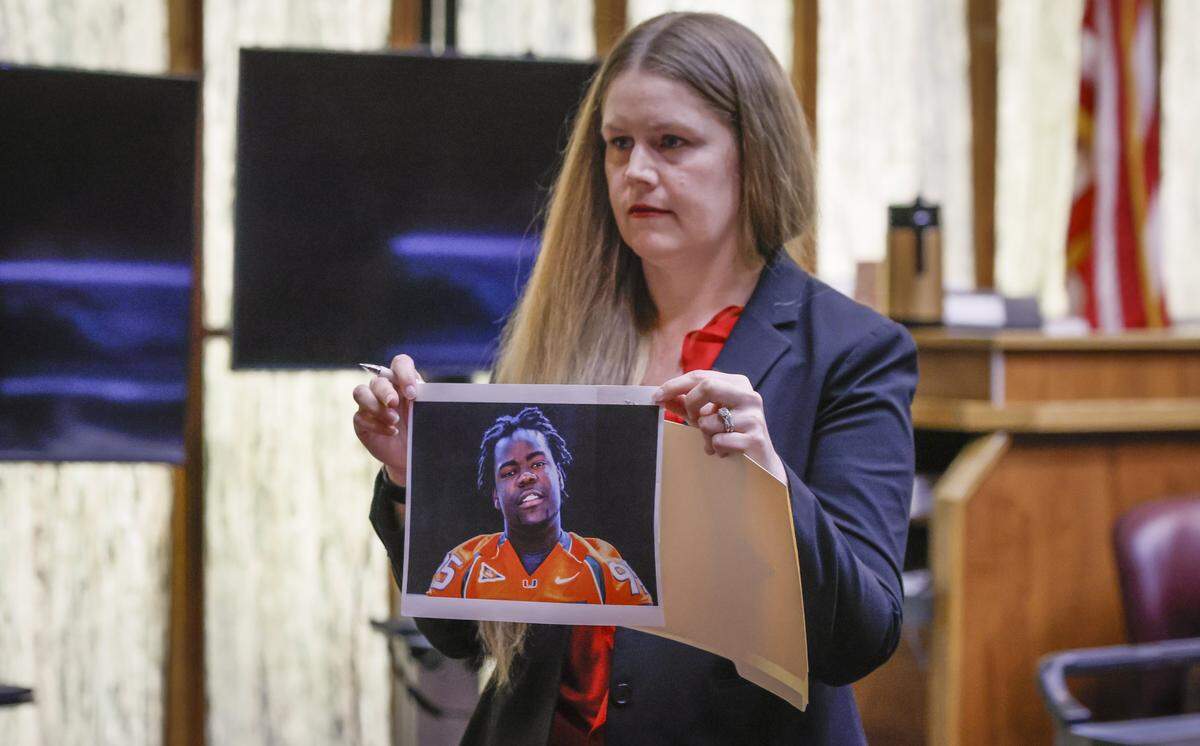
Turning to the jurors, defense attorney Christian Maroni proclaimed Jones’ innocence. Prosecutors, he said, equated innocent acts to murder, which “snowballed out of control” and led to Jones being charged with the killing.
“Rashaun Jones is not responsible,” the attorney said. “Rashaun Jones had nothing to do with [Pata’s] death.”
Throughout his closing argument, Maroni poked holes in the prosecution’s theory. Jones, he said, didn’t attend the team meeting because he was suspended and felt embarrassed. And the arguments between Jones and Pata were not uncommon in “locker room dynamics for a Division 1 football team.”
“There was no direct competition between Pata and Rashaun Jones,” Maroni said, adding that Jones, a defensive back, played a different position from Pata. “Not the type of competition that can drive someone to commit homicide.”
Maroni then zeroed in on the eyewitness testimony of Conner. The former UM professor, the attorney said, testified that the area was not well lit, and Conner wasn’t wearing glasses at the time despite having bad vision. Conner also only got a glance at the man who ran off for no more than two seconds.
Holding up the photo line-up, Maroni said Jones’ photo stands out compared to the other photos because Jones’ photo was darker than the others. Conner, the attorney added, could have misidentified Jones from spotting Jones on the sidelines of a game or on the football roster — especially since Conner identified Jones in the line-up seven months after the murder.
Maroni, too, focused on how the case was circumstantial, saying there was no “direct, credible evidence” tying Jones to Pata’s murder. Instead, prosecutors made “several leaps” to try to link the fatal bullet to Jones, Maroni said.
A firearms expert couldn’t testify that the bullet retrieved from Pata’s head was .38 caliber, Maroni said, as the bullet broke within Pata’s skull. But prosecutors, he added, still alleged that a .38 revolver Jones owned was the murder weapon, despite conflicting testimony about whether Jones owned a gun.
READ MORE: New evidence of hitman, Haitian gang in UM football star’s murder, defense says
Maroni also highlighted how possible suspects were quickly ruled out, including a man whose fingerprints were found on the hood of Pata’s car.
Urging the jury to find Jones not guilty, Maroni told jurors they had to feel confident to render a guilty verdict — to the point they are comfortable when their heads hit the pillow at night.
“[Prosecutors] have not met their burden because they cannot meet their burden,” Maroni said.