Bryan Pata had fought teammate accused of killing him, friend of UM star says
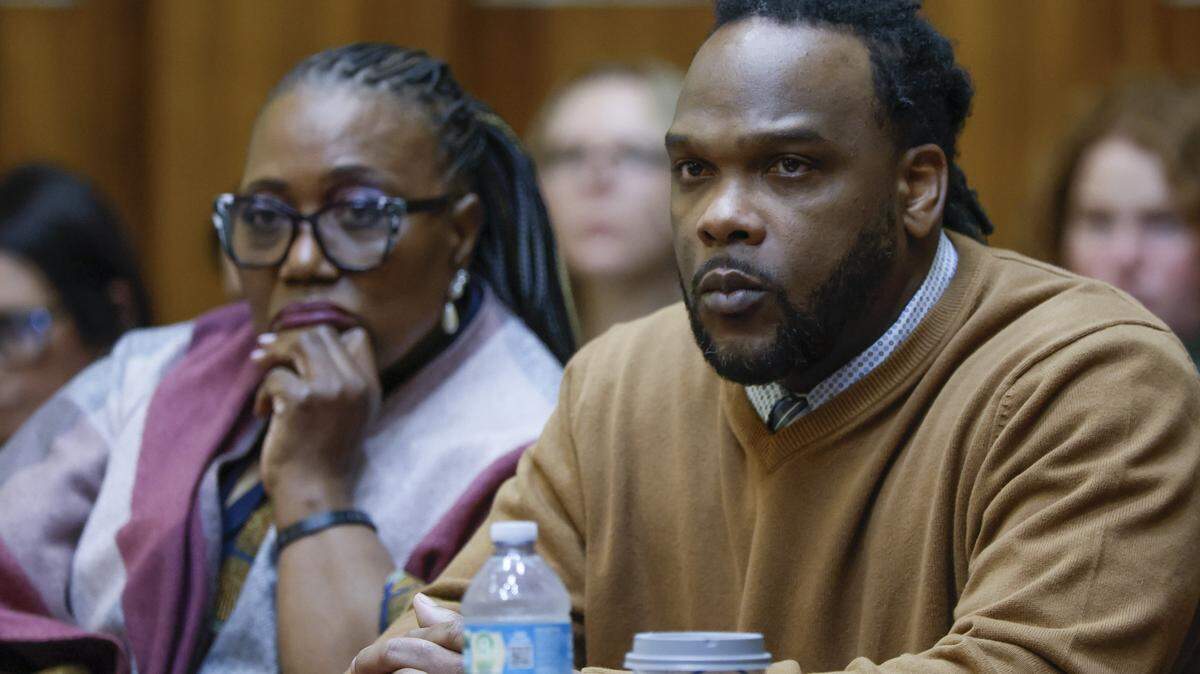
Some witnesses testified Thursday about contention between Rashaun Jones and Bryan Pata while others said there was nothing unusual about college football players butting heads, but they couldn’t recall all the specifics leading up to and following Pata’s murder on Nov. 7, 2006.
Pata, a 22-year-old Hurricanes star defensive lineman who was expected to be a top NFL draft pick, was shot in the back of his head and killed outside his home at the Colony Apartments in Kendall. He had just returned from football practice.
Jones, 40, continued to stand trial on Thursday on a second-degree murder charge in front of Miami-Dade Circuit Court Judge Cristina Miranda and nine jurors. Jones was arrested 15 years after his former teammate’s killing and has pleaded not guilty.
There was a rivalry between Jones and Pata over women and sports, prosecutors argued during opening statements this week. Dave Howell, who called Pata one of his best friends, testified Thursday there were several altercations involving Jones and Pata.
In one incident, Howell, Pata and Jones were in a dorm room, he said. They were questioning Jones about why he was there. When Jones tried to leave, Pata punched and headbutted him. Howell said he was stunned when it happened.
Howell, who also played football at UM, saw Jones with a gun during the fall of 2004, he said. They were “slapboxing,” which is a type of open-hand sparring, but in a playful way. Jones then showed him a gun, Howell said.
There were also disputes over women, Howell said. Pata’s girlfriend said something about Jones, so Pata confronted Jones. Howell didn’t elaborate about what Pata’s girlfriend said about Jones.
“It was just words between them, nothing physical,” he said of that Pata-Jones incident.
Howell said his then-girlfriend commented that Jones made two advances at her. When Howell confronted Jones, he essentially told him to get over it.
Howell said he was devastated when he learned Pata had been killed.
“I fell down,” Howell said while becoming emotional. “I started crying.”
It was an emotional day in court all around. Pata’s mother left the courtroom sobbing while someone was testifying. The prosecutors and the defense team became heated with one another repeatedly over the evidence, witness scheduling and lines of questioning. After one interaction, Judge Miranda instructed a defense attorney to change her tone.
Former New York Giants cornerback Bruce Johnson said he never saw Jones with a gun, wouldn’t characterize Jones as a bully and never witnessed Jones fighting with Pata.
It wasn’t unusual that sometimes football players didn’t get along or weren’t friendly with each other, according to Johnson.
Johnson testified he grew up with Jones in Lake City, and they both went to play for the Canes. They have remained friendly and in contact since college.
It was hard to remember some of the specifics from Nov. 7, 2006, according to Johnson, who added he did not want to testify and was forced to through subpoena. Johnson was on campus when he found out that Pata was killed, he said. He called several teammates, including Jones, to come to the university for a team meeting.
“Everybody was just shocked,” Johnson said.
Jones didn’t show to the meeting, Johnson said, but there might have been others who didn’t either. He couldn’t recall if Jones reached out to him later in the evening or what was said, and Johnson couldn’t identify his own phone number from that time in court records. He knew Jones was suspended at the time for failing a drug test for marijuana.
William Hellman, who was formerly assigned to the homicide bureau of the Miami-Dade Police Department, said he went to the Hecht Athletic Center for the meeting, and his understanding was all of the players were accounted for except Jones that night. Hellman didn’t take his own roll call, though, he said.
Michael Sanders testified he met Jones at UM, and they became friends.
On the day of Pata’s murder, Jones called Sanders, who played baseball at UM, and asked for money, he testified. Sanders’ parents owned KFC franchises. He found the call odd given the circumstances and told a coach.
However, he didn’t remember or know how much money Jones asked for, the words he used or why he needed it, Sanders said. He didn’t know where Jones lived or his financial situation.
“I don’t recall,” Sanders said.
Murder-for-hire theories have been raised. Jones’ defense lawyers previously said they received information from an Immigration and Customs Enforcement investigation involving a special agent who had intel from a confidential informant about a hitman and gang members related to Pata’s killing. In a separate incident, an ESPN investigation found that jail inmate Bernard Brinson said a fellow inmate told him he killed Pata for money.
Jurors are expected to return Monday morning to continue considering the evidence. If convicted, Jones would face a life sentence.
This story was originally published February 19, 2026 at 2:58 PM.