A La Carreta waitress was strangled, stabbed 20 years ago. Jury to decide killer’s fate

The man previously on Florida’s Death Row for beating, stabbing and strangling a La Carreta waitress with a rice cooker — before lighting a blaze to destroy key evidence — should be condemned to die, Miami prosecutors told a jury after detailing the slaying on Wednesday morning.
Rafael Andres, 61, was convicted in 2014 of the 2005 murder of 31-year-old Yvette Fariñas. Fariñas, who was a waitress at La Carreta’s Miami International Airport restaurant, had hired Andres, a handyman, to do renovations at the efficiency she lived in with her boyfriend.
Andres — originally sentenced to death by a jury in a 9-3 vote — was granted a new sentencing trial due to constitutional issues surrounding the state’s death penalty. Andres is already serving a life sentence on other charges stemming from the murder.
READ MORE: Miami handyman brutally killed La Carreta waitress. Will he face death penalty again?
On the morning of Jan. 24, 2005, Andres used a spare key to enter the efficiency — with the intent of killing Fariñas — and beat her in the face until she gave up her ATM card’s pin code, prosecutors say. Andres held her wrists and stabbed her three times in the chest — but Fariñas didn’t die.

He then put a dish towel over her face and strangled her with the cord.
“She tried to claw it off,” prosecutor Mary Ernst said. “She was awake and terrified when this man broke into her home on a random Monday morning...”
Neighbor saw him before blaze
After killing Fariñas, Andres drove his work truck to a gas station and filled a canister with gas. He set a blaze, but a neighbor spotted Andres leaving the home moments before the crime scene went up in flames and called 911. Fariñas was killed inside her efficiency, located in the 7300 block of Southwest 12th Street.
Andres used Fariñas’ ATM card to withdraw cash, buy goods at The Home Depot and pay for a stay at the Miccosukee Resort and Casino. In his spending spree, he fleeced more than $1,600, according to prosecutors.
“This was no accident,” Ernst said. “This was heinous, atrocious, cruel, tortious and vile.”
‘Young, vibrant’
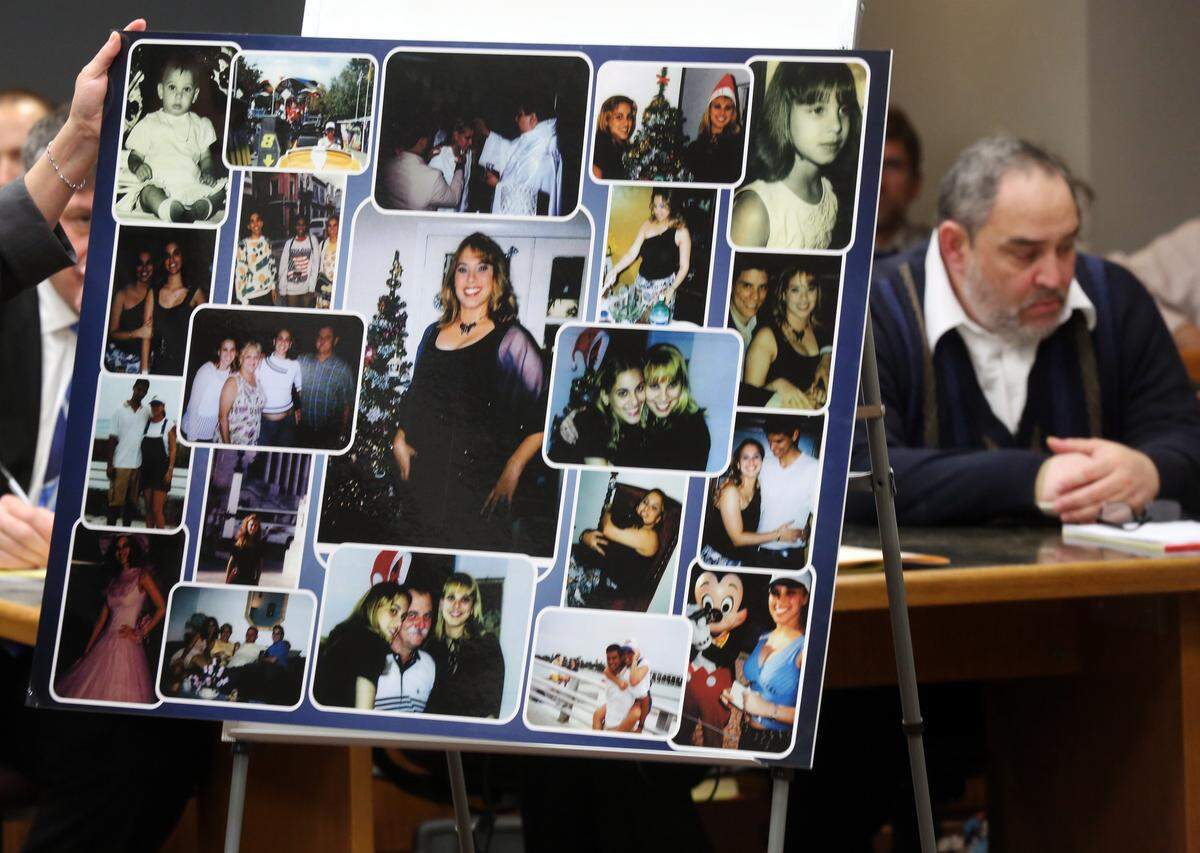
Facing the jury, Ernst held a large photo of Fariñas smiling — and another of her body after the grisly attack. In 1999, Fariñas moved to Miami from Cuba, where she left behind a small family. At the time of her murder, she was interviewing to become a federal security officer at the airport.
“She was young, she was vibrant,” Ernst said. “She was a woman on the cusp of her life.”
Andres, sandwiched between his attorneys, had his head down and looked at the table as Ernst delved into the events leading up to — and following — Fariñas’ killing.
“He beat her, he stabbed her, he strangled her, and he tried to burn down her house,” Ernst said. “The defendant knew he couldn’t get caught again.”
In 1988, Andres was convicted of stabbing to death 32-year-old Linda Azcarreta, a friend of his wife. Andres claimed he killed Azcarreta on March 9, 1987 in a frenzy of drug use. He cashed a $100 check meant for her after the murder.
Andres pleaded guilty to the killing and was sentenced to nine years but walked free after just 18 months due to his good behavior while behind bars.
Andres “didn’t learn his lesson” — more evidence that the “only proper punishment is death,” Ernst said.
Death in prison is his fate
Standing before the jury, defense attorney Sean Marcus said either way, Andres will die behind bars at a Florida prison.
“He will live the last of his days locked up in a cage,” the attorney said. “The only way he will ever leave prison is in a pine box, in a casket. This is punishment for the crimes he has committed.”
Marcus also delved into Andres’ beginnings: Andres was born in Cuba to a deadbeat alcoholic who beat him. Andres’ mother separated from his father and began seeing a man who took in Andres.
But when Andres moved to the U.S. around the ‘80s, his life took a turn for the worst, Marcus said. He and his family worked in Miami’s cocaine-trafficking business — and Andres began to dabble in drugs.
‘Cocaine rage’
Years of cocaine of abuse is what led to the 1987 murder of Azcarreta in “explosive cocaine rage,” Marcus said. The drug abuse caused Andres brain damage.
“That existed at or about the time that these events occurred,” Marcus said. “It impacts his judgment. It impacts his reasoning. It impacts how he reacts... His brain is different.”
While locked up, Andres began a journey of spirituality and redemption, Marcus said. He has “adjusted well” to prison life, guided fellow inmates and once stepped in to protect another inmate who was being stabbed.
That, Marcus argued, should support jurors favoring a life sentence.
This story was originally published November 5, 2025 at 2:54 PM.