The Miami Herald’s Fight to Report the Sex Trafficking Case
READ MORE
Dr. Feelgood
A Miami Beach doctor was charged with sex trafficking a teenage girl. Then she was found dead.
Expand All


A key part of any journalism investigation is access to public records.
The Miami Herald’s examination of the Kamlet case began in June.
For nearly every record obtained for this story, the Herald had to either consult with its lawyers, get its lawyers directly involved or use other sources to obtain them. Even after paying legal fees and the costs for the documents themselves, not all the public records were turned over.
Florida is known as the Sunshine State, having one of the most comprehensive public records laws in the nation. This law doesn’t just give access to the media; it also gives every citizen the ability to obtain public documents.
Under Gov. Ron DeSantis, however, records are not easily accessible. Several lawsuits have been filed over the past year, alleging that the governor has failed to comply with Florida’s public records law.
But the DeSantis administration is not the only obstacle the Herald faced with reporting this project.
Almost every clerk’s office in Florida has migrated its criminal records online, where the public can look up a person’s name and view any court documents associated with that person. The clerk’s office in Miami, however, only has the court dockets online, not the actual documents.
The Herald engaged its lawyers to remedy this issue and is still working with the newly elected Miami-Dade Clerk of Courts, Juan Fernandez-Barquin. The clerk has promised to modernize the office so that all records will be online – but that will take about two years. Until then, both the public and the media have to request them in writing and wait weeks – or drive to the clerk’s office in downtown Miami and wait in line to view the files.
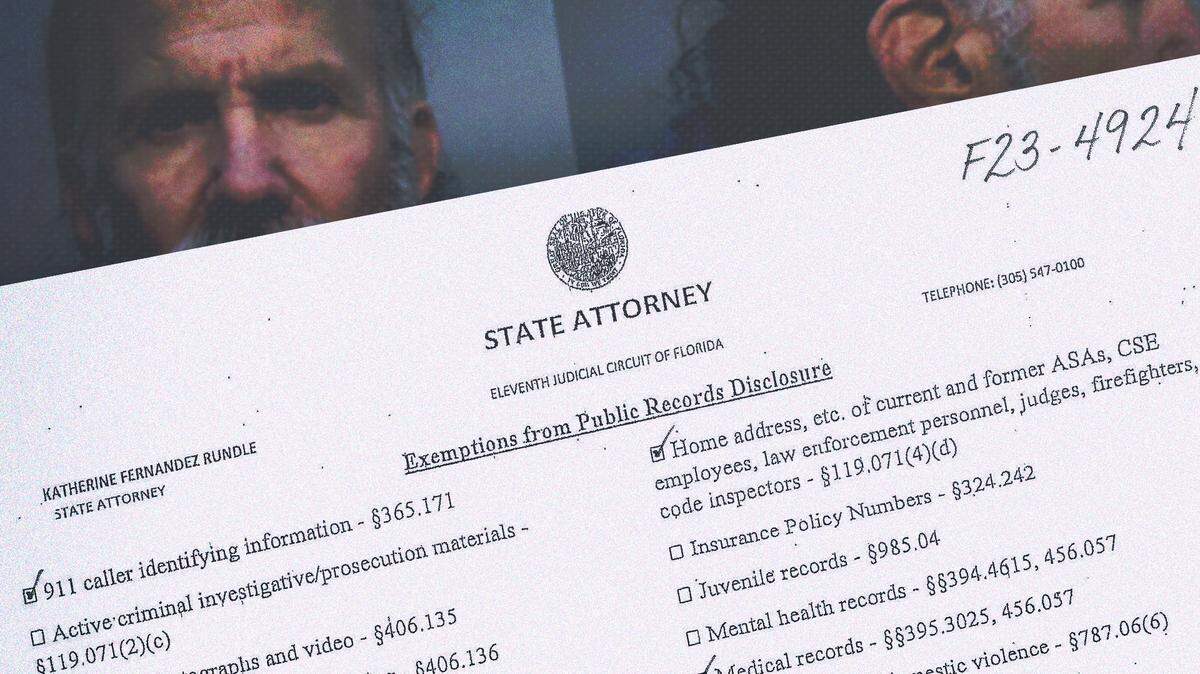
The office of Katherine Fernandez Rundle also didn’t turn over all the records in the Kamlet case and made it difficult to obtain others. The closeout memos for its human trafficking division – which shed light on which cases were prosecuted and which were not – were not readily available as they are in other counties. The state attorney’s office only provided the memos after the Herald researched the state’s sex trafficking statutes. We then resubmitted the public records request based on the statute numbers.
Reporters also became aware of records that were missing from the court file. The Herald only learned about these records from its reporting, learning, for example, that Tara, 16, was interviewed by the state attorney’s office. That interview, which bolstered Gina’s account of what happened, was not in the material turned over by the state attorney. The Herald was also tipped off about letters that had been sent to Fernandez Rundle concerning new allegations against Kamlet that were also inexplicably not part of his case file. The state attorney’s office only turned over those records after the Herald told them we knew they existed.
Here are the other agencies that refused to turn over records:
Miami Beach Police Department: The agency failed to turn over a police bodycam video that showed the victim on the last day she was alive. The police chief also refused to answer any questions about the agency’s protocols in handling cases involving sex trafficking of minors. A spokesman cited an open internal affairs investigation that they opened after the Herald posed the questions.
Miami-Dade Medical Examiner: The medical examiner’s office would not release the victim’s autopsy report or the toxicology report – to either the Herald or the victim’s family – until Dec. 4, after the Herald’s lawyers pressured the county attorney.
Miami-Dade Police Department: The agency’s homicide division is in charge of investigating the victim’s death. Seventeen months after the victim died, the case remains open. Police won’t provide any information to the Herald or the victim’s family about the investigation’s progress. Detectives have not interviewed the victim’s family or friends.
Miami-Dade Department of Corrections and Rehabilitation: The agency initially declined to provide data or records about Kamlet’s ankle monitor. After the Herald got its lawyers involved, they provided some, but not all, of Kamlet’s ankle monitoring. Even after turning over a number of “alerts” about Kamlet’s whereabouts, they declined to explain the circumstances surrounding those alerts.
The Florida Department of Law Enforcement: The Herald submitted a public records request on Aug. 1 for records pertaining to Kamlet’s criminal record. He has at least three additional arrests as recorded by the jail, yet there is nothing in his criminal record to indicate he had been arrested. FDLE failed to respond to a request to provide Kamlet’s TAR reports, which are a record of every time his license was put through the NCIS system. The Herald also reached out to FDLE Commissioner Mark Glass, in an email and also through a state lawmaker, but he did not respond or provide any records to the Herald.
The Florida Department of Health: The department, which is responsible for overseeing and regulating the medical licenses for physicians, took three months to provide the Herald with Kamlet’s medical credentials – which again, were only turned over after pressure from the Herald’s lawyers.
Many mysteries remain. Why don’t Kamlet‘s past arrests show up in police records? Where was he in the days after Gina disappeared? Do police have any suspects in Gina’s death?
Without the transparency of government officials and agencies, and access to public records, these questions may never be answered.
This story was originally published December 23, 2024 at 12:53 PM.