
Surprise decision in Parkland school shooting murder trial: Defense rests its case.
.JPG "FILE PHOTO: Ali Dangelo and her service dog, Strudel, attend a community commemoration event for the Marjory Stoneman Douglas High School victims at Pine Trails Park in Parkland, Florida on Monday, Feb. 14, 2022. The event was held on the 4-year anniversary of the shooting and included therapy dogs on-site, a memory wall displaying photos of the victims, an area to write messages, a brief commemoration ceremony, a video honoring the victims and a drum circle.")
Within days of Nikolas Cruz’s arrest for the deadliest school shooting in Florida history, the Broward Public Defender’s office telegraphed a broad defense aimed at keeping him off Death Row, blaming a turbulent upbringing, severe mental-health issues and failures in how police and the education system dealt with him.
But on Wednesday, at his sentencing trial for the massacre at Marjory Stoneman Douglas High, his attorneys abruptly rested their case, weeks earlier than expected.
In doing so, they opted for a tighter, more focused defense that focused on Cruz’s biological mother drinking heavily while he was in the womb, causing what they cast as a “poisoned” brain and impulsive and violent behavior during his childhood years.
His lawyers announced in court that they had concluded their defense after 11 days and 26 witnesses — the final one a nationally known fetal alcohol researcher who testified that Cruz’s birth mother drank heavily during her pregnancy with the future school shooter. The decision surprised the judge and prosecutors, who had been told the defense would call 80 witnesses.
The defense decision means that after a state rebuttal case, jurors will soon be asked in mid-October to begin deliberating whether Cruz should be executed for the rampage that killed 14 students and three staffers, and wounded 17 others on Feb. 14, 2018. Jurors must be unanimous if they mete out execution as punishment.
Some legal experts said that while the move was surprising, it might have been the right call.
Retired Miami-Dade senior homicide prosecutor Gail Levine said the defense got in the crux of what they needed: the effects of damage caused by Cruz’s mother’s hard drinking while he was in the womb. She believes the decision was reasonable, and probably buoyed by reading the body language of the jury.
“You are not looking to change 12 minds. You are looking to get just one on your side,” Levine said. “If there a subtle clue — maybe a nodding of the head, maybe a look over at your table — that’s non-verbal communication they may have picked up on.”
South Florida defense attorney David Weinstein, who had watched the case closely, said he was surprised that the defense didn’t present more testimony about Cruz’s high school years. But he believes the strategy was likely about limiting cross examination of more defense witnesses, and further state rebuttal evidence.
“So in the end, it seems that the fetal alcohol syndrome and his juvenile years will be their primary mitigating circumstance,” Weinstein said. “This has always been an uphill battle for the defense, so whatever advantage they think that they can get, they are going to use it.”
Cruz, 23, pleaded guilty last fall, setting the stage for the “penalty phase” in which jurors will be asked to decide whether to send him to Death Row or sentence him to life in prison. The defense’s decision to rest caught off guard prosecutors and Circuit Judge Elizabeth Scherer, who blasted the Public Defender’s Office for not letting her know in advance that no more witnesses would be called.
“I have never experienced this level of un-professionalism in my career. It’s unbelievable,” Scherer said.
The abrupt ending to the defense case left the court scrambling to arrange a new schedule, and prosecutors needing to reach out to their final witnesses. Both sides agreed that the state’s rebuttal case will begin Sept. 27, with closing arguments and deliberations set the week starting Oct. 10.
The defense team officially rested in front of the jury late Wednesday morning, after the judge questioned Cruz and prosecutors read a list of defense witnesses who did not testify, to ensure he was OK with them not taking the stand.
“Are you comfortable with this decision?” the judge asked Cruz, who agreed he was.
Prosecutors concluded their case early last month, calling 91 witnesses that including traumatized student survivors, medical examiners who cataloged the ghastly bullet wounds to the murdered victims, and the shattered relatives of the dead. On the final day of the state’s case in chief, jurors also toured the site of the massacre, the freshman building still stained with blood, and littered with shattered glass and discarded Valentine’s Day cards and gifts.
The state is hoping to prove “aggravating factors” that make this case worthy of the death penalty. They include the “heinous, atrocious and cruel” nature of the massacre and the calculating way Cruz planned and executed the assault on the school.
In defending Cruz, the Broward Public Defender’s Office has focused on Cruz’s biological mother, Brenda Woodard, a troubled prostitute long beset by an addiction to crack cocaine and alcohol. Woodard gave Cruz up for adoption at birth, but by then, the damage to Cruz’s developing brain had been significant, defense experts have maintained.
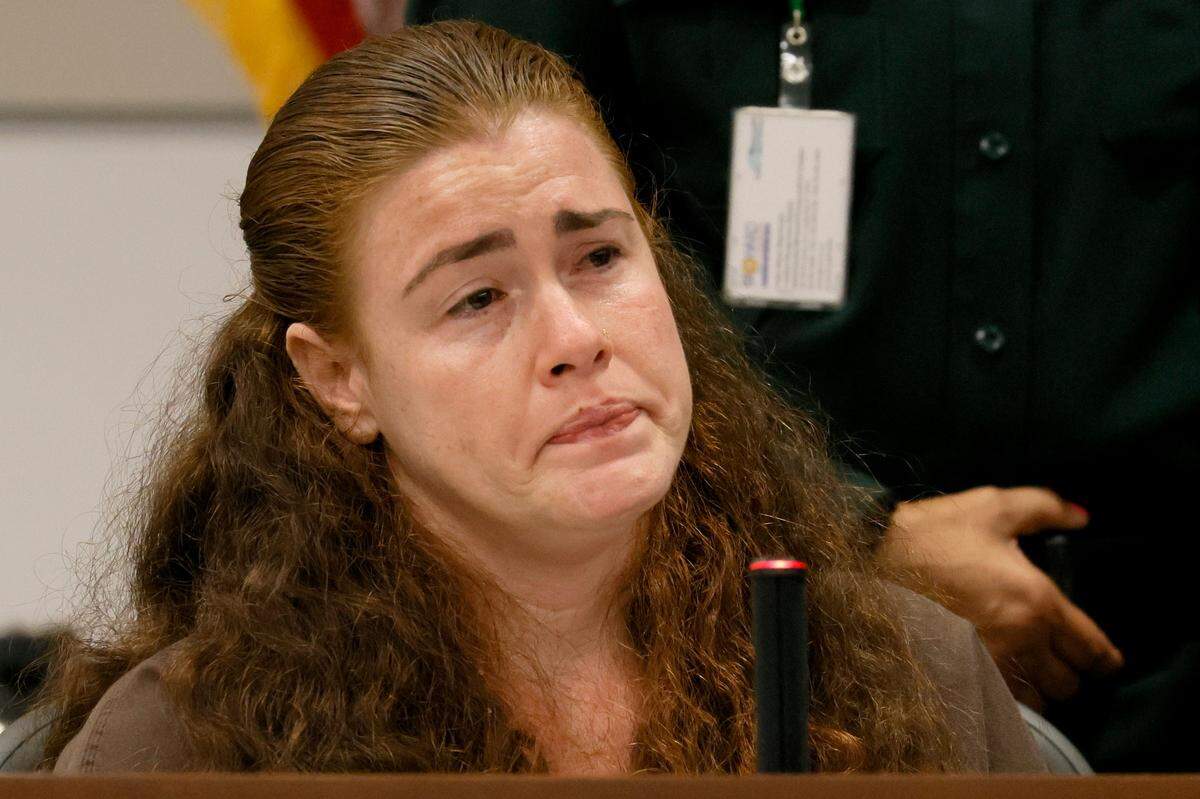
Cruz’s biological sister, Danielle Woodard, testified last month that as a young girl, she often saw her mother drinking while pregnant with her baby brother. “Nikolas was developing in her polluted womb,” Danielle Woodard told jurors.
Dr. Kenneth Jones, a leading researcher on damage caused to fetuses by prolonged alcohol use, told jurors on Tuesday that medical records revealed the defendant’s mother’s alarming habit while pregnant. He said he had “never seen so much alcohol consumed by a pregnant woman.”
Jones testified that fetal alcohol damage can cause temper tantrums, aggression and major behavioral issues. Defense witnesses have told jurors that Cruz was diagnosed with attention deficit hyperactivity disorder, had problems with motor skills and focusing, lashed out and attacked fellow students as a young child, and tormented his widowed mother, destroying TVs and punching holes in walls along with his half-brother, Zachary.
Another defense expert, Paul Connor, a neuropsychologist, testified on Monday about the severe effects of alcohol on a fetus and the development of a child.
To send Cruz to Death Row, jurors will have to find the aggravating factors outweigh the “mitigating” factors. Among those factors defense attorneys originally listed: mental-health disorders, brain damage caused by his mother’s drug and alcohol use, and claims that he was bullied and sexually abused by a “trusted peer.”
Under Florida law, the jury has to be unanimous in voting for the death penalty — meaning all the defense needs is one person to reject execution as punishment.
“In telling you Nikolas’ story, in telling you the chapters of his life, we will give you reasons for life,” Broward Assistant Public Defender Melisa McNeill told jurors during her opening statement last month.
Cruz’s case had already been pared down significantly: The defense elected not to try and introduce disputed “brain mapping” technology that could have been used to highlight neurological damage. But prosecutors challenged the use of the brain scans, and before the judge could make a decision, attorneys dropped it as evidence.
The defense strategy had also been restricted by the judge’s rulings.
Judge Scherer had earlier barred the defense from explicitly arguing that schools, police and mental-health providers had some blame for the massacre.
This story was originally published September 14, 2022 at 10:22 AM.