
‘Nikolas was poisoned in the womb.’ Parkland school shooter attorney makes case for life
Hoping to sway jurors against the death penalty, Parkland school shooter Nikolas Cruz’s defense team started at the beginning — when his biological mother was pregnant and on the streets.
“Nikolas Cruz’s prenatal vitamins consisted of Colt 45, Cisco Bum Wine, crack cocaine and cigarettes,” defense lawyer Melisa McNeill told Broward jurors on Monday morning, saying he fell victim from fetal alcohol spectrum disorder.
She added: “Nikolas was poisoned in the womb. He was brain damaged.”
From his birth onward, jurors heard, Cruz became a violent, disruptive problem child, raised by an adoptive Parkland woman who only reluctantly agreed to get him mental-health services. Over the years, educators chronicled his alarming behavior — his outbursts toward students and teachers, his fixation on guns, his cutting of his own skin — but failed to keep him in a special school for at-risk children or commit him to an involuntary psychiatric evaluation.
And despite all the warnings, she said, it all culminated in Cruz’s mother taking him to buy his “first real gun” after he turned 18. The following year, Cruz took an Uber to his former school, Marjory Stoneman Douglas High, and fatally shot 17 students and staffers with an AR-15-style rifle.
More than a month after Cruz’s sentencing trial began, the defense team did not shy away from Cruz’s responsibility for the brutal massacre. But they began presenting their narrative to jurors, casting Cruz as a child doomed by a damaged brain in the womb, and repeatedly failed by an adopted mother and a lackadaisical educational system.
“In telling you Nikolas’ story, in telling you the chapters of his life, we will give you reasons for life,” McNeill told jurors during her opening statement.
The defense began more than a month after the sentencing trial began for Cruz for the Feb. 14, 2018, massacre that stunned South Florida and the nation. Last fall, Cruz pleaded guilty to 17 counts each of first-degree murder and attempted murder, setting the stage for his “penalty phase” trial.
The 12-person jury is only deciding whether they sentence Cruz to the death penalty, or a term of life in prison without the possibility of parole. The jury must be unanimous in meting out death.
Over the first 12 days of testimony, prosecutors presented an excruciating and graphic presentation of Florida’s deadliest school shooting.
Dozens of students and staffers — 17 of whom were wounded by Cruz’s bullets — told jurors about their harrowing stories of survival. Jurors saw nightmarish surveillance video of Cruz methodically gunning down students in the hallways of two stories of the freshman building, and firing volleys through the windows of classroom doors. They also viewed autopsy photos of the gruesome wounds suffered by the 17 slain students and educators.
They heard from the grieving relatives of the murdered victims, how the deaths have destroyed family bonds and induced years of nightmares and anxiety. And the case concluded with jurors touring the freshman building, a crime scene frozen in time, its floors stained with dried blood, the hallways littered with broken glass, Valentine’s Day gifts abandoned on desks.
The state rested its case in chief on Aug. 4. After one week off, lawyers were supposed to hold a series of hearings last week for the judge to consider whether to allow jurors to consider disputed “brain-mapping” technology that the defense hoped might help explain his brain damage.
But the Public Defender’s Office, in a last-minute decision, decided to drop its effort to introduce the technology into the case.
The defense’s case is expected to last several weeks, and could be followed by a prosecution rebuttal case.
Part of the case will focus on Cruz’s biological mother, Brenda Woodard, a prostitute who was addicted to alcohol and crack cocaine during the 1990s. She agreed to give Cruz — and later another son, Zachary — up for adoption to Lynda and Roger Cruz, of Parkland.
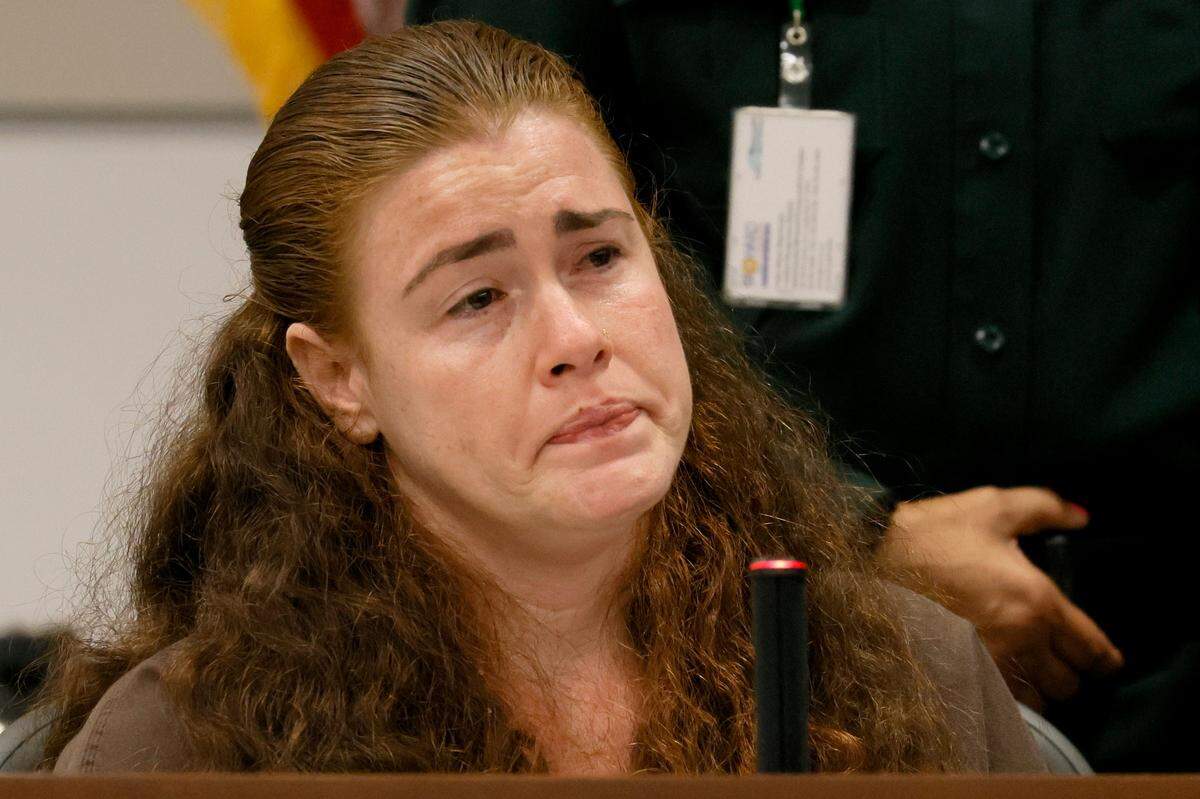
Cruz’s biological sister, Danielle Woodard, testified on Monday that as a young girl, she often saw her mother drinking while pregnant with her baby brother. “Nikolas was developing in her polluted womb,” Danielle Woodard told jurors.
One of Brenda Woodard’s former friends, Caroline Deakins, also testified that she used to work the streets with the woman, who never wanted Cruz and went to an attorney to arrange a private adoption. “I’m sorry Nikolas, but that’s just the way it was,” Deakins told Cruz in court.
Also on Monday, a former Broward County school preschool teacher testified about Cruz’s developmental delays and aggression — pushing and scratching — other children in class.
This story was originally published August 22, 2022 at 1:25 PM.