
State rests case against Parkland killer. Jurors make difficult tour of haunting crime scene
A stuffed white teddy bear, dirty and discarded on the stairwell floor. Outside room 1215, dried blood stained the floor where three students were fatally shot.
Inside room 1214, where students learned about the history of the Holocaust, bullet holes pockmarked desks, and laptops, headphones and water bottles remain frozen in time.
These are among the haunting sights seen by jurors who visited Marjory Stoneman Douglas High to witness the scene of Florida’s deadliest school shooting. After the jury visit and testimony from families of the last three of 17 murder victims, Broward County prosecutors officially rested their case on Thursday — day 12 of the trial — against confessed gunman Nikolas Cruz.
Cruz has already pleaded guilty, but the jury will be deciding whether to sentence the 23-year-old to death, or life in prison. The defense on Aug. 22 will begin calling witnesses aimed at persuading jurors that Cruz’s mental-health woes, brain disorders and tumultuous family life should spare him the death penalty.
The state has presented a brutally detailed case. Jurors heard from scores of shaken survivors, some of whom suffered catastrophic gunshot wounds, police investigators, crime-scene technicians, and medical examiners who cataloged the devastating bullet wounds to those killed.
And, perhaps most viscerally, jurors heard directly from a string of grieving relatives. Over three days this week, they told of lost futures and families shattered by the violent, premature deaths. The testimony was so moving that several of Cruz’s defense lawyers wept in court.
Read more: How a driven prosecutor is building the case to execute Parkland killer
Relatives of the final three murder victims — Helena Ramsay, Peter Wang and Christopher Hixon — took to the witness stand Thursday afternoon to give their “victim impact” statements.
Helena’s mother remembered a “beautiful, tall, graceful young woman” who was athletic and loved learning. The 17-year-old was shot to death on Valentine’s Day — also her father’s birthday.
“That day will never be a celebration and can never be the same for him and is now filled with pain, as is every day,” Ann Ramsay told jurors.
The mother and two cousins of Peter Wang described a dynamic 15-year-old who was part of a tight-knit Chinese immigrant family. In a statement read aloud, mother Hui Wang said she gets a tattoo to honor her son every year on the date of his death.
The wife of Christopher Hixon, the school’s athletic director and campus monitor, said her husband’s death ended “a beautiful life together.” Debbie Hixon told jurors: “I’m heartbroken that our journey ended too soon.”
Christopher Hixon was also the “best buddy” to his special-needs son, Corey. In a poignant moment, Corey — wearing a blue jacket and bow tie — told the court about getting doughnuts with his dad every Saturday.
“I miss him,” Corey said, as observers in court sobbed.
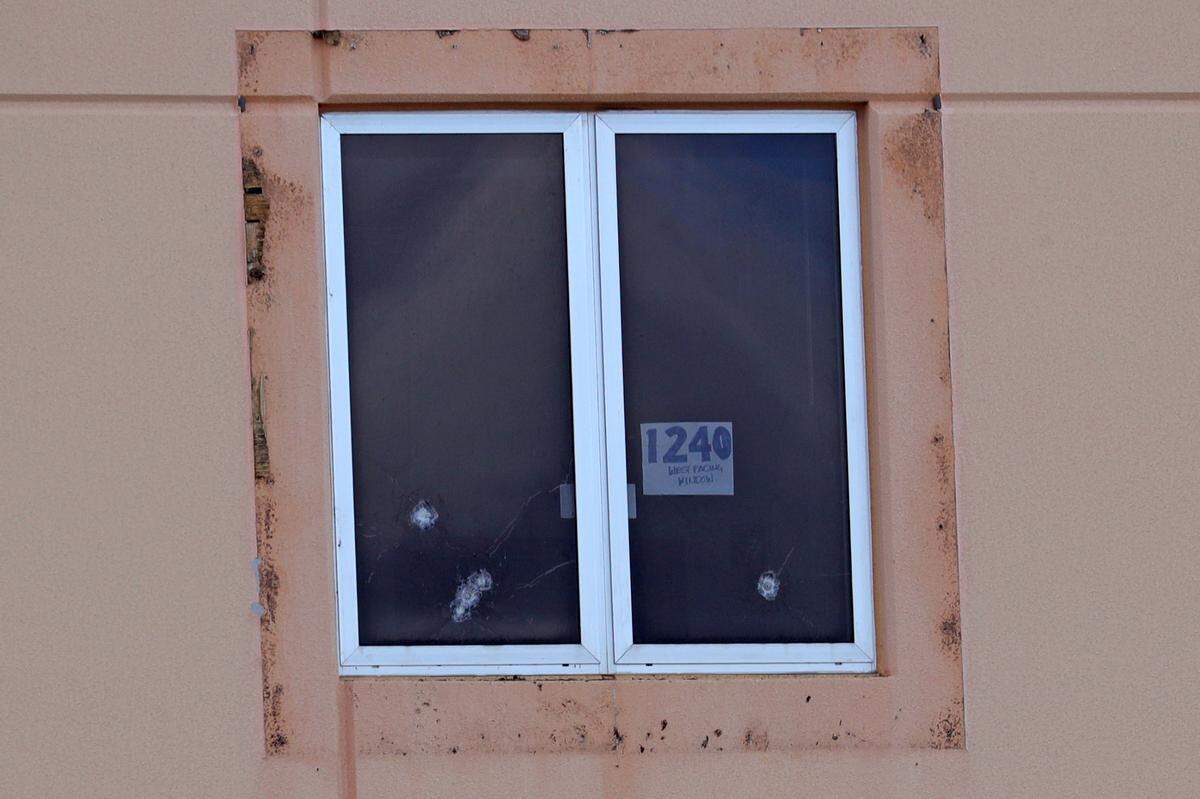
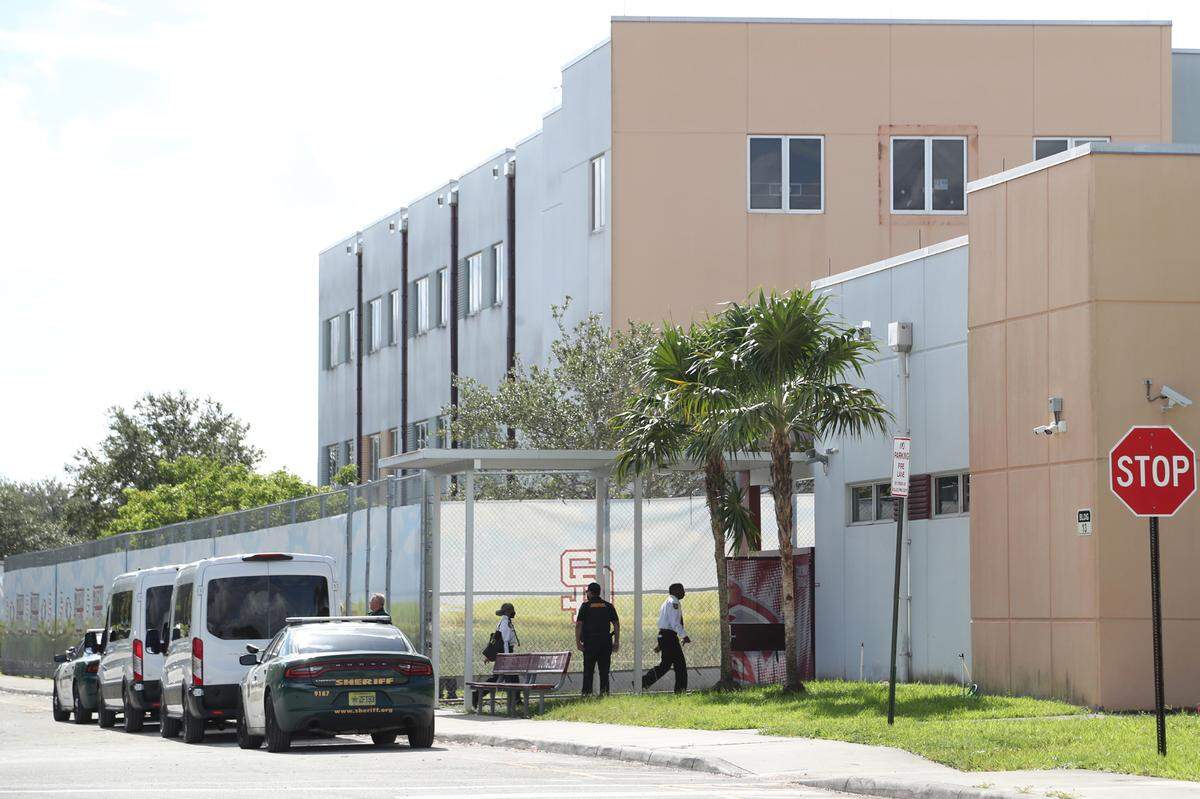
But it was the jury’s visit to the school that served as the chilling capstone of the state’s case, an exploration of the three-story freshman building, still strewn with Valentine’s Day cards, discarded water bottles and blood stains.
The group of 12 jurors and 10 alternates were allowed to visit each of the floors, and classrooms where students fled for cover as Cruz squeezed off volleys of high-velocity bullets though hallway door windows. They weren’t allowed to ask questions of deputies escorting them, touch anything or take photos.
The media wasn’t allowed to accompany the jurors. No photos were permitted, but a pool of reporters was allowed to walk through the building afterward, and their dispatch described a haunting scene — the first look inside by the media or public at the site of Florida’s worst school shooting.
A pool report, compiled by reporters from The Associated Press, the South Florida Sun Sentinel, Court TV and Miami’s ABC and CBS affiliates, detailed a haunting scene that matched the graphic testimony in court.
On the first floor, glass crunched under the feet of visitors as they walked into the classrooms where Cruz opened fire through the windows.
Outside a study hall at 1215 is where Luke Hoyer, Martin Duque and Gina Montalto were shot to death, dried blood staining the hall, discarded headphones just inside the door.
Nearby by, in an AP psychology class, a large pool of blood marked where 16-year-old Carmen Schentrup was struck in the head, fatally, by one of Cruz’s rifle rounds. Family photos from the teacher lined the walls, overlooking the staff phone fallen on the ground. A lone white sneaker sat discarded on the ground.
Although the bodies had long been removed, the carnage was still visible.
The alcove where athletic director Christopher Hixon — shot as he dashed through the west door, collapsed and writhed in pain — was bathed in blood, on the floor and wall.
In room 1216 — which had the most murdered and wounded students — brownish stains marked where Alyssa Alhadeff and Alaina Petty died lying next to each other. A blue folder with Alaina’s name is still on one desk. Bullet holes lined the walls.
Essays written by the students remain on their desks, never to be recovered. “We go to school every day of the week and we take it all for granted,” one student wrote. “We cry and complain without knowing how lucky we are to be able to learn.”
“These people were having a beautiful day and everything is kind of frozen where it happened,” the Sun Sentinel’s Ralph Olmeda said. “Laptops are left open. Assignments are just sitting there never to be looked at again.”
The scenes of dusty desks and books were made more eerie by the signs of Valentine’s Day strewn among the debris.
“Throughout the hall there were rose petals on the floor. There were cards on desks. There were some balloons that had deflated,” AP’s Terry Spencer said. “There was one bag, a pink Valentine’s bag, and there was a rose that was just wilted sitting on the top of it. On the floor where one of the bodies had laid, a handmade Valentine’s card had been cut out of construction paper. Part of it had been worn away from the blood that was on the floor.”
Up on the third floor, where six people died, the sheer amount of caked, brownish blood was jarring.
“The blood in the hallway is something I would never wish on people to have to see,” Olmeda said. “It’s been four years. The blood has lost most of its red hue. It’s brown. It’s dark. It’s caked. It’s flaky but it’s unmistakably blood.”
Beneath the water fountains, three large pools of dried blood mark the spots to where authorities dragged the bodies of Cara Loughran, Meadow Pollack, and Joaquin Oliver. A faint trail of blood traced the path of the girls’ bodies from the alcove where their bodies fell after being shot.
Read more: Parkland school shooter’s sister wants to testify in his trial. But she’s in jail, too
Blood also stained where Meadow and Cara were lying, injured, as a teacher rallied other students down the hallway. Cruz returned and shot them again.
Drops of blood also marked where Joaquin, wounded in a first volley, tried to escape but was killed by Cruz, who caught up to him. Testimony showed he held his hands up to protect himself. Two bullets in the wall show how futile his attempt was.
There was also an unfinished game of chess in one of the classrooms — one student told jurors about the game he’d played with friend Peter Wang.
Down the hall, where Wang was ultimately cut down, the floor was stained with dark splotches of blood and yellow-greenish material that was described in testimony as brain matter. There are six bullet holes in the window above where Wang died.
Cruz, testimony showed, tried to blow the windows out to shoot the fleeing students. Cruz himself declined to visit the school on Thursday.
This story was originally published August 4, 2022 at 2:17 PM.