
Florida insisted mom wasn’t a danger to her children — until the kids were hogtied, strangled
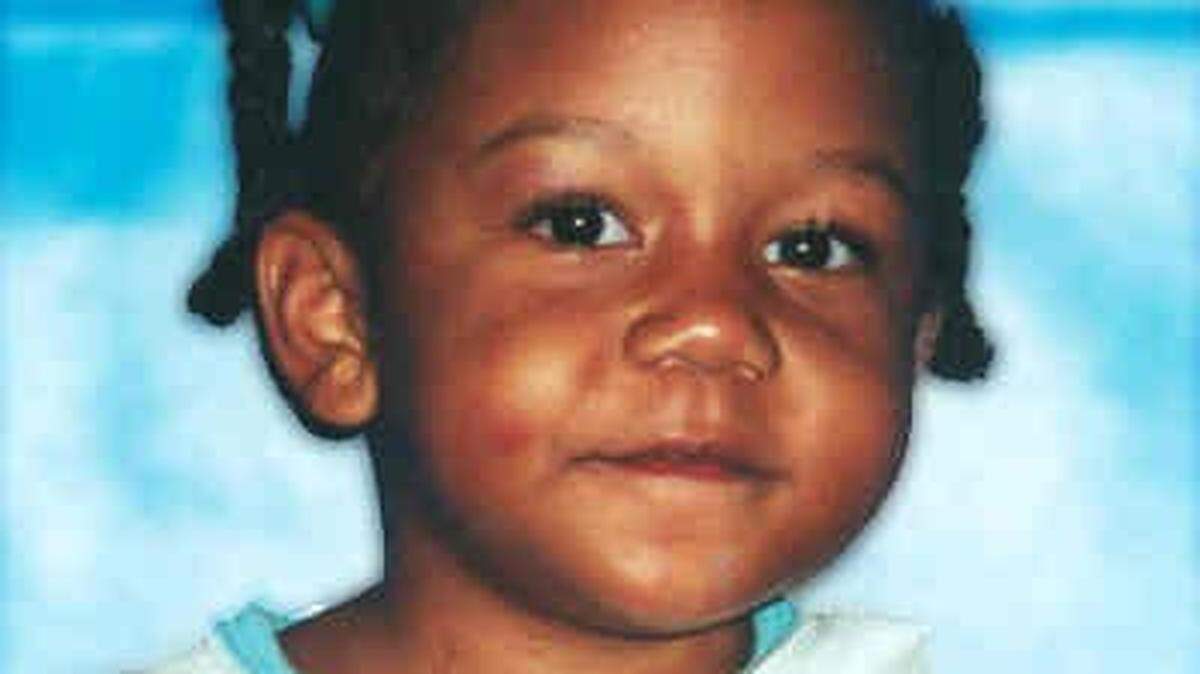
.JPG "Jeffry and Laura Belval, pictured here in a family photo, were killed on April 12, 2022, in Miami.")
READ MORE
Fatal Miscalculation
People called Florida’s child abuse hotline 13 times with concerns about Odette Joassaint’s children. By the time the 14th call came, Laura and Jeffry were dead.
Expand All
For years, state child welfare administrators responded with metronomic regularity to reports of violence and instability in the home of Odette Joassaint. Complaints that her behavior was bizarre and delusional. That she had bitten her children’s father on the arm and wouldn’t let go. That she refused to give her eldest daughter prescribed psychiatric medication, supplying the 14-year-old with booze instead.
Child protection workers urged Joassaint to accept a mental health evaluation. Again and again. Joassaint refused. Repeatedly. So be it, the state said.
It went that way until the 12th of April, 2022, when another call came in to authorities, this one from Joassaint herself. Come get my kids, she told police when they arrived. I don’t want them anymore.
Officers found a scene of horror: Joassaint had snapped, allegedly hogtying 3-year-old Jeffry and 5-year-old Laura by the arms, legs and neck — and strangling them with a red ribbon after they fell asleep.
She said her children “would suffer less if they were dead,” a police report said.
The deaths of Laura and Jeffry Belval present a textbook case of the Florida Department of Children and Families opting not to use all the tools at its disposal to defuse a domestic tinderbox.
READ MORE: Florida child welfare agency said the kids were doing fine. Actually, they were dead
There are facilities where Joassaint could have been evaluated and received counseling. DCF referred Joassaint to one, The Village. When their recommendations were ignored, DCF workers could have forced the issue for the sake of the children, petitioning a judge to order Joassaint to undergo the psychological evaluation — and to accept counseling, treatment or other services if the evaluation recommended them. They did not take that step.
At a minimum, investigators could have sought a judge’s order compelling Joassaint to open her door and let the agency take a look at how the children were doing. They never did that, either.
230 deaths this year
In a state that has grown numb to the loss of small children — DCF reports 230 child fatalities so far this year, with causes ranging from drownings to smotherings to drug overdoses to shootings — the seemingly methodical way in which Laura and Jeffry Belval were killed was particularly jarring.
In 45% of those 230 deaths, the family, like Joassaint’s, had a previous state child protection history within the past five years. Many, however, were not as extensive as the family of Laura and Jeffry: 14 reports in all to the state’s child abuse hotline, including the one that stemmed from the children’s deaths. Four calls were “screened out,” meaning they were never investigated.
“It is not known why the mother did this,” said a notation in the DCF file after Laura and Jeffry’s death. “There was no known reason to expect the mother to do this.”
At the time, DCF was still investigating the previous complaint involving the family, which was received three weeks before the children’s deaths.
But if the tragedy was unexpected, it did not come without warning signs.
Hundreds of pages of DCF records obtained by the Herald under Florida’s public records law detailing the too-short lives and grim deaths of Laura and Jeffry Belval offer a host of clues to Joassaint’s precarious mental state. Though supervisors had repeatedly suggested Joassaint be evaluated for mental illness, no such assessment ever was done, partly because Joassaint insisted on her psychiatric health, and partly because DCF simply believed her.
“They told me they were going to evaluate Odette. They never did that,” said Frantzy Belval, 45, Jeffry and Laura’s father. “DCF is responsible for all of it. DCF is responsible.”
The day after the children’s deaths, DCF called the killings “devastating,” and pledged in a statement to initiate a full investigation and “provide updates regularly and publicly.”
Since then, however, DCF has declined to discuss its history with Joassaint’s family or answer any questions about the agency’s efforts. Administrators issued a short statement by email, emphasizing that leaders lacked cause to shelter the two youngsters from their mother.
DCF said that “after reviewing past child welfare cases and reports to determine commonalities and further evaluating current practices, the department developed a new model aimed at addressing deficiencies in the child welfare system.” The new program, called Family Navigator, seeks to better and more quickly engage at-risk families with services designed to keep children safe.
Under the initiative, child abuse investigators will begin to assess the needs of at-risk children more quickly, including consultations with mental health and drug treatment counselors, encourage service providers to “maximize appropriate resources” for needy families and offer more services through $27.1 million in new mental health dollars and $73.9 million in new drug treatment funding, DCF said.
“Every day, staff at [DCF] have the difficult responsibility of protecting Florida’s children while only removing children from a home if a parent is unfit to care for their children or is likely to harm their children. In this case, DCF investigators were very involved with the family and recommended many services, but there was no history of physical child abuse to the two young children that would have led to their removal.”
The statement added: “Still, you will find from these records that as DCF staff interacted with this family, they recommended many services that were ultimately refused, while those very services may have resulted in a much different outcome.”
Fran Allegra, who headed Miami-Dade’s privately run foster care agency from 2004 to 2014, said DCF’s statement falsely implies the agency has authority to act only if a child is being physically beaten — or if a parent agrees to accept DCF’s help. In fact, DCF — and even a private citizen — may file a petition in child welfare court asking a judge to take the necessary steps to protect a child.
One of those steps might be sheltering a child from her or his parents. But they may also include several alternatives short of that, including getting a judge to order parents to accept an array of services — including drug treatment, domestic violence counseling and anger management.
During the decade she oversaw Our Kids, which no longer has a contract with DCF, Allegra was involved in efforts to develop safety assessments for children who are at risk of harm. She said the instrument DCF uses now, parts of which were adapted from an assessment tool created by a child welfare group whose board Allegra chairs, “demands that DCF consider all prior abuse calls, the demeanor of the parents [and] a parent’s willingness to cooperate” before deciding whether to act.
Increasing the threat
Refusing to cooperate with an investigation, Allegra said, “increases the threat assessment.”
“If allegedly abusive families refuse to talk with DCF, and they are allowed to simply refuse to cooperate, what is the purpose of child protective investigations?” Allegra asked. “If DCF is correct that they are powerless to deal with uncooperative parents, then child abusers can simply not answer the door and remain free to harm vulnerable kids. This position defies logic and common sense.”
DCF, she said, had “multiple and repeated opportunities to save [the Belval] kids.”
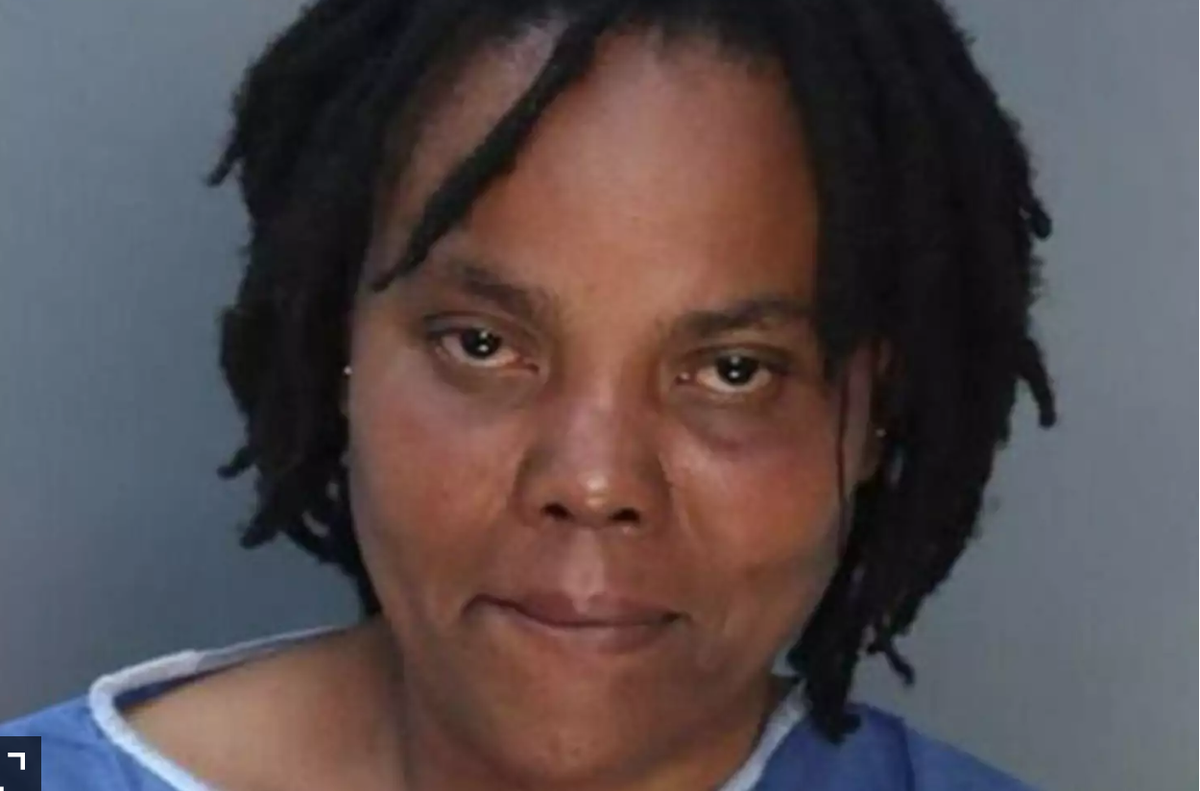
Joassaint remains in custody at the Miami-Dade County Jail on second-degree murder charges, though prosecutors have said they intend to seek an indictment for first-degree murder. Public Defender Carlos Martinez, whose office represents Joassaint, declined to discuss the case with the Herald.
Joassaint moved to Miami from her native Haiti around 2015 with her oldest daughter. She gave birth to Laura in 2016, and Jeffry in 2019. Records suggest her relationship with the youngest children’s father, Belval, was tumultuous.
DCF’s first contact with the family appears to have been in November of 2017, when Laura was 1 and her older sister was 10. A call to the state child abuse hotline alleged a “domestic disturbance” between the mother and father in which Belval “was observed with a large bite mark on his right arm.” Joassaint “had a knot on her forehead.” Belval told police he hit Joassaint in an effort to extricate his arm from her teeth. Joassaint was charged with domestic battery.
The investigation was closed the next month when Belval got a restraining order against Joassaint and moved out of the couple’s home. Laura and her older sister were “free of marks or bruises,” and “the family condition is not out of control,” the investigator wrote. The case was closed with no action.
A year later, in 2018, police and DCF investigators were back in the home. The agency’s hotline had been told that Frantzy Belval was an “angry drunk” who abused Joassaint regularly. Joassaint was pregnant then with Jeffry, and she accused Belval of punching her in the head. This time, Belval was arrested.
“The children appear to be scared when the domestic violence occurs,” a hotline caller said.
Joassaint told a DCF investigator that the fight “was simply blown out of proportion,” a report said. She was offered help by the agency but “declined and added that they do not need therapy.”
By October 2019, Joassaint was homeless and living with her three children at Lotus House, a Miami women’s shelter. DCF’s hotline received another call, claiming Joassaint’s oldest child was struggling with mental illness and had been acting inappropriately toward other children in Lotus House. DCF referred Joassaint for services — which she rejected — but while that investigation was pending DCF received another report, on Feb. 13, 2020.
“The mother has not been taking her depression medication,” DCF was told. “There is a concern for her ongoing ability to care for the children. She has been having delusional thoughts. She has been acting bizarre. She is confused, has a lack of goal orientation, and vague speech.”
Joassaint remained at the shelter, though by now the eldest daughter had been sent to live with her father in Haiti.
“She has been exhibiting irrational behavior,” DCF was told of Joassaint. There is a concern that she could harm the children if this goes on.”
However, shelter staff did not express any concerns about Joassaint’s parenting when questioned by an investigator. “The mother does her best to make sure that her children are taken care of and in her opinion she is succeeding at that,” a Lotus House assistant manager told DCF. Another manager said she “does not have any concerns for the mother as a parent.”
DCF records don’t say who initiated the probe into Joassaint’s mental health, and such information is confidential under state law. A report on the investigation does not elaborate on what caused concern.
When asked by an investigator about her mental state, Joassaint said “she has no problems with her thoughts and she is functioning well. She does not take any medications because she feels it would impair her ability to take care of her children.”
Joassaint accused the shelter staff of reporting her “because they don’t like her and because they did not like her daughter.”
“She does not have any mental health issues in her opinion, and she is operating just fine mentally,” the report said of Joassaint.
The report added: “She does not know who she can trust and she only slightly trusts the child protective investigator because he is of Haitian background however she still has her doubts because he is still an American and may still be against her like everyone else.”
The investigator concluded “the mother was able to conduct rational thoughts and ideas. She did not appear disoriented.”
On March 11, 2020, Joassaint was referred to The Village in Miami for mental health counseling, records show. But, in an email two days later, a staff member said Joassaint had “declined family services.” Joassaint, the email said, “states she does not have time and does not need services.”
A DCF supervisor wrote on April 9, 2020, that the investigation would be closed. “The family was referred for services,” the supervisor wrote, without also noting that Joassaint refused them. “There are no concerns for [the children’s] safety.”
Another hotline call
Six months later, Joassaint was the subject of another hotline call. The allegations are heavily redacted in the records obtained by the Herald — presumably to protect the privacy of Joassaint’s surviving daughter, who had returned from Haiti. They appear to concern Joassaint’s failure to treat or medicate the eldest daughter’s chronic mental illness, which led to her hospitalization at Jackson Memorial Hospital.
Joassaint was described as “upset and tired of DCF being called on her.”
The report was closed in November 2020 with “no indicators” that Joassaint was neglecting her daughter’s medical needs. Once again, records reflect that “the family was referred for services.” Once again, Joassaint rejected them.
By the summer of 2021, when Joassaint was reported to DCF yet again, she appears to have abandoned any effort to cooperate with the agency — a stance she largely maintained until the deaths of her children.
The report was heavily redacted, but it appears to again concern the mental health of Joassaint’s eldest child. Joassaint told an investigator the allegations were “being made maliciously by the father of her youngest two children as they have ongoing issues and are no longer together.”
The records don’t disclose who initiated the probe. But it is clear Belval was seeking custody of his two children, and expressed concerns about their half-sibling’s psychiatric issues: “He fears that she [the older sister] will do something” to them.
In an interview with the Herald, Belval confirmed that he was worried about the mental health of both Joassaint’s older daughter and Joassaint herself.
Joassaint, once again “was not cooperative,” the report said. She “says that she does not need services, nor do any of her children, and that she does not want to be bothered in connection with this report.”
Around Christmas 2021, DCF received a new report. During the investigation, the agency was told again — it appears by a doctor — that Joassaint was refusing to give her eldest, 14 at that time, the prescribed psychiatric drugs. Joassaint claimed “the government messed up her child’s brain” with them.
In a notation dated Jan. 24, 2022, the report added: “She also indicated that she will not open her door for anyone, and she asked this [investigator] to stay away from this case.”
“She stated that the government cannot take her child away,” a report says. In fact, the government did exactly that. DCF removed the oldest child, committing her under the Baker Act to a psychiatric facility for treatment. The investigation ends there with no serious inquiry into the welfare of Jeffry and Laura.
The report documented a supervisor’s instruction that an investigator “assess” Joassaint for mental illness. DCF’s records give no indication that assessment occurred.
Frantzy Belval said an investigator promised “they would evaluate her to see if she could take care of the other two kids” — his children. “I was waiting, waiting, waiting, and they told me nothing.”
“What about my two children?” he said he asked.
Laura, by now old enough to express herself, told an investigator she wanted to live with her father full time instead of just on the weekends, as had been the case, Belval said.
DCF’s solution, he said, was to put the responsibility of protecting the youngsters on him.
Belval said he asked the investigator why the oldest girl was removed from Joassaint’s custody at the same time his children were deemed safe. “DCF told me the reason they didn’t take my two kids was because I’m here. I’m gonna watch everything. But my kids only came to me on Saturday and Sunday.”
DCF’s final opportunity to act came in March, when the agency hotline was told Belval and Joassaint had been in another physical clash in which Belval struck Joassaint repeatedly in the face.
The investigation began as the previous one ended, with Joassaint refusing to answer her door. And it ended too late.
Shortly after the investigation commenced, an investigator spoke at length with Joassaint’s neighbor, who claimed Joassaint provoked the incident. She said Joassaint tried to grab something from Belval — a necklace — and Belval backed away. The neighbor never saw Belval assault the children’s mother.
The report said the neighbor “does not talk to the mother because the mother is very rude and aggressive.”
On March 23, a DCF supervisor noted in the record that the case investigator “was unable to assess the family’ because the mother was avoiding the investigator. The supervisor repeated the instruction that had gone unheeded so often in the past: “Assess for any mental [illness] due to violent behaviors.”
Belval told the Herald he warned investigators that “you have to be tough with Odette.” They told him they would. But, he added, she kept them away from his children again and again.
“She would not cooperate with anybody,” he said.
It was only through the father that DCF was able to look in on the youngsters.
Around April 2, Belval allowed an investigator into his home, and the investigator rendered one of the last portraits of Laura and Jeffry: Laura was described as craving rice, beans, fish and chicken, liking to play with her mother’s smart phone and watch YouTube videos. She was “preoccupied,” the investigator wrote, with a new pair of tennis shoes and didn’t wish to talk further.
Jeffry was described as a typical toddler. He “likes to play, laugh and grab things,” the investigator wrote. “The child enjoys jumping on the bed.”
Ten days later, DCF was dispatched to the mother’s apartment, where they found Jeffry and Laura — unresponsive. They had been strangled on the bed.
The following day, April 13, a report was placed in the family’s file documenting DCF’s last evaluation of the children, a “danger assessment” performed by the investigator exactly 11 days earlier. The report, in a gruesome miscalculation, stated that the children faced “no present danger.”
At 3:09 p.m. on April 15 — two days after the killing — a clinical coordinator with Miami’s private foster care agency, Citrus Health Network, entered a notation in the death investigation: “Follow up,” she wrote, “to see if the mother did a psych evaluation.”
This story was originally published July 17, 2022 at 6:00 AM.