
A Miami-Dade running and biking trail was promised decades ago. What’s the holdup?
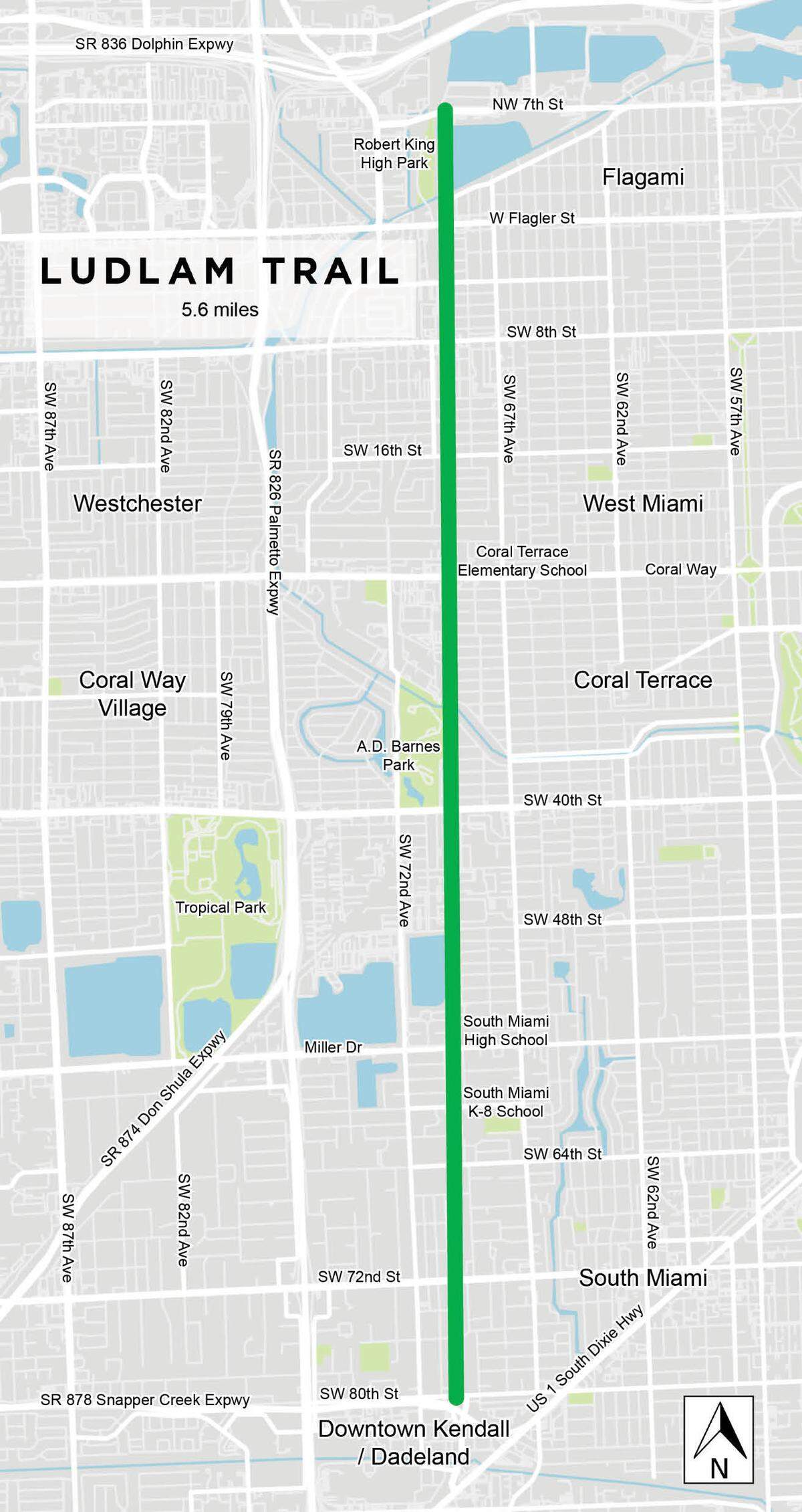
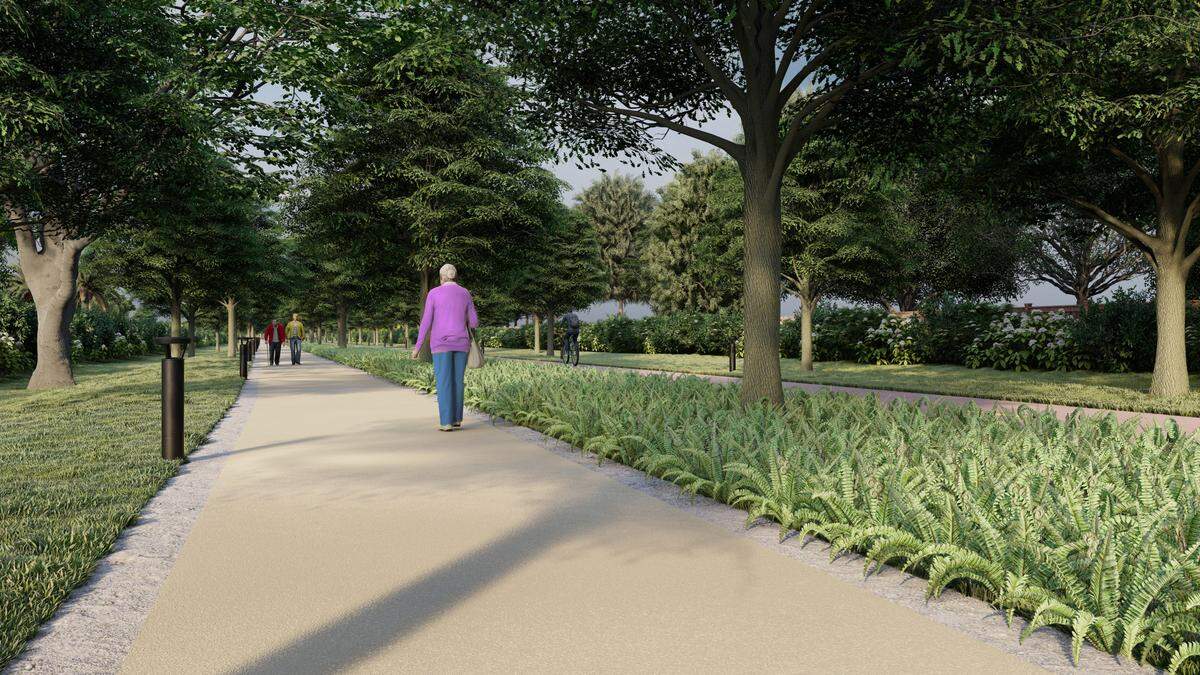
Nearly three years ago, Miami-Dade County said it was finally ready to move on a popular but long-delayed plan to convert nearly six miles of an old rail line running along Ludlam Road into a richly landscaped trail for people on foot and on bikes.
By now, the Ludlam Trail was supposed to be fully designed and under construction.
Instead, the county — which approved the trail plan in 2015 and has so far spent $42 million on the project — has nothing to show for it.
There is no designer in place, let alone a design. After a nearly two-year process to select a design firm, the county has yet to formally hire anyone, and project managers at the parks department — the agency charged with seeing the trail through — have declined to publicly explain why it’s taking so long.
The official project timeline keeps shifting. The county held a groundbreaking in 2021, though construction did not start. At one point, the trail was supposed to be finished in 2025, then some sections were promised by 2028. Now, it’s unclear what the planned completion date may be — or how much it will all cost.
The county is not answering questions. Officials with the parks department did not respond to a voicemail and an email from the Miami Herald this week asking to interview someone at the agency.
The corridor, once open to informal use by runners and dog-walkers, has been fenced off for nearly a decade, since the discovery of soil contamination in several places.
Trail advocates and community leaders say they’ve had it with the parks department, and they’ve launched a public campaign to shame the county into disclosing information and fulfilling its promise.
“This is pathetic,” said Julio Robaina, a former state legislator who, as mayor of South Miami a quarter-century ago, was among the first to float the idea of the trail. “The problem has been the bureaucracy in the Miami-Dade parks department, which has basically dragged this out. Nobody knows what they’re doing. They need to start telling us where things stand.”
‘It’s not brain surgery’
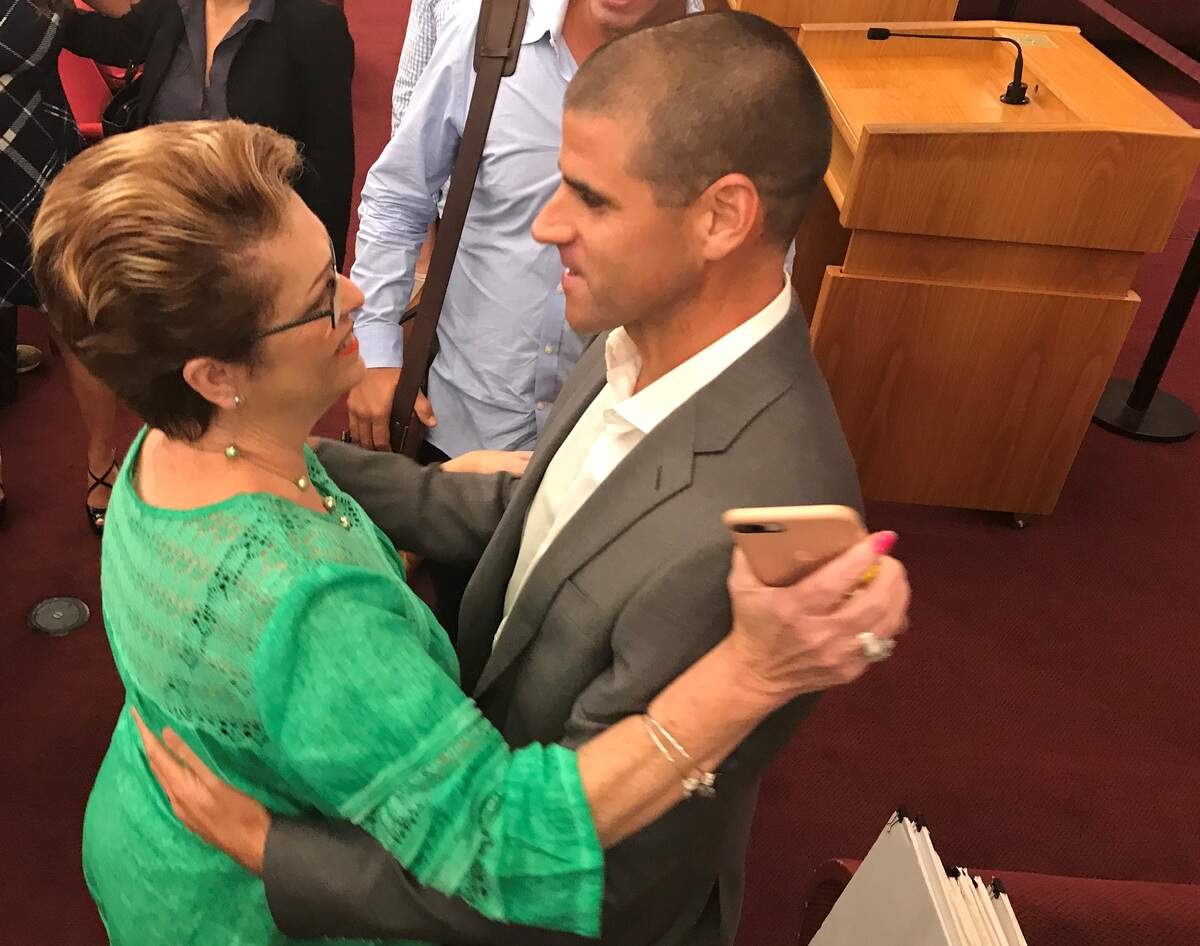
For the past several months, a frustrated Robaina — not to be confused with the former Hialeah mayor with the same name — has made it his mission to get the Ludlam Trail done. He’s been bird-dogging the project, rallying residents, advocates and elected officials, and helping revive a dormant support organization, Friends of the Ludlam Trail.
“This is a typical example of government bureaucracy at its worst,” he said. “It’s not brain surgery. We can do it.”
Robaina’s quest stems in part from an informal assignment by Miami City Commissioner Ralph Rosado, who as a young South Miami assistant administrator first brainstormed the trail idea with the then-mayor. The northern portion of the rail line cuts through what is now Rosado’s commission district.
Rosado, who was elected to the Miami commission last year, has been designated by the city manager and fellow commissioners to push for an even larger idea, dubbed the Miami Loop, that would connect the Ludlam Trail, the nearly finished Underline trail and the long-in-the-making Miami River Greenway into one continuous trail around the city.
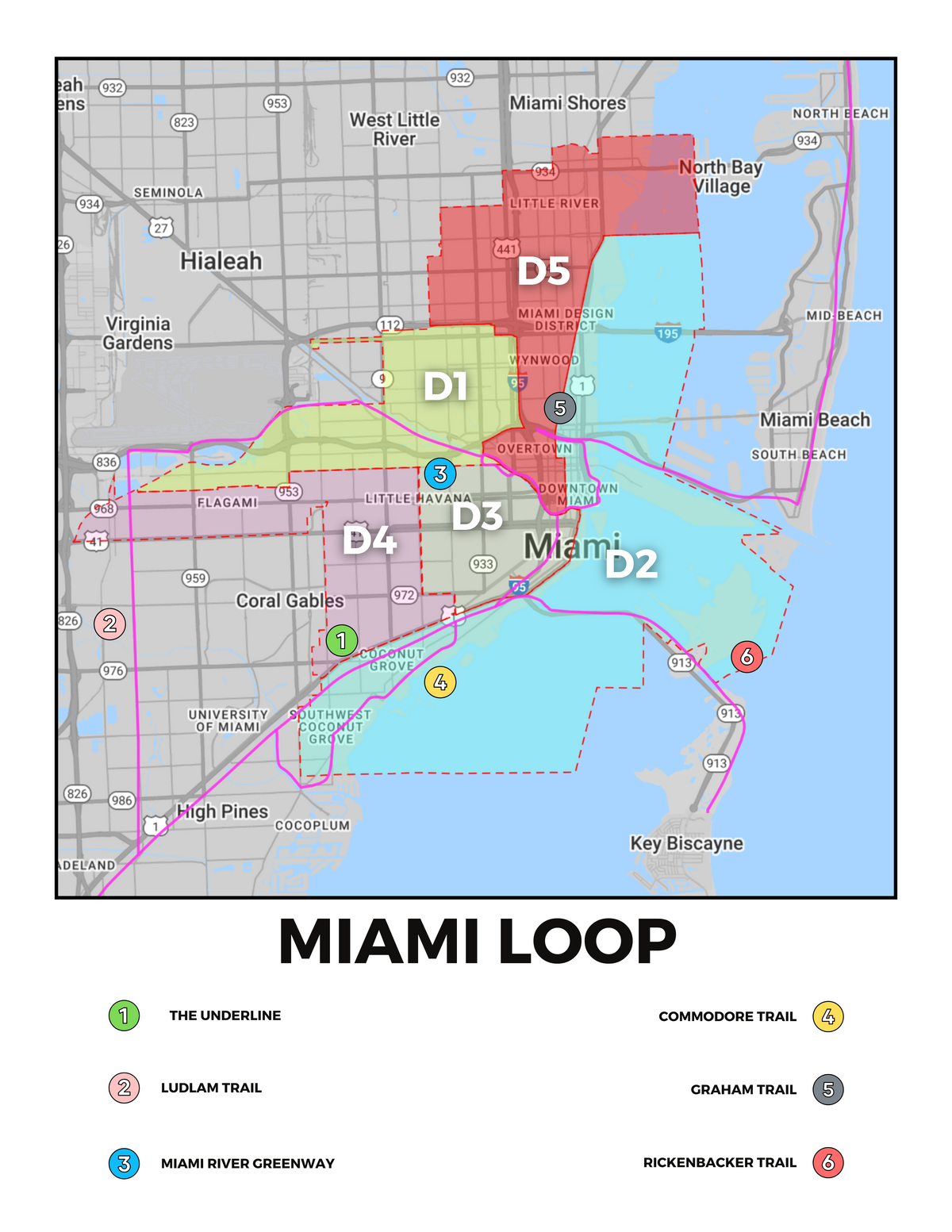
Rosado, who has convened an informal working group of local government officials and advocates to find ways to make the Loop a reality, asked Robaina to look into the status of the Ludlam project, and the former politician has taken to it with unvarnished gusto.
On July 1, during a public meeting of Rosado’s Loop group, Robaina and longtime trail advocates peppered a half-dozen county representatives with questions about the project’s status, cost and funding sources. They got few answers.
County officials have cited “cone of silence” rules, which bar them from commenting publicly on pending contract awards, for their reticence.
But Robaina suggested county officials are hiding under the cone of silence to avoid explaining why the project is being held up.
In his digging, Robaina said, he found out that the county selected a winning bidder to design the trail a year ago, but no contract has been signed, for reasons he has been unable to determine. The Miami-Dade County Commission would have to approve that contract, he said, but nothing has been submitted to the board.
“Why isn’t this on an agenda? I’ve known about this for a quarter of a century,” Rosado said, echoing Robaina’s questions. “It hasn’t moved.”
The county representatives provided no explanation.
A frustrated Robaina then questioned whether the parks department has the know-how or will to build the trail.
“Is parks really capable of doing this?” he asked the department’s sole representative at the meeting, Irene Cambreyo Gonzalez. “If you guys can’t do it, you need to pass it to someone who can. Something doesn’t smell right.”
What will it really cost to build out the Ludlam Trail?
Cambreyo Gonzalez and the other county officials at the meeting also could not provide a project cost or clarify another question over the status of plans for four bike and pedestrian bridges for the trail over busy main roads — Bird Road, Coral Way, Flagler Street and Southwest Eighth Street.
The Florida Department of Transportation has committed to building and paying for three of the bridges, but its timeline is unclear. FDOT is not part of Rosado’s working group and was not represented at the meeting.
The fourth bridge, over Coral Way, will be built by a private developer, MV Real Estate Holdings. Under a deal with the county, the firm completed a pair of senior housing apartment buildings on the Ludlam Trail on opposite sides of Coral Way. The finished buildings include ramps leading up from ground level to the gap where the bridge will be.
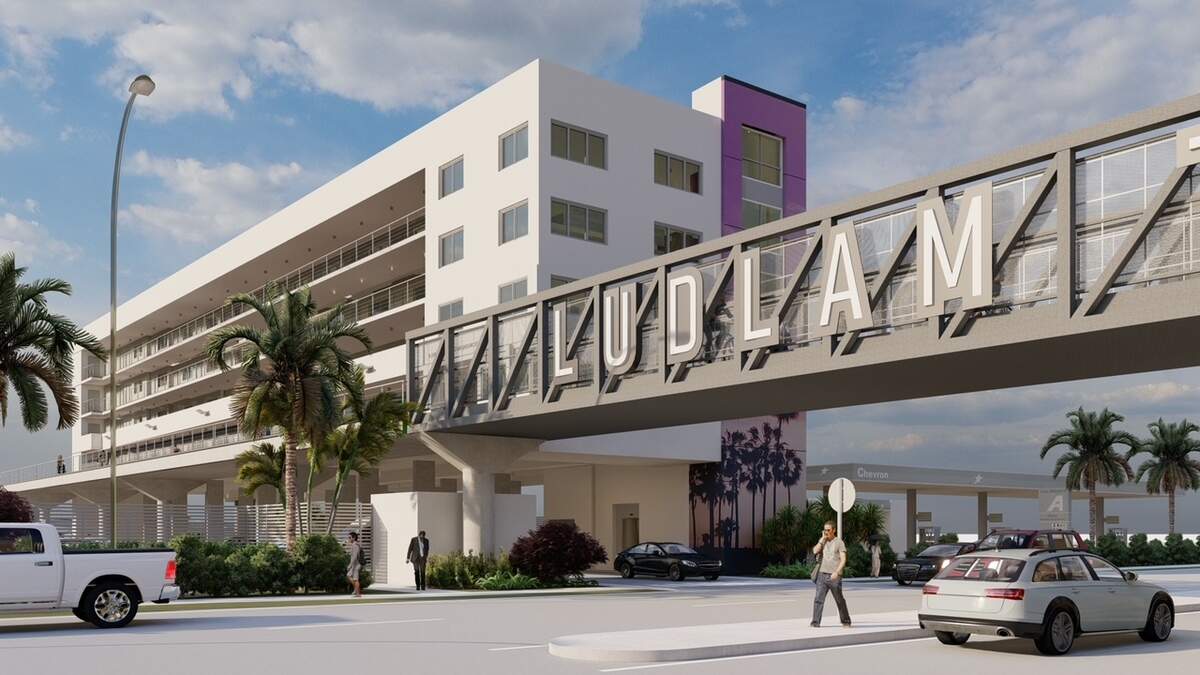
But there’s significant confusion over precisely how much the bridges or the trail itself are supposed to cost, and who is paying for what.
FDOT has allocated $100 million to the project, said meeting participant Ken Bryan, Florida director for the national Rails-to-Trails Conservancy organization, a key Ludlam Trail backer, after looking at the state agency’s website. But he said it’s unclear whether that’s supposed to cover only the bridges or some or all of the paved trail itself. The large sum seems sufficient to cover both, Bryan added.
The county representatives had no response.
FDOT’s communications office did not respond to an email from the Herald requesting an update on the bridges.
Guillermo Alvarez, vice president at MV Real Estate, said in an interview the firm is waiting only for final permits from the county to build the Coral Way bridge for the trail. He said the county is covering the cost but did not have the figure at hand.
Prominent running coach Frankie Ruiz, founder of the Miami Marathon and a longtime Ludlam Trail advocate, said he had seen numbers from county sources as high as $160 million for the full trail project, a figure he said “makes no sense.”
Bridges aside, he said, the trail itself consists of “a strip of grass” with paved paths and few amenities.
By comparison, the longer and more complex Underline project, approved by the County Commission at about the same time as the Ludlam Trail, will be finished this year.
The 10-mile Underline project, which garnered extensive public and political support, has been managed by the county public works and transportation department at a construction cost nearing $150 million. It encompasses significant infrastructure improvements and an elaborate series of gardens and parks, sports courts, public art, and performance and community gathering spaces.
Ludlam Trail has been an idea for decades
The Ludlam project was inspired by the popular conversion of abandoned rail lines into recreational trails that have proliferated across the country since Congress passed the National Trails System Act in 1968. Florida East Coast Railway, which owned the corridor and ran freight trains on the line, closed it in sections and finally removed the rails around 2005.
By then, the idea for a conversion raised by Robaina and Rosado was taken up by advocates and residents. They saw it not just as a recreational opportunity, but also as an easily walkable and bikeable transportation link to the suburban neighborhoods, apartment buildings, warehouse and commercial districts, and several schools and parks along its route.
Formally organized as Friends of the Ludlam Trail, the advocates won the support of then-Miami-Dade County Commissioner Rebeca Sosa, whose district the corridor runs through. Sosa eventually won unanimous support of the commission for the plan and purchase of the rail property for $25 million. Sosa also secured FDOT’s commitment for the bridges, trail supporters say.
The county plan allowed Florida East Coast Railway to sell three “nodes” at major intersections for commercial and residential development, with a requirement that developers pay to build portions of the trail through their projects. Projects and trail segments at Bird and Coral Way have been completed, while a third, at Southwest Eighth Street, is under construction.
But the county ran into significant snags on its portion, including a costly and prolonged environmental impact study required for federal funding.
The discovery of soil contamination along the railway was not a surprise but added cost and further delays, though it’s unclear how much. Developers have completed remediation in their nodes, and the rest of the trail will be cleaned up and capped as it’s built in phases, the county has said.
The trail plan also lost public and political momentum when Sosa, its champion, left office at the end of 2022.
Natalie Milian Orbis, who was appointed to Sosa’s old seat in 2025, has now taken up the cause.
She said county staff put the project cost at $180 million, a significant piece of which would go to soil remediation. Miami-Dade has earmarked $91 million in its five-year capital plan, but there’s federal money involved that requires raising matching money, Milian Orbis said.
The cost for the bridges has been estimated at $10 million each, she said, but she believes they can be built for substantially less while still meeting stringent FDOT standards.
Milian Orbis recently touted a $1.25 million grant approved by the Florida Legislature toward the project that she helped secure.
“Parks tend to take a very long time. Funding has been the challenge,” Milian Orbis said. “It has not been for a lack of interest.”
.JPG "IMG_Ludlam_Lights_2015_2_1_UVA2B1E2_L277112267 (2).JPG")
But she said the project is worth the time and money and represents an investment in health, recreation and transportation for suburban west Miami-Dade. The area has not seen the same level of planning or public spending on trails that Miami and the eastern suburbs have enjoyed, Milian Orbis said.
The current county budget adds little clarity to the Ludlam Trail picture. It lists $11 million for construction and land acquisition, without providing details, and earmarks $750,000 for planning and design — not enough to cover design costs likely to go into the millions.
Over the next three years, the budget document projects only an additional $13 million for construction.
Ruiz, the trail advocate, says the confusing figures are trying his patience, and his efforts to obtain clear explanations from parks and county officials have also been rebuffed.
“Clarity has been basically lost,” he said. “There are no answers. We would ask for regular meetings with the county, and we would get these ambiguous responses.”
Ruiz said the tens of thousands of people who live along the Ludlam corridor deserve better.
“The suburbs should be as sexy as the stuff they have east of U.S. 1,” he said. “This corridor was really symbolic. The community deserves this project.”