
Developer says he paid for Miami Beach mayor’s billboards in Times Square
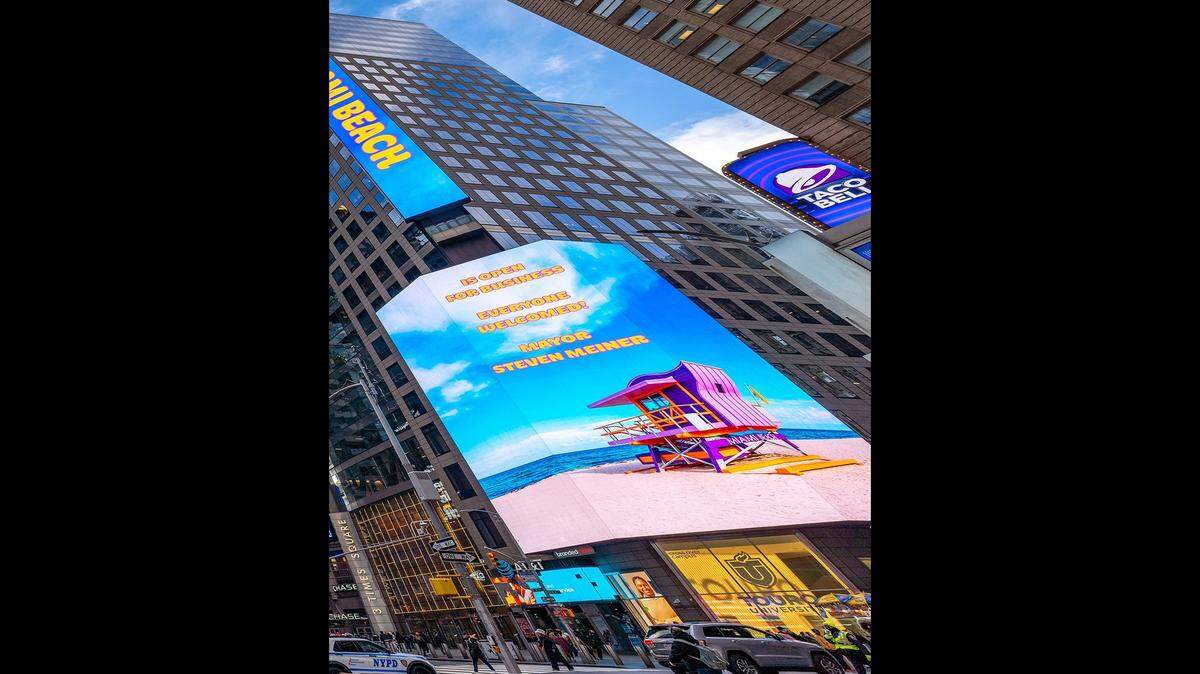
Real estate developer Russell Galbut paid for digital billboards that displayed in Times Square this week in which Miami Beach Mayor Steven Meiner encouraged New Yorkers to come to his city, the Miami Herald has learned.
The billboards showed one of Miami Beach’s iconic lifeguard stands with the message: “Miami Beach is open for business. Everyone welcomed! Mayor Steven Meiner.”
“New Yorkers: look up … Miami Beach is open for business,” Meiner wrote in a social media post Thursday with images of the ads. “A world-class destination to live, work, and invest capital!”
The billboards feature Meiner’s name and do not include the city logo.
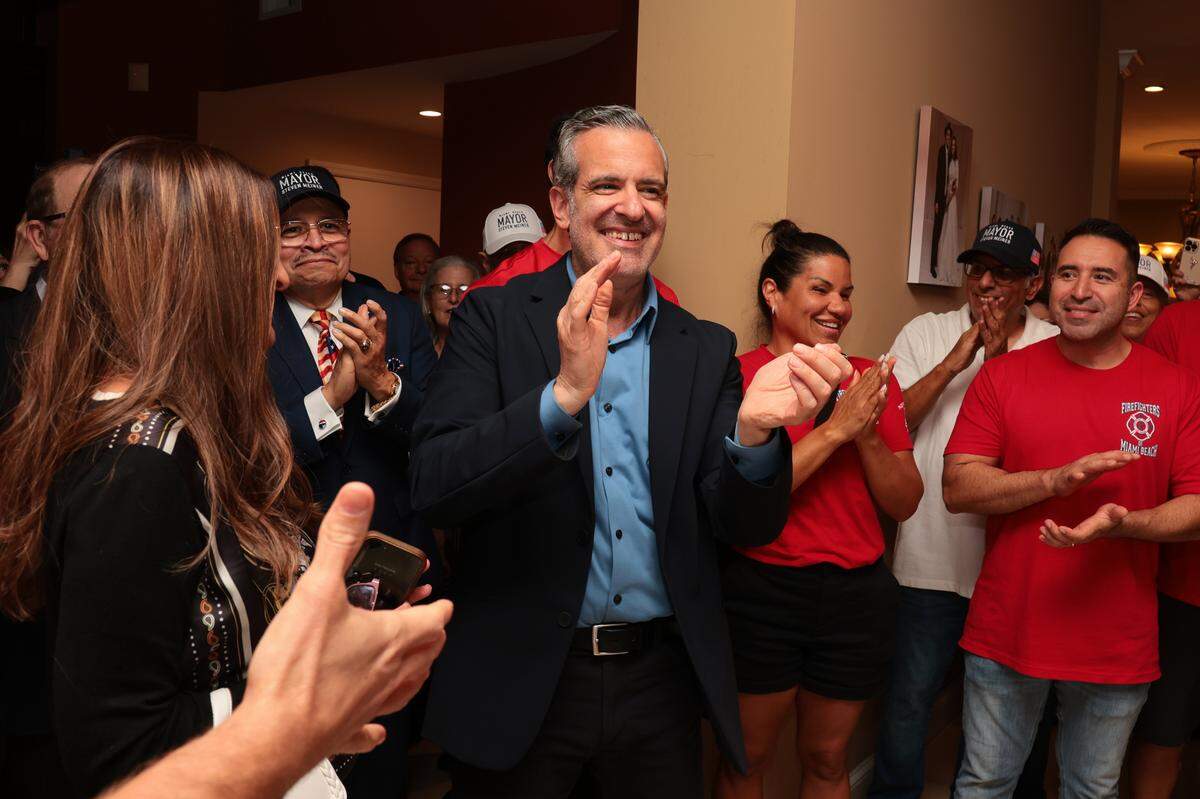
Meiner had not publicly disclosed who subsidized the billboards. In response to a question on social media asking who paid for them, he wrote that “no taxpayer funds were used on this billboard.”
Miami Beach spokesperson Melissa Berthier said the ads were “coordinated directly by the mayor” and that “no city resources or funds were used in their production or placement.”
Meiner and his chief of staff did not respond to questions from the Herald this weekend.

In an interview Friday, Galbut told the Herald he raised the idea of a billboard campaign to Meiner. He said it was a response to the Nov. 4 victory of Democratic socialist Zohran Mamdani in New York City’s mayoral race.
“It cost a little bit of money, but it’s worth it because it’s ridiculous what’s happening in New York,” Galbut said. “I just think that this is such a unique opportunity for South Florida.”
Galbut, one of Miami Beach’s most prominent developers, declined to say how much the ads cost. He said they flashed over the course of two days last week, multiple times per minute for several hours.
Digital billboards in Times Square can cost anywhere between a few hundred dollars and tens of thousands of dollars, depending on their location, length of time and other factors, according to digital advertising firms.
Galbut said his team designed the billboards before getting them approved by the mayor’s office.
He said a second billboard is also in the works that will show people lounging on beach chairs with a message along the lines of: “Why aren’t you here? Your neighbors are. Welcome to Miami Beach.”
Meiner is registered as non-party affiliated, and his seat is officially nonpartisan.
He won reelection to a second two-year term earlier this month on the same night as Mamdani’s win.
Two days later, Meiner posted: “To our friends up in New York — if you crave a law and order city, sunshine, ocean breezes, where economic growth is on the rise, [Miami Beach] is ready. No state income tax, year-round warmth, world-class culture, and neighborhoods that feel like home.”
“Email me if I can help in any way with your move to Miami Beach.”
The approach is reminiscent of a campaign several years ago by Mayor Francis Suarez in the city of Miami, a separate municipality. In 2021, a Silicon Valley investor paid for billboards in San Francisco displaying a social media post in which Suarez had written: “Thinking about moving to Miami? DM me.”
Mamdani has faced backlash from some in New York’s Jewish community for his critical positions on Israel and its war in Gaza. Galbut and Meiner are both Jewish and vocal supporters of Israel.
Galbut is a Miami Beach resident who co-founded Crescent Heights, the development firm behind numerous projects in the city, including the Alexander, Shelborne and Casablanca hotels, and the Five Park condo tower.
Galbut said he viewed Mamdani’s win as a chance for Miami Beach to show that it is “the most tolerant community out there.”
He also said it presented an opportunity for Miami Beach to “become relevant” by being more open to adding new residents and embracing development.
Mamdani’s proposals to increase taxes on the wealthy to implement his agenda — which includes free buses and childcare — have prompted some New Yorkers to threaten to flee the city.
Galbut expressed frustration with what he sees as opposition to development in Miami Beach, noting that the city has lost residents in recent years, according to Census data.
“You need to create the housing that is affordable for everyone to live on Miami Beach, to work on Miami Beach,” Galbut said. “If Miami Beach doesn’t get in line and start to embrace it, then they’re a bunch of idiots.”
Specifically, Galbut said, the city should embrace Florida’s Live Local Act, which offers incentives to developers who build workforce housing. Miami Beach officials have pushed back on the law.
On the campaign trail, Meiner touted a policy he spearheaded that makes it more difficult for developers to get approval for zoning variances.
Galbut added that, while Miami Beach ran marketing campaigns to discourage young party crowds from coming to Miami Beach for spring break, it never followed up by saying “who we do want to come and be part of our community.”
“I said, ‘You’ve got to create a campaign to invite these poor New Yorkers,’” Galbut said, describing his conversations with Meiner.
The billboards have generated buzz among Miami Beach residents.
In response to Meiner’s social media post, some residents worried that the mayor was calling for more people to move to a city that is already facing substantial traffic and infrastructure concerns.
“Read the room!” one commenter wrote. “We are full and have enough problems before adding more people and cars.”
Miami Beach Commissioner Alex Fernandez told the Herald that, while he didn’t love the design of the billboards, he liked the intent behind them.
“If it helps draw businesses to fill empty retail spaces and people to boost our economy, then it’s good for our city. Miami Beach is paradise with world-class amenities,” Fernandez said. “I only wish the graphics had better reflected the Miami Beach vibe.”