Miami Beach commissioners demand shutdown of hostel sheltering over 100 homeless people
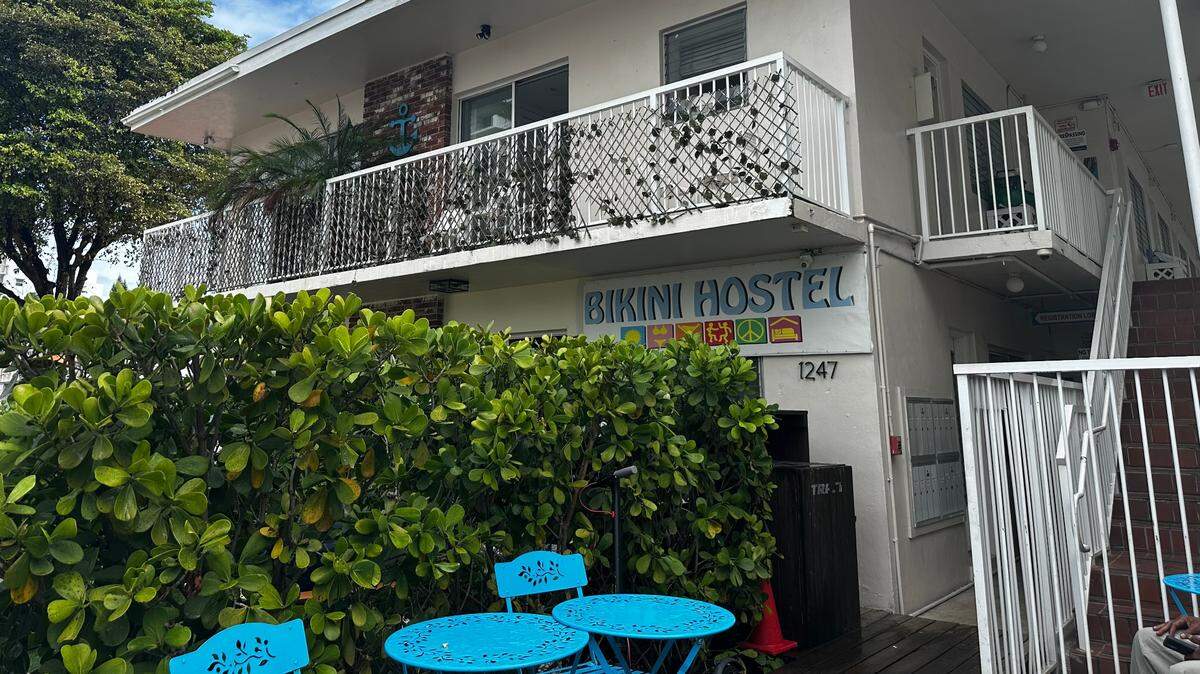
The Miami Beach City Commission on Wednesday called for the closure of a South Beach hostel that has been providing beds to the homeless and offered to pay $100,000 to have the individuals relocated to the city of Miami.
Commissioners said the situation has become untenable since early November, when city of Miami officials moved 53 people from the Camillus House shelter in Miami city limits to the Bikini Hostel in Miami Beach. The city of Miami has been paying for the beds occupied by homeless individuals and getting reimbursed by the Miami-Dade Homeless Trust, the county’s homeless services agency. More than 100 homeless people are now occupying beds at the hostel, leading to mounting complaints from residents in the well-to-do West Avenue neighborhood.
Miami Beach officials initially said Wednesday that the hostel’s license to operate in the city, known as a business tax receipt, should be revoked on grounds that the hostel is acting improperly as a de facto homeless shelter.
After City Attorney Ricardo Dopico said the hostel was “operating within its permitted use” — and that elected officials didn’t have the authority to revoke a business tax receipt — commissioners instead voted to direct the city administration to investigate complaints about the hostel in hopes of shutting it down.
“I think we all read between the lines and know what the end action is,” Commissioner Joseph Magazine said.
Dopico noted the city doesn’t currently have evidence of criminal activity or code violations that would warrant the hostel’s closure.
The City Commission also voted to allocate $100,000 for the Miami-Dade County Homeless Trust to relocate the homeless individuals from the Bikini Hostel back to shelters in the city of Miami. Miami Beach Mayor Steven Meiner said the offer accounts for the difference in bed prices between the Bikini Hostel and Camillus House, since the Camillus House charges a higher nightly fee. It wasn’t immediately clear whether Camillus or other shelters had the capacity to take in so many people.
Homeless Trust Chairman Ron Book, who has repeatedly clashed with Miami Beach leaders over homeless issues in recent months, told the Miami Herald the city’s offer is a “non-starter.”
Book said the amount of money being offered is insufficient and said the Homeless Trust and city of Miami have provided ample services and meals to the hostel’s residents — despite claims by Miami Beach commissioners that the residents aren’t getting the support they need.
The city of Miami has outreach staff at the hostel daily from 10 a.m. to 10 p.m., according to Book and the hostel’s owner, Phillip Muskat. Book said additional case managers and medical service providers also visit the site regularly.
“Our clients love the Bikini Hostel,” Book said. “They are not clamoring to come back to the mainland.”
In November, people who spoke with the Herald after being relocated to the hostel with only a few hours’ notice offered mixed reactions.
Steven Crist, 50, who had been living at Camillus House for eight months, said he welcomed the change, appreciating the hostel’s relaxed environment and lack of curfew.
“We can basically do what we want as long as you don’t act like idiots,” Crist said at the time.
Yadier Montoya, 35, said he had recently secured a bed at Camillus after spending months living on the street and said he was unhappy with the sudden move to the hostel but felt he had no other choice.
READ MORE: Miami moves 50 homeless people from shelter to South Beach hostel. Was it political?
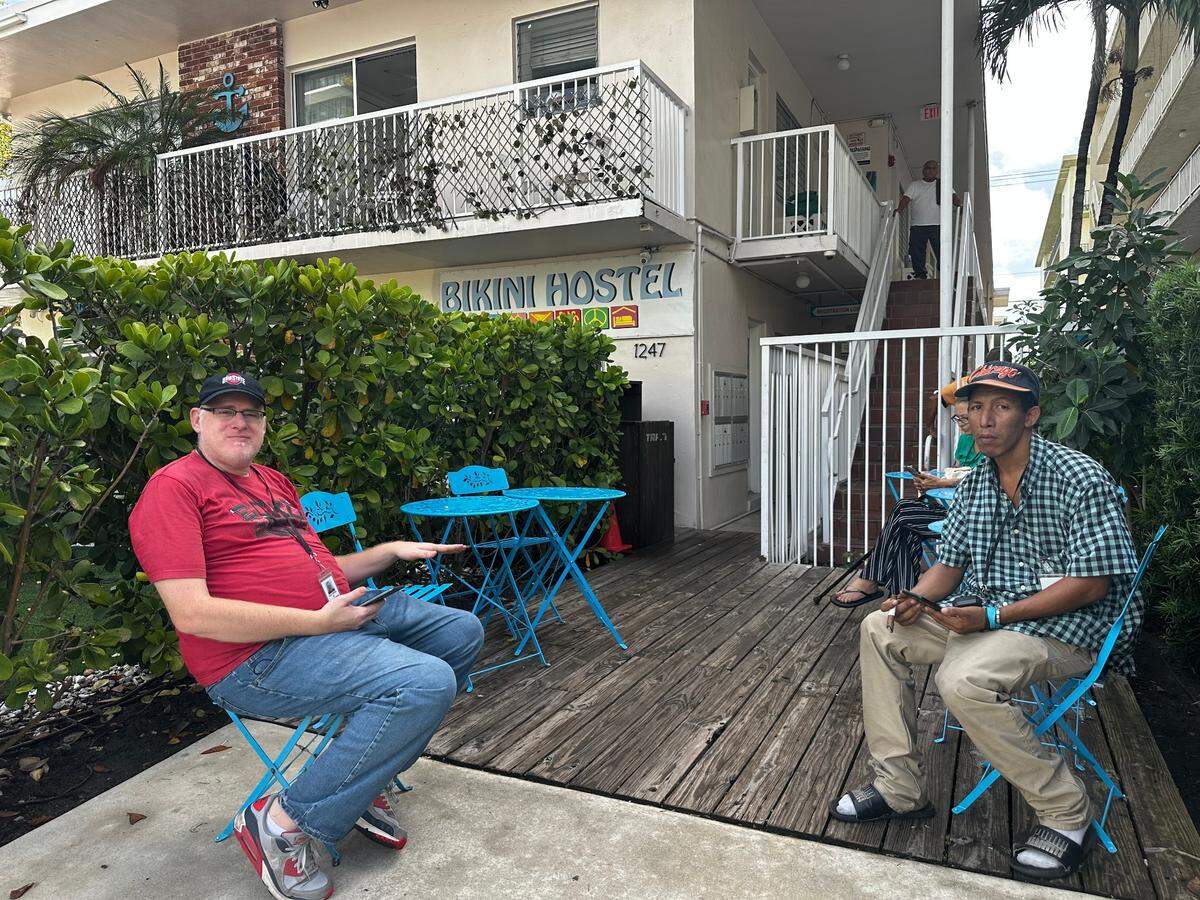
Kenia Fallat, a spokeswoman for the city of Miami, said the city “has not received any official proposal from Miami Beach” about potentially relocating Bikini Hostel residents.
“The City of Miami and our partners continue to provide ongoing support services to assist individuals,” Fallat said. “Our overarching goal is to place these individuals in permanent housing.”
Camillus House CEO Eddie Gloria also said he had not yet been contacted about the proposal.
Muskat, the hostel owner, said he believed that taking in homeless individuals was the right thing to do and that it has provided him a steady clientele. The hostel has 150 beds and is continuing to welcome other guests.
“What am I really guilty of?” Muskat said. “We’re guilty of providing shelter for unhoused individuals.”
Amid the controversy over the hostel’s future, Muskat is in talks with developer Michael Stern, who owns several other properties along West Avenue, over a possible sale of the Bikini Hostel property.
In September, a commission agenda item indicated that a developer was interested in building a public parking garage at the site.
Stern declined to comment on the negotiations.
‘Not how you rehabilitate people’
Earlier this month, an anonymous email was circulated among residents in the neighborhood near the Bikini Hostel, located at 1247 West Ave., calling on them to contact city officials and demand the hostel’s closure.
The hostel, which has operated for 15 years, “is a magnet for noise, disorder and instability, and it clearly has no place in a community that prospers on neighborly support and interconnectedness,” the message said.
“The sense of community in the neighborhood is practically nonexistent due to the hostel, with an endless parade of short-term visitors who don’t care about the neighborhood,” the email said. “The building continues to be a nuisance, undermining everything that makes Miami Beach a great place to live.”
At Wednesday’s meeting, Miami Beach officials cited their own laundry list of concerns.
Commissioner Alex Fernandez displayed recent negative online reviews of the hostel, including one in which a guest claimed that a man had asked if the guest smoked weed and then proceeded to touch the guest’s feet.
Commissioner David Suarez played a video that was posted in community Facebook groups, showing several bicycles that appeared to be painted over in black, lining the fence of the hostel. Suarez said it was an indication that the bikes were likely stolen.
Others noted that the hostel features a “beer garden,” which they said was inappropriate for a population that may be struggling with addiction.
“This is not how you rehabilitate people,” Commissioner Kristen Rosen Gonzalez said. “I think we have to take every action possible so this population is relocated to a facility that can meet their needs.”
Miami Beach police have had a vehicle stationed outside the property at all hours, costing the city about $35,000 per month.
“If there is anything wrong happening, the police officer should be able to stop that,” Muskat said. “But there isn’t anything happening.”
‘We will take this to court’
Meiner and several Miami Beach commissioners said Wednesday that if the city can’t reach a deal with the Homeless Trust, they would welcome litigation to resolve the matter.
“If we get sued, I think we will win, because what’s happening is wrong,” Commissioner Laura Dominguez said.
In an email to residents Thursday, Rosen Gonzalez said the city “will take this to court.”
“We will prove that this situation is not only a risk to public safety, but also cruel and inhumane for the homeless population being warehoused there,” she wrote. “And we will secure our neighborhood.”
Book, who previously served as a lobbyist for Miami Beach in Tallahassee, has sparred with the city over its escalating arrests for outdoor sleeping and its decision in October to rescind a ballot question about imposing a 1% sales tax for homeless services.
There are no homeless shelters in Miami Beach, but the city pays for dozens of beds at facilities in Miami.
“They believe they are the only city, the only community, that should be exempt from any level of [homeless] placement in their city,” Book told the Herald.
Meiner said in November that he believed the relocation of individuals from Camillus House to the Bikini Hostel was a form of political retribution, just days after the vote to rescind the ballot question. The Homeless Trust and the city of Miami denied it, saying the move was merely to ensure that people had shelter amid a dispute with Camillus over bed prices.
After backlash from county leaders over the ballot question removal, Miami Beach officials in November agreed to direct $10 million to the county for homeless services and provide additional funding in future years.
The city of Miami participates in a Homeless Trust program under which homeless people may be placed in hotels and motels. Book said the Homeless Trust has been pursuing the partnerships to increase bed capacity and ensure compliance with a new state law that subjects local governments to lawsuits for letting people sleep on the streets.
Miami Beach officials said they had believed the Bikini Hostel arrangement was temporary. Some were unaware that the homeless population there had grown substantially over the past four months.
“It’s so absurd to watch this scene,” Meiner said. “This facility is not a homeless shelter.”
Miami Herald staff writer Tess Riski contributed to this report.
This story was originally published February 27, 2025 at 3:33 PM.