Thankful to be alive, but Surfside survivor is living in limbo
Steve Rosenthal thought he had lost everything in the Champlain Towers South condominium collapse.
He was hopeless and homeless, living in a hotel, reduced to wearing donated underwear and trapped in no-man’s land as he tried to rebuild his existence. He spent hours on the phone with the Florida Department of Motor Vehicles explaining how he did not have his license plate because it was buried beneath tons of rubble.
“I was a zombie,” Rosenthal said.
Then, one day, a Miami-Dade police officer called.
“Are you Steve Rosenthal?” the officer asked. “We found something that belongs to you.”
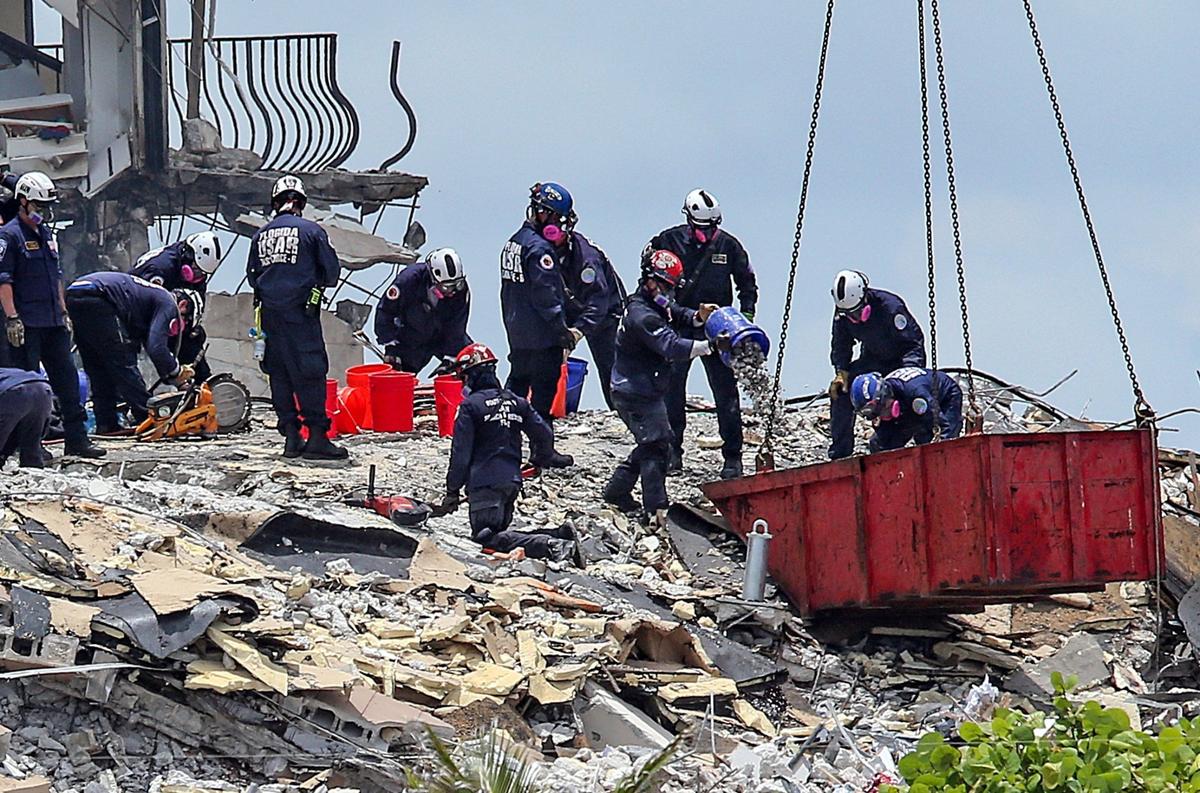
Sifting through the debris of the fallen building in Surfside, a search-and-recovery crew discovered a royal blue drawstring bag embroidered in gold with Rosenthal’s name. Inside were two of his oldest possessions: The prayer shawl and tefillin, a small box, he wore at his bar mitzvah 60 years earlier.
Rosenthal couldn’t believe it.
“If that is not a message from God, I don’t know what is,” he said.
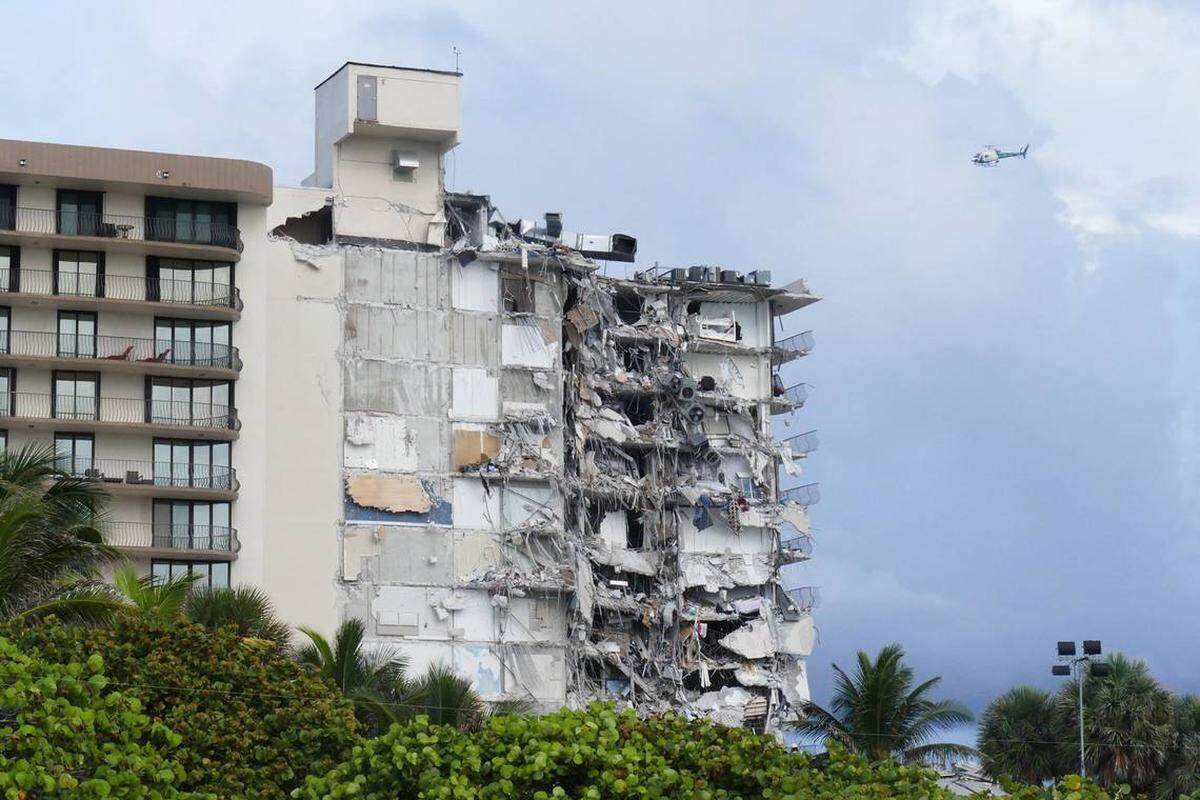
He felt uplifted by the news, following his descent from his seventh-floor balcony in a fire department ladder truck bucket, shaking with fear and sorrow and realizing “my life would never be the same and I would never return to my home at Champlain.”
Like other survivors of the disaster that killed 98 people on June 24, Rosenthal is living in limbo. Semi-retired from the advertising business, he has struggled emotionally and financially to resume his life as he awaits court rulings on when and how much he will be compensated for the loss of his condo. He and his fellow survivors and relatives of the people who died are plaintiffs in a class-action lawsuit overseen by Circuit Court Judge Michael Hanzman.
Rosenthal, 72, who owned Champlain unit 705, is renting a Brickell apartment for $3,700 a month and has no idea where he’ll move when his lease runs out. He’s had to buy furniture, clothes, a computer, “a coffee machine, a dust broom — anything you have in your house I’ve had to buy,” he said. “Up until a month ago I was rotating between three shirts.”
But the recovery of his bar mitzvah items was a revelation that gave him a new sense of purpose.
“I was spared for a reason. I’m not sure what that reason is, but I’ve changed my ways 180 degrees,” he said. “Since then I go to temple every morning. It feels wonderful to say my prayers. I’m trying to keep kosher. I light Sabbath candles.
“I’m becoming a good Jew. It’s like my late parents are saying, ‘You’re coming back, Steve.’”
Rosenthal was born in Germany and grew up in Baltimore, where his family ran a grocery store. His Lithuanian parents were survivors of the Dachau concentration camp.
“And I’m a Surfside survivor,” he said. “When I tell people they give me hugs and kisses or they say, ‘I gotta rub up against you so I can play the lottery.’”
Rosenthal tells his rabbis at The Rok Family Shul in Brickell that he thanks his parents for saving him. His unit was adjacent to the section of the building that collapsed. The units in his section that remained standing were taken down 11 days later as a tropical storm approached and they were deemed unstable.
“The destruction stopped three feet from my door,” Rosenthal said. “I attribute that to my parents in heaven, my angels, deciding it was not my time yet.”
Rosenthal recalled how he was awakened that night.
“I was in bed and at first I thought it must be a big storm coming in,” he said. “The room began to shake. I told myself, ‘You’re dreaming you’re in California in an earthquake.’ Then dust fell from the ceiling onto my face. I went to my sliding glass doors but I couldn’t see anything. When I opened my front door a plume of toxic smoke knocked me back like a sonic boom.”
Rosenthal tried to run out the front door but the hall was blocked by fallen beams. He went onto his balcony and saw dozens of rescue vehicles arriving on the scene. His friend Raysa Rodriguez up in 907 yelled to him that the entire back of the building was gone. He told an elderly neighbor crying on her balcony to put some clothes on over her nightgown and grab her passport.
“The cherry picker comes for us, and I was as scared as I’ve ever been, thinking the rest of the building would fall on top of us,” he said.
Six months later, Rosenthal relies on his faith to buoy him on dark days. He’s worried about the long-term effects of the smoke he inhaled that night; he had throat surgery in 2016. He’s worried about where he’ll live. He has insomnia.
“I hear thunder and I jump two feet in the air,” he said. “People are in therapy for depression and anxiety. People are living on limited or fixed or retirement income and having nervous breakdowns about their housing and financial situations.”
Rosenthal is thankful to the Global Empowerment Mission (GEM), the Jewish Federation, the Catholic Church and other donors that gave money to victims, but most of it has been used up paying for rent and new belongings. He is frustrated by the wrangling in court about how compensation funds will be divided. Condo owners won’t receive payouts until the Champlain property is sold in the spring.
“I want to write a letter to Judge Hanzman,” Rosenthal said. “’Dear Your Honor, we’re alive and we’re in trouble. You don’t seem to care about us, the living, as much as you care about the dead. Don’t take it out on the survivors.’”
In overseeing the legal fallout from the condo collapse, Hanzman has found himself in a position of trying to appease hundreds of people — from survivors who lost their units to representatives of the victims who died. Hanzman, considered an expert in complex litigation, has tried to balance the demands of both sides in a class-action case, but the amount of money available to compensate everyone fully and fairly is limited — making him a lightning rod as he tries to be judicious and empathetic.
“Many times in cases involving mass tragedies — for example, plane crashes and things where multiple people are killed or injured — all the victims are in the same boat as far as the legal claims and the legal defense,” Hanzman said during a court hearing. “And here we’re in very uncharted waters because we have victims who, thank God, only lost their units and survived this tragedy, and we have other owners and non-owners who perished in this tragedy.· And this is a very unique circumstance.”
Rosenthal emphasizes that the survivors feel neglected.
“After the collapse, of course it was all about search and rescue. But when it became clear they wouldn’t find anybody we asked, ‘What about us?’” Rosenthal said. “Mayor [Daniella] Levine Cava came and apologized. Now we feel invisible again. The focus seems to be on the heirs, many of whom own homes, instead of the living, who have no homes.
“Everybody is concerned about the people who died and the heirs. Well, the people who died, and I mean this with all due respect, they are dead. And the heirs for the most part are independent and self-sufficient. On the economic side, the people who have a second home in Jersey or Canada or Philadelphia, they have a place to go. The story now should be about the people who lost their only house and the people who were dependent upon the person who died. We have to start over.
“I don’t know what’s going to happen to us. I’m renting from a man from Argentina. If there’s a coup he may kick me out.”
Miami Herald staff writer Jay Weaver contributed to this report.
This story was originally published December 28, 2021 at 1:00 AM.