
After 2019 losses, Rosen Gonzalez and Group 1 candidates look for political comeback
Former Miami Beach Commissioner Kristen Rosen Gonzalez is making another run at a return to City Hall, and she’s up against three candidates who — like her — lost their commission races in 2019 and are looking for political redemption.
Rosen Gonzalez, a Miami Dade College professor who was elected in 2015 but resigned to run an ill-fated campaign for Congress, is the leading fundraiser among the Group 1 commission candidates seeking to replace term-limited Commissioner Micky Steinberg in the upcoming Nov. 2 election. The other candidates are restaurateur Adrian Gonzalez, business owner Raquel Pacheco and salesman Blake Young.
If no one earns more than 50% of the vote, the top two candidates will move on to a Nov. 16 runoff election.
The candidates all agree that more police are needed to stop the party-like atmosphere in South Beach, and that a citywide 2 a.m. rollback on alcohol sales is a misguided attempt to curb crime.
But Rosen Gonzalez, 48, has faced questions about recent gaffes, like claiming to be Hispanic, and an outspoken animosity for the sitting mayor and other commissioners that has only intensified during recent issue-based campaigns she led as a community activist. Also, last month, Rosen Gonzalez’s insurance carrier settled a defamation lawsuit filed by a man accused by the former commissioner of exposing himself in 2017 while they sat alone in a car, paying $110,000 to Rafael Velasquez.
Rosen Gonzalez says the case was settled without her consent. She has apologized for calling herself Hispanic, and said that if elected, she will put aside personal differences to work with the commissioners she doesn’t get along with.
“Politics can get messy, but we can do this civilly,” she said.
But that hasn’t kept away the critics. Commissioner David Richardson, with whom Rosen Gonzalez has frequently feuded, endorsed Pacheco despite saying he rarely backs candidates. He said Rosen Gonzalez has lied to residents about his positions, scaring the public and forcing commissioners to spend time during meetings to correct the record.
“I think it makes it hard for anyone to work with an individual that is not concerned with telling the full truth,” Richardson said. “She routinely distorts the facts to fit her own narrative.”

Rosen Gonzalez has attacked Richardson and others for their votes to sell or redevelop public property. She likened Richardson to dictators like Fidel Castro for using self-promotional “propaganda” — like signs, grocery bags and fliers — at food giveaway events he helped organize during the pandemic. Richardson, in turn, published photos of Rosen Gonzalez handing out bags with her name on them at a separate food giveaway.
Pacheco, the owner of a translation company, has pitched herself as a measured consensus builder and said she disagrees with Rosen Gonzalez’s abrasive political “tactics.”
“I don’t think that anyone right now wants to see drama,” Pacheco, 47, said, adding: “It’s counterproductive. The accusations, the name calling, the insinuation that people are corrupt, that’s just not conducive to government.”
Pacheco has also been the target of criticism. A political committee financially backed by a Rosen Gonzalez supporter mailed voters an attack ad bringing up two bankruptcies Pacheco filed for and a lawsuit against her when she was the president of her condo association.
Pacheco said she filed for bankruptcy in 1998 when she was in debt after college. She filed for bankruptcy again in 2017, listing $145,000 in debt. That included a $100,000 federal loan from the Small Business Administration, $27,500 in taxes and other expenses. Pacheco, who said she was asked to pay off the SBA loan two years early, said her 2013 pregnancy as a single mother put her in financial trouble because she had to pay about $30,000 in maternity care out of pocket.
The condo-association lawsuit, filed in 2015 by several unit owners of the Harmony Villa building where Pacheco still lives, accused Pacheco and the management of the building of endangering residents by failing to receive a required 40-year re-certification and allowing the building to slip into disrepair.
She called the lawsuit frivolous and politically motivated, but said she could not comment further because she signed a non-disclosure agreement. The case was settled in 2016.
“There’s a lot of politics that go on in these HOAs,” Pacheco said, referring to homeowner associations. “As a former HOA president I understand that because I was the target of that.”
The mailer, paid for by the group Residents for A Better Miami Beach, also claims Pacheco once worked for “anti-gay” Sen. Rick Santorum, the former Republican presidential candidate who once called for a constitutional amendment to define marriage as between a man and a woman.
Pacheco said the claim was false, but admitted that she name-dropped Santorum in a 2019 résumé to fill the commission seat vacated by Rosen Gonzalez, writing that she “worked with various well recognized and accomplished individuals including ... Senator Richard Santorum.”
Pacheco, whose résumé says she worked in event planning and public relations, said Santorum may have appeared at an event she was hired to work at but she never worked for him or spoke to him.
“We did a lot of events for Republicans at the time,” Pacheco said.

Candidates view crime in South Beach as main concern
Apart from the back-and-forth between Rosen Gonzalez and Pacheco, the Group 1 candidates have largely kept to themselves and focused on the issues they believe voters care about. Addressing resident concerns about the crime and disorder in South Beach’s entertainment district is a top priority for all four candidates.
Every candidate said they would personally vote against the non-binding ballot question that asks whether voters want the commission to ban alcohol sales citywide at 2 a.m., abandoning the 5 a.m. standard in much of the city, with exemptions that have yet to be disclosed. They are also in agreement about reopening Ocean Drive to at least one lane of car traffic as a way of breaking up street parties there after the city closed the road to expand outdoor restaurant seating and provide exercise space for residents during the COVID pandemic.
Adrian Gonzalez, the 47-year-old owner of David’s Cafe Cafecito, said the way the ballot question is worded gives too much discretion to the commission to craft resulting restrictions, which he said could favor certain businesses over others.
“We don’t want to open the Pandora’s box on that,” he said. “I think it should stay the way it is.”
He said the city should treat its entertainment district like New Orleans does Bourbon Street during Mardi Gras. The scene looks like “controlled chaos,” he said, where police are able to maintain order while bars rake in “insane” revenue for the city.
He said Miami Beach should help the entertainment district succeed under the 5 a.m. closing time bar owners are used to by ramping up police enforcement and hiring more cops.
“This entertainment district has to be allowed to thrive, and you have to help it,” he said. “This 2 a.m. rollback to me, it makes no sense, you’re going after specific businesses, not all businesses.”
He said the city needs to enact a “zero tolerance” policing and code-enforcement model to crack down on visitors committing crime — which he called the “thug element” — and business owners breaking rules in order to raise the standard in South Beach. That includes lobbying prosecutors to argue for stiffer penalties, he said.
“We want to send a message: We have a beautiful city. Come and enjoy, party, have a great time, and do whatever you want to do but be respectful,” Gonzalez said. “The moment you cross the line, we will prosecute you to the fullest extent of the law.”
He served on the Miami Beach Visitor and Convention Authority for several years and is currently the president of his homeowners association in Lakeview and a member of the the city’s Marine and Waterfront Protection Authority.
Gonzalez, whose family opened the original David’s Cafe in Miami Beach in 1977, closed the 919 Alton Rd. business in August 2020 after his landlord filed for eviction due to nonpayment of rent.
The owners failed to pay more than $51,000 in rent from September 2019 through January 2020 by early March and the court issued a summary judgment. In 2012, former workers of David’s Cafe II protested and went to court alleging that the owners had failed to pay them their proper wages, eventually receiving 75% back pay.
Gonzalez said the incident, caused by rising lease payments and an economic downturn, was one “blip” in the restaurant’s otherwise storied history. He said the workers demanded more than what they were owed and eventually received their money. He said some returned to work for the restaurant.
“They were made whole,” he said.
Gonzalez has also endured personal financial troubles, which he said were caused by the pandemic’s impact on his restaurant business. A lawsuit was filed against him in January 2020 demanding the foreclosure of his home mortgage after his creditor alleged nonpayment. Then in July 2020, the Ford Motor Credit Company sued him for not paying his car lease and repossessed his car. Last March, Discover Bank sued Gonzalez alleging that he owes more than $20,000.
Gonzalez said his personal finances are directly linked to his restaurant and that he could not afford to pay his bills. He said he enrolled in a federal mortgage-relief program to renegotiate his mortgage.
Gonzalez revived his business last March, opening a pop-up at the Shelbourne South Beach hotel. The restaurant has been the location of regular community meetings held by former Mayor Matti Bower, known as the Tuesday Morning Breakfast Club.
Gonzalez said if elected, he would propose legislation to help small businesses afford rising rents through a voucher program. Growing up in Miami Beach, he said, the variety of restaurants and businesses gave the city a unique charm. But now, he said, only “generic” or chain businesses can afford the rent.
“Things like this will allow a small business, a fixture in our community, from leaving to the Miami side to open up over there for financial reasons. It will preserve the flavor, which we’re all about.”
Rosen Gonzalez, who helped organize a protest outside City Hall last spring break, has changed her position on the need to roll back alcohol sales.
In 2017, she opposed a binding vote to end alcohol sales on Ocean Drive at 2 a.m. But in April, after Mayor Dan Gelber proposed a 2 a.m. last call in the South Beach entertainment district, Rosen Gonzalez said it wouldn’t go far enough to fix the public safety issues and instead floated a 10 p.m. rollback.
“I am not afraid to say that we need to shut it down,” she wrote in a Facebook comment on March 30. In a different comment, she wrote that hospitality workers who would lose their jobs should be offered to take a complementary technology course at Miami Dade College.
But during the current campaign, she came out against the non-binding 2 a.m. referendum because, she said, the ballot question does not state what businesses, if any, would be exempt from the new cutoff. She said clubs or bars inside hotels or with adequate security should be allowed to serve until 5 a.m.
“I want to see a change in Miami Beach’s culture. But the ballot question was set up for failure because it was too vague and it doesn’t really specify clearly enough [what] these exemptions are.”
Rosen Gonzalez, who is engaged to chef Bernie Matz of the late-night Bodega restaurant and club, recently opened a restaurant with him and said the 2 a.m. alcohol ban issue is not “black or white.” She said it could hurt hospitality workers trying to make ends meet. She said that she reached her current position after studying the issue more and speaking with the owners of Mango’s Tropical Cafe, The Palace and Twist, two of whom donated to her campaign.
The police chief, she said, should inspire officers to patrol the streets and enforce the law.
“If residents don’t begin to feel safe, then we need to reexamine who’s running Miami Beach,” she said.
Pacheco, the former president of the Miami Beach United resident-advocacy group, said while she is personally against the alcohol-sales ban, she would follow whatever voters decide. She said her “research” shows the 2 a.m. rollback will likely pass, so she is looking ahead to how the city commission will balance the will of the voters with the financial health of a city reliant on the tourism and hospitality industry. She has floated the idea of doing a 2 a.m. pilot program to gauge its impact, although she does not think it will help make South Beach safer.
“Personally, I don’t believe that is going to solve our problems,” she said.
She proposes doubling the number of officers on foot patrols, stepping up code enforcement to squeeze out business owners who frequently flout the rules, including short-term rental operators, and dispersing party crowds by reopening Ocean Drive to at least one lane of traffic. The former Connecticut Army National Guard member said she was taught in military training that it was risky to attempt breaking up a large crowd, so she felt reopening the oceanfront street would improve safety and help police move around more effectively.
“Our residents don’t feel safe,” she said. “They don’t frequent the entertainment district because they don’t feel safe there.”
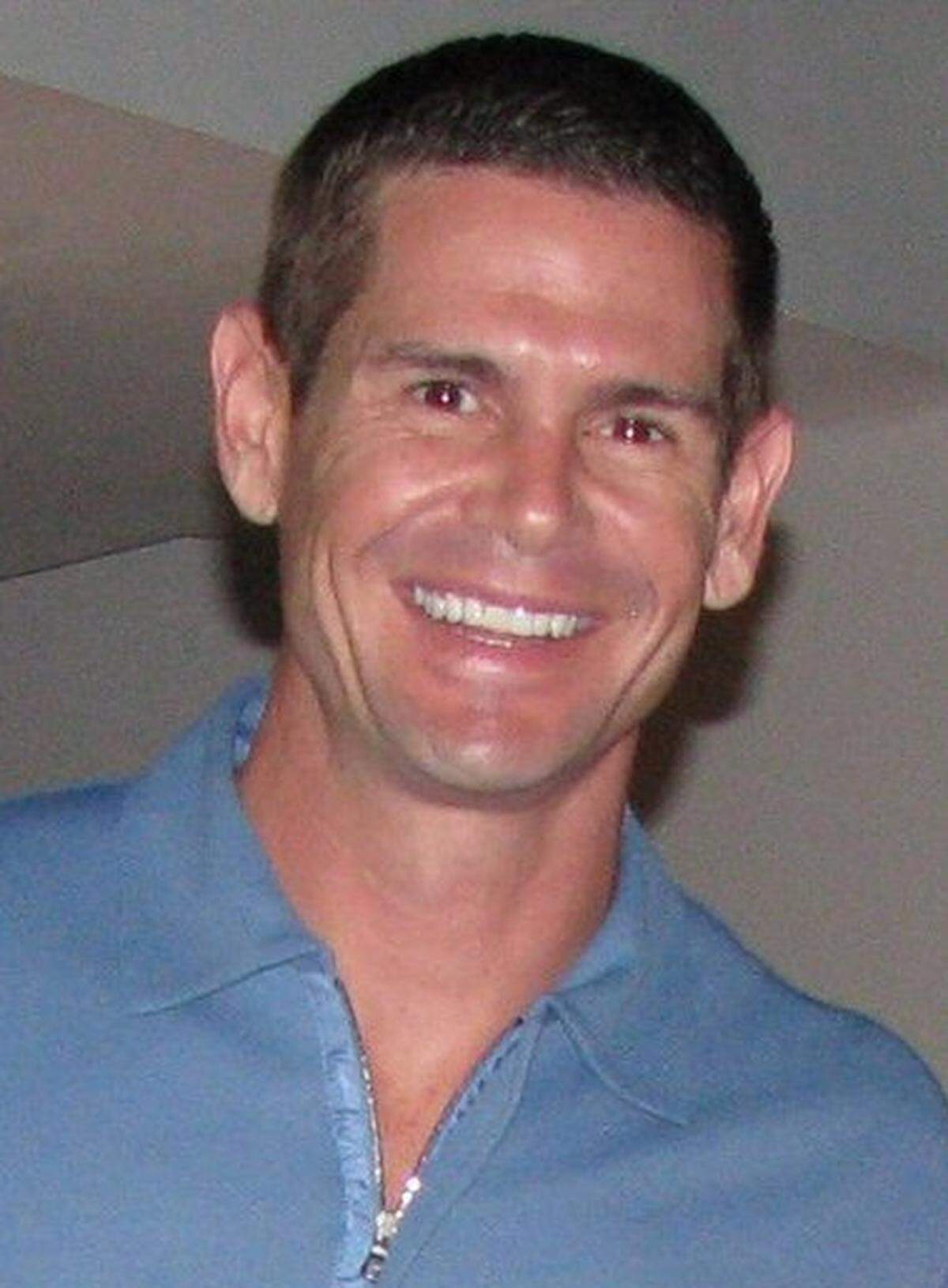
Young, 50, an industrial sales contractor, said public safety has been his main focus since he ran in 2019 and he criticized his opponents for suddenly showing concern about the crime and disorder in the streets.
“I’m the only person that led with that in 2019,” he said. “Those guys were talking about mushy stuff about their families.”
Young, who is the president of his condominium association at the Regatta Miami Beach, said a 2 a.m. rollback wouldn’t help reduce crime, but he believes the saturation of bars, smoke shops and liquor stores has contributed to South Beach’s decline. He has proposed zoning changes to break up strings of similar businesses and new incentives to convince business owners to cater to a more upscale, family-friendly clientele. But in the short term, he said, the next Group 1 commissioner needs to have the courage to “press the police button” by advocating for having more police visibility and a crackdown on enforcing even minor crimes.
“We certainly can police our way out of it,” he said.
Like he did in 2019, Young is running a “donation-free” campaign where he is not asking supporters for any money. He said his goal is to remove the influence of money from politics.
“The donation-free campaign is a campaign free of special interests and big money,” he said in a recorded campaign spot put out by the city for all candidates. “It’s a campaign where we’re concerned about our community, the residents and our well being at large.”
This story was originally published October 7, 2021 at 4:37 PM.
CORRECTION: This story has been updated to reflect that Miami Beach commission candidate Raquel Pacheco filed for bankruptcy in 2017 after accumulating $145,000 in debt. The story was also updated to reflect that Miami Beach commission candidate Adrian Gonzalez is facing three lawsuits alleging nonpayment on his mortgage, credit card and car lease.
.JPG)