On Miami Beach’s new bike lane, cars aren’t the threat — they’re the protection
You are taking your life in your handlebars every time you ride a bicycle in South Florida, but a new bike lane in Miami Beach creates a safety buffer with the very thing cyclists fear most — cars.
Washington Avenue is home to the first parking-protected bike lane in the region and it’s earning rave reviews from cyclists, residents and businesses along a once-hip South Beach thoroughfare that is undergoing a revival.
“A parking-protected lane is not a novel concept in cities worldwide, but it’s finally here, we finally have one of our own, and it’s going to help make biking safe for all ages and all types of users,” said Matthew Gultanoff, founder of Better Streets Miami Beach. He lives in South Beach and takes his 4-year-old daughter to school on his bike.
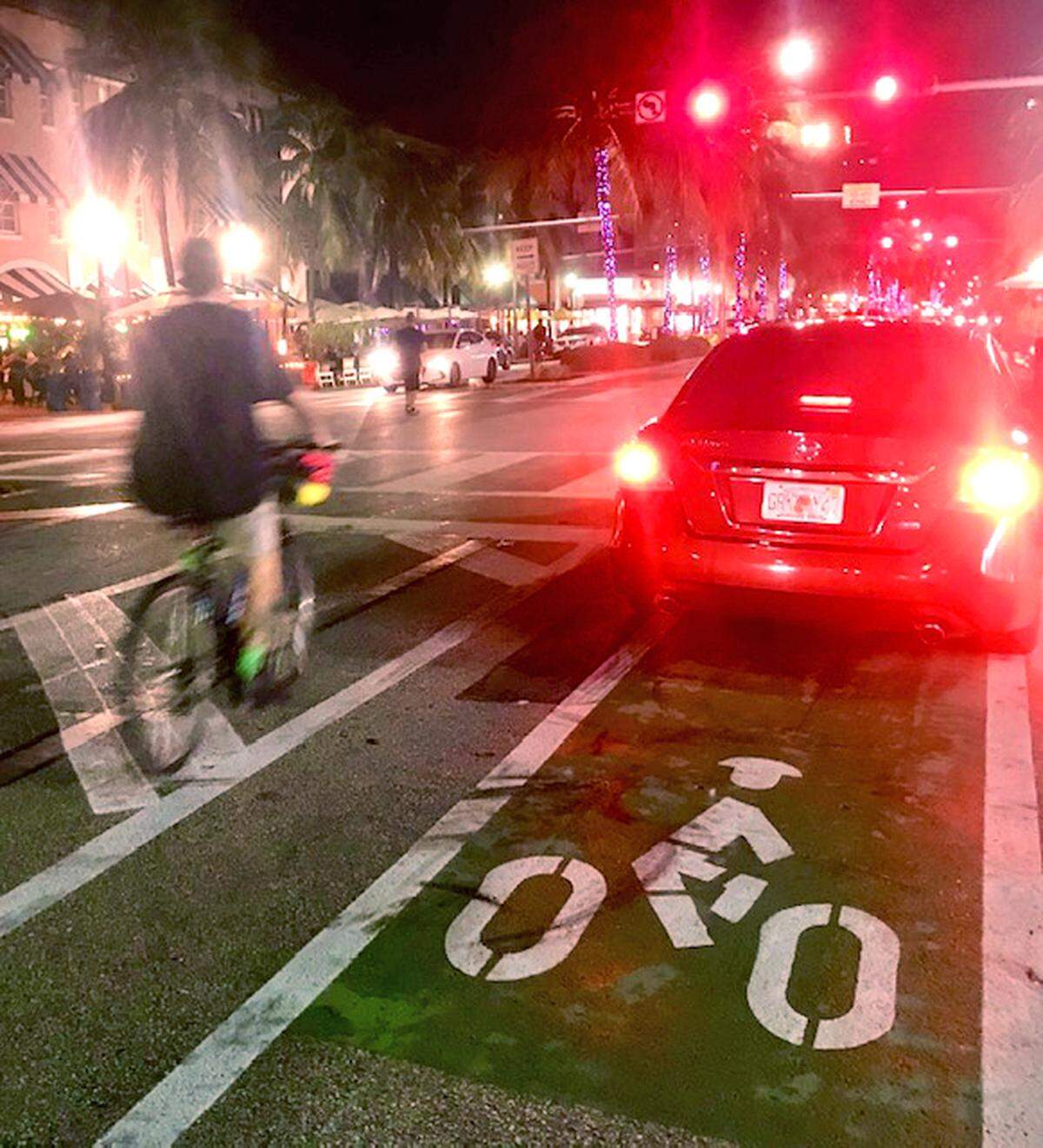
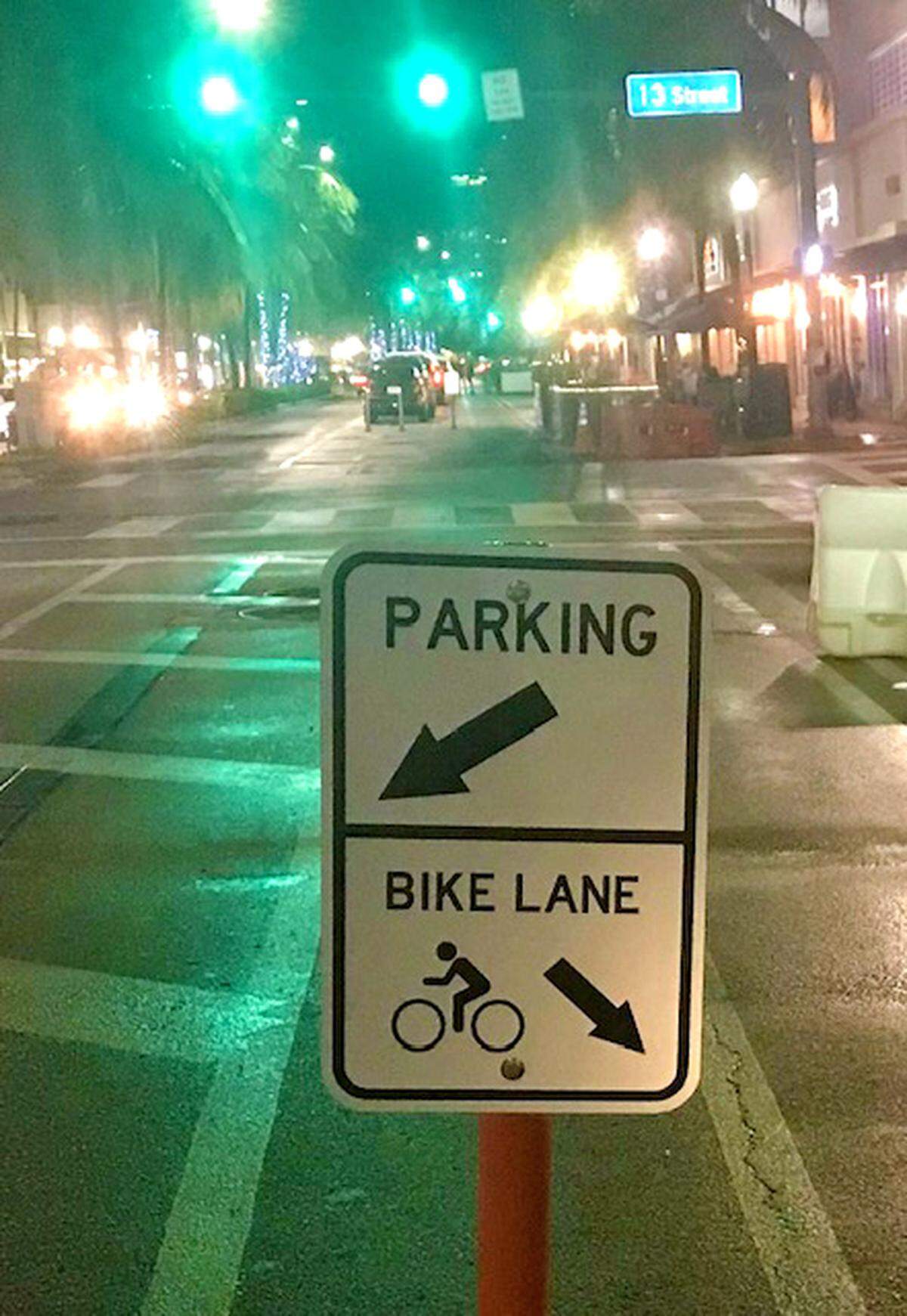
A designated bike lane, marked with green paint and white lines, runs along both sides of Washington from Fifth Street to Lincoln Road. The parking-protected lane runs between the sidewalk and a lane of parallel-parked cars — serving as a wall between cyclists and street traffic. To make room for the new lane, which runs from 11th Street to 16th Street, a lane of vehicular traffic was eliminated, reducing Washington Avenue to one lane of traffic in both directions.
“People love it and we’ve seen the number of cyclists increase by about 60 percent,” said Troy E. Wright, executive director of the Washington Avenue Business Improvement District. “You’re free to enjoy Washington Avenue without being worried that you’ll get run over.”
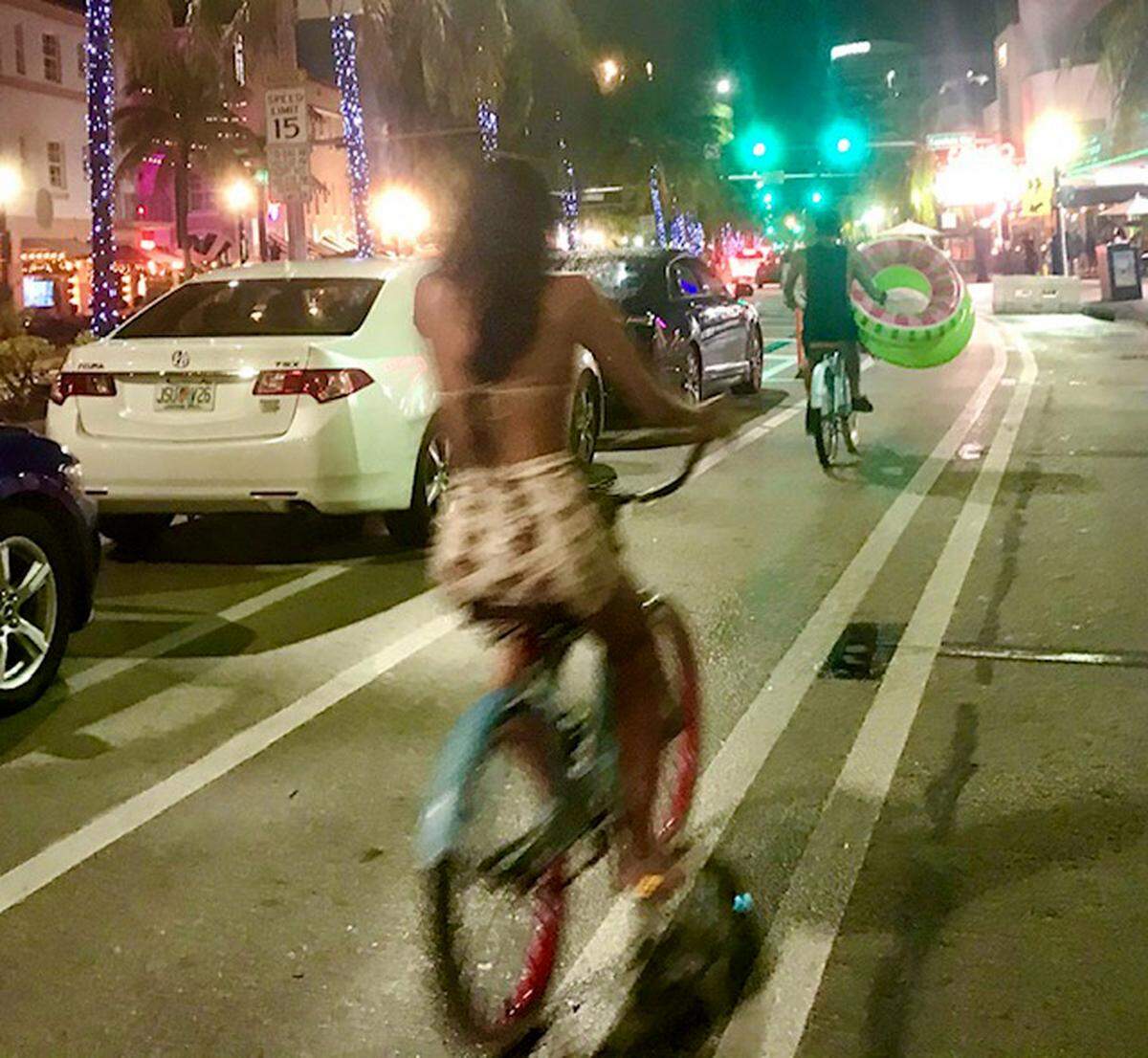
Dana Wall and David Carson, who live in the Brickell area, were among the cyclists who took a spin along the avenue during a “Bike the Wave” celebratory unveiling of the lane on Saturday night. They bike everywhere, including to their jobs, and are planning to move to Miami Beach because of its potential as a bikeable city, where they can get around without the hassles of traffic congestion and parking.
“You can ride and look at the storefronts without having to constantly look over your shoulder thinking you’re going to get hit,” said Carson, who thinks all U.S. cities — especially one as flat and warm as Miami — should aspire to building the bike infrastructure of cycling nirvana Amsterdam. “This is a real asset. I hope they extend it and make it permanent. It’s proof that we don’t have to abide by car culture.”
The bike lane and outdoor dining lane were both introduced during the coronavirus pandemic to create new spaces out of existing roadway, and are two of the silver linings of the crisis, Wall said.
There are trouble spots along the corridor, and there will be a learning curve for both drivers and cyclists. At a few places on Saturday, cars were double-parked in the bike lane or Uber drivers blocked the lane while awaiting a pickup, forcing cyclists to veer around them. Cyclists who rode too close to parked cars risked getting “doored” by heedless exiting passengers. Motor scooters invaded the lane on occasion.
“Vehicles making right turns can be a problem, particularly with large delivery trucks at the end of the intersection, so adjustments will be made to the parking lane,” Gultanoff said. “But drivers in cities all over the world have figured this out.”
The new bike-friendly design meshes with plans to enliven Washington Avenue, which had grown shaggy since its South Beach heyday as a night club hub. New hotels, businesses and restaurants are opening, with added emphasis on entertainment venues, public art and outdoor dining. Eleven eateries have opted to utilize the extended sidewalk dining lane that used to be the parking lane, with three more in the application process.
“It will not look the same in two years. We’ve already seen a 15 percent increase in pedestrian traffic and a 20 percent decrease in vacancies,” said Wright, who plans to borrow ideas from Seattle, where he was vice president of the Jimi Hendrix estate and started a gospel choir that charted on Billboard. “This market needs to be diversified. We’ve got plans for live music and arts series in 16 locations.
“We have a strong vision of a place where people — locals and tourists — can exhale. And there’s no way we would have gotten this far without the pandemic. We’ve been able to see things in a new way, try things and change things.”
Washington Avenue can be a model for other neighborhood thoroughfares, said Azhar Chougle, executive director of Transit Alliance Miami, the transportation advocacy organization that recently conducted an audit of Miami’s paltry collection of short and random bike lanes. While a bicycling boom swept the world during the pandemic, and cities adapted by creating new pathways, Miami leaders took no such initiative, while letting bike master plans languish in a metropolis consistently ranked as one of the most dangerous in the country for cyclists and pedestrians.
“It’s a transformational street that is already making people feel more comfortable on it,” he said. “This is a big turnaround for Miami because once people experience it they know it’s possible.”
In the works for Miami Beach are bike lanes along Meridian Avenue and West Avenue and “slow streets,” using signage and barricades to discourage through traffic, in the Flamingo Park neighborhood, Gultanoff said. Parking-protected lanes, popular in New York and other cities, should extend the full length of Washington Avenue, he said.
“It’s critical that the network continue to grow because without a true network you can’t get from point A to point B and replace those traffic-choked car trips,” he said. “To hop on two wheels is freedom. We are so starved for that freedom in South Florida.”
This story was originally published September 30, 2020 at 7:00 AM.