Why is South Florida balking at closing streets to make room for social distancing?
A social distancing turf war is playing out in South Florida and a restless nation. Penned inside by stay-at-home orders and penned outside by park closures, people squeezed onto four-foot-wide sidewalks are seeking six feet of space. They’re asking for streets to be closed to cars so they have room to move safely.
It’s happening in New York City, where the City Council plans to expand a coronavirus street network by closing 75 miles of roadways to vehicular traffic. It’s happening in Oakland, California, which started a “Slow Streets” campaign in response to the pandemic and has closed 10 percent of its streets. It’s happening in Minneapolis, which has closed five parkways, and Washington, D.C., which has closed 10 streets for 13 hours per day, and Philadelphia, which closed a portion of Martin Luther King Jr. Drive.
But it’s not happening in Miami, Miami-Dade County or Miami Beach.
Along Ocean Drive, frequently closed for festivals and holidays but not during a public health crisis that has killed 167,000 worldwide, only the east parking lane is barricaded for six blocks by plastic orange poles.
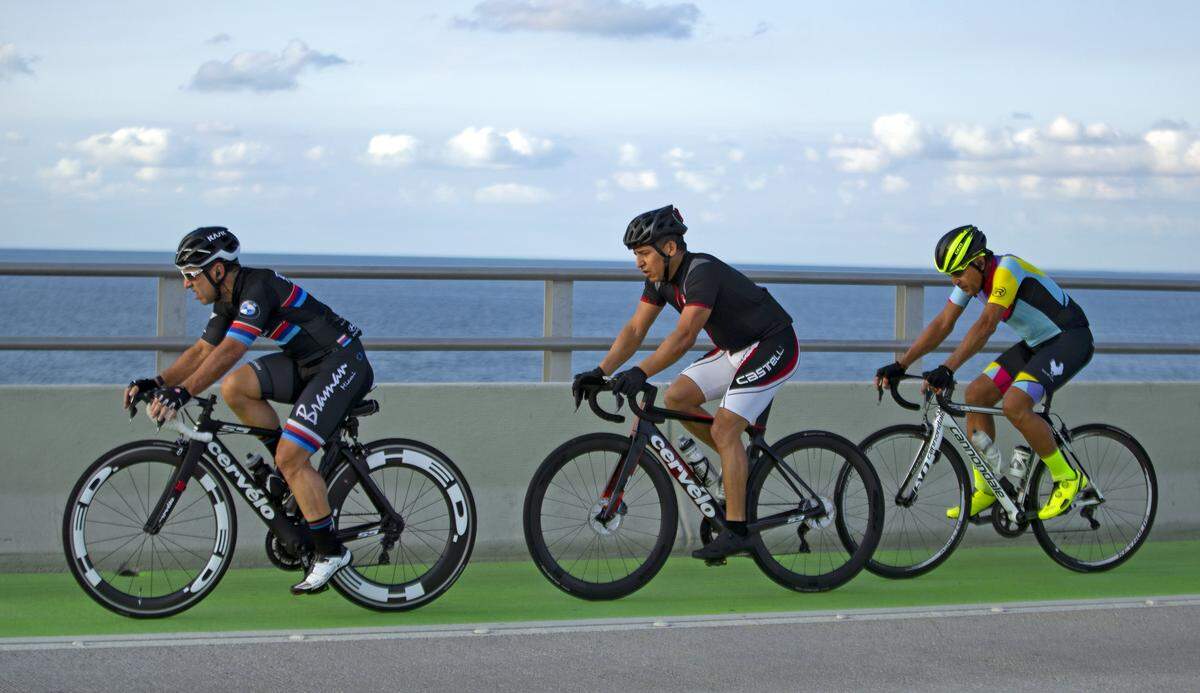
The Venetian Causeway is crowded with walkers, runners and cyclists negotiating its notoriously narrow sidewalks, bridges and bike lanes.
Downtown, Midtown, Upper East Side and North Dade condo and apartment dwellers have nowhere to go given green space closures up and down the waterfront, so they are running into each other.
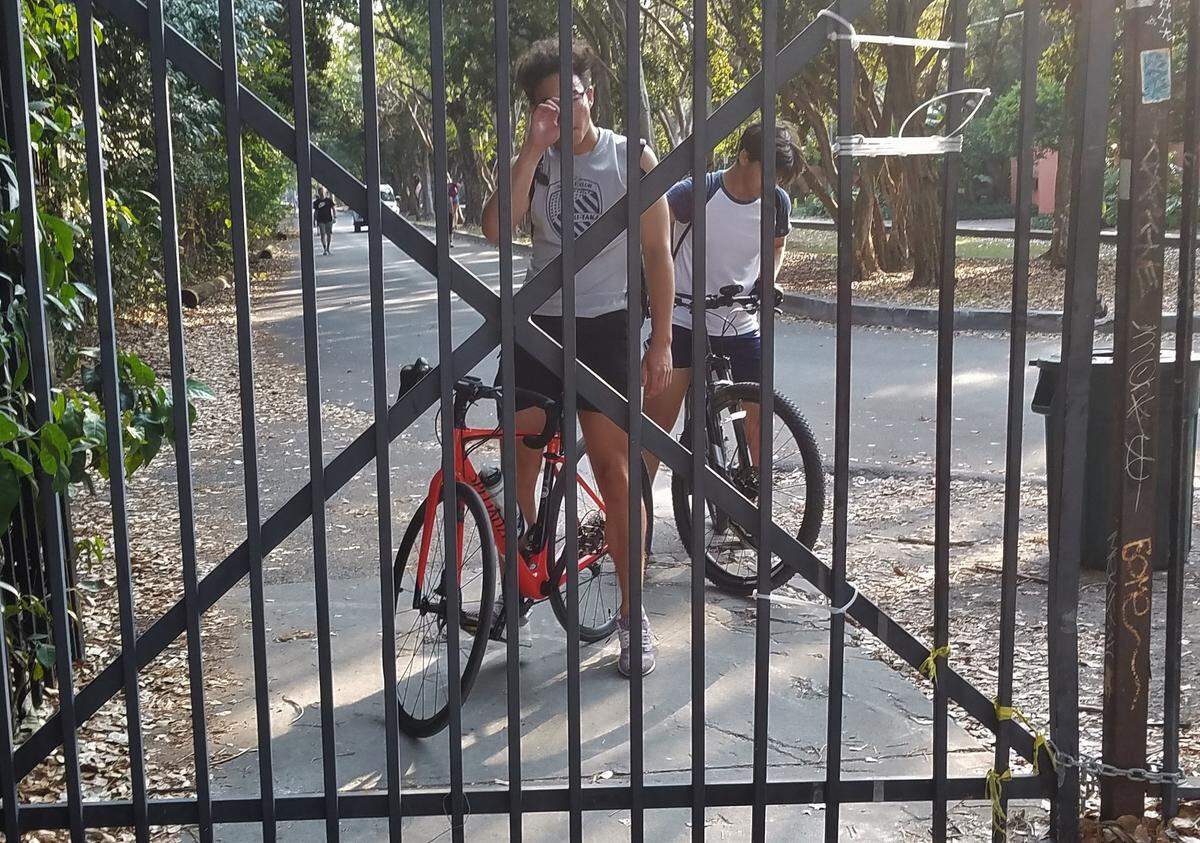
The conflict peaked in the Cliff Hammock neighborhood when someone cut off access to the southern section of Brickell Avenue, a quiet, shady cul-de-sac long favored by pedestrians, joggers and bike riders. Instead, they were shunted onto dangerous South Miami Avenue and its skinny, cracked sidewalk.
Someone closed Stallone Gate, so named 23 years ago for Sylvester Stallone’s attempt to privatize his wealthy neighborhood — Madonna lived there, too — by erecting a fence and permanently locking the gate that connects Coconut Grove, the Rickenbacker Causeway and the north Brickell corridor. Because of a public outcry against the “Rocky” actor, Stallone’s effort failed, he moved out of his $25 million mansion and the portal remained open until last week, when it was chained and padlocked shut — twice, with two different chains.
Who did it? Nobody is confessing in the mystery now dubbed Stallonegate. But some believe it was a homeowner, angered by increased pedestrian traffic during the coronavirus pandemic.
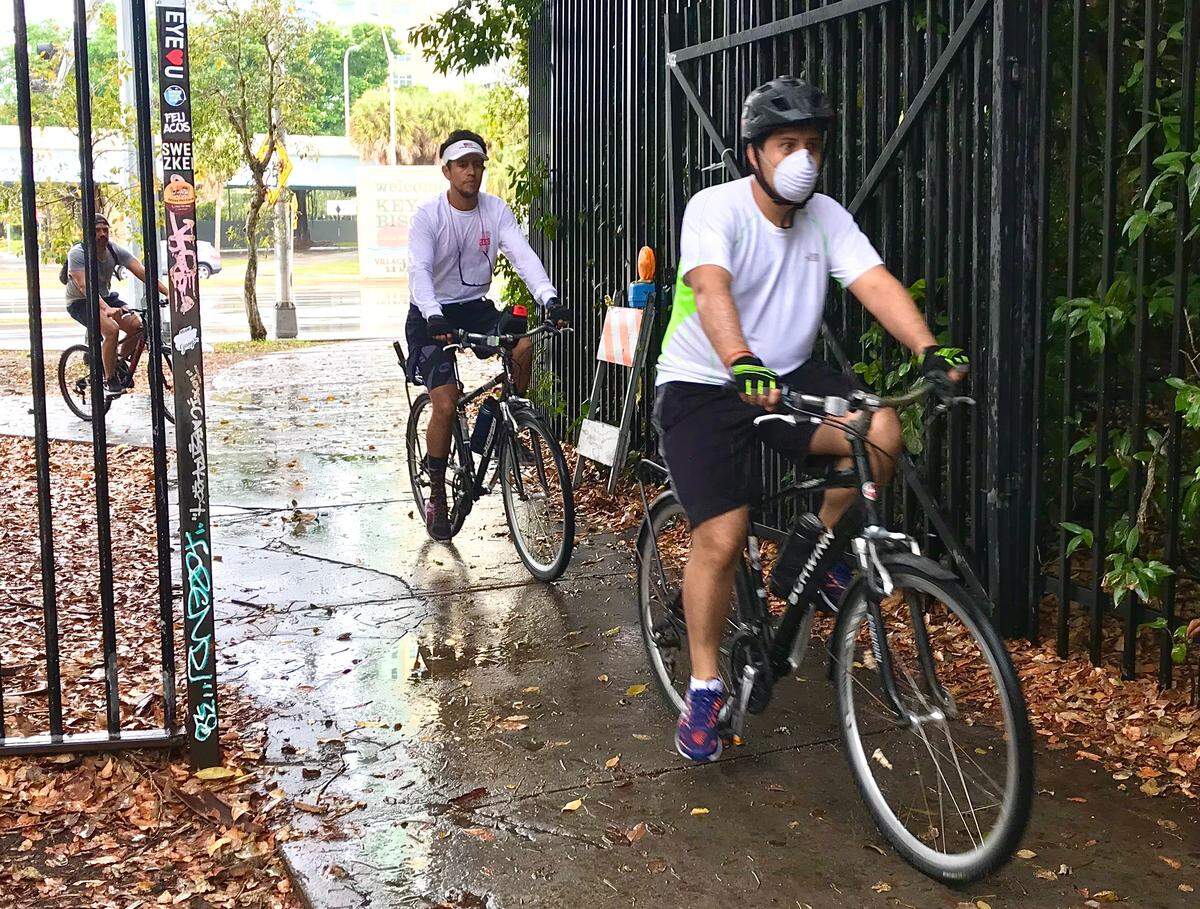
While vehicle traffic has plummeted, people have taken to the streets because their gyms, swimming pools, parks, playgrounds, ballfields, green spaces and beaches are closed.
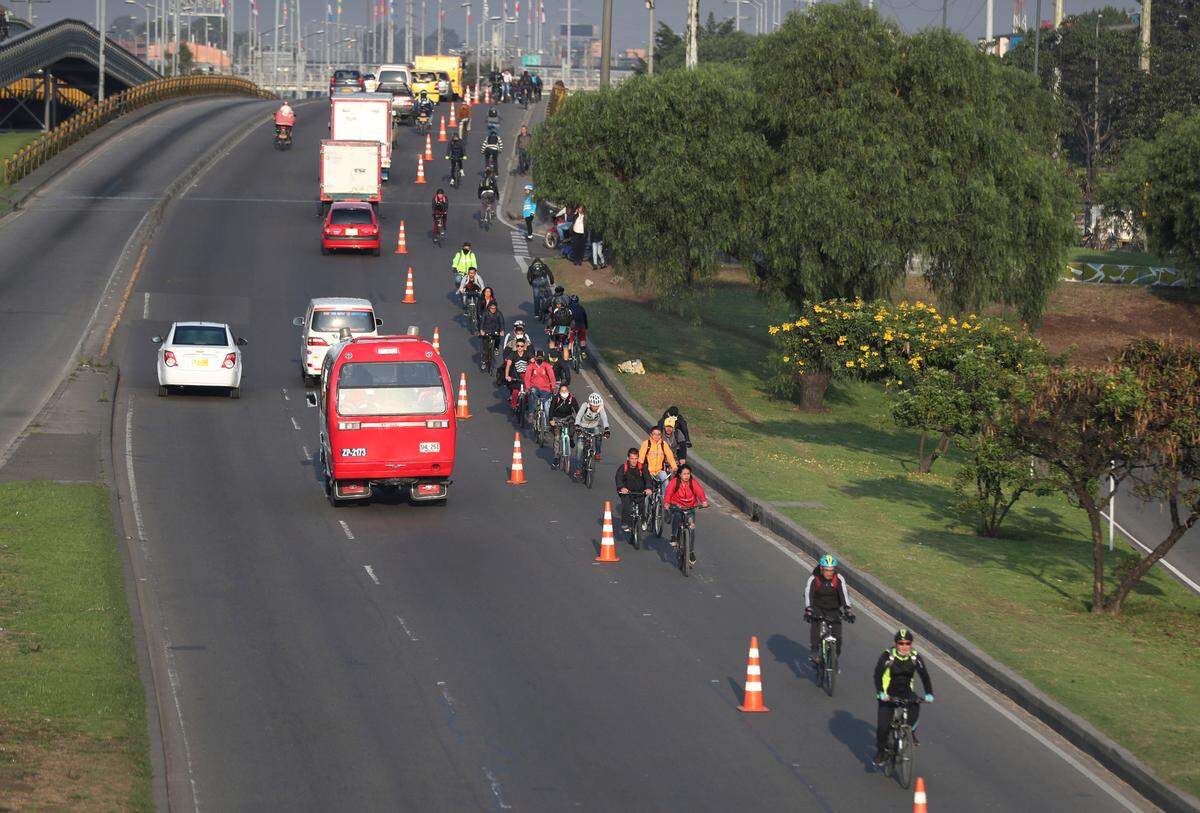
Responding to the immediate need for six feet of separation, cities from Montpelier, Vermont, to Montpellier, France, have temporarily shut off streets or traffic lanes to cars. Pop-up bike lanes are being painted in Mexico, Colombia, Germany and England.
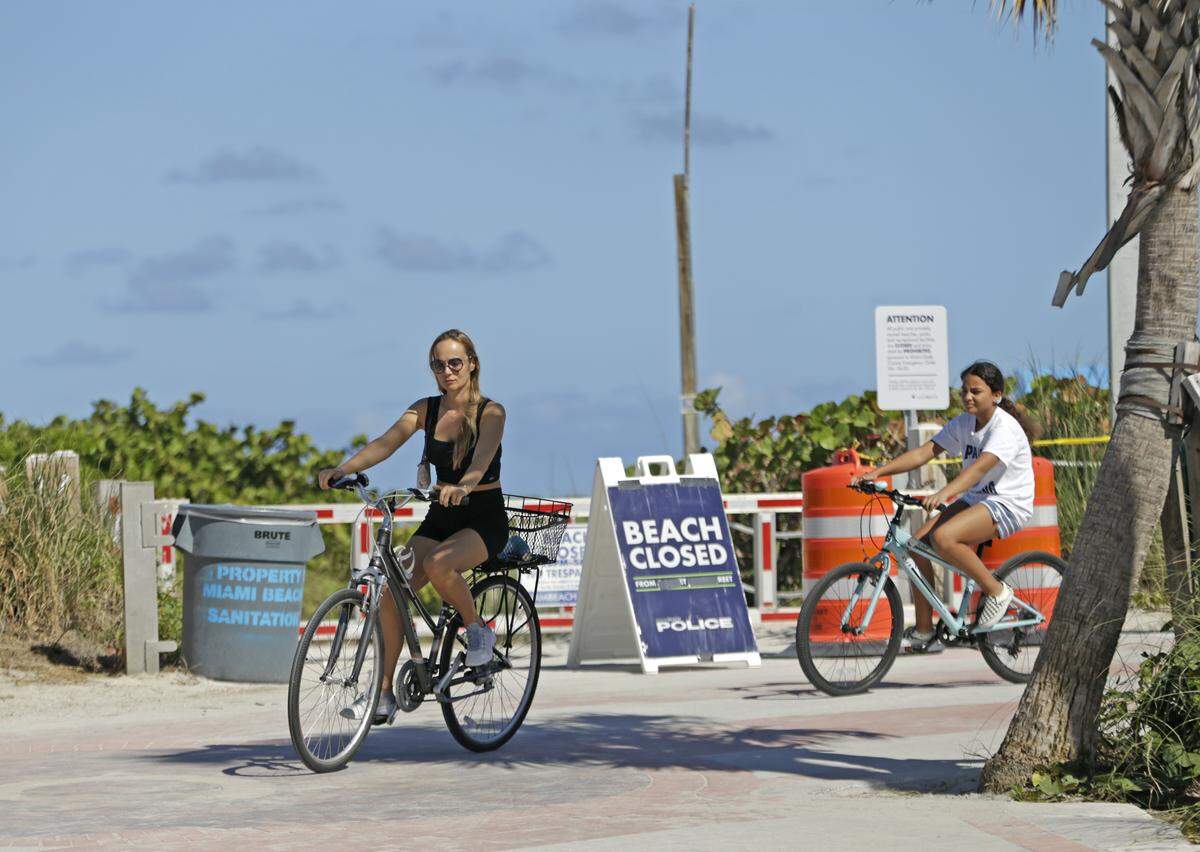
But in South Florida, consistently ranked among the deadliest places in the nation for pedestrians, no reallocation of street space has occurred since blanket open space closures were implemented in mid-March.
Mike Lydon and Tony Garcia, of the urban design firm Street Plans based in South Miami and co-authors of “Tactical Urbanism,” have compiled a growing list of 100 cities opening what they call COVID-19 Streets. Tab Combs from the University of North Carolina’s Department of City and Regional Planning has also created a list of 103 actions taken by cities in the U.S. and around the world. No South Florida city is on either list.
Local leaders say they have resisted any adaptive measures out of concern that creating space for walking or biking would simultaneously create space for gathering — and a new virus hot spot. No one wants to risk promoting community spread of COVID-19.
“Fear continues to run rampant, which is understandable,” said Gary Ressler, a downtown Miami businessman and Miami Beach resident who has been lobbying for street and lane closures. “But the alternative is cramming people onto sidewalks where they cannot possibly social distance, thus more transmission of coronavirus and more endangerment of lives. Small sidewalks are hot spots.”
To ease the awkward choreography of exhalation avoidance, Ressler advocates closing Flagler Street in the downtown core and half the width of Biscayne Boulevard from downtown north through a portion of the Upper East Side.
“We close Biscayne Boulevard every year for the Ultra Music Festival, and we do it quickly and efficiently overnight, so we know how to do it,” said Ressler, principal of the Tilia Companies and board member of the Downtown Development Authority and Miami Foundation. “Why not do the same thing for the people of downtown? It’s common sense.”
The development authority asked the Florida Department of Transportation about the feasibility of closing streets in early April, but FDOT and city of Miami leaders concluded it would only promote congregating.
Now leaders are citing the scenes on Jacksonville’s beaches as proof of what the public will do when given more acreage. When the beaches were reopened for limited use on Friday, they were flooded with people who didn’t necessarily observe distancing guidelines or wear masks, prompting hashtag trends of #FloridaMorons and #Floridiots.
“The reality is that creating new, temporary public spaces invites people to come together, making it difficult to enforce social distancing restrictions,” said Christina Crespi, executive director of the downtown authority. “We saw what happened when Jacksonville began opening its beaches, and crowds formed within minutes. That is the exact opposite of what we are trying to accomplish through social distancing in Miami-Dade County, which is home to the most cases in Florida.
“The Miami DDA strongly supports expanding bike lanes throughout our urban core, but it needs to be done methodically and with the public’s best interests in mind.”
Opening streets to people would in fact be safer than reopening certain beaches and parks, argues Azhar Chougle, executive director of Transit Alliance Miami, the nonprofit, pro-mobility organization that has launched a campaign for repurposing of streets during the pandemic. Chougle has been monitoring the effects of street alterations in other cities.
“Unlike beaches and parks, streets are not designed for people to gather but to move,” Chougle said. “We are not seeing groups of people clumping, congregating and hanging out on closed streets in other cities. Right now, next to our crowded sidewalks we have streets that are largely empty.
“This isn’t about creating hot spots, it’s about creating space so you don’t have people shoving themselves into narrow corridors and dodging one another. It’s about creating a safe network of streets so you don’t have people gravitating to one segment.”
Ocean Drive in the heart of South Beach was a prime candidate for closure, but Miami Beach commissioners decided against it, worried the street’s brand-name appeal would make it a magnet. Miami Beach first began shutting down its public beaches March 16 in reaction to alarming mobs of spring breakers not adhering to distancing rules. A segment of one parking lane has been cordoned off since spring break.
“We have to weigh benefits versus risk,” Miami Beach Commissioner Steve Meiner said. “We’re telling people stay at home and then we’d be opening up Ocean Drive and that’s a contradictory message. It’s an iconic street and could attract a mob of people. People might interpret it as kind of advertising, ‘Hey, come back to Ocean Drive,’ and that would draw not only residents but non-residents.
“The residents who have reached out to me want Ocean Drive closed to car traffic. But the consensus on the commission swung toward no. That doesn’t mean we won’t reconsider.”
Matthew Gultanoff, a Miami Beach resident and cycling advocate, said he’s disappointed the city retreated from a plan to close Ocean Drive — which runs parallel to the beach and the crowded Lummus Park walkway — from Fifth to 15th streets. He also suggested closing a lane south of Fifth Street and on South Pointe Drive.
“Ocean Drive is such an obvious, ideal place to dedicate to pedestrians and cyclists,” Gultanoff said. “The city has a playbook for closing Ocean Drive. The barricades they use are in place. Businesses and hotels are closed and would not be impacted. Tourists and spring breakers are gone. But rather than protect the hundreds of residents using this area every day, they are paralyzed by fear of potential gatherings. For a city that’s supposed to be progressive and that has had a bicycle master plan on the shelf for five years, it is not logical not to do this.
“I’ve been exploring the entire city with my 2-year-old daughter on my bike and it is a pleasure to ride with traffic volume down everywhere, but plenty of cars are still rolling along Ocean Drive.”
To avoid creating a huge surge on Ocean Drive, Miami Beach could follow the example of cities like Oakland, Denver and Montreal, which have opened interconnecting networks or adjacent streets to spread out pedestrian and bike traffic.
In Hollywood, where the city has closed the beach and broadwalk, neighbors are asking for relief from the overflow parade of people walking and parking on Surf Road.
The Venetian Causeway, where a cyclist was struck and killed by a distracted driver last year, is another choke point in need of expanded safe space, say the walkers, runners and cyclists who use it.
“The Venetian is very worrisome. There’s absolutely no room for social distancing,” said Marcia Duprat, campaign manager for Transit Alliance Miami. “Cars are speeding dangerously close to people. Speeding is a thing now because there are fewer cars on the road. People have a hunger for exercising or getting fresh air in areas that are accessible or near the water.”
Demarcating lanes or blocking streets with barriers, cones or signs — like the current mobilization to block beach entrances and park trails — would not be an insurmountable logistical obstacle, Chougle said. Nor would it cause a drain on personnel for enforcement.
“South Florida is home to many events and temporary street closures are common,” he said. “We are certainly rising to a lot more challenges that are a lot more complicated. Other cities accomplishing these adjustments can serve as models. And no one is suggesting we take away valuable police manpower. Streets can be closed without an immense police presence. We don’t need to station cops every block.”
What happened on Jacksonville’s beaches is not indicative of what would happen on streets, Ressler said.
“Streets don’t function like beaches,” he said. “The idea that no one will social distance or police each other is false. I’ve been in Publix and I’ve seen shoppers enforcing mask etiquette quite forcefully.”
The explosion in human-powered use of street space combined with the erasure of vehicular congestion during the pandemic has made people realize how many miles of a vast public resource are allocated to cars rather than people, and raised hopes that experiments with car-free routes could become permanent. Urban planners have argued for years that the percentage of land devoted to roadways and parking is typically double the amount devoted to walkable green space, and that percentage should be reversed to make cities more livable.
“This should be a wake-up call for Miami, Miami Beach and the county to put the focus more on citizens and less on vehicles. This should be a pilot project on how to take back underutilized streets,” Ressler said. “Closing Flagler Street during the crisis would accelerate its evolution as a curbless street that the city intends to close to cars periodically in the future.”
For Ocean Drive, which has been “teetering on the edge of becoming permanently pedestrian-friendly, this is the opportunity to close it for good,” Chougle said.
Duprat said discussions with Transit Alliance chapter members are revealing “one of the silver linings to the pandemic: People see life without gridlock and may not return to their dependence on cars for every trip, and we could become a less car-centric city.”
But only if they feel safe after the crisis recedes and traffic returns, Chougle said.
“It’s the first time people in Miami are experiencing what a safe street feels like and it’s magical,” Chougle said. “Imagine a Miami where you can walk, bike, run, push a stroller, take your dog out and not worry about getting killed by a car? It took a crisis for us to realize what other cities feel like all the time, and there’s no excuse to lose that once the crisis is over. If you build a safe way for people to get around, they will do it.”