Artists turn Miami Marine Stadium seats into art. The seats once held Jimmy Buffett fans
Miami Marine Stadium, where the water was the stage, has been closed for 27 years. It is fenced off and abandoned. Its wooden seats, once filled with fans for boat races and concerts, are empty.
But there is new hope for revival of Miami’s one-of-a-kind performance venue and architectural marvel, and the artists who turned the concrete hulk into a colorful canvas are helping reimagine its future.
Sixty of those empty chairs that had been rotting in the sun were salvaged and donated to artists for the “If Seats Could Talk” project, designed to raise awareness and funds for the stadium’s renovation. Fifteen are on display at the Miami Art Mob exhibit downtown on the second floor of the former Macy’s building through Monday night as part of Miami Art Week.
Each 42-pound seat is now a piece of art in tribute to the Virginia Key stadium that served as muse to graffiti and mural artists who converged there and made it into an open-air studio. Some sections were covered with 200 coats of paint. The stadium, opened in 1963, became as famous for its street art as it had been for its performances by the Beach Boys, Jimmy Buffett, Ray Charles and Bonnie Raitt.
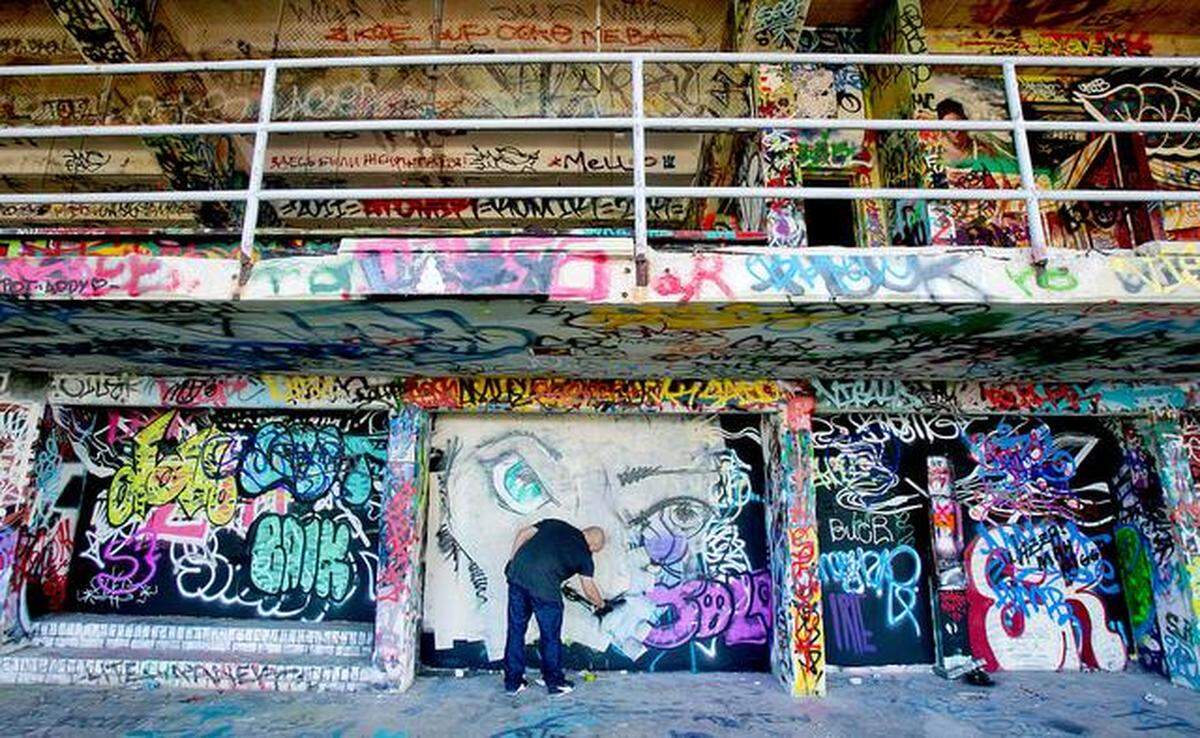
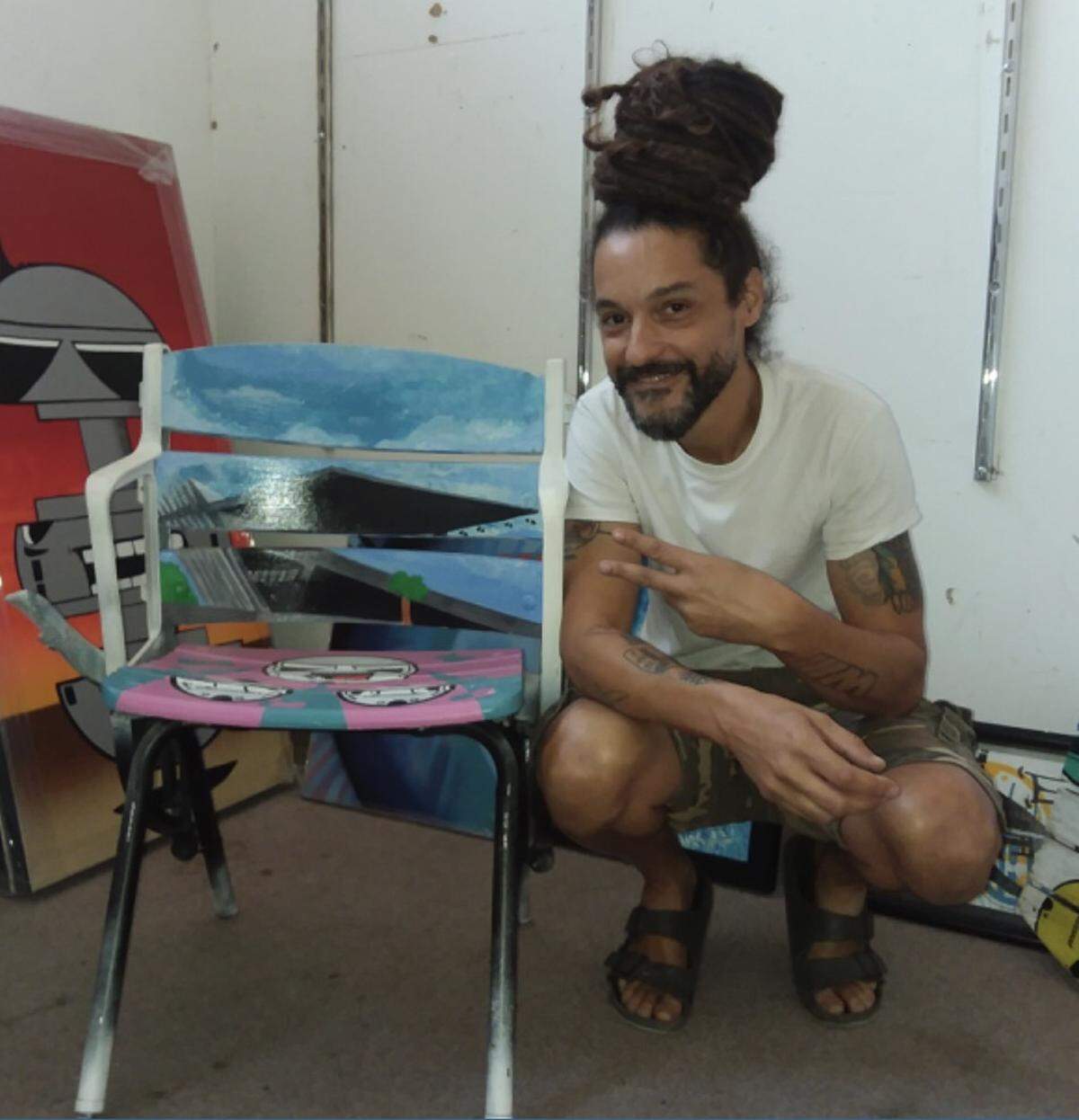
“A group of us would go every Sunday, pack a picnic lunch and a bunch of paint,” said Chy Walton, known for his Mitrooper graphic art. “I always felt a heightened sense of creativity at the stadium, which was a magnet for artists. Painting the chairs allows us to stay connected and give something back.”
The photogenic graffiti and the annual Miami International Boat Show, which moved to the site in 2016, saved the stadium from demolition. Longtime proponents of its restoration finally gained significant momentum last month when iDEKO, which produces the New York City Marathon and other large-scale events, and AEG, which produces music festivals and concert tours and owns the Staples Center in Los Angeles, the O2 arena in London and various sports teams, were formally recommended to be future operators of the venue, which they would lease from the city of Miami.
Funding, design and voter approval hurdles remain in 2020, which Restore Miami Marine Stadium co-founder Don Worth calls a “make or break year for the stadium’s life,” but he said he is more optimistic than ever after years of frustration.
“I think the Marine Stadium will be as symbolic to Miami as the Sydney Opera House is to Sydney, Australia, and as transformative to Miami as the High Line has been to New York City,” Worth said. “Once restored, it will truly be one of the great open-air venues in the world, easily on par with places like Red Rocks in Colorado and Bregenz in Austria. There is nothing like it anywhere.”
Worth’s group, in conjunction with the National Trust for Historic Preservation — which called the stadium “Miami’s Eiffel Tower” — and Dade Heritage Trust, initiated the seats project in 2017 following Heineken’s “Save a Seat” crowd-funding campaign for the stadium.
One of Worth’s favorite seats is by Robert Sylvain, who made his into a golden throne utilizing found objects such as a chandelier, wrench and chains. Sylvain’s throne is in homage to audience members who sat in the seats during the stadium’s glory years.
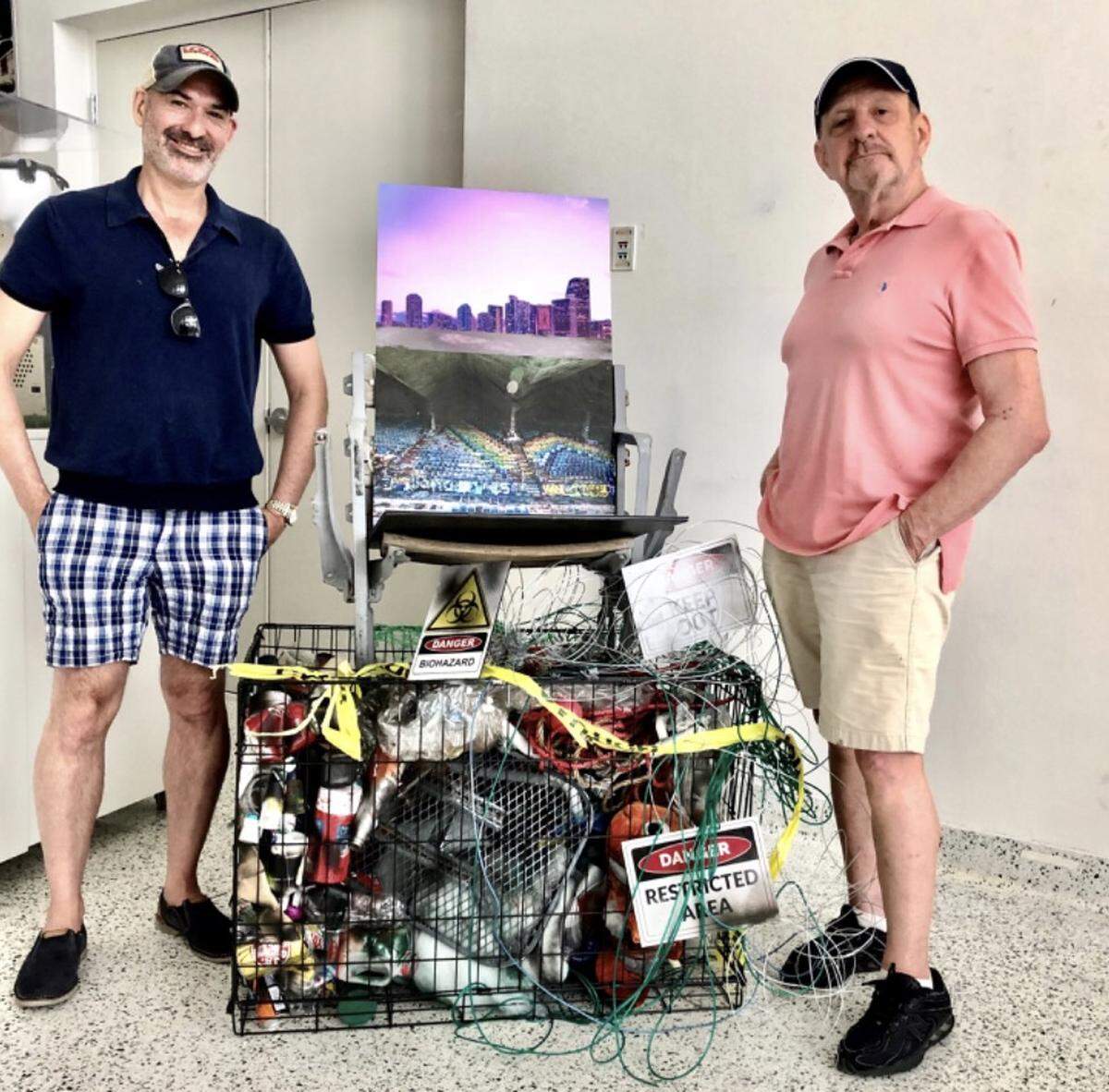
Alfredo Cappelli and George Hernandez partnered to create a chair that sits atop a wire crate filled with trash that is polluting oceans: plastic bags and bottles, soda cans, fishing line, shoes, food containers, a stuffed Nemo toy.
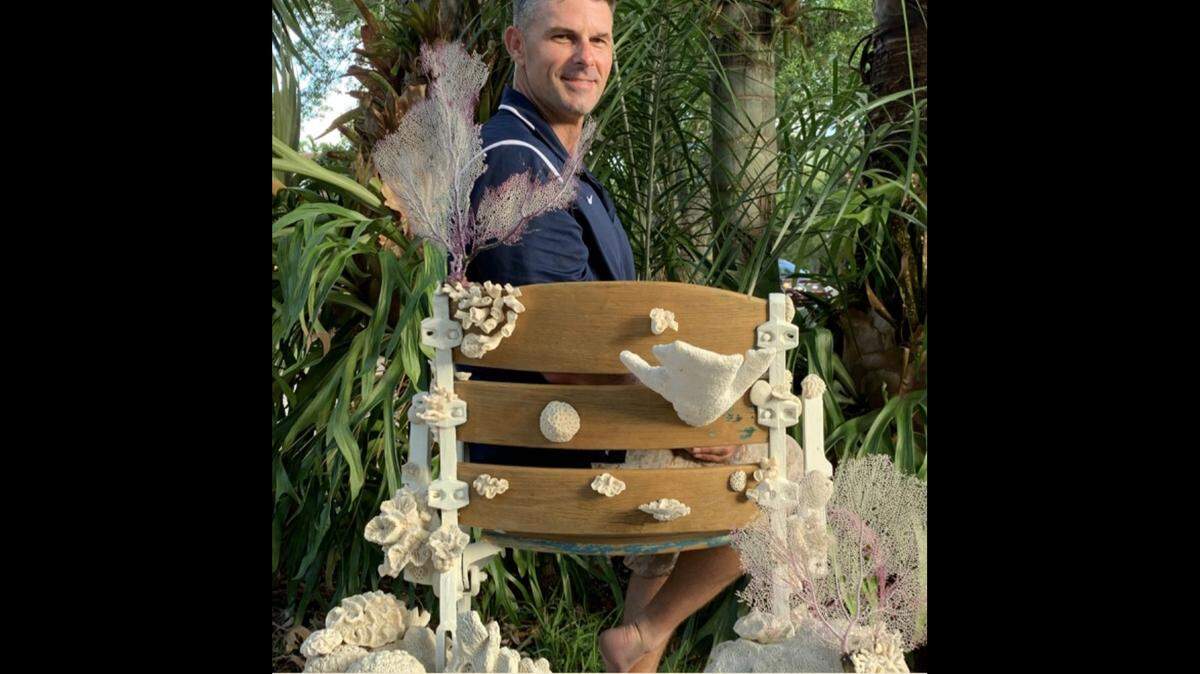
Artist Rush Bowles adorned his chair with beautiful elkhorn, brain, boulder, fire and star corals to invoke the idea of reclamation of lost treasure.
“I want the seat to have the exciting feeling of finding something that was once lost, like a diver finding a sunken ship covered by a coral reef and forgotten in time,” he said.
Monique Lassooij, who painted a spectator on her seat, said the stadium reminds her of a popular summer event in Amsterdam called the Canal Concert, where musicians play on pontoon stages and locals and tourists line the banks or watch from their own boats.
With iDEKO and AEG running the stadium, it could thrive again, Worth said. AEG Florida chief John Valentino produced shows at the stadium and has “fond memories of balmy tropical nights and cheering fans in front of the stage seated in the grandstand as well others in boats and yachts floating behind the stage,” he said. He once had to convince a worried Al Jarreau that he would not be electrocuted following a rainstorm by walking out onto the barge himself to demonstrate it was safe.
“We’re fortunate to have the iDEKO and AEG team that understands the challenges and the magic and how to sell it to performers,” Worth said. “When the city ran the stadium it’s not surprising that it did not do a very good job. You need people who know how to manage venues and capitalize on this stadium’s marvelous potential.”
Historic restoration expert Richard Heisenbottle has turned his plans in to the city. He collaborated with original architect Hilario Candela, who collaborated with lead engineer Jack Meyer 56 years ago to construct the longest span of cantilevered concrete in the world.
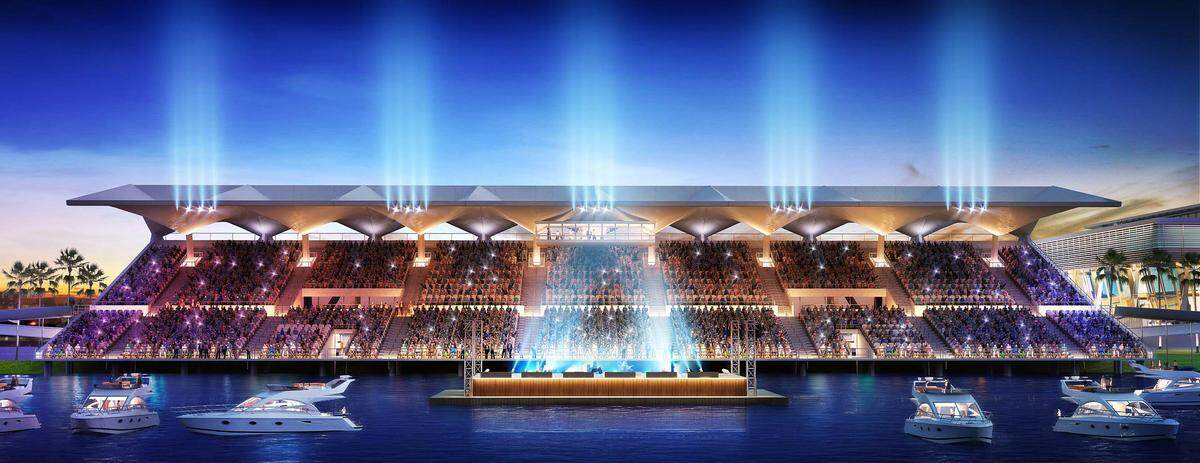
How much will it cost to resurrect the stadium? The city estimates $45 million, and approved a resolution authorizing the sale of bonds in 2016. Naming rights and sponsorships would generate more money. But city law requires that voters approve via referendum the renovation and lease of city-owned waterfront property, just as they did for Watson Island and Parrot Jungle.
Another obstacle in the way of a successful revamp is the boat show, which disrupts the site during peak season from early December to mid March because of set-up and take-down time.
“I’ve been a supporter of the boat show because it saved the stadium from being turned into condos and hotels,” Worth said. “They initially promised they could do the whole thing in 40 days. It’s up to 106 and needs to be condensed. But even with the show in place, we could still have concerts at night.”
Other uses: Drone racing, Cirque de Soleil shows, theater and dance performances, poetry readings (Allen Ginsberg did one in 1970), yoga classes open to the public.
“I’ve given tours of the stadium to entertainment business people and they ask, ‘Why isn’t this done already? It’s incredible!’” Worth said. “We’ve got a global brand like Heineken enthusiastic about the stadium even when it still looks like the Berlin Wall.”
The city is eager to cooperate with basin users, primarily rowers from the Miami Rowing Club, who fear boat traffic and damage to the environment of Virginia Key. Worth, a rower himself in Miami Beach, does not want stadium events to be impediments to practices or regattas.
Nor does the city want to repeat the mistakes of the past. By the mid-1980s, the city’s management of stadium bookings lagged and a lack of maintenance led to decay.
After Hurricane Andrew in 1992, the stadium was shut down as the city erroneously asserted it was damaged and attempted to claim $1 million from FEMA to tear it down. But engineers determined it was structurally sound.
Meyer said the stadium was built to be indestructible. Nevertheless, it sat idle from that point onward and was derided as a white elephant by most city commissioners. Skateboarders snuck in and up onto the roof after it was fenced off.
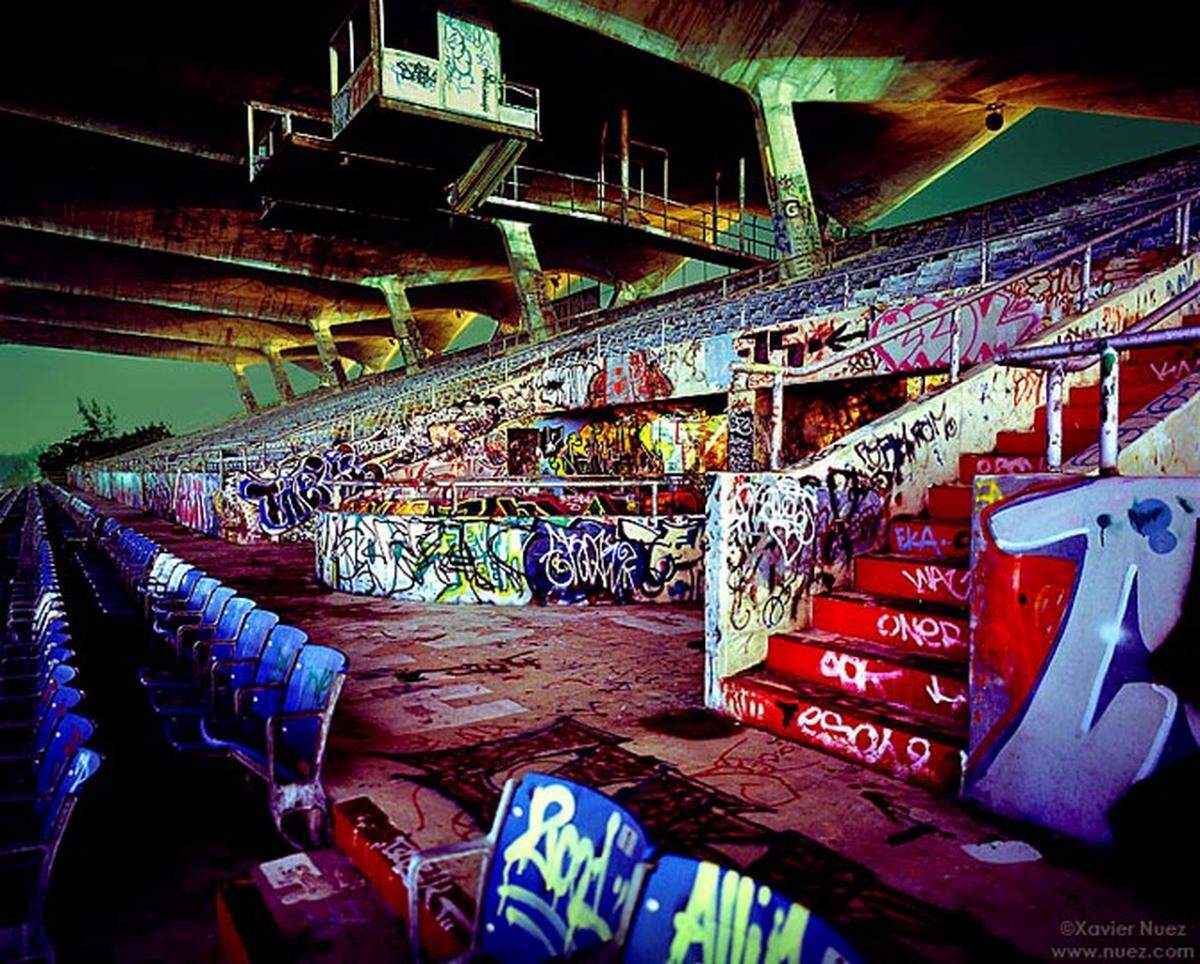
In 2008, Friends of Miami Marine Stadium was formed to save it. The National Trust for Historic Preservation and the World Monuments Fund lent support, and the city’s Historic and Environmental Preservation Board designated it as historic.
But a campaign to raise $30 million collapsed in 2014 when spokesperson Gloria Estefan withdrew her support. She balked at what she said was a surprise commercial development plan for land around the stadium.
Five years later, the shuttered stadium is at a crucial juncture, and if its seats could talk, they would ask to be filled again, said exhibit curator Angela Shlyakhov.
“We want to generate support for the stadium,” said Shlyakhov. All seats are for sale and interested buyers can contact her at movieenthusiast392@gmail.com. “And we want to stimulate creativity in the artists who have loved the stadium and kept it alive since 1992.”
If you go
The Miami Art Mob exhibit, featuring three dozen artists, is open through Monday from 3 to 10 p.m. at 8 South Miami Ave., in downtown Miami on the second floor of the old Burdines/Macy’s building. It’s free.miamiartmob.com@miamiartmob
This story was originally published December 7, 2019 at 5:14 PM.