How does a newly arrived Afghan family celebrate in Miami? It starts with a prayer
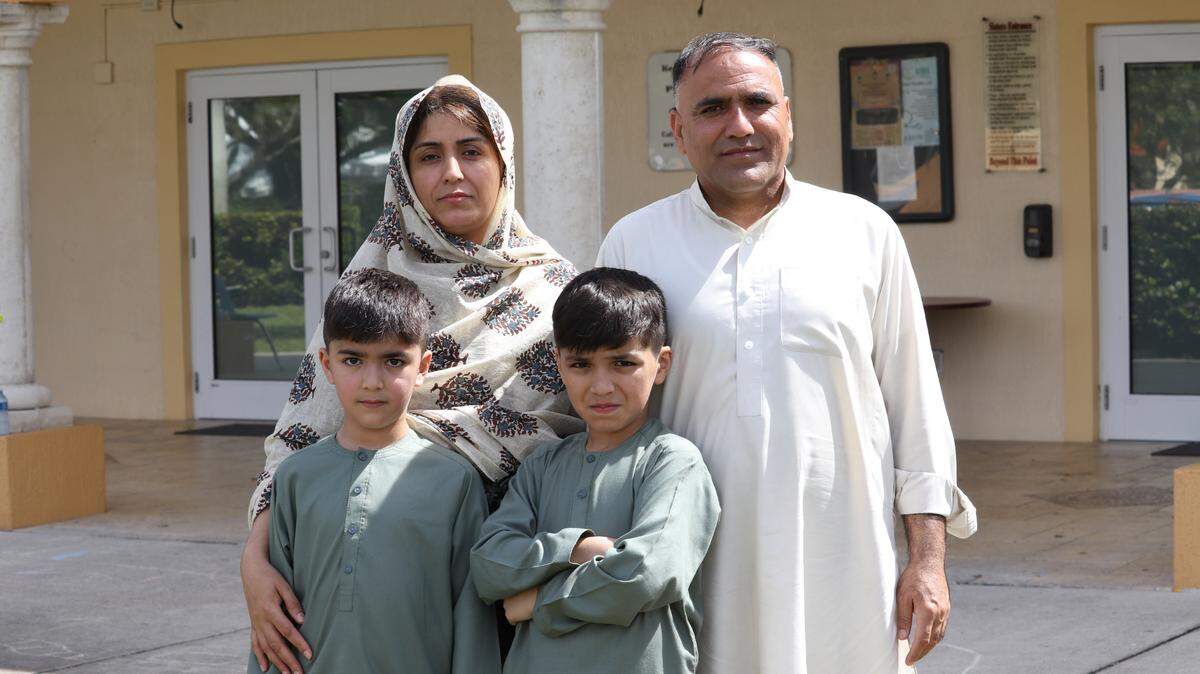
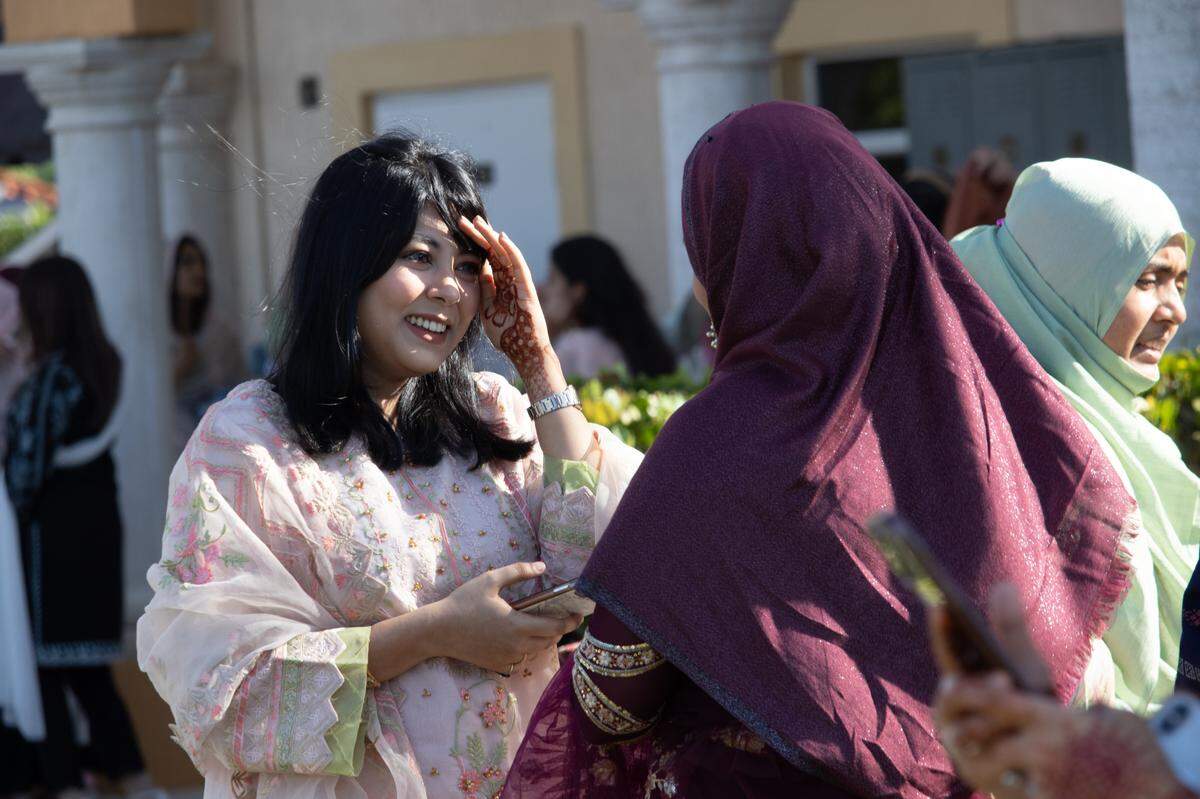
As Naseema Ahmadzai and her family gathered with others at the West Kendall mosque Monday to celebrate Eid-ul-Fitr, she was happy, and a bit sad.
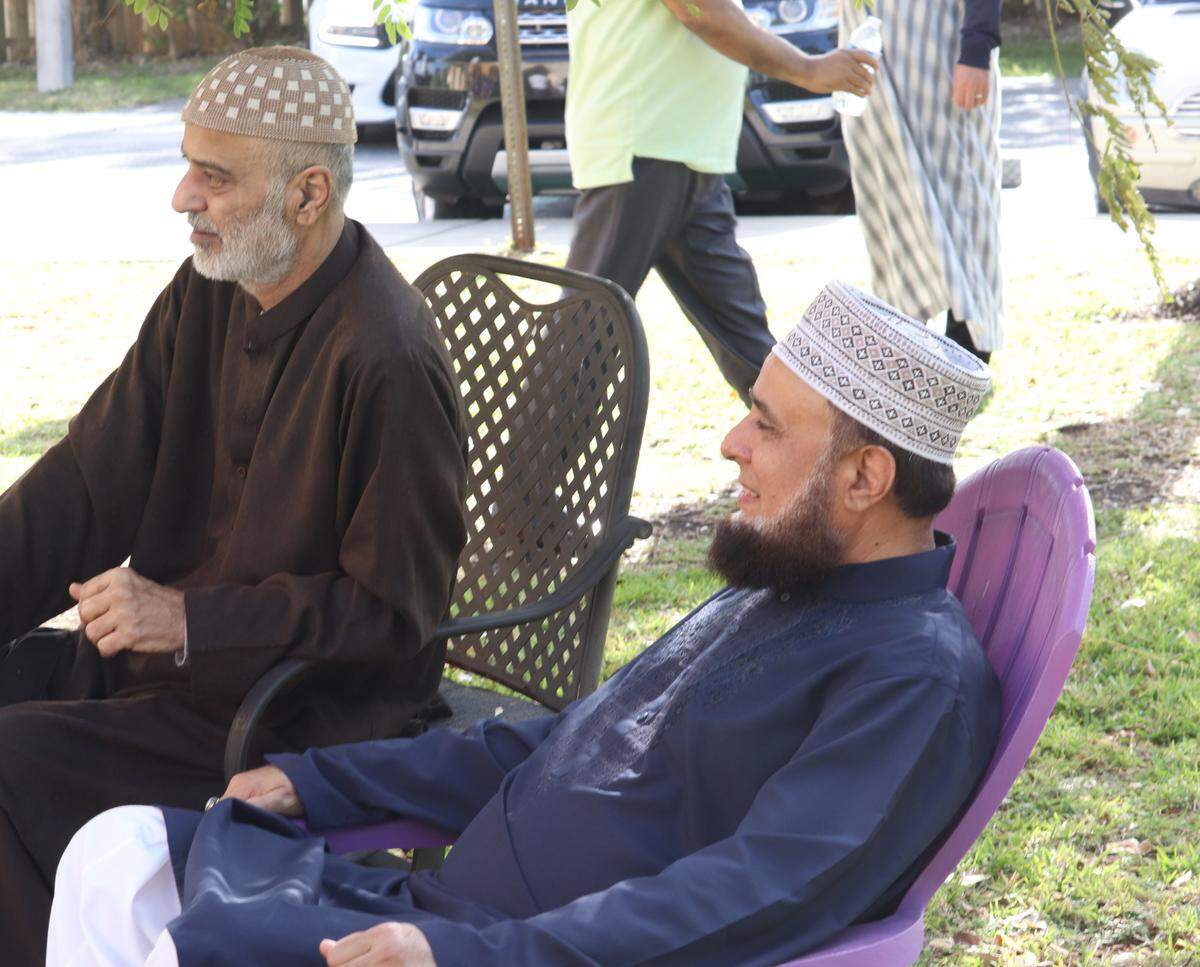
Monday was the first time in two years that members of Masjid An-Noor, 11699 SW 147th Ave., could observe Eid in person, marking the end of Ramadan, the Islamic holy month of fasting and reflection. During the pandemic, the mosque celebrated Eid remotely.
For Ahmadzai and her family, the gathering was the first time they celebrated Eid in South Florida, instead of their Afghanistan homeland.
“It’s difficult. We miss our country. We miss our homeland, of course, we miss our people,” said Amhadzai. “But still, when we see our community, our Muslim brothers and sisters here ... I’m grateful, I’m very excited.”
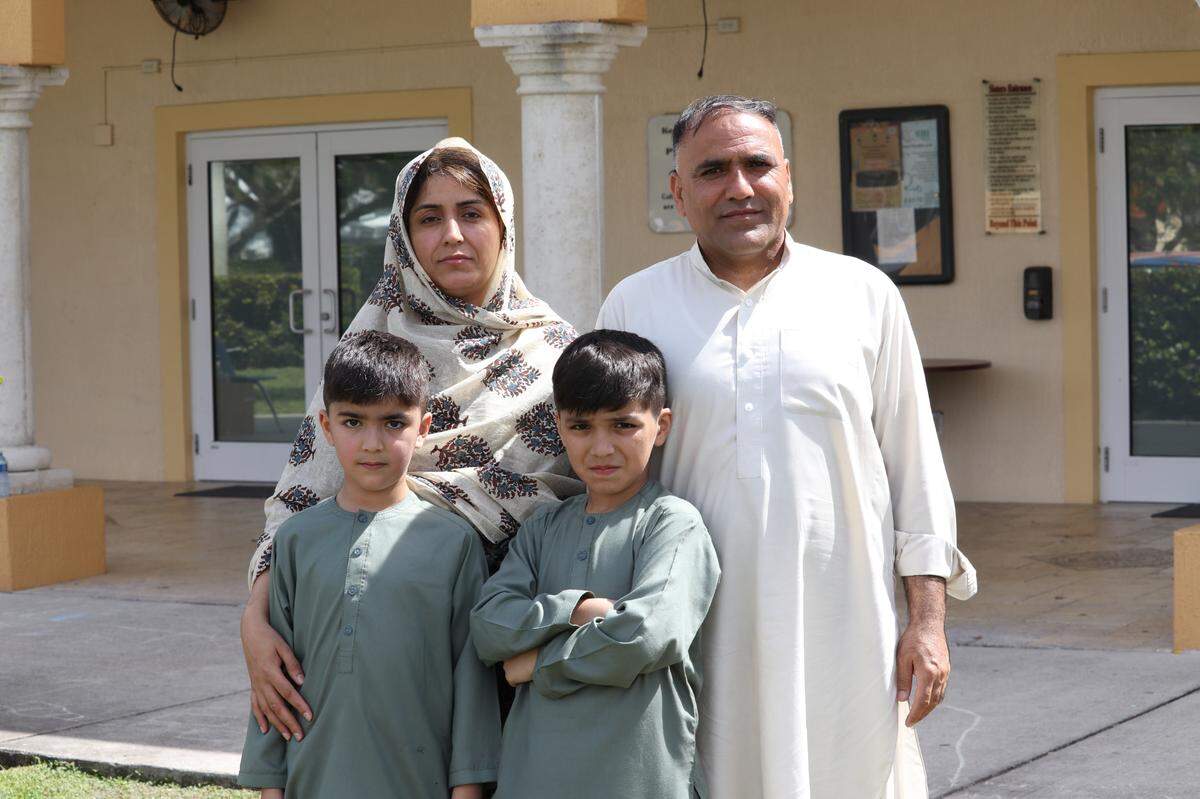
Amhadzai, her husband Mohammad Kabir Nazari and their children — 14-year-old Lima, 10-year-old Hasanat, 9-year-old Mohammad Shaheer, and 6-year-old Mohammad Zaheer — are among hundreds of Afghans who have fled their country and settled in South Florida after the United States pulled its troops from there last year.
Their journey to Miami has been challenging.
U.S. officials first sent the family to Qatar in the Middle East last August. From there, they went to Germany. A few days later, they were sent to Washington before being moved to Wisconsin, where they lived for several months at Fort McCoy U.S. Army base. In February, they came to Miami.
The family is living in a motel as they search for a place to live, which is difficult with Miami’s high rental costs. They need clothes for their children, and a car to get around. And they need jobs.
“They want to be part of the community … they left so many family behind but the good thing is they’re safe and secure and they want to move on with that life everybody desires. America is the land of the opportunity,” said Farzana Ghani, a volunteer with a variety of organizations including Community Changemakers and the Coalition of South Florida Muslim Organizations (COSMOS), which helps connect families like Ahmadzai’s with available resources.
But more help is needed, according to Islamic School of Miami Vice Chair Naveed Anjum, COSMOS founding member Shabbir Motorwala, and Umer Rahman, program director at Florida International University’s Office of Engagement. The Islamic School of Miami is part of the West Kendall mosque.
“We are at our breaking point here, where we are doing anything and everything,” said Rahman. “And we’re pushing our community to go to the brink to help out in ways that we haven’t done before. But it needs to be a communal effort, for all of South Florida’s community to come together and help them out.”
Many of the families helped the U.S. military during its 20-year war with Afghanistan, paving the way for them to come to the United States legally. In the case of Ahmadzai, she was a public school teacher from 2001-2015. She then worked with several non-governmental agencies (NGOs) during the war, including War Child Canada and the Norwegian Refugee Council.
Her husband worked as a doctor at the Afghan-Japan Communicable Disease Hospital in Afghanistan for six years, she said. The hospital treats patients with tuberculosis, malaria and HIV/AIDS, in addition to other diseases.
Motorwala says many of the families need financial resources to restart their lives in South Florida with the goal of becoming financially independent. That can come in the form of a job, a place to live or a car — or donating money or gift cards.
“This is an American thing; this is not just a Muslim thing,” Rahman said.
HOW TO HELP
Anyone who is interested in helping can contact COSMOS at Cosmosfla@gmail.com or by phone at 305-283-2261. You can learn more about the organization by visiting cosmosfl.org/
READ NEXT: Miami changes, but these old and sacred buildings carry on tradition for the faithful
This story was originally published May 2, 2022 at 7:35 PM.