‘Can’t buy wildlife once it’s dead.’ County approves 550-home plan on former golf course
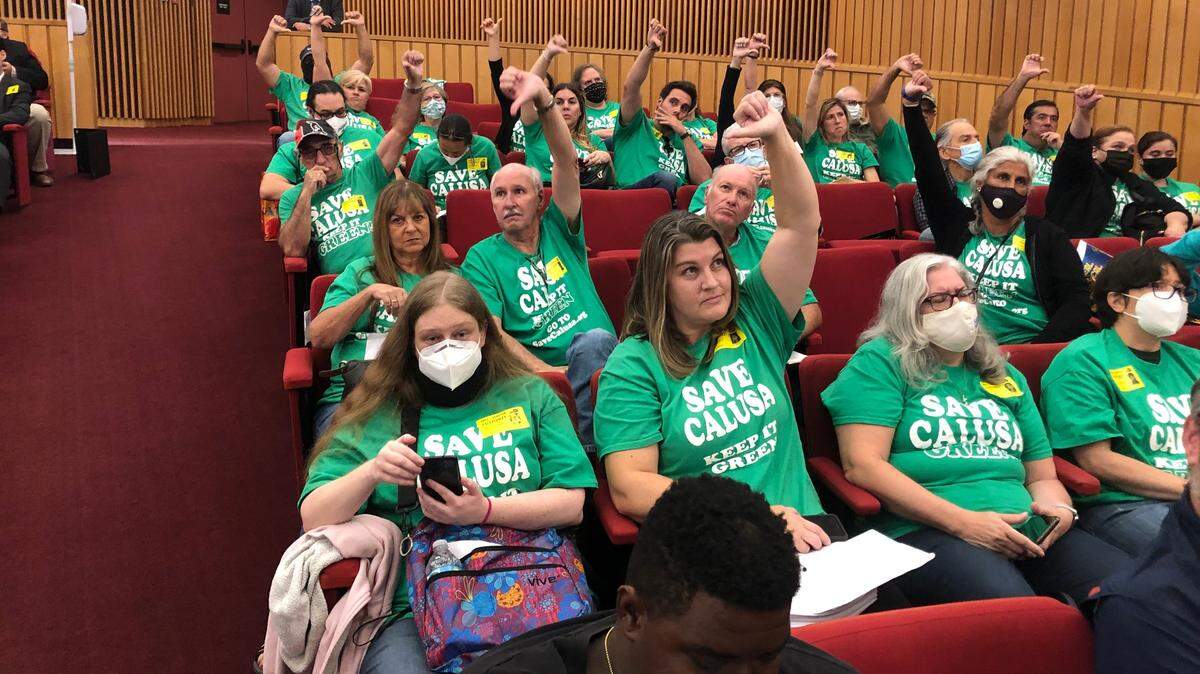
The tension was palpable Wednesday as Miami-Dade County commissioners listened to impassioned debate about what should happen to the abandoned, overgrown Calusa golf course in a Kendall neighborhood where neighbors have been pitted against each other over a developer’s plan to build 550 houses on the old fairways.
On one side of the room were dozens of supporters of Save Calusa, the grassroots campaign to keep the 168-acre property wild. They wore green T-shirts and told commissioners how their neighborhood will be ruined and the environment destroyed by construction of a gated community.
On the other side in red T-shirts were Calusa ring homeowners — those whose homes abut the course — who were paid up to $300,000 each by the developer to lift a 99-year covenant that would have restricted the land’s use to a golf course until 2067. They did not speak during the zoning hearing because they had previously signed non-disclosure agreements as a condition of their settlements. But the developer told commissioners how those homeowners gave critical input on the project and were in favor of it.
Bird rookery on site
Bad blood boiled over when commissioners voted 10-2 to grant GL Homes’ rezoning application for the development. Green shirts called fist-pumping red shirts “traitors” and “sellouts” but vowed to fight on and at least preserve some natural habitat, including a bird rookery that is thriving on a water hazard island.
After years of bitter conflict, neither side got what it wanted. The golf course — and the golf course community residents moved into — is never coming back. Instead, another subdivision will rise amid suburban sprawl in Kendall.
“We know how these things always go,” Commissioner Joe Martinez said just before the vote. He and Sally Heyman — who said the scope of the project “overwhelms the area” — were the only two dissenters.
Raquel Regalado voted for the development in her home District 7. Martinez, who said his adjoining District 11 in West Dade will be adversely affected, also voted against waiving the covenant a year ago. “This isn’t only about traffic. It’s about quality of life.
“And you have a small minority of homeowners screwing their neighbors around and impacting other communities. People originally in love with their view of the golf course — that didn’t matter anymore when the payoffs increased.”
Developer: Homes needed in Miami-Dade
GL Homes Executive Vice President Dick Norwalk argued that even though the land is zoned as parks and recreation, its best use is residential given that county studies show the dwindling supply of building sites for new single-family homes will be exhausted by 2025. He said GL Homes cut the number of houses from 1,000 to 550, giving it the lowest density of any golf course redevelopment in the county.
“This would be a wasted opportunity to decide this land should remain a vacant lot,” he said. “We’ve done the work to plan responsibly for a beautiful community. We reduced density and addressed environmental concerns that will be controlled during the permitting process.”
But attorney David Winker, representing the Save Calusa homeowners, said the development contradicts the county’s master plan objectives.
“The developer is asking you to do something for them with a series of exceptions and not giving anything back — not even a park that staff recommended,” Winker said. “The only people in support of this project were paid in a secret agreement. This is a real estate play. The buyer paid only $2.7 million for this land because it was parks and recreation land. Please do the right thing for our environment, resiliency, children, community and future.”
Ron Magill objects to plan
Zoo Miami spokesman Ron Magill, a Kendall resident, spoke ardently for conservation of the land — or a closer study of the animals living on it.
“I took personal time off today because I’ve been to that bird rookery,” he said. “We need to make room for more people, but where does it stop? Big developers can afford lawyers and consultants. Get wildlife experts in there, not paid consultants.
“You can buy consultants, but you can’t buy wildlife once it’s dead.”
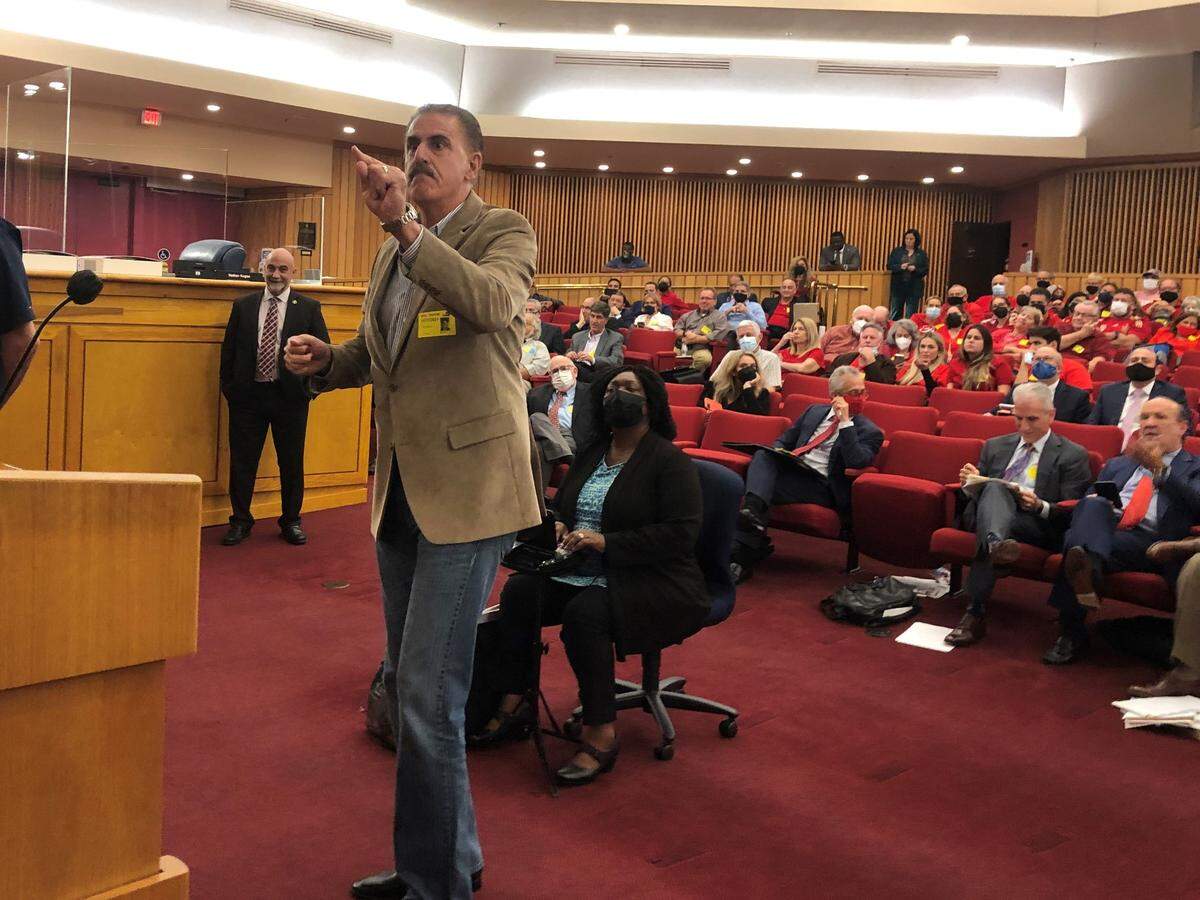
Norwalk and Calusa homeowners clashed on environmental issues. A bat survey requested by homeowners showed the endangered Florida bonneted bat foraging over the course, but Norwalk said his consultants found no evidence of the bat roosting at Calusa.
Homeowners — who are not allowed on the fenced-off property — documented the presence of eight threatened tri-colored herons with photos and managed to get their nesting site listed on the Florida Fish and Wildlife Conservation Commission map, but Norwalk said most of the birds are cattle egrets in non-native trees in a tiny corner of the property.
“These opponents have painted this fantasy of an environmental Xanadu when it’s actually a degraded former golf course,” Norwalk said. “It’s a 6,400-square-foot island. The idea that we would defer an entire development plan because of .147 acres is just crazy.
“This is not public park space that we are taking away. It is private property behind ring homes. It was never publicly accessible for walking your dog or having a picnic.”
Conduct a bird survey
Norwalk said GL Homes will be “a good steward” and comply with the county’s Department of Environmental Resources Management requests to conduct a bird survey during nesting season and follow practices to avoid displacing the bat population.
A parade of homeowners spoke, some emotionally, some angrily, against the development.
Ring homeowners George Moussa, Anna Palmer, Ana Pardo and Vanessa Cabrera said they refused payment to waive the covenant because they oppose the project. They had proposed the land be donated and turned into a nature sanctuary or that the county buy it and make it a park.
“Don’t let special interests prevail over the folks who live here,” said Sandra Lea-Oquendo, who has lived in Calusa for 41 years. “This land was sold out from under us.”
Roads and schools are oversaturated, said homeowners, who also dread flooding and the loss of trees.
“Our schools are stuffed,” Anelle Martinez said. “Don’t build and they won’t come.”
“Why would anyone think to pave this over and add to the congestion?” said Lucia Echauri. “It’s an oasis in the midst of madness. This should be like New York’s Central Park and not just a build, build, build mentality.”
Save Calusa leader Amanda Prieto said homeowners won some important victories despite “extremely limited opportunities to express our concerns.”
“I’m really proud of the community effort and we raised a lot of awareness about what citizens can do in a pro-growth, pro-development county,” she said. “We’ve got more development on the horizon.”
Bacardi chairman bought property, sues homeowners
The history of the dispute over Calusa’s fate dates back more than a decade. The original 1967 covenant required the property remain a golf course for 99 years unless 75 percent of abutting homeowners agreed to lift it. Rum empire chairman Facundo Bacardi bought the Calusa Country Club for the bargain price of $2.7 million in 2003 — knowing it was restricted by the covenant and zoned as parks and recreation — and soon after golfers began to notice its deterioration.
After Hurricanes Katrina and Wilma hit in 2005, the damaged clubhouse wasn’t repaired and was replaced by a trailer and Porta-Potties. The course was closed in 2011 and reclaimed by nature.
Bacardi offered ring homeowners $50,000 each to waive the covenant. They didn’t, so Bacardi sued them. The covenant was upheld in a court ruling in 2016, but Bacardi said he’d continue the legal battle to invalidate it, then paid off weary ring homeowners with individual settlements of up to $300,000. Of 146 ring homeowners, 123 accepted payments and signed waivers, fracturing the community.
Commissioners released the covenant in October 2020, paving the way for new houses on the old course. GL Homes paid Bacardi $32 million for the property and he has a 35 percent stake in the development venture.
Miami Herald Staff Writer Douglas Hanks contributed to this report.
This story was originally published November 17, 2021 at 8:50 PM.