Hialeah chief knew FBI was probing his cop for sex assaults. He let him work street anyway
For two years, Hialeah Police Sgt. Jesús Menocal Jr. patrolled the streets of Miami-Dade County’s second-biggest city while FBI agents investigated him for allegedly detaining young women and sexually assaulting them.
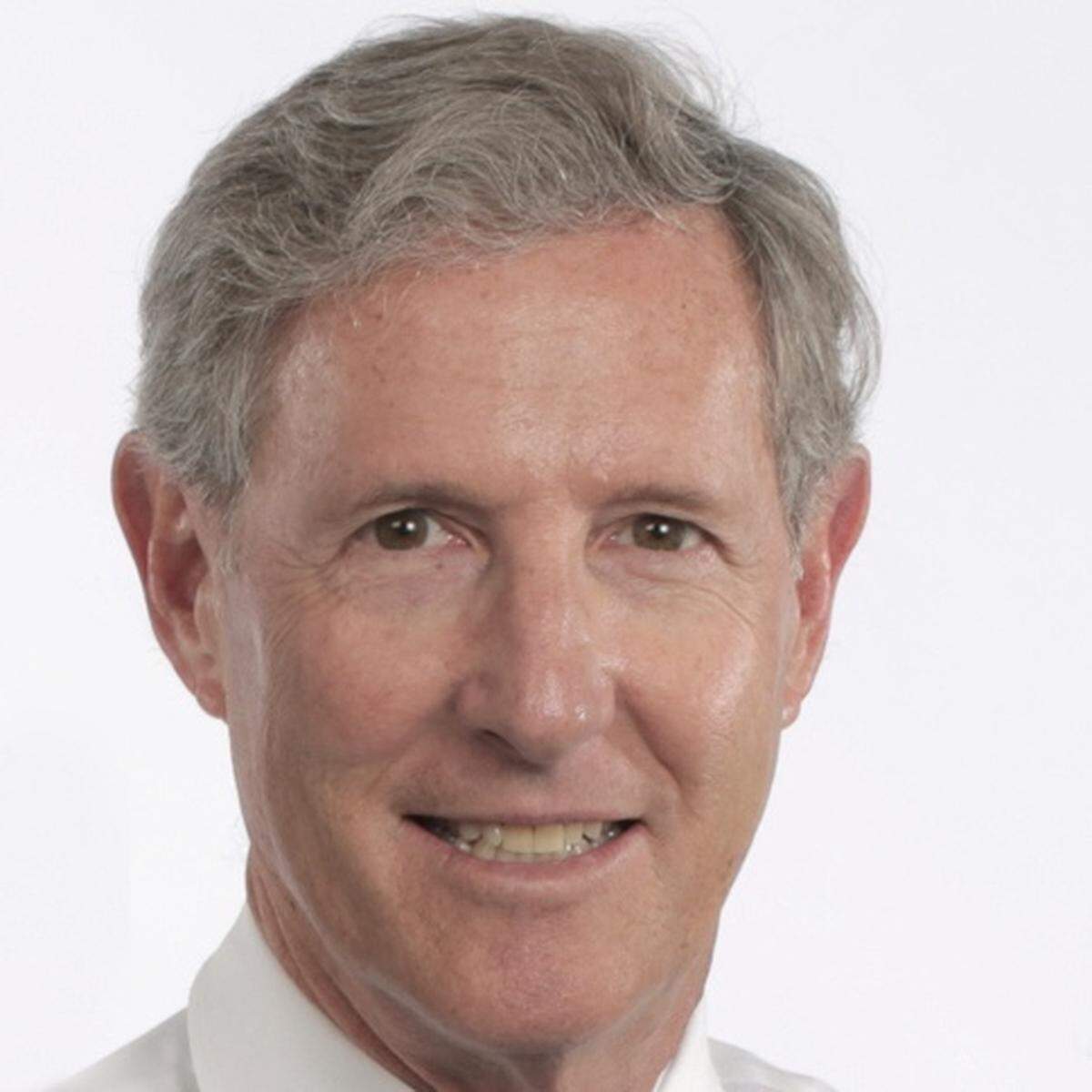
Hialeah Police Chief Sergio Velázquez says he knew the FBI was pursuing a case against the decorated cop.
Yet Velázquez didn’t pull Menocal off the street, leaving him with a badge and gun.
Why?
Velázquez won’t say.
At a news conference in November after the Miami Herald published an investigative story on Menocal, the police chief said he reinstated the officer to patrol duties in mid-2016 because “he was no longer facing sexual [assault] allegations” at that time following a review by state prosecutors. But Velázquez refused to answer why he kept Menocal on the street when the chief learned months later that the FBI had opened its own probe into the same allegations.
Keeping Menocal on patrol was a baffling decision that put the public in potential danger and opened up the city of Hialeah to major liability, according to experts interviewed by the Miami Herald. And it contradicted how the chief treated Menocal when he fell under the earlier state investigation. In that case, Velázquez did relieve Menocal of police powers, sending him home on administrative assignment with pay for three months before putting him on desk duty as the SWAT coordinator.
“Why you would allow this individual to interact with the public is highly questionable,” said Jerry Hester, a former FBI agent in South Florida who worked on the bureau’s public-corruption squad. “It’s a question of judgment. [The chief] is saying he went to all this trouble to cooperate yet he’s not doing the most obvious thing, which is removing this person from public contact. It calls into question his judgment overall and what else he’s not handling properly or not telling us.”
Menocal was arrested in December and charged with violating the civil rights of two women in 2015. The feds allege that he used his badge to stop one of the women, a minor, and “kidnapped” her, forcing her to remove her underwear and turn around “for his own sexual gratification,” according to an indictment. Menocal is also said to have “exposed his bare penis to [the other victim], placed her hand on his penis, and kissed her.” He has pleaded not guilty.
Menocal was investigated by the Miami-Dade State Attorney’s Office, but prosecutors decided in August 2016 not to charge him. Even before state prosecutors declined to file charges, Velázquez put Menocal back on the street, police records show. And while Velázquez did sustain an internal affairs complaint against Menocal — which found that the cop had broken departmental rules by taking, at various times, nine women into a camera-less room at a police station without filing reports — the chief never disciplined him.
Velázquez said at the November news conference that he took no action because the FBI opened a new criminal investigation. The chief suggested the criminal investigation prevented him from acting, saying his hands were tied by a Florida statute known as the law enforcement officers’ bill of rights and the police union’s collective bargaining agreement.
“When this case goes criminal [federally], it’s in the best interest of the case to stop any administrative procedure,” Velázquez said at the news conference.
“All police officers and correctional officers fall under the officers’ bill of rights,” he elaborated. “They have certain protective rights under that and also under our collective bargaining agreement. … When certain things happen, that [administrative case] gets tolled, and we go back to a criminal investigation, which is more important than the administrative investigation.”
A spokesman for the department did not respond Thursday when asked to elaborate on that reasoning. The chief has refused interview requests, calling a Herald reporter a “liar” after a city meeting.
But Charles Nanney, former head of the Miami-Dade Police Department’s special investigations division, said Velázquez did in fact have the authority to discipline his officer.
“He’s probably using [the FBI investigation] as an excuse for not taking disciplinary action against him,” Nanney said. “It’s not a violation of the officers’ bill of rights.”
As for keeping Menocal on the force while the FBI investigated, “we would’ve relieved him of duty and placed him on the desk with pay,” Nanney said, referring to how Miami-Dade would have handled the case.
Menocal, who comes from an influential South Florida law enforcement family, remained on the street for two years while under FBI investigation. It was only in early 2019 that Velázquez put him back on a desk. The chief has declined to say when exactly that happened. He has also not explained why he finally removed Menocal at that time, saying only that “new information” from the FBI had come to light.
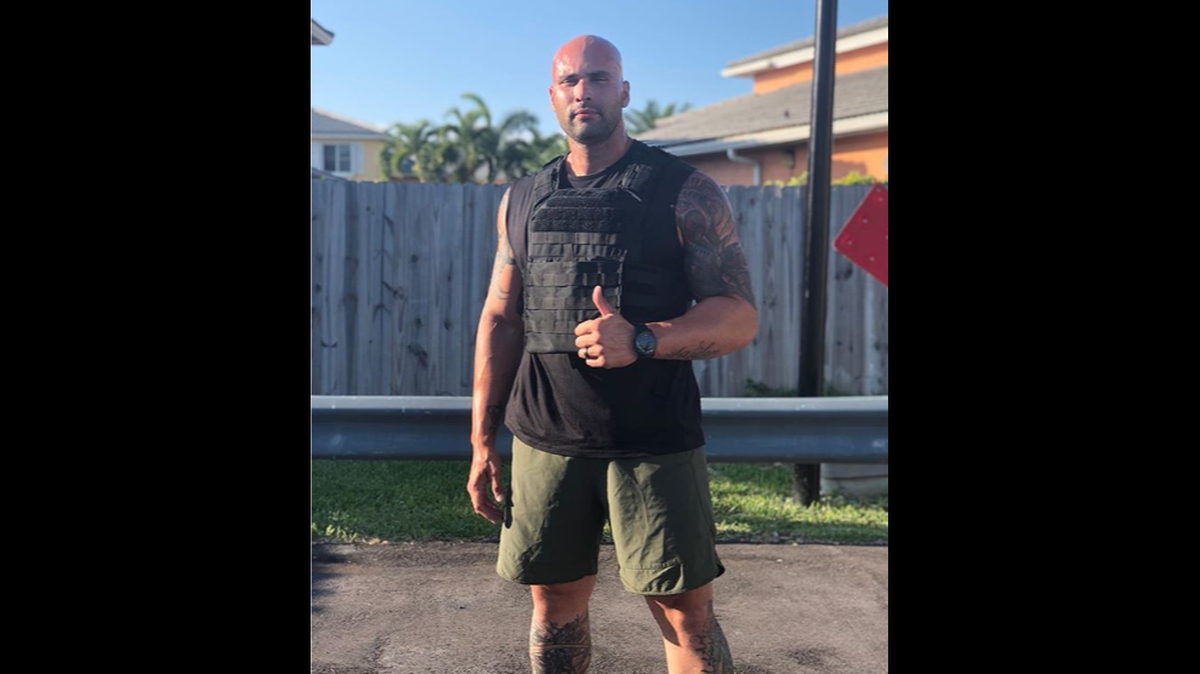
No women have stepped forward saying Menocal abused them during the time he was patrolling the streets while under FBI investigation. But he was accused of impregnating one of his police cadets while serving as a training adviser at the Miami Dade College School of Justice in the summer of 2017.
David Weinstein, a former federal prosecutor in South Florida, said the chief did have the authority to keep Menocal on patrol while he was under federal investigation, noting that Velázquez may have been seeking to avoid a conflict with Hialeah’s police union.
The alleged affair with the cadet, however, should have made the right decision clear, Weinstein said. While the pregnant student recanted her story of an affair with Menocal and the case was dropped, Hialeah police investigators uncovered significant evidence that Menocal did indeed have sex with her and then pressured the woman to lie about it.
“Quite frankly, when the allegations came out about impregnating the cadet at the police academy, at that point the chief should have put him back on the desk and reinstated his suspension,” said Weinstein. “You have to be conservative. ... He’s protecting the public against an officer — an officer who is also training other cadets.”
Now, Velázquez’s handling of the Menocal case is coming under scrutiny from several Hialeah City Council members. The council members have said they would like to examine Velázquez’s decision-making. At a recent city meeting, a commissioner making a request for Menocal’s internal affairs file led to an angry outburst from Hialeah Mayor Carlos Hernández, who has been closely allied to the chief after appointing him in 2012. (Hernández called the Herald’s reporting “racist” and “anti-Cuban.”)
The chief’s public statements on the case have been vague and hard to corroborate through public records.
For instance, he said at the news conference that he had referred the case to the FBI in 2015.
“At my request, this case was also reviewed by the FBI public-corruption task force,” Velázquez said.
That referral did indeed happen, according to a source familiar with the investigation. But it’s not clear the chief had anything to do with it.
The source said Hialeah’s internal affairs department alerted a Hialeah police sergeant who was detached to the FBI’s public-corruption squad. The FBI didn’t take the case at the time, deciding to step back while the state attorney’s office reviewed the evidence.
The city could provide no records showing the chief had directed internal affairs to make the referral.
Asked if the chief made the referral, department spokesman Lt. Eddie Rodriguez did not indicate either way.
“Hialeah police has a sergeant from the Internal Affairs Unit assigned to the FBI’s Public Corruption Task Force,” Rodriguez said in a statement. “It was through our sergeant that the information was delivered.”
Rodriguez did not respond when asked to clarify if that meant the chief ordered the referral.
Additionally, Velázquez said at the news conference that he had provided a memo to Miami Dade College about the incident involving the pregnant cadet. The college said it had not received any such memo.
Throughout the news conference, which the chief called on Nov. 15 in response to the Herald’s first story on Menocal, Velázquez accused journalists of distorting the facts with “misinformation.” He zeroed in on the Herald reporting that he chose to give Menocal a 4.5 percent raise in 2016 while the cop was on desk duty and under state investigation.
“That’s inaccurate and completely incorrect,” said Velázquez, insisting that a police union contract required the raise.
But the raise was a “merit step” based on performance that could be approved or denied, not an automatic pay bump, according to Menocal’s personnel file, which was obtained by the Herald through a public records request.
Both Menocal’s immediate supervisor and Velázquez signed off on the raise. The supervisor wrote: “No outcome has come as of yet from the criminal investigation and merit step [raise] is being recommended.”
Hialeah’s police contract states merit steps can be withheld: “If an employee, after he is reviewed, is denied the merit step, said employee will receive a written statement from the Department Head stating why the merit step has been denied.”
Nanney, the retired Miami-Dade division chief, questioned the chief’s explanation.
“Plenty of police officers have been denied merit raises based on performance,” he said. “It’s not automatic.”
At the news conference, Velázquez raised a variety of defenses about how he handled Menocal’s case, saying his department does not “cover up.”
Unprompted, he also denied that Hialeah police had been placed under the supervision of the federal government’s largest law enforcement agency. (No reporter had asked any question about federal oversight.)
“In case anybody feels that we’re being overseen now by the Department of Justice because of some wrongdoing in our investigation,” Velázquez said, “that is completely incorrect and inaccurate.”
This story was originally published February 7, 2020 at 10:31 AM.