600+ people sleep on Miami’s streets. Here’s why they might soon face arrest
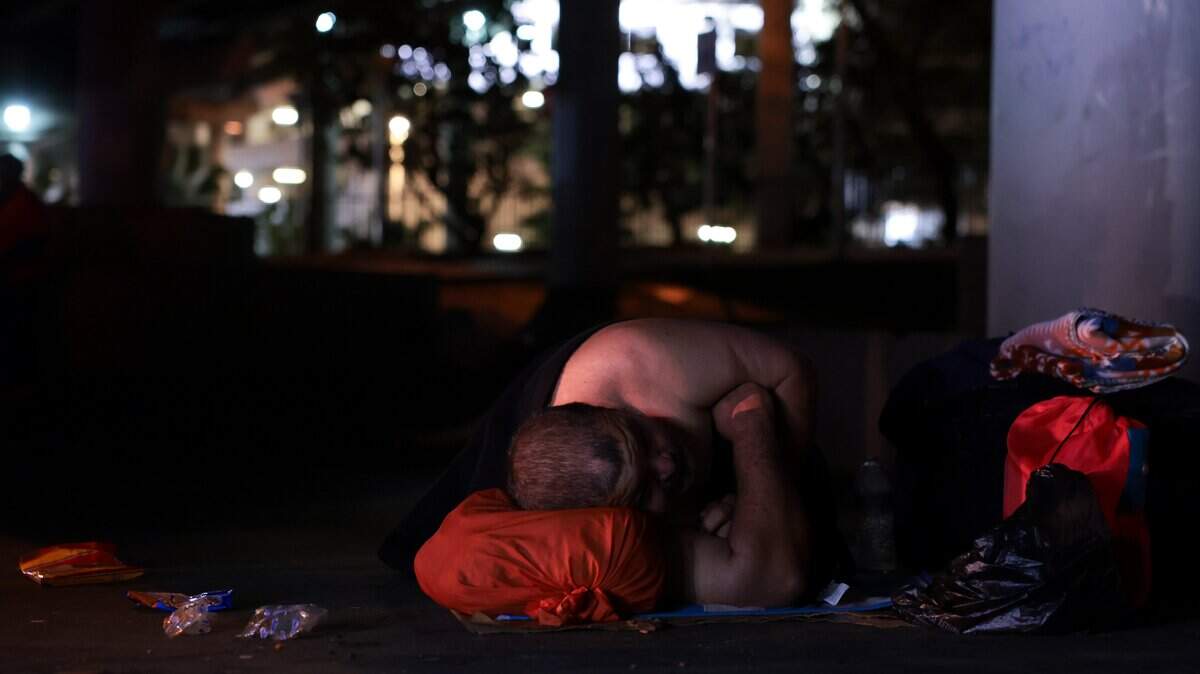
Over objections from advocates but with the backing of Miami’s police chief, city commissioners voted 4-1 to advance an ordinance that would make it easier for Miami police to arrest people sleeping on the city’s streets.
The proposal, which District 3 Commissioner Rolando Escalona put forward earlier this month, will now go to a second and final vote. Only District 5 Commissioner Christine King opposed the measure.
Should it pass, police would no longer be required to issue written warnings to people found violating Florida’s public camping ban, nor would they need to give people “maintaining an encampment” a chance to gather their belongings and relocate before arresting them.
Tallahassee lawmakers outlawed public camping across Florida in 2024, putting local governments on notice to either get people off their streets or risk lawsuits. The anti-camping bill, HB 1365, lets residents sue their local governments for non-enforcement of the ban, but it doesn’t specify what enforcement should look like.
Per the city of Miami, anyone sleeping in a tent, under a piece of cardboard or blanket, or accumulating more possessions than could fit in a three-cubic-foot box is considered to be maintaining an encampment and therefore in violation of the state’s camping ban.
Speaking at the commission meeting, Miami Police Chief Edwin Lopez backed the measure, saying his department had only made two arrests this year for violations of the camping ban. Arrests “are not used often,” he said, but Escalona’s measure “gives us an opportunity for those cases that are very rare to seek other, alternative actions.”
No residents turned out in favor of Escalona’s proposal, though a number showed up to speak out against it.
“If we arrest people when they have nowhere realistic to go, we are not solving homelessness, we are making survival harder,” said Matthew Pastewski, a fourth-year medical student at the University of Miami who works with the Miami Street Medicine team treating people who are living outside.
“Shelter access is already limited, and services are already hard to reach,” he added.
Roughly 80 new emergency shelter beds are supposed to come online soon, but space in Miami-Dade’s shelter network remains “tight,” Ron Book, chairman of the county’s homeless services agency, the Homeless Trust, told the Herald earlier this month. As of January, when the Homeless Trust last tallied the county’s homeless population, 605 people were found sleeping on Miami’s streets — just over half of the county’s entire unsheltered population.
Escalona stressed that his proposal doesn’t give police the right to arrest the homeless if no shelter beds are open.
But some people prefer to stay on the street even when emergency shelter beds are available. A recent survey conducted by University of Miami researchers of people sleeping on Miami’s streets found that 28% of respondents likely wouldn’t accept a shelter bed if offered one, saying they feel unsafe or overly restricted in the shelters.
Book has questioned the need for Escalona’s measure, telling the Herald earlier this month that current ordinances already permit arrests of people sleeping outside and that “simply arresting people for the sake of them being homeless is probably an unproductive way to manage and deal with the problem.”
Pastewski agreed, saying many of those arrested for public camping end up back on the streets — but with more problems than before.
“Jail makes medical problems worse,” he said, explaining that detainees often lose critical medications and documents as well as their cell phones.
“They often leave [jail] sicker, more disconnected,” he said. “No one chooses homelessness.”
Tess Riski and Sofia Baltodano contributed reporting.
This story was produced with financial support from supporters including The Green Family Foundation Trust and Ken O’Keefe, in partnership with Journalism Funding Partners. The Miami Herald maintains full editorial control of this work.