
Miami Herald journalists win top Esserman-Knight Award for Brightline investigation
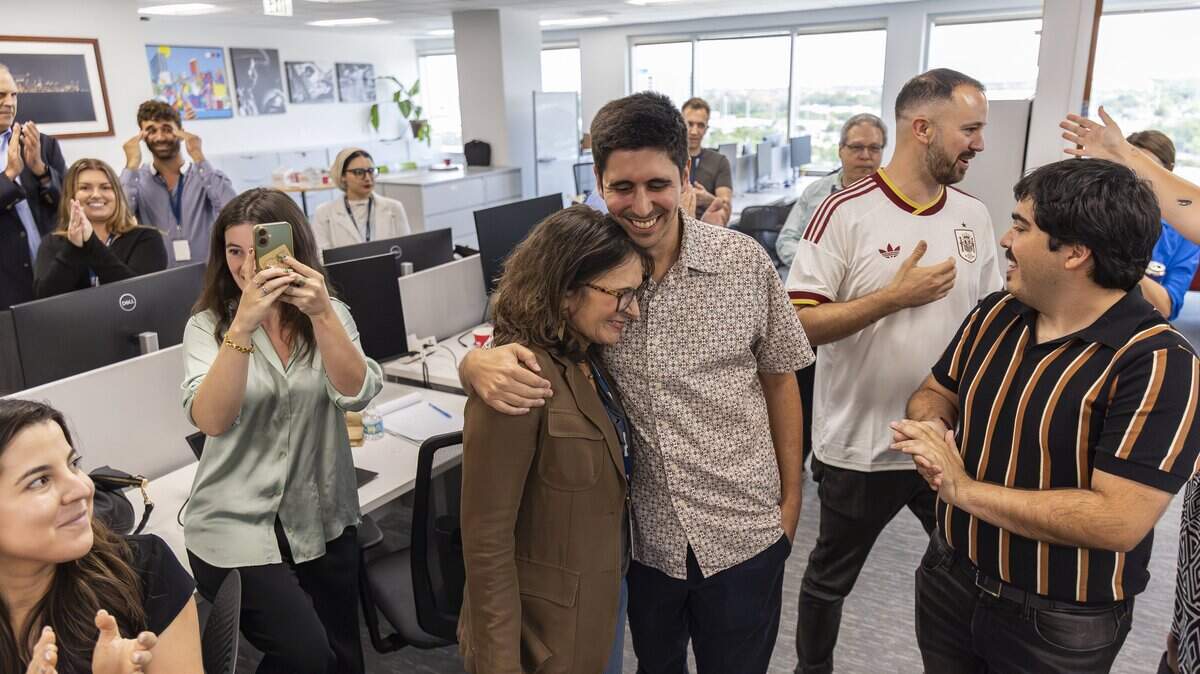
The Miami Herald took top honors at the Esserman-Knight Journalism Awards on Monday for an investigation into Brightline’s deadly safety record, exposing the human cost of the higher speed rail.
The Herald swept first, second and third place for investigations that helped unlock Brightline safety funding, revealed hidden flooding risks and forced changes to a flawed bus camera safety program.
Investigative reporter Julie K. Brown received the Alberto Ibargüen Excellence in Journalism Award for her landmark reporting on Jeffrey Epstein and his victims.
The 2026 Esserman-Knight awards, which honor excellence in investigative and public service reporting in South Florida, were announced at a ceremony at Florida International University’s Wertheim Performing Arts Center.
The Herald collaborated with WLRN on the Brightline project, Killer Train. It was produced by Miami Herald journalists Brittany Wallman, Aaron Leibowitz, Allison Beck, Susan Merriam, Shradha Dinesh and WLRN reporters Daniel Rivero and Joshua Ceballos. The investigation had immediate impact, helping spur the federal government to free up $42 million for rail safety improvements.
Miami Herald journalists Alex Harris and Susan Merriam were recognized with second-place honors for their Floods of Trouble series, which exposed how climate change, rising seas and chronic street flooding are threatening homes across South Florida while critical information about flood risk often remains hidden from buyers and residents. Through data analysis and on-the-ground reporting, the series revealed gaps in oversight and showed how many vulnerable properties lie outside official flood zones.
Reporters Clara-Sophia Daly of the Miami Herald and Nandhini Srinivasan of the Florida Trib won third place for their investigation into Miami Dade’s partnership with the private company Bus Patrol. These reporters found thousands of drivers were being ticketed with little recourse to challenge citations. Their reporting prompted increased oversight and new controls to prevent injustices.
Herald reporters were also recognized with an honorable mention: Caught in the Crackdown dug deep into Florida’s immigration enforcement efforts, documenting the human toll of raids, detentions and new state policies while revealing alleged abuses and the far-reaching consequences for immigrant communities. Journalists recognized for the project were Ana Claudia Chacín, Ana Ceballos, Shirsho Dasgupta, Veronica Egui Brito, Claire Healy, Churchill Ndonwie, Syra Ortiz Blanes and Ben Wieder.
“The best journalism doesn’t just inform – it makes a difference,” said Alex Mena, executive editor of the Miami Herald and el Nuevo Herald. “These projects exposed hidden dangers, held powerful institutions accountable and helped improve lives across South Florida. I couldn’t be prouder of our journalists and the public-service mission they fulfill every day.”
The work could not have been done without the support of community funders. The Esserman-Knight Foundation funds two emerging investigative reporter fellowships at the Miami Herald, and these reporters were involved in the Crackdown and Bus Patrol projects. The Ida B. Wells Society for Investigative Journalism funded a reporting fellowship for one of the reporters on the Killer Train project. The Pulitzer Center supported Floods of Trouble with a grant to enable data collection and mapping.