
Hunger, crime, blackouts: Cuba’s elderly bear the brunt of the island’s growing crisis
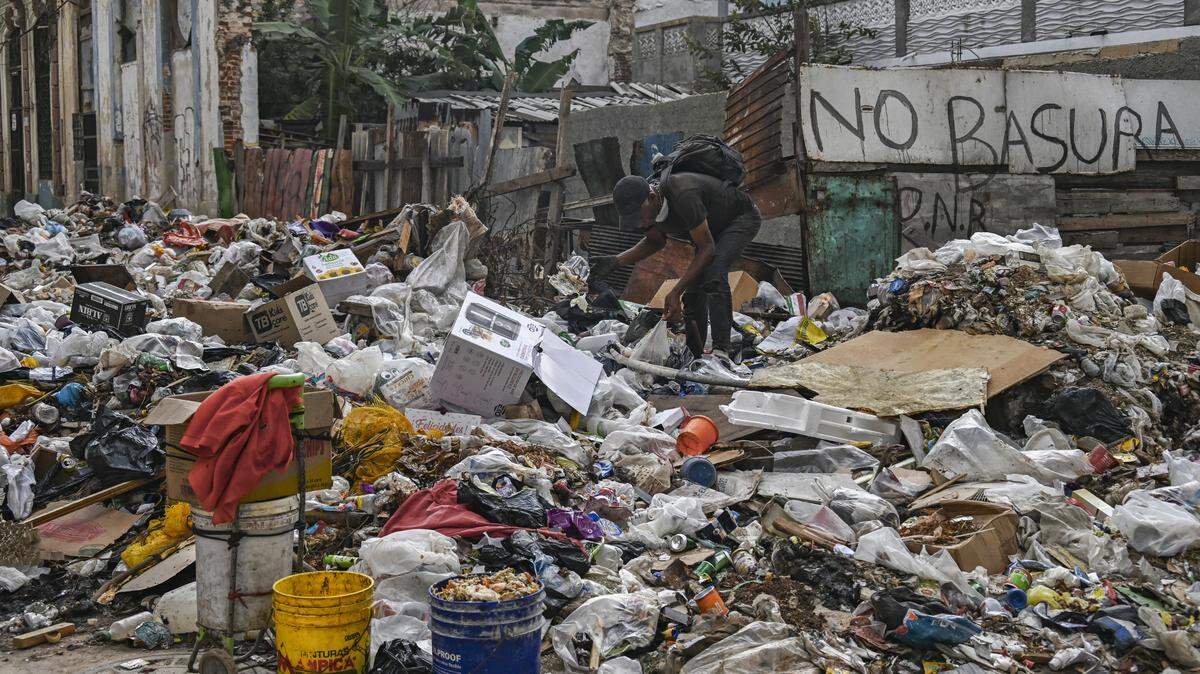
On one corner of Calle Enramadas in Santiago de Cuba, the island’s second-largest city, a group of homeless elderly people gather daily. What used to be a colorful strip of lively businesses have now become shelters for hungry old people who, on the verge of fainting, ask for a glass of water so they can keep walking in the sun.
Exhausted and bearing the brunt of Cuba’s precarious economic situation, the elderly wander from place to place, carrying the bags that Cubans customarily take everywhere in the hope of being lucky enough to buy something to eat.
Gaunt and weary, they step into shops and stores to catch their breath. Sometimes they appear in such dire straits that the workers take pity on them, offering a glass of sugar water so they can find the strength to carry on with their day. The people of Santiago support one another, yet government aid for those most in need never arrives.
“People are dying of starvation. They’re corpses, zombies,” said Irina Hung, 47, a Miami accountant who is originally from Santiago and traveled to the island in January to see her family.
Hung found Santiago de Cuba overwhelmed by 20-hour blackouts and constant street crime, so much so that her 10-year-old nephew warned her not to take out her cellphone in the street because it could be stolen.
Cuba’s elderly make up the most vulnerable population amidst the economic and political crisis currently gripping the island. Recent waves of emigration of younger Cubans have left many older adults alone to fend for themselves under the direst conditions. Lacking qualified and trustworthy caregivers — and as they gradually lose their physical abilities and become unable to venture outdoors — many are dying of hunger and disease within their own homes, where they remain until a neighbor eventually discovers them.
It is becoming increasingly common to see elderly people sleeping on park benches or huddled in the doorways of buildings in cities across Cuba. They also frequently appear on lists of missing persons—often because they suffer from mental illness or senile dementia.
They are also at increased risk from the growing violence on the island, which renders them targets for physical assault and fraud.
A paralyzed country
Since January the long blackouts, street violence and hunger have become increasingly worse in Cuba. For more than four months now, a partial chokehold imposed by the Trump administration on subsidized fuel that mainly came from Venezuela and Mexico has been in place, though the U.S. allowed a Russian tanker to dock on the island in March to deliver 730,000 barrels of crude oil.
“The shipment is merely a Band-Aid,” said Jorge Piñón, a senior research fellow at the University of Texas at Austin Energy Institute and an expert on Cuba’s energy crisis. “It won’t change the situation in the slightest.”
The result is a paralyzed country where the most vulnerable populations., especially the elderly, try to survive without electricity, water, public transportation and sometimes without a hot meal.
The hardships faced by the elderly are not new in Cuba, where 25.7% of the population is over age 60 — the highest percentage in Latin America. Galloping inflation has been eating away at retirees’ pensions for decades.
In 2021, Cuban leader Miguel Díaz-Canel announced economic measures that deepened the crisis. Cubans’ purchasing power was devalued and the cost of foreign currency rose. As a result, anyone without relatives abroad who could send dollars was left at a disadvantage, which for many elderly people means surviving on the charity of neighbors.
Although pensions were increased in September 2025, they remain minimal, at an average of $9 per month, an amount that does not cover basic goods.
Simplest things
President Donald Trump and Secretary of State Marco Rubio have repeatedly said over the past few months that Cuba has a failed economic and political system and must enact reforms. But negotiations between the two countries appear to be at a standstill, and Diaz-Canel recently said he will not relinquish power, even though the U.S. has communicated to Cuba that they consider him an obstacle to reforms.
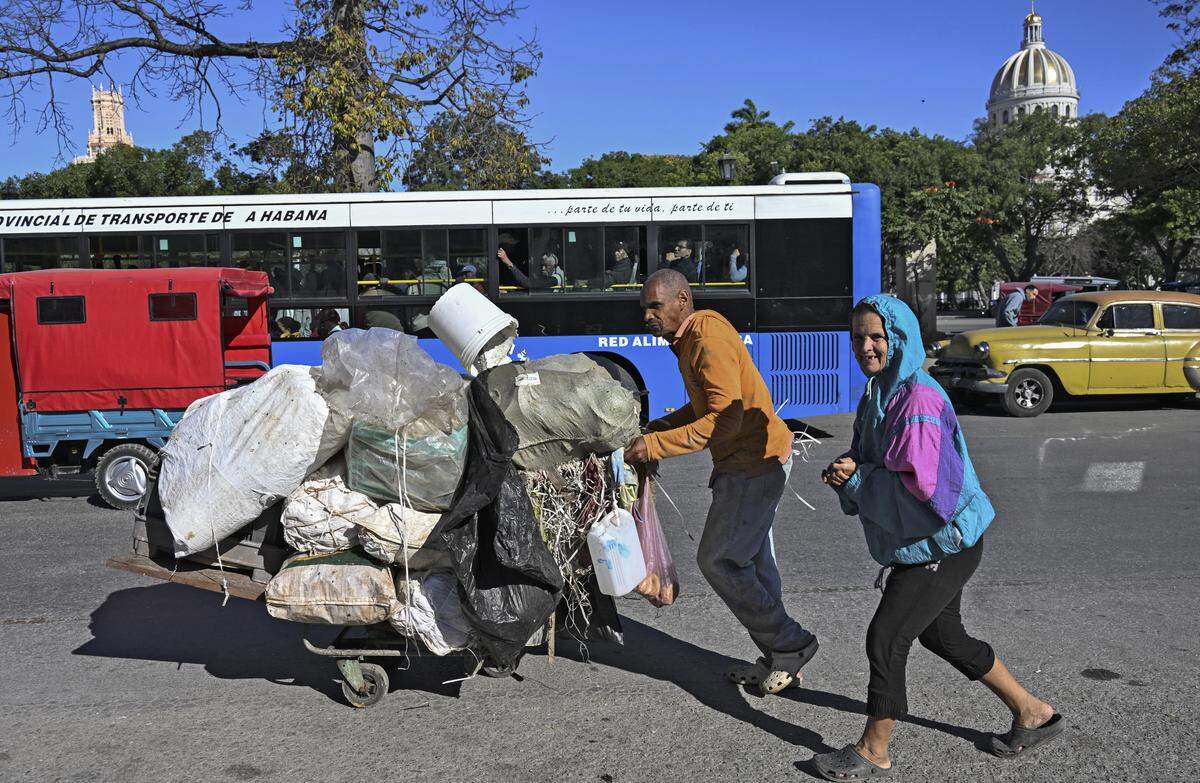
Meanwhile, the elderly on the island are forced to beg or search for food among the mountains of trash that block the streets.
Cuba has endured harsh times during 67 years of the Castro regime, including what it called the “Special Period,” an era of extreme scarcity in the 1990s after subsidies ended following the collapse of the Soviet Union.
Now, the government’s lack of interest in collecting garbage — a problem that predates the U.S. oil blockade — is the most visible symbol that a failing state rules Cubans through repression, using hunger as a mechanism of control. Since 1962, the government began rationing food, under the pretext of ensuring an equitable distribution in the face of the shortages caused by the U.S. embargo.
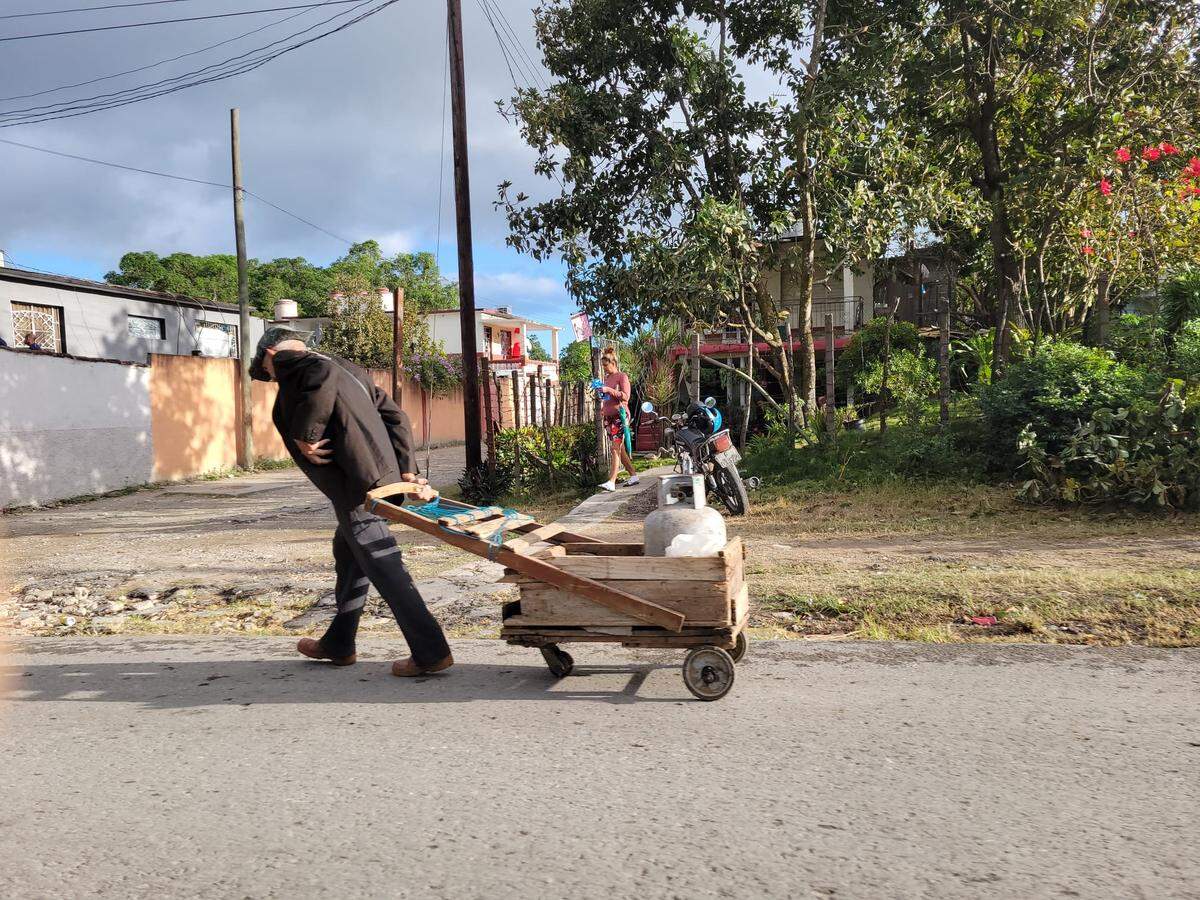
In present-day Cuba, older adults drag carts loaded with a portable gas tank or a container of charcoal. It’s the only option they have left for cooking on makeshift grills they build from any scrap metal they can use to prepare the single hot meal many have that day.
“The life of Cubans is total sadness,” said Odette Toledo, who lives in Philadelphia and, together with her two brothers who also live outside the island, financially supports her parents in Cuba.
“The government is holding them hostage,” said the 47-year-old nursing assistant, who says she has a difficult time dealing with what her parents are living through. She added that if she and her brothers don’t send her parents money and food “they are going to die.”
Her father, 76, and her mother, 74, worry all day about the simplest things, she said. Like running water. Her parents are constantly worried about when the water will be available and how long it will last so they can collect the bare minimum needed to survive.
“Those old people have to start hauling buckets of water,” she said.
Toledo last visited the island in October and said she cried many times at what she witnessed.
The elevators don’t work and the elderly people in the building where her parents live in Vedado, one of Havana’s best neighborhoods, get trapped in their apartments, unable to go down for hours until the power returns. The sidewalks are torn up, Toledo said, adding that she finally understood why, even after sending her father a wheelchair, he told her he couldn’t leave the house.
Buying medicine or collecting pensions is difficult for retirees in a country where banks set limits on cash withdrawals and most ATMs are broken or unusable because there’s no electricity.
“The day the blood pressure medicine arrives, my mother goes to the pharmacy at dawn and comes back at 2 p.m.,” Toledo said.
Poetry and begging
The recent case of Isabel Mendoza, an elderly woman who was begging on the streets of Santiago de Cuba to feed her sick husband, has moved Cubans commenting on social media.
“I don’t like doing this because I am a professional, I’ve won poetry awards ... and look at what I’m reduced to,” Mendoza, a member of Cuba’s writers union, said in a video recorded by social activist Yasser Sosa Tamayo, in which she acknowledged that a monthly pension of about $8 is not enough to buy food.
For decades, older adults have stood in long lines to buy food or medicine. Grocery shopping in Cuba can’t be done all at once as it is in other countries; instead, people must visit several stores each day to find different items.
Retirees who have more time to spend in shopping lines become their families’ lifelines, taking on the cumbersome task of searching for food and standing in long lines. With the massive exodus the Cuban population has experienced — nearly two million people, many of them younger, have left the country since 2021 — many of the elderly have been left alone on the island, sometimes finding themselves responsible for caring for grandchildren whose parents emigrated.
Sociologist Elaine Acosta, a research associate at Florida International University’s Cuban Research Institute, says that the rise in extreme poverty, the result of overlapping crises, has left many older adults on the streets.
The Cuban regime has chosen to ignore the problem, labeling homeless people with a euphemism, “deambulantes,” meaning people wandering the streets. Sometimes their existence is denied altogether, as former Minister of Labor and Social Security Marta Elena Feitó did in 2025. Feitó said people living on the streets were actually “disguised” actors trying to ruin the image of the Revolution, a statement that went uncorrected by any of the other officials present when she made it.
Acosta, director of the Cuido60 project, which has monitored the situation of the elderly since 2021, said they have recently seen an increase in violent acts against older people, homeless or not.
“The 2024 census data indicated that the population living on the streets had tripled. We know most of them are older people. Sometimes they are subjected to violence,” Acosta said.
Violence against older adults
Violent crimes against the elderly are frequently reported by the independent press in Cuba, the only way such events come to light, because official media outlets have traditionally concealed them.
A case in point: Pablo Vega, a blind retiree who left home early on Feb. 20 to withdraw his pension from an ATM. On his way back he was beaten by robbers. He died days later from his injuries, activists in Cuba reported on Instagram.
Rita María García Morris, a Presbyterian activist who lives in Cárdenas, in Matanzas province, where she runs the Centro Cristiano de Reflexión y Diálogo de Cárdenas, a Christian organization that promotes human rights and supports vulnerable populations, expressed outrage at another violent attack that shocked her city.
Agustín, an elderly man who lived on the streets and had mental health problems, died in February from burns inflicted by an 18-year-old who was later arrested. Agustín’s neighbor say he never bothered anyone.
“What is happening to elderly people who live alone or on the streets is a collective punishment,” García Morris said. The activist spoke with the Herald while she was in Miami for meetings to obtain aid for her organization, which receives no government funding and depends on assistance from religious groups.
There is a total lack of essential supplies for caring for older adults, such as mattresses, hygiene products, diapers, coats and blankets, García Morris said, listing some of the items her organization distributes to needy families.
There are no databases in Cuba listing professionals who care for older adults, which prevents hiring trained personnel, García Morris said. This makes caregiving difficult, both for family members abroad and those living on the island, who fear theft and scams targeting the elderly.
“I have been to nursing homes, and I have seen people tied to the railings or sitting on the floor,” said García Morris.
In February, the Cuban government allowed private-managed daytime and permanent-care homes for older adults and people with disabilities, under the supervision of the Public Health Ministry.
At least 10% of the capacity of those centers must be allocated to vulnerable people, with fees regulated or covered by the government.
García Morris and Acosta believe the measure comes too late.
Many Cubans have expressed concern on social media about how private entities that will care for the elderly will be chosen and who will decide which people are considered vulnerable enough to enter the centers. They fear the lack of transparency and corruption that affects so many agencies in Cuba.
Disappearing on the streets
The problem of people who simply disappear while on the streets, especially elderly adults with dementia or other mental health problems, is a common complaint on social media.
People with missing relatives turn to social networks because of the lack of help from the police, who rarely find their loved ones.
“Some older adults run away from home or don’t know how to return,” said Yanelys Núñez, coordinator of the Gender Observatory of Alas Tensas, which has documented the killings and disappearances of women since 2023.
Alas Tensas is an independent Cuban feminist magazine founded in 2016 and edited in Madrid by the association Árbol Invertido. The group publishes on its website the photos of the missing persons sent by families, neighbors, or activists within the island.
Núñez says there are no official statistics on disappearances in Cuba and the police do not issue public alerts.
“In 2025 we recorded at least 38 cases of missing women and girls,” Núñez said.
In most cases documented by Alas Tensas there is no information or updates about what happened to the missing person.
“They say they have circulated news of the disappearance internally at the national level, but they are not making it public so that the people can help. You don’t know if anything is being done to look for the person. Friends and family are the only ones searching,” Núñez said.
From paternalism to abandonment
The Cuban government has shifted from a paternalistic position, in which it controlled everything, to reducing subsidies for vulnerable people at the moment they need them most, activists say. That abandonment is even more damaging in a country like Cuba, which has run a global propaganda campaign based on its social achievements.
Food restrictions for Cubans date back to 1962, when ration books were first established, a system that distributes monthly staples. In recent years the few subsidized food items are delivered late or never. That leaves the public forced to buy food from places that sell in foreign currency, which many pensioners simply don’t have.
Starting in April, the most vulnerable populations, such as children and older adults, could be most affected because the government plans to cut or eliminate the few subsidized food items that were sold in stores through the ration booklets.
One victim of this government policy is Sistema de Atención a la Familia, a government-subsidized and managed social program designed to provide food to vulnerable individuals at reduced prices. The cost of lunch in these public dining rooms has risen for retirees, who can no longer afford it even though it is subsidized, Acosta said.
Because there is no public transportation on the island due to fuel shortages, many older adults cannot get to the meal centers. The home delivery system for elders who can’t leave their homes has also been affected by the fuel cuts.
Responsibility for the crisis
The crisis is not necessarily due to the regime lacking resources: The Cuban armed forces, which control large parts of the economy through its conglomerate GAESA, has had as much as $18 billion in its cash accounts. That amount exceeds the foreign reserves of countries like Costa Rica, Uruguay and Panama, according to an investigation by the Herald in August 2025.
And yet, while resources for public services is restricted, the Cuban regime uses that cash hoard to build luxury hotels for tourism, even though the industry has been in freefall for years.
Miami resident and human-rights activist Janisset Rivero blames the regime for the humanitarian crisis. “They steal the nation’s money and don’t invest it where it’s needed. It goes into their personal coffers.”
Rivero said the unjust conditions fostered by the regime have created huge inequalities between the ruling elite and the population.
Cuba’s hospitals are in deplorable condition. Cuban doctors have decried the total lack of medications, saying that health care on the island has hit rock bottom.
For diseases spread by mosquito bites — oropouche, chikungunya and dengue fever — doctors reportedly prescribe “plenty of water” because there are no aspirin tablets in hospitals, social media complaints say.
Although no figures have been released by Cuban health authorities, the elderly are among the most affected by the mosquito-borne viruses, Dr. Alfredo Melgar, who treated several people in his Miami clinic who returned from the island infected with the diseases, told the Herald.
Toledo, the Philadelphia woman who helps support her parents on the island, witnessed another side of the health crisis during her visit to Cuba in October.
“There are so many elderly people without teeth. If they go to the dentist, they have their teeth extracted because there aren’t enough materials to do other work,” she said. “It breaks my heart to see them deteriorating and that nobody cares.”
This story was originally published April 29, 2026 at 5:30 AM.
