
Miami’s forgotten history: Pink islands, film capital, city sports. What to know
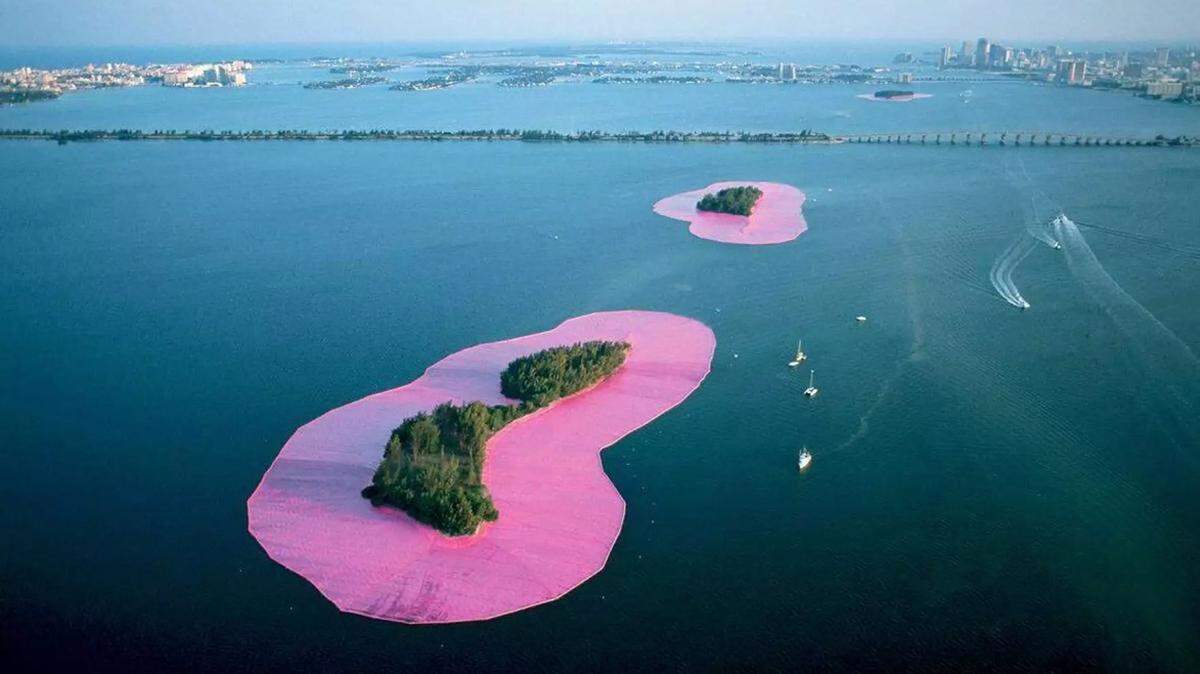
Miami’s past holds surprising stories of ambition and reinvention, from a Bulgarian artist wrapping islands in pink fabric to a failed bid to become the film capital of the world.
Here’s a roundup of stories looking back at the people, places and projects that shaped South Florida:
Miami Studios opened in Hialeah in 1922 as an attempt to dethrone Hollywood, attracting director Rex Ingram and producing 35 Florida-made movies in 1922 and 1923 before the studio collapsed under weather delays and inexperienced technicians. The facility was demolished in 1960 to make way for a city water plant extension.
Spirit Airlines became known for its bright yellow planes after a bold 2014 rebrand that replaced its original blue and white color scheme from when the company moved to Broward in 1999, according to a look back at the airline’s livery history. Spirit shut down on May 2.
Bulgarian artist Christo wrapped 11 islands in Biscayne Bay with 6.5 million square feet of hot-pink polypropylene fabric in May 1983, a project that took 30 months, $3.1 million and 400 workers to complete. Environmental officials documented no adverse effects on plant or animal life during the two-week display.
The Fulford Speedway in what is now North Miami Beach hosted South Florida’s first major auto race on Feb. 22, 1926, drawing more than 20,000 fans who watched Peter De Paolo win in a Dusenberg and shatter speed records for distances up to 300 miles. The track was badly damaged by a hurricane that September and later consumed by a brush fire.
A nine-hole golf course called the Royal Palm Country Club opened in 1898 on land now near Jackson Memorial Hospital, UMHealth and a Miami-Dade courthouse and jail, later expanding to 18 holes and renamed the Miami Country Club. The county bought the entire property in 1953 for about $1 million.
This report was produced with the assistance of a proprietary tool powered by artificial intelligence and using our own originally reported, written and published content. It was reviewed and edited by our journalists.