
Miami voters to decide this summer on even-year elections — starting in 2034
Last year, two Florida courts ruled that Miami’s efforts to switch the city from odd- to even-year elections without voter approval violated the state’s constitution.
So this summer — about a year after that legal debacle — Miami voters will get the chance to decide.
On Thursday, the Miami City Commission advanced a referendum to the August primary ballot that seeks to switch the city to an even-year election cycle.
The ballot question is the latest version of the legislation, championed by Commissioner Damian Pardo, which has undergone several revisions and been a point of contention throughout the past year.
Touted as a reform measure that would increase the city’s low voter turnout, the even-year proposal posed a mathematical problem that quickly became a political hot potato. That’s because it could only be accomplished by either shortening elected officials’ terms or lengthening them.
When city commissioners voted to give themselves and the mayor an extra year in office last summer to achieve that end, residents called the move a “power grab,” and the courts found it violated the Florida Constitution.
But the latest version of the proposal seemingly sidesteps those political and legal pitfalls.
The charter change would shorten elected officials’ terms to three years — just one time — and the switch wouldn’t take effect until the next decade. That means the city’s first even-year election would happen in 2034.
Here’s a breakdown of how Miami’s election-date change would work if approved by voters:
- The next elections for mayor and City Commission would take place as currently scheduled: in 2027 for Districts 1, 2 and 4; and 2029 for mayor and Districts 3 and 5. The winners of those races would be elected to a typical four-year term.
- The following election cycle would occur four years later, as usual: in 2031 for Districts 1, 2 and 4; and 2033 for mayor and Districts 3 and 5.
- The winners of the 2031 and 2033 races would be elected to one-time three-year terms.
- As a result of those shortened terms, the city would sync up with the even-year election cycle for those seats in 2034 and 2036, respectively.
- In 2034, the city would have an election for Districts 1, 2 and 4.
- In 2036, the city would have an election for mayor and Districts 3 and 5.
- From that point forward, elections would take place in even years, and terms would resume being four years each.
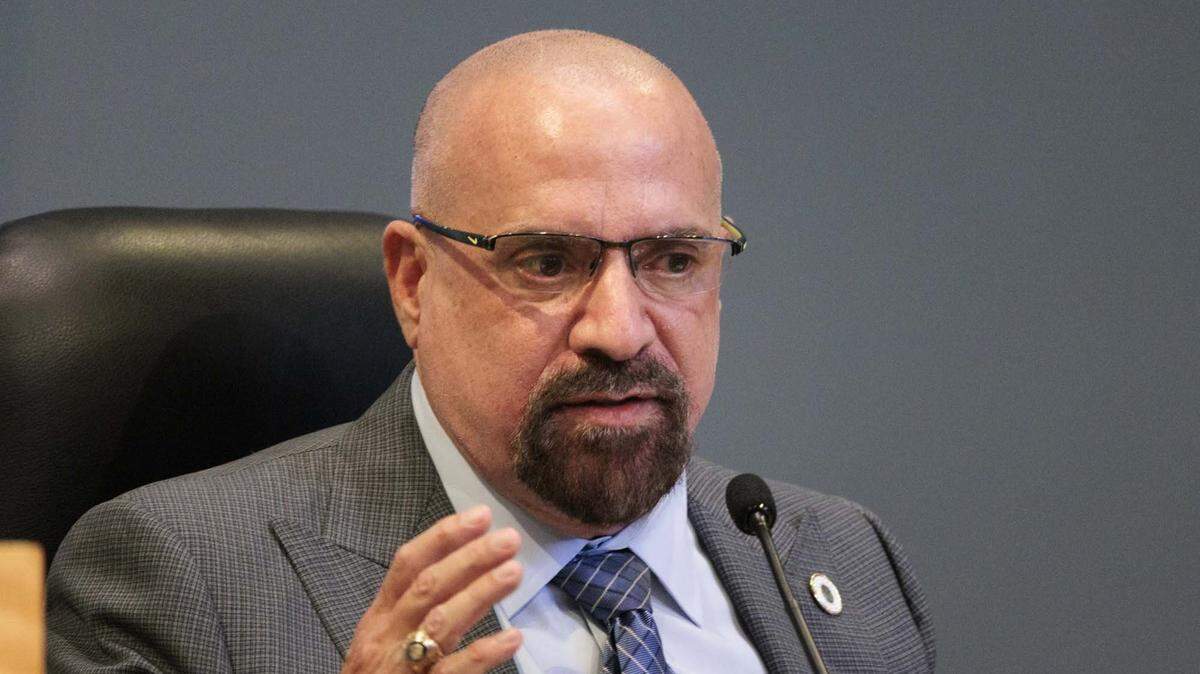
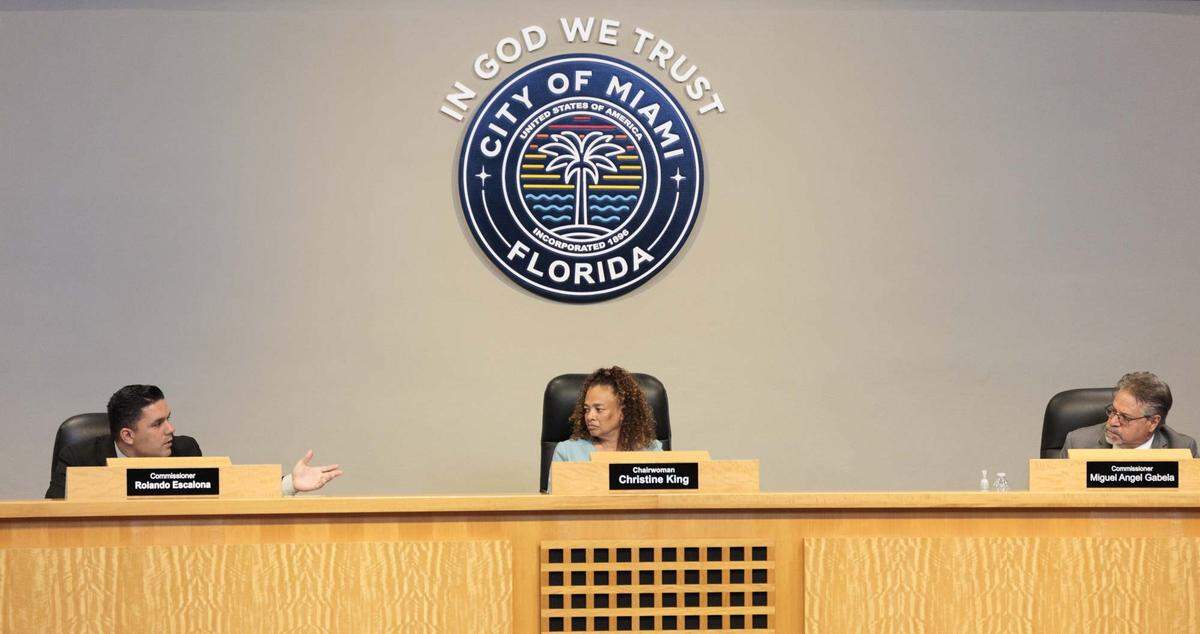
The City Commission voted 3-2 to send the proposal to the August ballot on Thursday. Commissioners Miguel Angel Gabela and Christine King voted against putting the item on the ballot.
Speaking to the Miami Herald before Thursday’s meeting, Pardo said the lifetime term limits measure that Miami voters passed in the fall, limiting elected officials to two terms as mayor and two terms as commissioner, would not be affected by the shortened terms. In other words, the one-time three-year terms would count as full terms as it relates to term limits.
Asked why his proposal seeks to shorten terms starting in 2031 rather than immediately after the next election cycle, Pardo said there wasn’t enough support among his colleagues on the commission to do so.
Generally speaking, Pardo said, “A lot of people are very skittish about giving up time in their term.”
How we got here
In 2025, Pardo had initially pushed legislation that would have gone into effect almost immediately. He, along with former Mayor Francis Suarez, spearheaded last year’s ordinance that accomplished the move to even years by giving the city’s six elected officials an extra year in office.
That change, which postponed the 2025 election to 2026, enraged some residents. That’s partly because it gave an extra year to two officials who were term-limited: Suarez, as well as former Commissioner Joe Carollo.
Former City Manager Emilio González, then a declared candidate for mayor, filed a lawsuit challenging the city’s ordinance. A Miami-Dade Circuit Court judge, as well as Florida’s Third District Court of Appeal, sided with González.
The appeals court found that the city “may not enact an ordinance which effectively amends its Charter without submission of the issue to the will and vote of its constituents by referendum.”
The ruling effectively overturned the city’s ordinance, reverting the election to November 2025.
The attempted election delay became a defining issue in last year’s crowded race for mayor. González, through his legal challenge, pitched himself to voters as a champion for good governance.
He advanced to a runoff race with Eileen Higgins, who also criticized the city’s ordinance. Higgins defeated González in a December runoff.
What about the mayor’s term?
On the campaign trail, Higgins had pledged to shorten her term to three years to help achieve the switch to even-year elections. Two months after her swearing-in, she introduced legislation to do just that.
But Higgins does not have a vote on the five-member City Commission, and her efforts to shorten her term fell flat.
In early 2026, Pardo pushed a revamped — and now dead — proposal that would have created one-time five-year terms for the candidates elected in 2027 and 2029. That proposal meant a potential bonus year for nearly all of the city’s six current elected officials, five of whom are eligible for reelection.
Higgins requested to have the mayor’s race splintered off into a separate ballot referendum, but that request didn’t gain traction among the commissioners.
Speaking to the Miami Herald last month, Higgins said she still had hopes to shorten her term but that the issue was out of her hands.
“This is an odd form of government where the mayor doesn’t get to vote,” Higgins said, “and so it really will be dependent on what the commissioners decide at the next commission meeting.”
This story was originally published May 14, 2026 at 12:34 PM.
.jpg)