
Miami mayor wants to shorten her term. Will the City Commission let that happen?

With a month to go before the deadline for sending referendums to the August primary ballot, the city of Miami is still weighing its options for moving from odd- to even-year elections.
The development puts Mayor Eileen Higgins, who was elected in December, in a difficult spot. She’d promised voters on the campaign trail that she would shorten her four-year term to three years to help make the adjustment, but she can’t do so without a green-light from the City Commission.
On Thursday, commissioners were scheduled to vote to finalize a ballot question seeking to align the city with the even-year election cycle by giving one-time five-year terms to the winners of the 2027 and 2029 City Commission races. That proposal, which would allow the city to have even-year elections starting in 2032, was sponsored by Commissioner Damian Pardo.
But Pardo, who’s championed the push to switch to even-year elections, said the city needs more time to iron out the details. He told the Miami Herald on Thursday that city is “going to look at all the options” to “create legislation which is the most legally defensible that can be passed on the dais.”
Earlier this year, Higgins had asked to splinter off the mayor’s race as a separate referendum so she could shorten her term. Under Higgins’ proposal, the next mayoral election would be in August 2028 — separate from the City Commission races, which take place in November.
Pardo said that approach, however, creates cost concerns and that it would put the city on the hook for covering the cost of a separate mayoral election. He also said it creates voter confusion to have separate ballot referendums asking about even-year elections on the same ballot.
Pardo said the new plan is to fold the mayor’s item into his proposal so that there is one single ballot question rather than two.
Pardo’s initial plan had already passed a first vote. But following the decision to combine the questions, he said the exact mechanism for aligning with the even-year cycle — such as whether to shorten or lengthen commissioners’ and the mayor’s terms — is still to be determined.
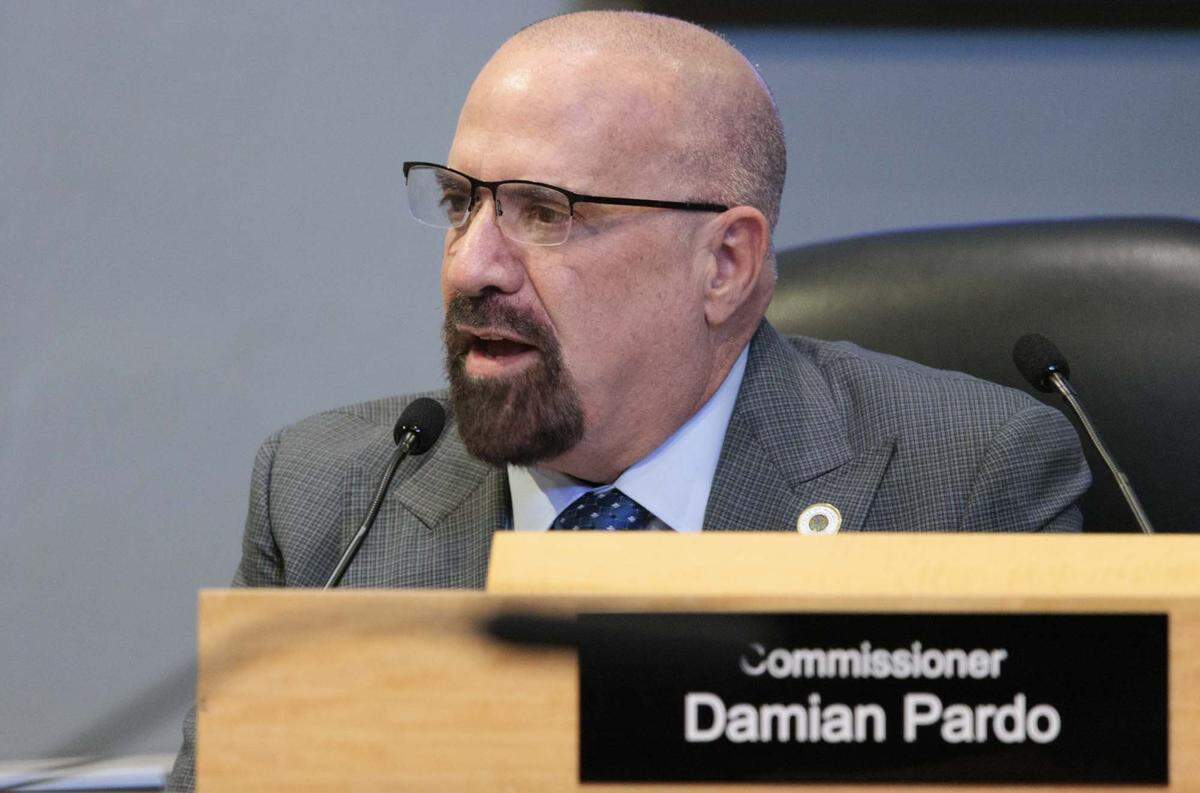
Pardo said City Attorney George Wysong will be bringing options back to the next commission meeting, slated for May 14.
But the clock is ticking. Wysong previously said May 22 is the deadline for finalizing ballot referendums for the August primary.
The move puts Higgins in a precarious position. As mayor, Higgins doesn’t have a vote on the five-member City Commission, though she can veto legislation and meet privately with commissioners to whip up votes.
Speaking to the Herald after Thursday’s meeting, Higgins said she wasn’t sure what the new iteration of the legislation would be.
“It looks like at the next meeting they’re going to come back with something else,” she said. “I don’t know what that would be. You would have to check with them.”
Asked if she was confident that her proposal to shorten her term will land on the August ballot, Higgins said: “I’m hopeful.”
“This is an odd form of government where the mayor doesn’t get to vote,” Higgins added, “and so it really will be dependent on what the commissioners decide at the next commission meeting.”
.jpg)