South Florida leaders push crackdown on Cuba-linked firms, a lifeline for thousands of families
For decades, Miami-Dade’s Cuban American community has sent money, food and medicine to relatives on the island, providing a lifeline to loved ones living under Cuba’s communist government. But as Washington intensifies pressure on Havana and South Florida leaders call for stricter enforcement of sanctions, those long-standing connections are coming under new political scrutiny.
In cities like Hialeah, local officials are pushing to investigate and potentially suspend or revoke the business licenses of companies they say maintain ties to the Cuban government. The effort marks a shift in a region where economic and family links to Cuba have historically been deeply embedded in daily life, coming at a time of heightened U.S. pressure on Havana and intensified focus on Venezuela after U.S. forces captured Venezuelan President Nicolás Maduro earlier this year.
From the mayor of Hialeah to members of Congress, several Republican elected officials have urged tougher enforcement of federal sanctions, which are overseen by the Treasury Department’s Office of Foreign Assets Control. The politicians are arguing that existing measures have been applied unevenly and, in some cases, inadequately. They say stronger enforcement is needed to cut off financial flows, logistical support and commercial activity that benefits the Cuban regime.
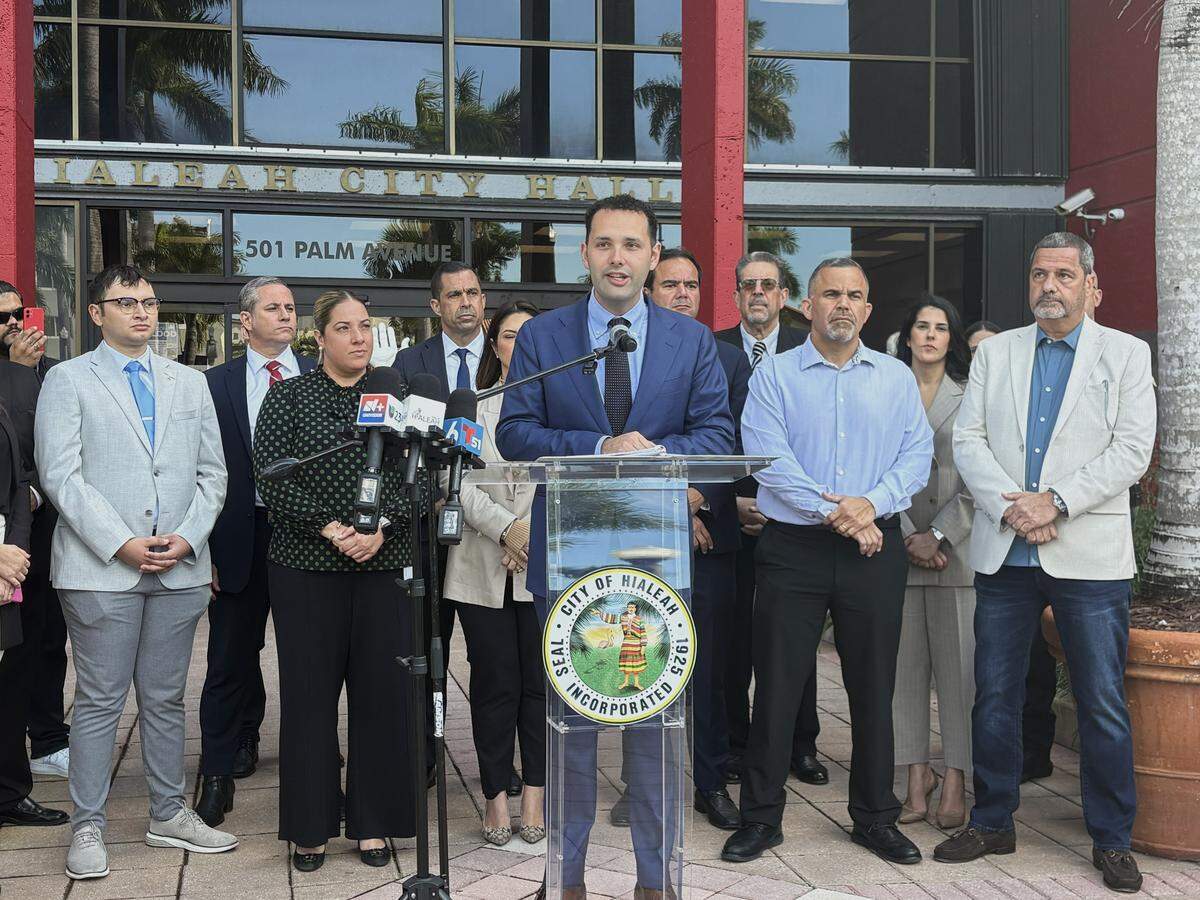
As soon as Hialeah Mayor Bryan Calvo took office in January he launched a Cuba Business Advisory Task Force to review more than 290 local firms that do business with Cuba.
“Our new Cuba task force will review businesses in our city that are doing business with the Cuban dictatorship,” Calvo said at a Jan. 20 press conference. He emphasized that being flagged by the city does not imply wrongdoing: “This doesn’t mean that all of these businesses are violating or skirting the law, but they have been identified as potential cases that require further review.”
For Cuban Americans who regularly send food, medicine and other essential goods to their relatives, Calvo’s task force presents a difficult dilemma. Many of those who spoke to the Miami Herald left the island decades ago, pushed out by economic hardship, and some say they would return if the regime were to fall. Yet they struggle to reconcile their opposition to the Cuban government with the reality that their families depend on the aid they send to survive.
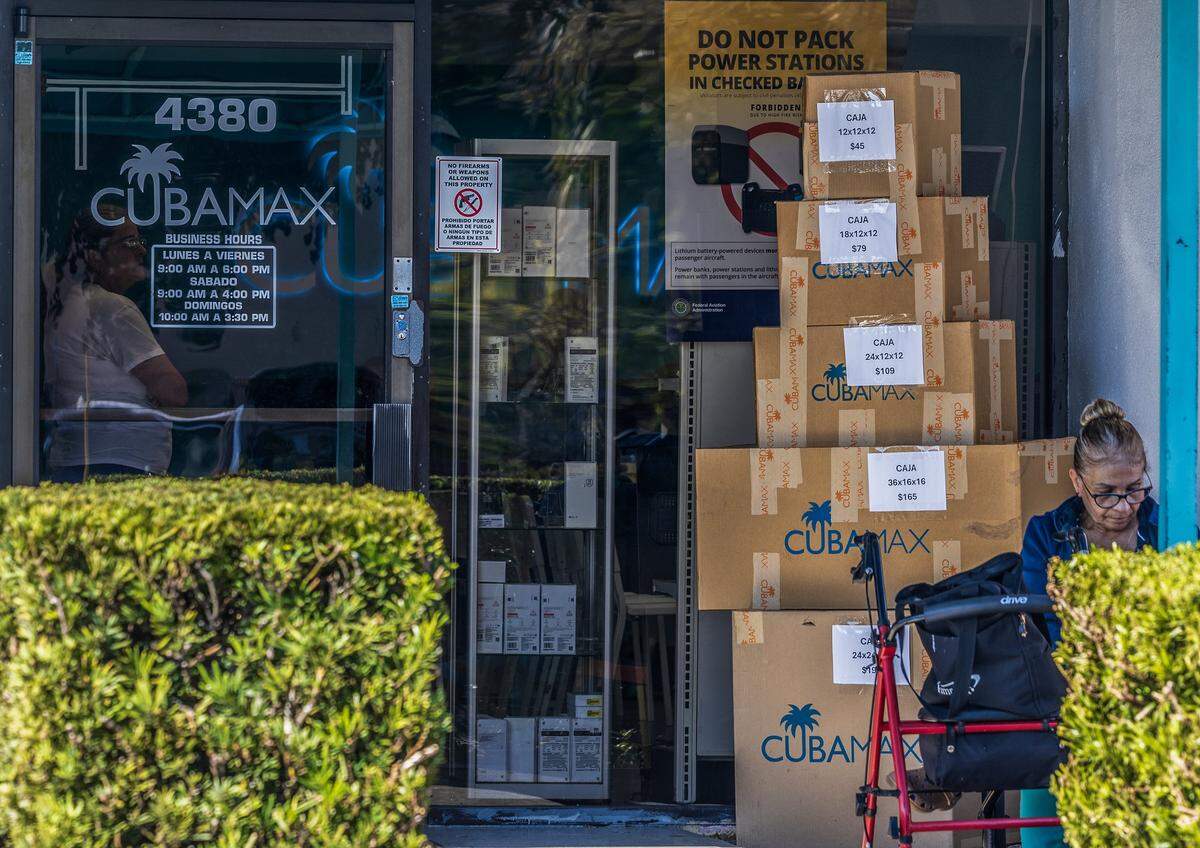
Nilo León has lived in the United States since 1994, first in New Jersey and for more than two decades in Hialeah. León, 74, regularly sends food and other supplies to relatives in Cabaiguán, in the province of Sancti Spíritus. On a Friday morning in February, as he left a shipping company in Hialeah, León told the Herald that he sends remittances, solar lamps and food to his hometown on a regular basis.
He said he agrees the city should investigate any wrongdoing by businesses that send goods to Cuba, but he worries about the broader consequences.
“If it’s to end the regime, I agree. We left a long time ago because of it,” he said in Spanish. “But we still have to help our families. If we don’t, they will die.”
Read More: For decades many have predicted the downfall of Cuba’s regime. Is this time different?
A political rallying point
The move to scrutinize firms that do business with Cuba has become a political rallying point among Republicans in South Florida, a region with deep Cuban-American roots, drawing support from a coalition of elected officials, including the mayors of Coral Gables, Vince Lago, and Doral, Christi Fraga; Miami City Commissioner Ralph Rosado; Miami-Dade County Commissioner Natalie Milian Orbis, and Miami-Dade Tax Collector Dariel Fernández.
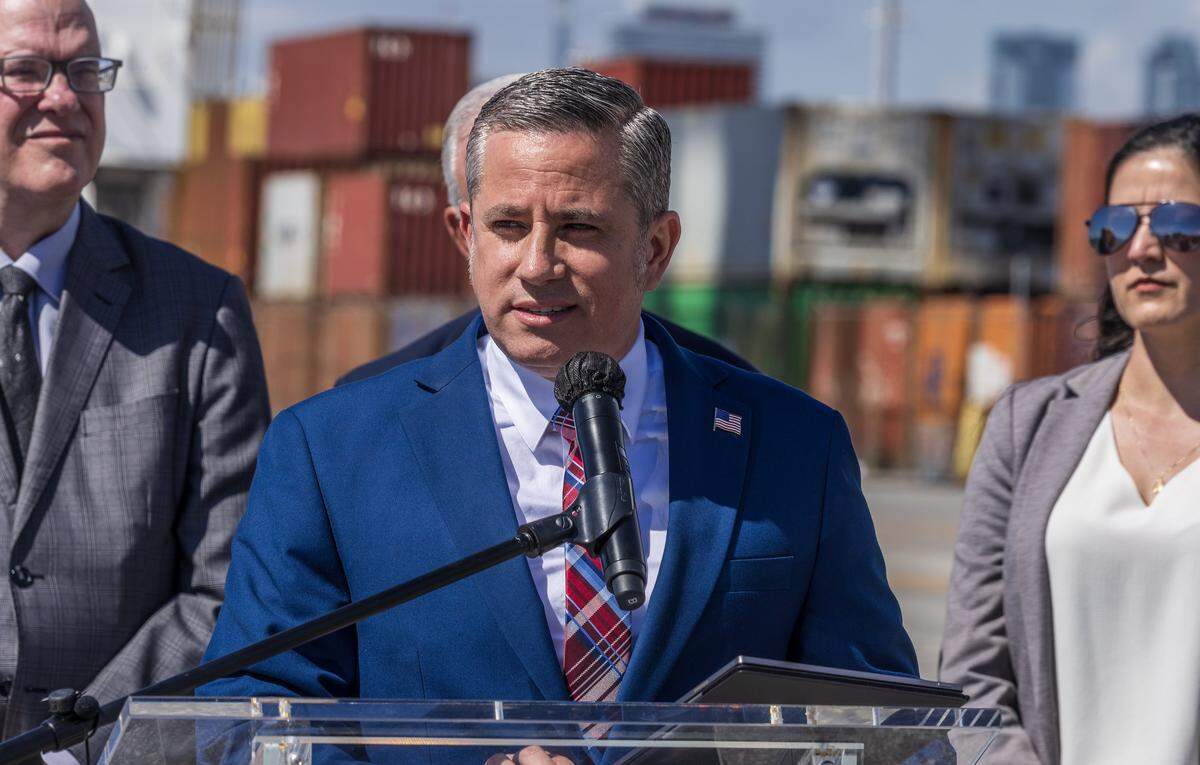
Fernández, who was born in Cuba, was the first to act last year when he announced he was cracking down on businesses that “illegally engage in commerce with the murderous communist regime in Cuba.”
What the businesses do
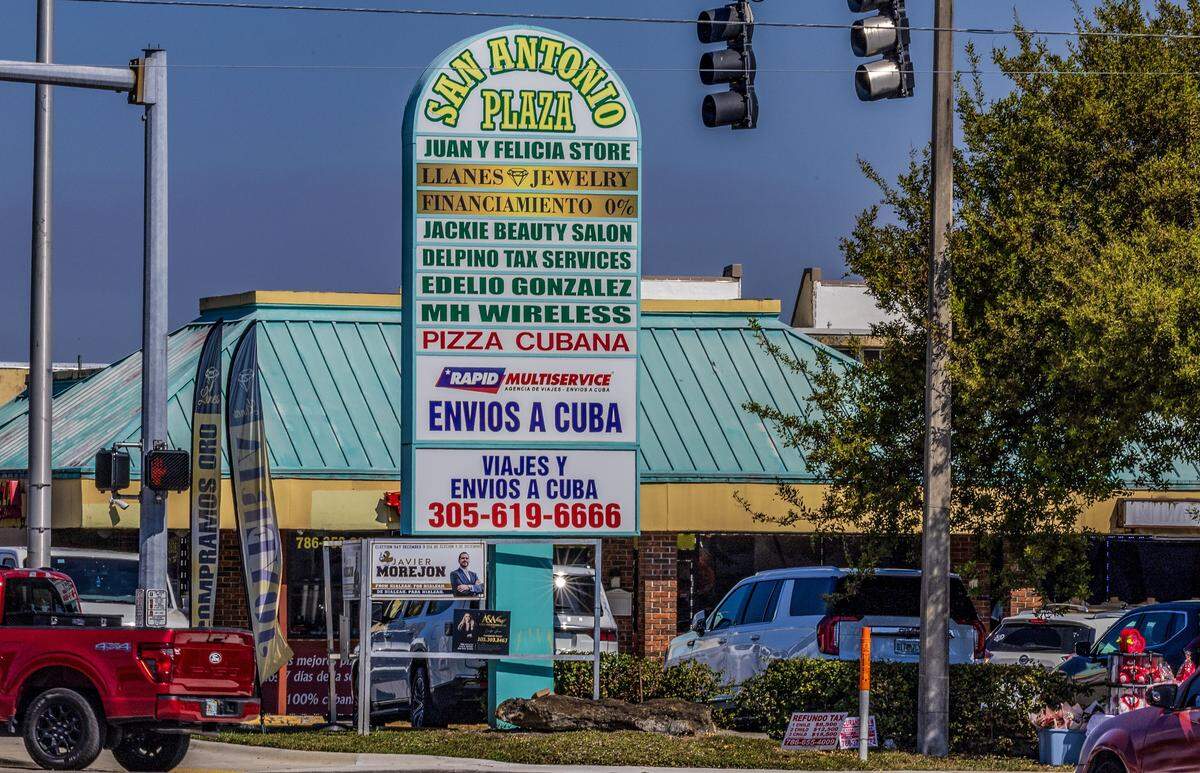
The businesses offer a wide range of goods and services, from shipping household items, such as appliances, cellphones, toys, and candy, to selling basic food products and alcohol. They also ship electric bicycles and motorcycles, generators and electrical supplies, construction materials, and sell services such as airline travel and the processing of remittances, the money Cuban Americans send to relatives on the island.
Commerce with Cuba, which has been going on for decades, has long been a sensitive issue in South Florida, particularly in Hialeah, the U.S. city with the largest Cuban exile population, where Cuban Americans regularly ship goods to relatives. For many residents, these storefronts are more than commercial enterprises; they are lifelines, providing a direct connection to loved ones navigating worsening shortages of food, medicine and electricity.
That connection, however, now exists in a charged political environment. Calvo has leveraged Cuba policy to build his public profile. As a Hialeah council member, and later during his 2024 campaign for Miami-Dade tax collector, he championed a resolution that barred city contracts and funding for businesses that “facilitate or assist in facilitating recreational trips and leisure vacations to Cuba,” a move critics described as largely symbolic but politically potent.
After Calvo recently announced the creation of the Cuba task force in Hialeah, the initiative quickly gained traction among regional politicians. On Jan. 21, the Miami-Dade County Commission unanimously approved an ordinance, led by Commissioner Natalie Milian Orbis, targeting abuses of Cuba-related federal authorizations and perceived loopholes in sanctions that benefit the Cuban regime.
At the federal level, Republican U.S. Rep. Carlos Giménez called in January for an immediate halt to travel and remittances to Havana, accusing the government of Cuba of systematically denying basic rights and repressing dissent. In a Feb. 10 letter, Giménez, along with Reps. Mario Díaz-Balart and Maria Elvira Salazar, urged the Treasury Department and the Bureau of Industry and Security at the Commerce Department to conduct a comprehensive review of all active U.S. licenses authorizing business with Cuba, immediately revoke any that provide economic benefit to regime-controlled entities, and tighten oversight of future license applications. They argued that existing authorizations may undermine U.S. sanctions by allowing transactions that benefit Cuba’s state or military apparatus rather than the Cuban people.
In the past decade, U.S. airlines have been allowed to operate commercial flights to the island under Treasury licenses. Currently, more than a dozen flights operate daily between Cuba and the U.S., with Miami serving as the hub for the majority of these routes.
A connection with relatives on the island
Cuban Americans who help feed and clothe their families on the island worry about the impact of cracking down on the firms that make those transactions possible, even when their own political views on the Cuban regime itself are uncompromising.
Ebelio, who asked that his full name not be used, has lived in the United States for nearly all of his adult life. He emigrated from Havana in 1980, and now at 67 and retired, he believes the Cuban regime would collapse if the Trump administration captured Cuban leaders, similar to what happened in Venezuela earlier this year. If that were to happen, he said, he would return to his hometown for good.
In the meantime, however, he sends food to his sister and cousins every month. But until then, his focus is not on politics, it’s on his family. He said he does not know whether businesses that ship goods to Cuba are directly linked to the regime, and he admits that possibility troubles him. Even so, he does not want Hialeah companies that export to the island to close. “Cubans survive on what families abroad, like mine and many others, send them every thing they need monthly,” he said. “They barely get by. If they don’t receive food, they won’t survive.”
Legal challenge on Cuba-linked businesses
According to the Miami-Dade Tax Collector’s Office, about 1,400 businesses in the county engage in Cuba-related commerce. Of those, roughly 175 have received letters requesting a review of their business licenses as part of a phased audit, Fernández told the Miami Herald.
The office initially revoked the licenses of 20 companies but later reinstated 18 after the businesses submitted the required documentation. Two licenses remain revoked because the companies failed to provide the requested paperwork, Fernández said.
One of the 18 businesses whose license was revoked and later reinstated has since sued the Tax Collector’s Office. Xael Charters, a Coral Gables–based Florida company, claims in its lawsuit that on Dec. 22 the tax collector revoked its business tax receipt without prior notice or an opportunity to be heard, effectively barring the company from operating in Miami-Dade County.
The lawsuit also claims Fernández falsely suggested in social media post on X that the charter company was engaged in unlawful commerce with the Cuban government. According to the complaint, the tax collector’s office had previously requested and reviewed Xael’s federal authorization, received written confirmation from Treasury and renewed the company’s business license in October 2025 without identifying any deficiencies.
Xael Charters argues that the revocation violated its due process rights and exceeded the tax collector’s authority, asserting that Cuba-related commerce and travel are governed exclusively by federal law. The company says it operates under valid Treasury Department authorization and U.S. Transportation Department oversight, and that federal regulators are fully aware of its charter flights to Cuba.
The limits of local power
The Hialeah task force is expected to move through multiple phases, including identification, document requests, investigations conducted by the city’s Economic Crimes Unit and administrative hearings. Businesses will be given the opportunity to respond and present evidence of compliance. If violations are found, the city will hold a public hearing to determine enforcement actions.
Officials have not provided a timeline for completing the review, but businesses in Hialeah have already begun receiving notices. Several owners told the Herald they were contacted directly and given 30 days to respond.
Some of the businesses operate as travel agencies, though several said they do not offer travel to Cuba despite receiving the notice. Others that do provide Cuba-related travel services said they are communicating with the city through their attorneys.
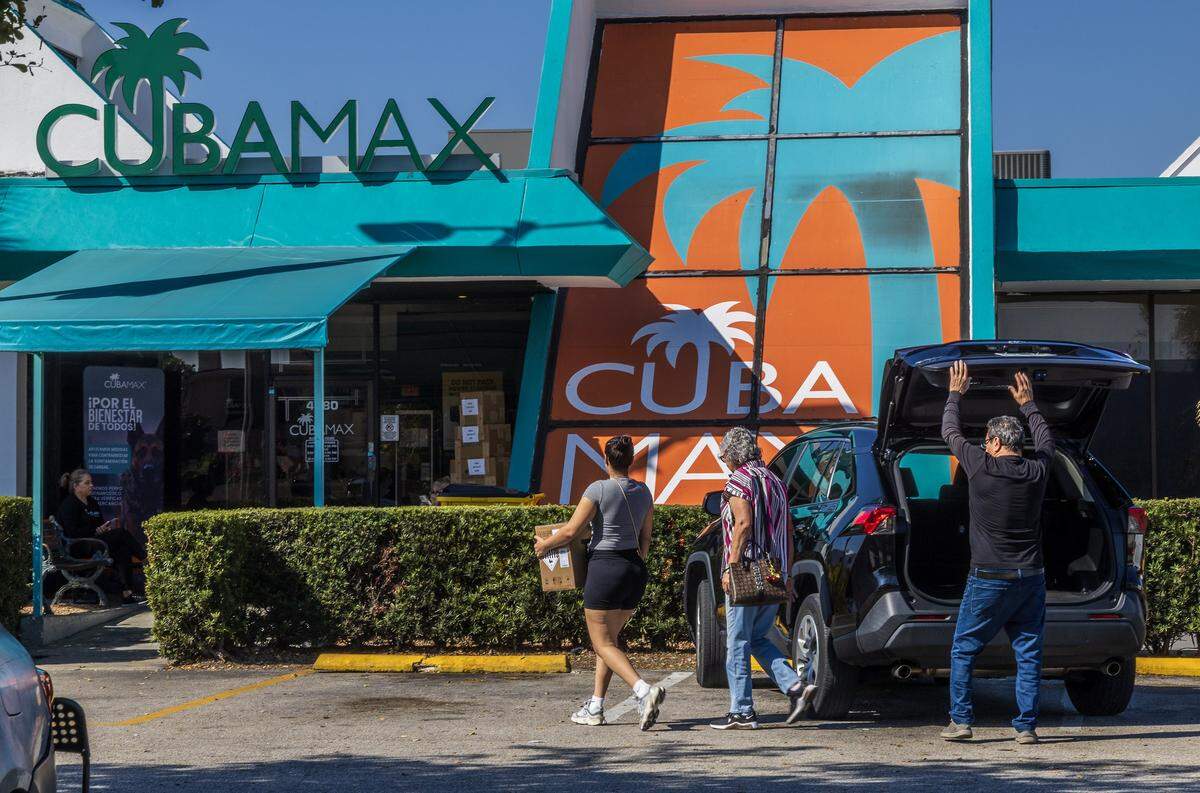
Giraldo Acosta, president of Cubamax, which operates a daily charter flight to the island, told the Herald his company, which has four locations in Hialeah, was contacted by the city.
“It’s very easy to make accusations, but operating an aircraft requires extensive permits and regulatory approvals; everything we do is fully regulated,” said Acosta. “We were founded in 2001, and we comply with reporting requirements, audits, licensing rules and inspections by both federal agencies and independent firms.”
Acosta said Cubamax provides humanitarian aid, and that shipments of food, medicine and hygiene supplies make up about 98% of the business.
Companies that export to Cuba must obtain licenses from the U.S. departments of Treasury, Commerce, and/or Transportation, depending on the type of activity, the products involved and how the business engages with Cuba. Those licenses are issued after a vetting process and require strict, ongoing compliance.
That raises a key question: Can Hialeah, or any other local government, suspend or revoke a local business license for activities that are federally authorized?
Calvo insists Florida law provides the authority.
“Florida statute allows us as a municipal government to revoke or suspend a business license if a business is supporting the Cuban dictatorship,” he said. “If we determine that it is in the best interests of the city and our residents to revoke or suspend a license, we will do so, and we will not hesitate.”
Legal experts, however, say the city’s authority may be limited unless it can demonstrate violations of state or local law, such as fraud or falsified documentation. A city cannot enforce federal sanctions or Treasury licenses, said a trade compliance expert who requested anonymity due to political sensitivities, noting that municipalities do not have the power to regulate foreign commerce or replace federal oversight.
When asked how his administration would enforce Treasury licenses, Calvo said city government has been in communication with U.S. Sen. Rick Scott on the issue. While Scott could add political pressure, enforcement and verification of Treasury rules fall not under the purview of Congress, but under the president.
While city officials and legal experts debate the limits of local authority over federally authorized trade, the potential impact hits close to home for residents like Ada Echeverría. She came from Cuba a decade ago and works as healthcare provider. She began sending money to her mother as soon as she was able. Though she was able to bring her mother to the U.S. in 2023, her in-laws remain in Santa Clara, the region where she and her husband are from.
“Nothing works in Cuba. When I left, things were difficult, but not like now,” she said. “They are out of power for 24 hours at times, and even basic medicines to reduce a fever are hard to find. We constantly send them money, food and medicine. If suddenly the businesses that help us send them good were shut down, what would happen to them?”
This story was originally published February 18, 2026 at 5:30 AM.