
How the blasts of cold air in South Florida are affecting your food
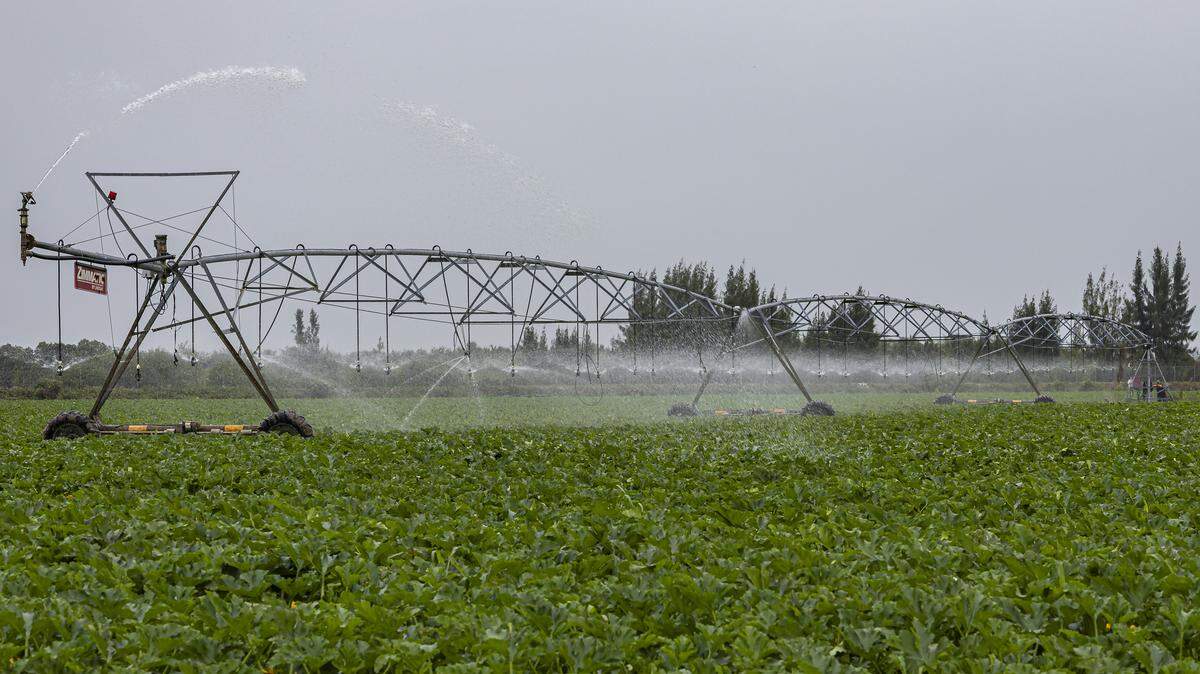
Florida’s agricultural industry is taking stock after Sunday’s extreme weather, with farmers facing millions of dollars in losses after a battering from an extremely dry fall compounded by the weekend’s arctic plunge.
Temperatures dropped to the single digits in parts of North Florida and the teens and 20s elsewhere. In South Florida, temperatures dropped to the low-30s.
The perfect storm is “a natural disaster,” University of Florida Forage Extension Specialist Marcelo Wallau predicted in the UF’s report on Friday.
As the industry assesses damage from the weekend’s winter blast, UF’s Institute of Food and Agricultural Sciences reports that reduced pasture productivity could raise the cost of beef and dairy. If vegetable or citrus fields in Central and South Florida show significant damage and have compromised crops of blueberries, strawberries and fresh greens, that could mean shortages and higher prices at grocery stores in coming weeks.
The blueberry and strawberry fields at Southern Hill Farms in Central Florida’s Clermont, about 20 miles west of downtown Orlando, resembled a “glass forest” after Sunday’s frost. Heavy chunks of ice coating the plants from usually protective sprays of water to create thin ice layers, led to breakages. The weight of ice took down sprinkler systems, burying some crops, Fox 35 reported.
“Freeze nights like this are physically exhausting and emotionally heavy. One wrong shift in temperature, wind, or timing can mean the loss of an entire crop, months of planning and care gone in a single night,” David Hill, one of Southern Hill Farms’ owners, told the Central Florida station. “The event we had last night was catastrophic.”
At Torbert Farms in Homestead, farmer David Torbert said the cold took a toll.
“We had some damage,” he said.
Torbert estimates that 300 of his 1,400 acres were endangered by the cold. He said he’ll monitor his crops over the next three days to see how they respond.
Ahead of the cold weather, Torbert’s crops got extra doses of water and fertilizer to withstand the conditions, but it may not have been enough. Purchasing coverings for a farm as big as his would have been expensive, he said.
The cold weather looks to already have a significant effect on what crops of snap beans, yellow squash, sweet corn and okra yield in the seasons ahead, Torbert said.
“The wind blew most of the night,” he said. “Temperatures were 38 or 39 degrees, and then right at daylight it went down to 34 on my farm.”
Frigid temperatures also damaged the crops and plants at Dunn’s Overtown Farm in Miami.
“They’ve been struggling a lot,” said Christyna Salmon, farm co-founder and master gardener at the 1-acre farm. “The coverings can only do so much when the temperature drops like that.”
Salmon has done more than put coverings over her crops. She has also been using a mulching method that covers the ground with wood chips or hay to keep plant roots warm.
Dormant butterflies, however, have been a clear indicator of how cold weather has affected the crops.
“The butterfly population [is] in decline,” she said. “I’ve seen five or six butterflies dormant on leaves and trees, and try to provide covering when I can.”
With fewer butterflies, fewer flowers will be pollinated and less fruit will be produced, Salmon said.
She anticipates that the cold weather will lead to less fruit and vegetables in coming harvest seasons. Flowers are needed to produce fruit, and she’s noticed many are now frozen and will fall off when they eventually thaw in the sun.
“If you don’t have a bunch of flowers, you don’t have a bunch of fruit,” she said
Over the past few days, Salmon has spent time ordering supplies like coverings to protect her crops. Many farmers in South Florida are unprepared for this weather, she said.
Temperatures in Miami-Dade and Broward got as cold as 32 degrees on Sunday, with wind chill in the low-20s.
And it’s not over yet.
Tuesday will start out in the low-40s, and while it will warm up during the week, the 40s will be back on Friday.
With the frigid temperatures, Salmon is concerned about possibly losing two plots of crops.
“A lot of people more than likely lost a garden plot of veggies,” she said, “because they all froze.
This story was originally published February 2, 2026 at 3:55 PM.
%20Cropped.jpg)