
Rare redo: Builder needs new Miami-Dade vote to develop the Calusa golf course
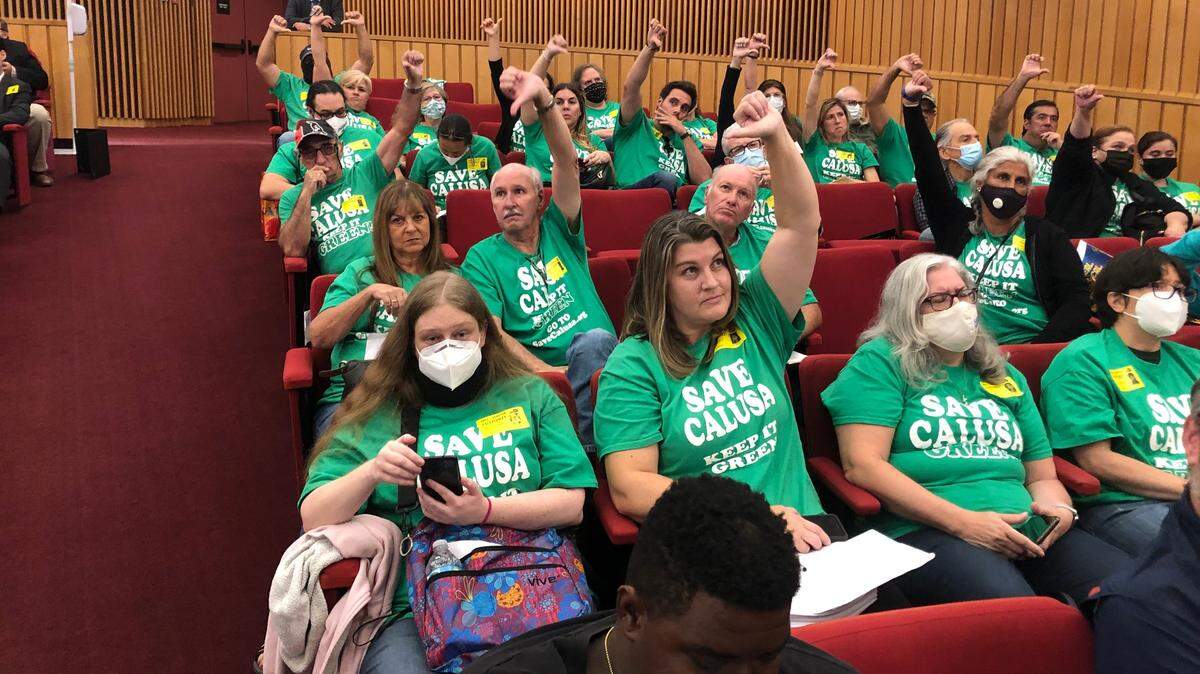
Nearly five years after she lost a key Miami-Dade vote trying to stop homes going up on a West Kendall golf course, activist Amanda Prieto is dusting off her “Save Calusa” gear for a rare redo before the County Commission.
“I have three bags full of T-shirts and 40 signs,” Prieto told the Miami Herald in a recent interview. “They’ve been sitting in a storage facility since 2021.”
Those green T-shirts are expected back in force before the County Commission on Thursday, Jan. 22, for a repeat of the zoning hearing that went badly for Prieto and her fellow Calusa neighbors in 2021.
Now, she has a second chance at convincing commissioners that the Calusa project is too big for the idle golf course and will create too much traffic for the suburban neighborhood where she lives.

In a legal challenge that went all the way up to the Florida Supreme Court two years ago, Prieto’s group is forcing developer GL Homes to start fresh with a new zoning hearing on the 22nd. A court found Miami-Dade failed to follow the rules related to advertising the final Calusa zoning hearing in 2021, a decision that’s now requiring a new vote for GL Homes to build the 540-home suburban complex planned for the shuttered 168-acre golf course off Southwest 127th Avenue near the Killian Parkway.
Despite pulling off the uphill feat of blocking an approved project in Miami-Dade, it’s not clear what kind of a difference five years will make at County Hall for Prieto and her fellow Calusa neighbors.
The approval vote was lopsided five years ago, and six of the 10 commissioners who voted for the Calusa project in 2021 remain on the 13-member board. The two who voted against approval have left office.
GL Homes has also backed off a part of the development plan that was a rallying cry for neighbors and their supporters. Neighbors — including the well-known Zoo Miami ambassador Ron Magill — had argued the Calusa plan would wipe out vital nesting grounds for rare birds by filling in a lake to create more homesites.
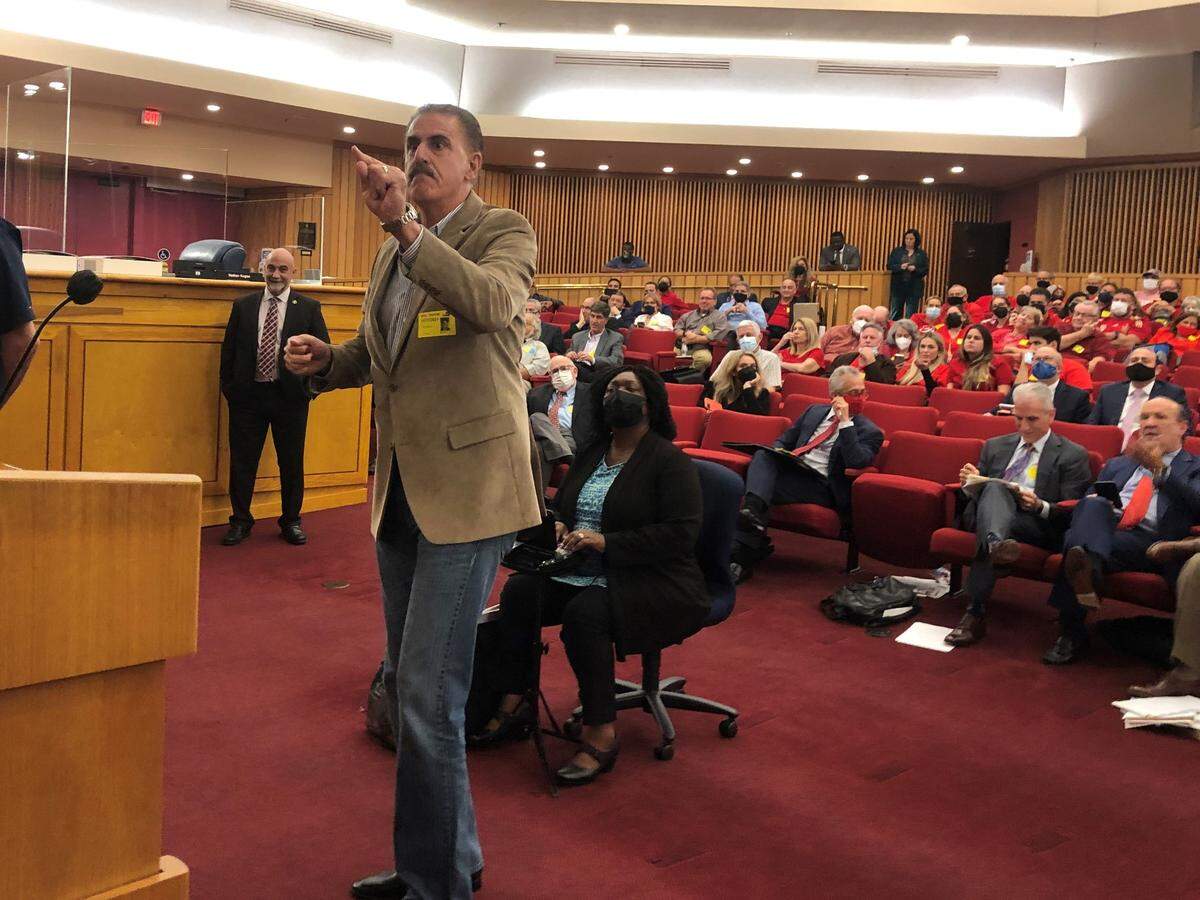
Now, that lake remains largely intact in the revised Calusa plans, including the island that’s home to the birds. GL Homes is promising to make the island a permanent rookery, preserved by part of the monthly fees future residents will pay as part of their homeowner association dues. Without Prieto’s group fighting in 2021, the lake likely would have been filled.
But to tamp down concerns on the commission about the bird issue, GL Homes had agreed to fund a nesting study as part of its county approval package and scrap filling the lake if biologists found rare birds living there. Several nests of endangered tri-colored herons — considered a threatened species in Florida — were found on the island.
“If there is one nest, it’s a rookery,” said Dick Norwalk, executive vice president at the Sunrise-based builder.
With the heron nesting confirmed, GL Homes revised its Calusa plan to preserve the island on the lake popular with birds, shaving 10 units off the number of planned homes in the project where prices are expected to hover around $1 million. The builder claims other steps — including reworking the shoreline of the lake to widen it in some parts — will make the habitat more bird-friendly than it is now.
“It costs us millions and millions of dollars,” Norwalk told the Herald. “But that’s part of the process.”
GL Homes has been spending on political donations, too. While Prieto said county rules on zoning matters prevent her from speaking privately to commissioners on the project application, the builder emerged as a top donor to commissioners last year. A Miami Herald analysis found that entities linked to the builder gave roughly $100,000 to commissioners’ political committees in 2025, making GL Homes a top 10 donor in county politics last year.
“Anywhere we are, we participate in the process and help people who are doing fundraising,” Norwalk said.
Opponents of the project see the new Calusa rookery plan as falling short of creating a true sanctuary for rare birds. In a December letter to the county, the Tropical Audubon Society requested a 300-foot buffer around the rookery island to assure the birds aren’t spooked by people during nesting, while the current design has a gap of 100 feet in some areas.
“The Calusa rookery is an ecological asset. Strong, proactive safeguards are essential to ensure its continued survival,” wrote Executive Director Lauren Jonaitis.
Norwalk told the Herald the new lake design will eliminate some of the narrowest parts of the shore, which he says currently put the island within 40 feet of the rest of the property.
Birds are sure to be a flashpoint when commissioners meet again to consider the fate of the idle Calusa golf course, which closed in 2011 and has been eyed by developers ever since. Prieto said she’s expecting the same kind of strong turnout from neighbors wearing the green “Save Calusa” T-shirts who filled the commission chambers in 2021.
“I’m going to say to them: I came here four years ago with concerns, and you didn’t listen to me. And I was correct,” Prieto said of the rookery concerns that were validated by the nesting studies. “This is why our voice matters.”