
What’s the price tag for ending property taxes on Miami-Dade homes? $900 million
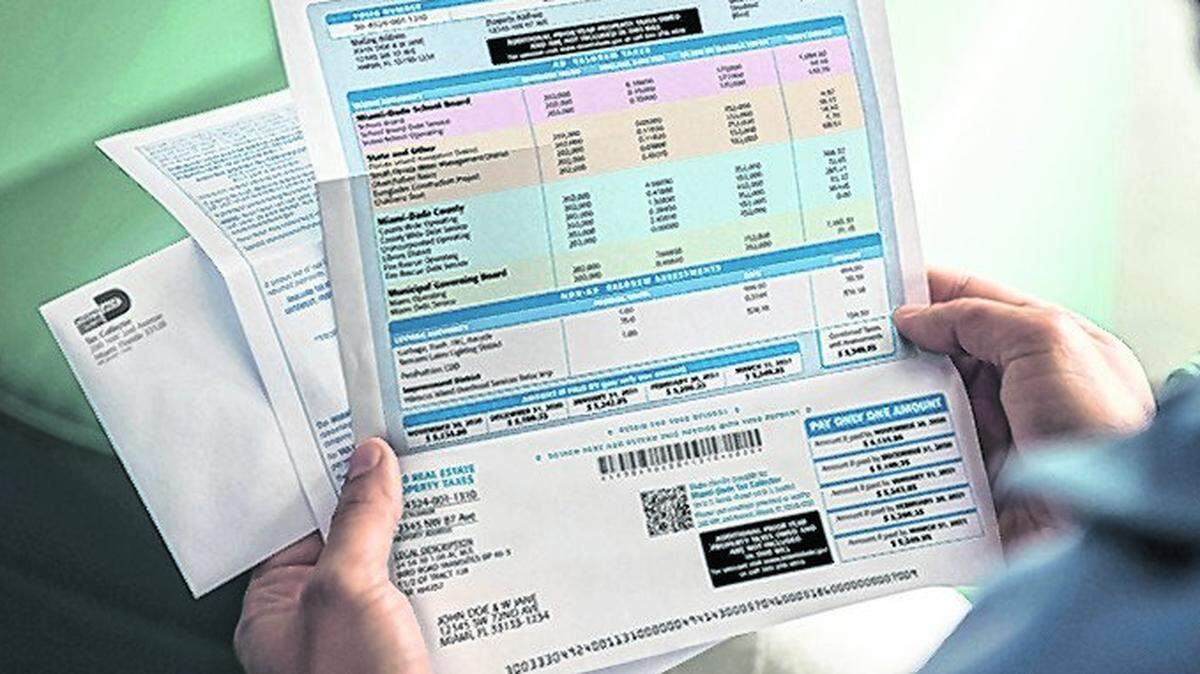
If Florida voters exempt homeowners from municipal property taxes, Miami-Dade County will lose more than $900 million in revenue, according to a recent forecast.
Miami-Dade’s budget office estimates a proposal to end local government taxes on primary residences would cut roughly $909 million from the revenue collected through property taxes, which fund more than $3 billion worth of countywide services and municipal expenses like fire trucks, libraries and neighborhood police patrols by the Sheriff’s Office.
Eliminating taxes on primary residences — properties given “homestead” status under Florida law — would mean losing 28 cents of every dollar Miami-Dade expects to collect from its four property taxes in 2026, according to the forecast.
The estimate is part of Miami-Dade’s effort to warn about the consequences of the tax-cut push underway in Tallahassee as Gov. Ron DeSantis and his Republican allies pursue a referendum on the top source of revenue for local governments across the state.
“I would ask the state: Are they really planning to run county government for us? Because we wouldn’t have the dollars to do it,” Miami-Dade Mayor Daniella Levine Cava said. “We’re hoping cooler heads will prevail.”
But for advocates of statewide property-tax relief, the push offers a chance to force local governments into cutting spending while sharply reducing homeowner tax bills that average about $5,000 a year in Miami-Dade.
“There is no other way to put this, but you are being over-taxed,” Blaise Ingoglia, Florida’s chief financial officer, said during an Oct. 30 Miami-Dade stop on a statewide tour blasting local governments for what he claimed was overspending enabled by elected leaders refusing to cut tax rates. “Miami-Dade needs to start being more fiscally responsible.”
County Commissioner Natalie Milian Orbis voted against the $12.9 billion budget for 2026 that fellow Miami-Dade commissioners passed in September. Initially, Levine Cava proposed a spending plan with multiple cuts to address a revenue squeeze — brought on in part by back-to-back 1% cuts in the countywide tax rate in 2022 and 2023 that the mayor championed as real estate values surged. But the mayor and commissioners ultimately found ways to keep most services intact for 2026 while predicting the actual tough decisions would come in votes this year on the 2027 budget.
Orbis said the process signaled to taxpayers that Miami-Dade generally has spare money to spend and could afford even lower tax rates. “It was doom and gloom,” she said. “If you can find the money to plug those holes, why can’t you find the money to provide taxpayers relief?”
It’s not clear what tax-cut options will actually make their way to Florida voters next November, since multiple bills are working their way through the legislative process. Some bills would offer targeted tax cuts for homeowners over the age of 65, while others would rework the formula for how tax bills are calculated without eliminating a property tax altogether.
None would impact the property taxes that fund local schools. Instead, the legislation focuses on the property taxes charged by counties and cities — taxes that amount to between 1% and 2% of a property’s taxable value for most homeowners in Miami-Dade.
The proposal that has gotten the most attention is also the simplest: eliminate county and municipal property taxes on all homes granted homestead protections.
In Miami-Dade, that would mean steep drops in tax bills for about 55% of the county’s homeowners, according to data published by the Property Appraiser’s Office. In Miami-Dade, there are about 780,000 residential properties, including apartments and condominiums, and roughly 444,000 have homestead protections.
Those protections, required under Florida law, already shield homeowners from the costs of surging real estate values.
For homestead properties, Florida law caps increases in taxable value to the inflation rate or 3% — whichever is lower.
Some years, when inflation is low, that means the value used to calculate a tax bill can increase less than 1%. Most homestead properties also get a break on tax calculations, with $50,000 deducted from their taxable value each year, with increases in the deduction each year to compensate for inflation. Most local governments double the deduction for low-income homeowners over 65.
Homestead protections don’t shield homeowners from higher tax rates. Miami-Dade hasn’t raised its countywide property tax rate since 2011.
But with county real estate values soaring after the pandemic, Miami-Dade’s elected leaders have had far more money to spend in recent years. And while longtime homeowners can count on only modest increases in their tax bills most years, that’s not true for people who own houses without homestead protections — such as landlords. Non-homestead properties can see their taxable values increase as much as 10% per year under Florida law, costs that contribute to higher rents across the region.
Florida Rep. Alex Rizo, a Republican from the Hialeah area, said he favors tax relief that can help non-homestead properties too — but without the kind of cut that would lead to steep reductions in local government revenue.
“We’ve been bombarded by people saying, ‘Please give us some relief,’” Rizo said. “At the same time, we know how expensive it is to operate things down here.”