‘I have nothing’: How a mass eviction left retired, disabled Miamians homeless
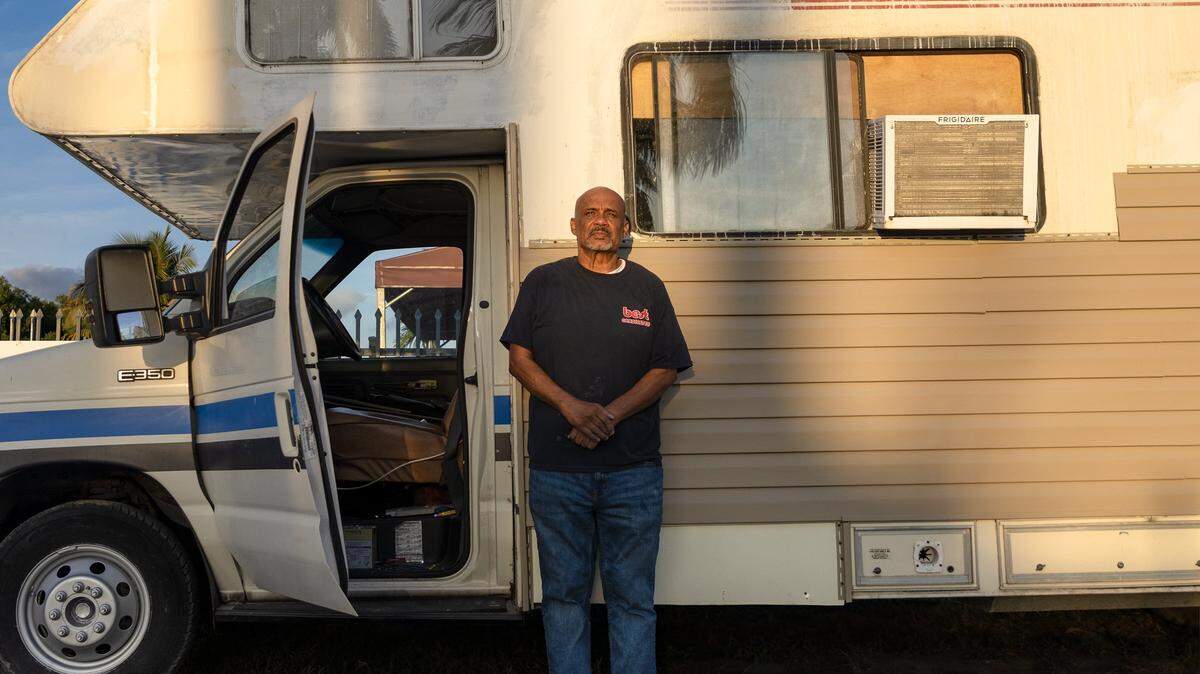
On a Sunday evening in December, Angel Rogelio Diaz Franco sprawled on a dingy twin mattress in the van he now calls home. Looking around, he squinted. The sole source of light inside came from a small flashlight, which cast a dull-white glow over a bedside tray loaded with pill bottles and a floor fan that circulated the van’s hot, stale air.
Tan carpeting ran up the walls and windows to keep out the sun and any inquisitive eyes. Up near the cab, a toilet seat rested atop a five-gallon orange bucket.
Franco, 58, has been living in the van since October, when he was evicted from his home of 19 years in Sweetwater’s Li’l Abner Mobile Home Park.
His eviction capped a yearlong battle with the park’s owner, CREI Holdings, which in November 2024 informed Li’l Abner’s 3,000-plus residents — roughly 15% of Sweetwater’s population — that they’d need to vacate within six months.
Ownership offered buyouts — ranging from $3,000 to $14,000 — to incentivize homeowners to leave quickly.

Most did, but Franco and nearly 200 others held out through the summer and into mid-fall. They filed a class action lawsuit against CREI Holdings, alleging the company violated Florida law governing mobile home park evictions — charges CREI denies. They remained in their homes as their case wound its way through court, hoping to secure heftier compensation packages and more time to find new places to live.
So far, they’ve gotten nothing. In September, a Florida court sided with the park’s owner, allowing the evictions to proceed. That their case is on appeal is of little consolation to a number of those recent evictees, some of whom are now for the first time experiencing homelessness.
As the sun sets on their working years, some former Li’l Abner homeowners now find themselves crashing on the couches or spare cots of friends and family, sharing rooms, even beds. Four of them, all over the age of 55, told the Miami Herald they’ve had to live in cars or vans — or on the street.
Their housing is day-to-day. The possessions they collected over a lifetime, once enough to fill multi-room trailers, have been whittled down to whatever they could fit in a suitcase or two.
‘I had a decent, dignified life’
Before leaving his Li’l Abner trailer, Franco had stuffed a few sets of clothes into black trash bags. They now sit among a tangled moraine of power tools that occupy much of the van, which a friend sold to him in September for $600.
The tools are remnants of the almost three decades he spent working in body shops. Sometimes he loans them out to former coworkers. Sometimes they bring him food. When they don’t, Franco swings by McDonald’s or Costco, where he’s still a member.
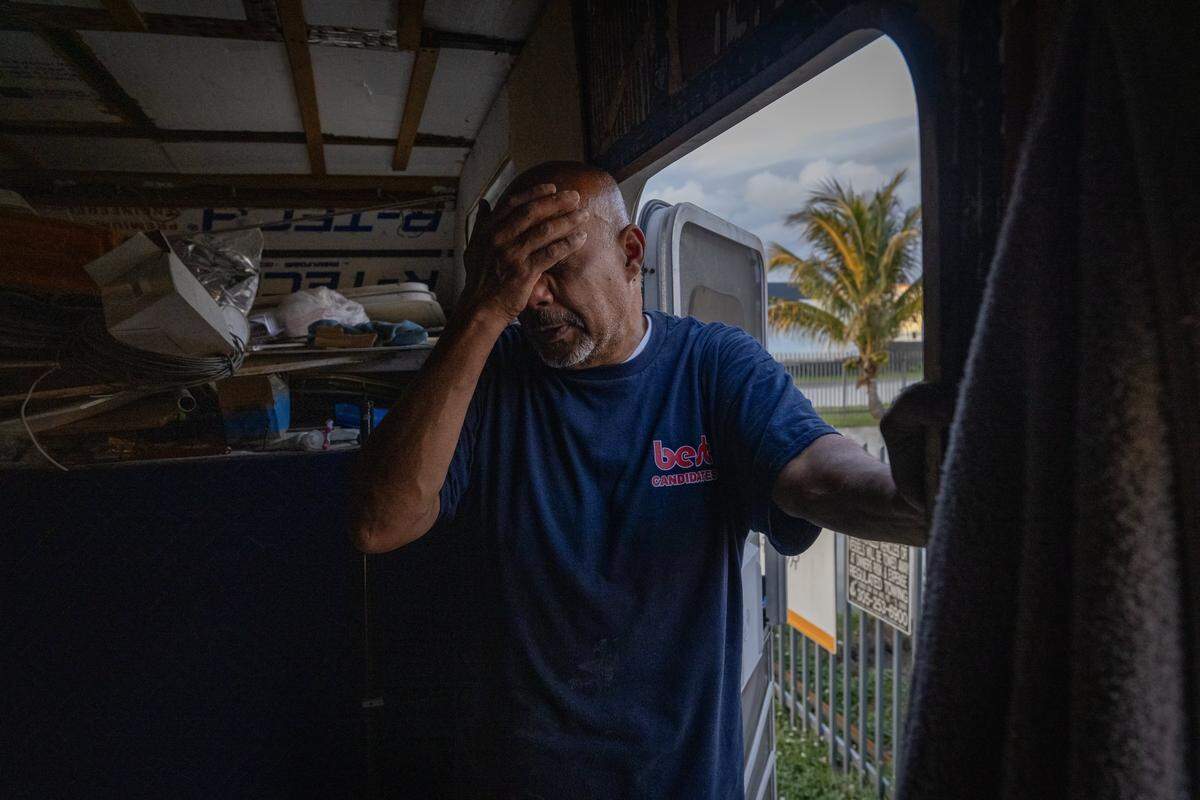
He chuckled. “I’m a big fan of [Costco’s] $1.50 hot dog and soda meal.” The combo has become a staple of his diet. While he’s there, he’ll use the bathroom and clean himself off in the sink.
Franco came to the United States 30 years ago from Venezuela, and he spent the first 16 years of his life in the U.S. without documentation. He rented for years before he was able to purchase his trailer, which he did almost two decades ago, for $35,000. While he owned the structure of his home, he, like most mobile home owners, rented the land beneath it from the park. Contrary to their name, mobile homes — at least those in Li’l Abner — aren’t particularly mobile.
“I had a decent, dignified life,” Franco said. “Never, never, never, not even when I was here illegally, when I first arrived in this country, was I in a situation like this.”
That life provided him enough money to buy his trailer, pay his lot fees and support his family back in Venezuela. He estimates he put an additional $40,000 into the four-bedroom, two-and-a-half bathroom home over his 19 years there.
But Franco was diagnosed last year with ALS, a neurodegenerative disorder that eventually leads to paralysis. While he can still get around, a spinal infection earlier this year damaged his nerves and cost him much of his mobility.
Franco now walks with a limp and groans when getting into or out of the van, which he has to do quite a bit. He knows his van is an eyesore. He can’t keep it parked in any one place for more than a day or two, lest someone call the police and he lose the only home he has left. It’s illegal to live in a van like his, parked on the side of the road. So Franco pulls himself out of bed most mornings around 4, hobbles into the dark and moves his home to a different neighborhood.
“I feel like a criminal,” he said. “Sometimes I wake up, and I have no idea where I am — if I’m parked here, if I’m parked there. … It’s a very weird, a very … ” He paused and closed his eyes. “A very unpleasant feeling.”
Much as he’d like a stable place, Franco hasn’t worked full-time since February, and his job prospects are grim. “I’ll soon be trapped in my own body,” he said. “I don’t have a steady income. Who would rent to me?”
And after almost a year of unemployment and convalescence — plus the eviction that’s now on his record — renting an apartment, even an efficiency, is out of the question. But he’s living off his limited savings — plus whatever money his ex-partner and daughter are able to send — and his bank account is nearly empty.
So is Lucía Cruz’s.
Cruz, 61, purchased her five-bedroom, three-bathroom trailer in October 2023 for $127,000, taxes included. That was 13 months before she was told she’d need to leave.
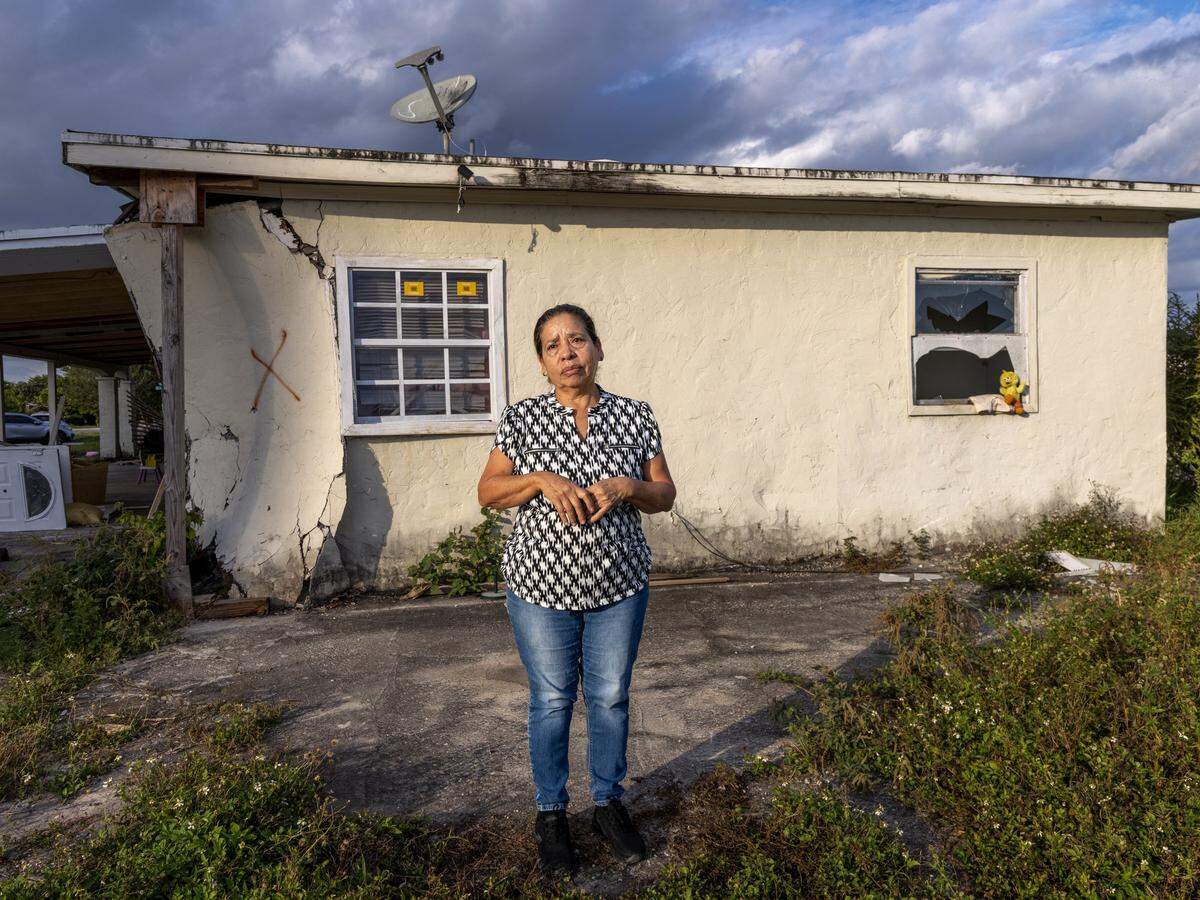
She had sold her Homestead townhouse to purchase the mobile home, in part because the trailer was much larger. Five of her granddaughters live in Missouri, and they spend every summer in Miami with her, enjoying traditional Nicaraguan food and keeping up their Spanish.
As she spoke, a tremble overcame her gesturing hands, and she clasped them together.
“Parkinson’s,” Cruz said.
She was diagnosed six years ago. Knowing that she was sick and would soon be unable to work, Cruz wanted to free herself of her mortgage and steep property tax obligations. She thought the trailer, which she could buy in cash, was an affordable way out that maintained some semblance of homeownership.
“The worst mistake of my life,” she said. “Now I have no job, no house, no money.”
Cruz has since moved back to Homestead, where she, her pregnant daughter, son-in-law, two grandsons and one of their partners occupy a two-bedroom, two-bathroom house. Cruz splits her room with her older grandson’s partner and her 7-year-old grandchild, with whom she shares a bed. She has space for one suitcase that contains two pairs of shoes and a few pairs of pants and blouses. What remains of her wardrobe is in a 10-by-10 storage locker.
“This change in my life,” she said, was like falling from “heaven to earth.”
Cruz stood at the intersection of Fifth Street and 112th Avenue, appraising her former neighborhood. The block, once home to dozens of trailers, was deserted. The mobile homes had been demolished. Squat piles of rubble dotted the lots.
Cruz lingered around a patch of grass that was reclaiming what appeared to have been one of her neighbors’ kitchens. A rectangle of smashed white floor tiles remained, and weeds sprouted from their cracks. She crossed the street to one of the block’s few enduring trailers. It was abandoned and in active decay. The street-facing wall sagged, and the front door, ripped from its hinges, lay on the ground. A side window was shattered, and between protruding shards of glass perched a stuffed cartoon duck.
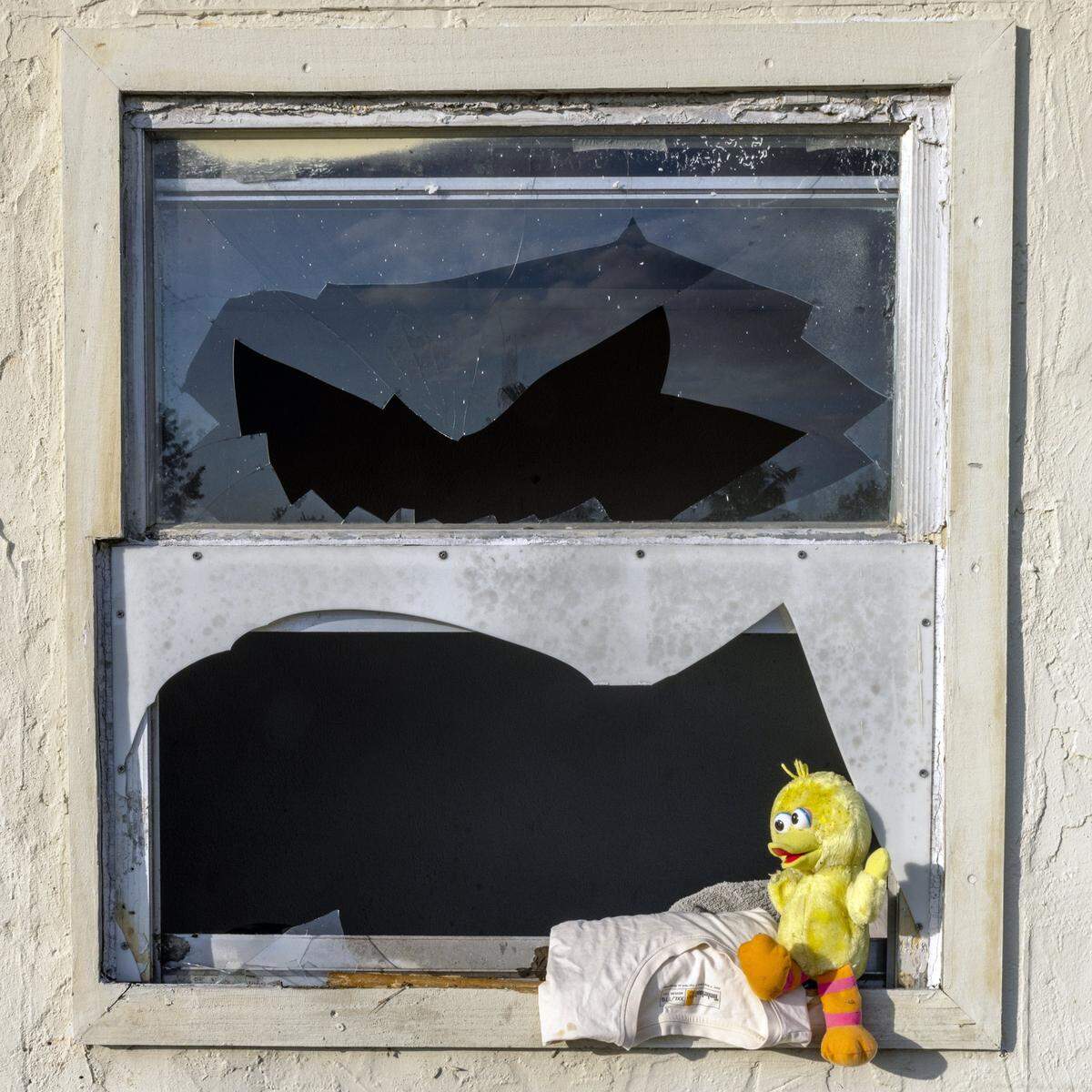
The place had been ransacked. So had Cruz’s. The dining room table set she had purchased, her bed, her refrigerator — anything she didn’t have the time or money to take — went with the looters. “They took everything,” said Cruz, who, after seeing a video of one of her neighbors, Vivian Hernandez, getting thrown to the ground by Sweetwater police, said she had decided not to file a police report.
The police department told the Herald it had reviewed the incident and determined that the actions taken by its officers were appropriate and “within the scope of the law.”
Cruz milled around outside the looted trailer, looking blankly up the street. She began to cry. “God give me strength,” she said. “Give me a peaceful place to live, a place to make my coffee.”
At this point, Cruz’s hopes of securing that place rest with the ongoing lawsuit against CREI Holdings. She’s praying it’ll lead, perhaps through settlement, to a larger payout — at least $50,000. That’d be enough for her to sustainably relocate to Missouri, where housing is cheap and she can be closer to her son.
Like Cruz and Franco, Carmen, a 73-year-old former resident of the trailer park, is in an uncomfortable housing limbo. Her predicament stems in part from the fact that she left well after the eviction date — and with no money from the park’s ownership.
Those who departed the park by the end of January got a $14,000 buyout, while those who left by April or May walked away with $7,000 and $3,000, respectively.
Many of her former neighbors were disappointed by the maximum buyout offer, but they took it anyway.
Those who rejected it felt it simply wasn’t workable. When you’re 73 and finding work is challenging, $14,000 does little to help you rebuild a life, Carmen reasoned.
“I couldn’t survive three months with that,” she said. “First month, last month and deposit plus moving [costs], and you’re left with nothing.”
Carmen came to the United States 16 years ago from Nicaragua with dreams of economic mobility she felt were unattainable back home. Chief among them: owning a home.
To that end, Carmen — who asked to be identified by her first name only because of privacy concerns — cleaned houses and babysat children, squirreling away her earnings. “You don’t spend, you save. And for what?” she asked. “By God, so you can have a house — even if it is a mobile home.”
Finally, by October 2024, one month before CREI Holdings told Li’l Abner’s residents they’d need to vacate, Carmen had saved enough to purchase her home. And she did — for $126,500. “What’s left of my life, at least in my final years, I wanted to live peacefully, without a mortgage,” Carmen recalled. “I spent all of my savings on [the mobile home].”
She had four good weeks in it.
“I still cry about it,” Carmen said, tearing up. “I feel I have nothing.” She now shares a room with her niece in a two-bedroom apartment they split with a subletter. It’s a downgrade, she feels, from her three-bedroom, three-bathroom trailer.
Like Cruz, all of Carmen’s possessions were taken by looters, except a suitcase full of clothes and two TVs, which she brought with her to her niece’s place.
Carmen isn’t even sure how long she’ll be able to stay there. She’s now financially dependent on her niece, who works as a nanny and gets paid regularly but doesn’t earn much.
Seeing what some of her former neighbors are going through, Carmen’s increasingly worried about falling into homelessness. “I feel it’s impossible to survive with how expensive the rent is, with how my life is,” she said. “It doesn’t feel possible to live in Miami.”
She, too, is banking on a settlement with the park’s owners to recoup some of her investment.
“We’re still hopeful for relief from the appeals court,” said David Winker, one of the lawyers representing the residents.
Stay or go?
Slumped in the back of his van, Franco wondered what he was going to do.
“I knew these things happened to people,” he said. “I never thought it would happen to me.” The sweat that had been beading on his forehead dripped down his face, and he wiped at it with a veteran-looking bath towel.
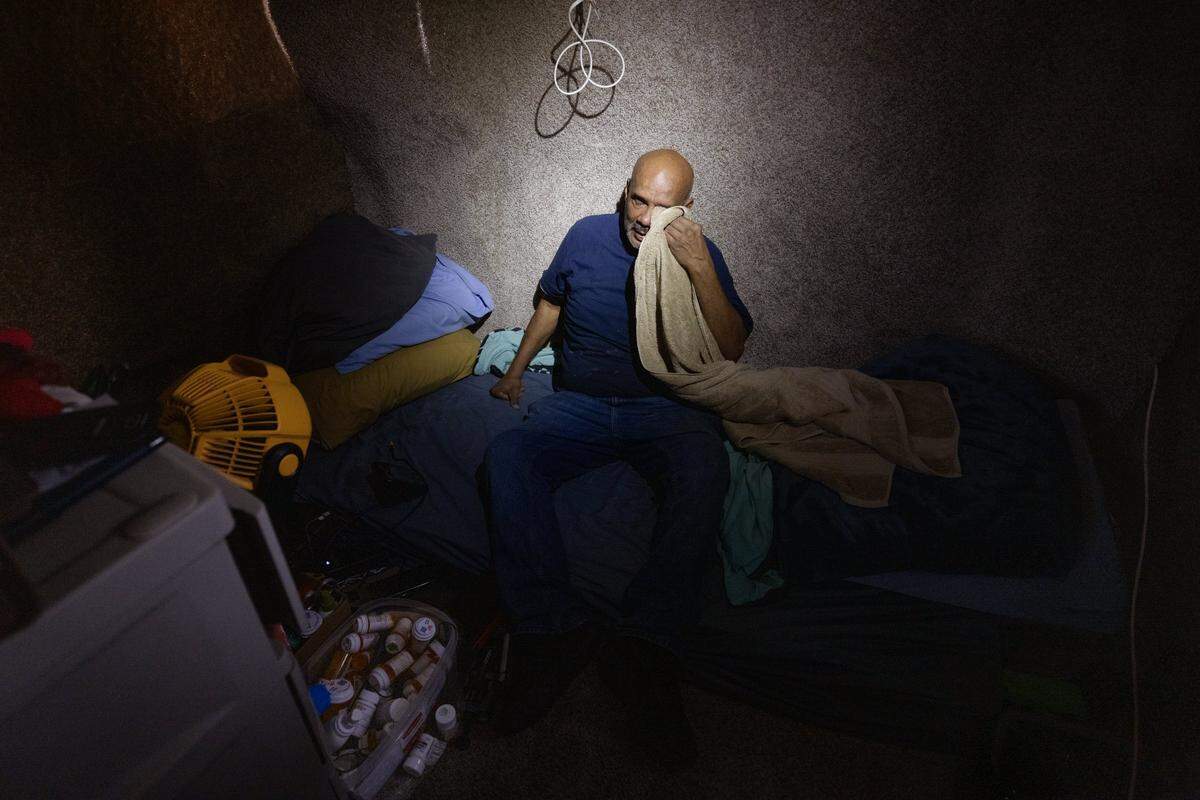
“It’s an oven,” he said, struggling to his feet and out into the cool December night. The sun had set, and mosquitoes swarmed up from the grass below.
He wondered where he could go. Nebraska? Rents are cheaper there, but he doesn’t know anyone, and his doctors are all here in Miami.
Perhaps things would have to get worse before they get better. “That’s how things work here,” he said. “If I ask for help now, [social services] will leave me sitting for a year, two years.”
Franco wrapped his fingers around a metal fence post, nuzzling his cheek into its cold gray exterior as he leaned his weight against it.
“I thought taxpayers like me would never find ourselves in a situation like this,” he sighed.
It turns out, he reflected, many people are “only two weeks away from being out on the street.”
This story was produced with financial support from supporters including The Green Family Foundation Trust and Ken O’Keefe, in partnership with Journalism Funding Partners. The Miami Herald maintains full editorial control of this work.
This story was originally published December 31, 2025 at 5:00 AM.